Haplogroups and Noble Lines Haplogroup J2a1a1a2b2a2b2b At Amiternum in Abruzzo, one early medieval man offers a sharp little lesson in how paternal lines survive political collapse. The individual known as ASM_S37, dated to around AD 864 at Santa Maria in Civitate, lived in a landscape that had once been thoroughly Roman and was then part By Sven • 5 min read
Haplogroups and Noble Lines Haplogroup J2a2a1a1a2 At Epila, at Las Lomas del Molino near Zaragoza, one man dated to around AD 574 stands out for anyone tracing the Y-DNA haplogroup J2a2a1a1a2. He appears in the record as sample I30931, from post-Roman medieval Spain: a period when Iberia was no longer Roman in government, but still full By Sven • 5 min read
Haplogroups and Noble Lines Haplogroup G2a2a2 At Las Lomas del Molino in Epila, near Zaragoza, one man from around AD 600 carries an unusually revealing paternal marker for the early medieval western Mediterranean. The individual identified as I30597, from post-Roman Spain, is reported here under Y-DNA haplogroup G2a2a2. That matters because G lineages are often associated By Sven • 5 min read
Haplogroups and Noble Lines Haplogroup R1b1a1b1a1a3a At Hatherdene Close in Cambridgeshire, an early Anglo-Saxon burial dated to around AD 500 produced one of the more useful little clues in the long history of Y-DNA haplogroup R1b1a1b1a1a3a. The individual known as HAD017 does not give us a legend, a dynasty, or a named man from the chronicles. By Sven • 5 min read
Haplogroups and Noble Lines Haplogroup I1a2a1a1d1b1 At Krakauer Berg in Peissen, in medieval Germany, two men buried nearly two centuries apart carry the same fine-grained Y-DNA line: I1a2a1a1d1b1. One is identified as KRA004X and dated around AD 1140; the other, KRA004, dates to about AD 1338. That is a small detail at first glance, but archaeologically By Sven • 5 min read
Haplogroups and Noble Lines Haplogroup J2b2a1a1a1a1a2a At Mursa in Roman-era Croatia, one excavated man dated to around AD 200, sample I26752, carries the very specific Y-chromosome line J2b2a1a1a1a1a2a. That matters because Mursa was not some remote village on the edge of events. It stood in a busy frontier world on the Drava, in a landscape shaped By Sven • 5 min read
Haplogroups and Noble Lines Haplogroup R1b1a1b1a1a1c2b2a1b1a4b2a2 In about AD 1170, one man was buried in Oxfordshire at Magdalen College's Longwall Quad. He appears in the ancient DNA record as C11119, a medieval individual from an English landscape already dense with churches, fields, market exchange, and layered memories of Roman and Anglo-Saxon Britain. For anyone By Sven • 5 min read
Haplogroups and Noble Lines Haplogroup J1a2a1a2d2b2b2c4d At Mursa in Roman-era Croatia, one ancient man dated to around AD 200, identified as I26749, carries an intriguingly specific paternal line in modern reporting: J1a2a1a2d2b2b2c4d. On its own, that string of letters and numbers is not a biography. But placed in its archaeological setting, it becomes a small but By Sven • 5 min read
Haplogroups and Noble Lines Haplogroup R1b1a1b1b3a1a1a At Gornji Kosinj in inland Croatia, the medieval cemetery of Saint Ana has yielded one of the more telling little clues in the history of Y-DNA haplogroup R1b1a1b1b3a1a1a: sample I35014, dated around AD 1100. On its own, one burial does not make a population. But placed beside earlier finds from By Sven • 5 min read
Haplogroups and Noble Lines Haplogroup E At Verteba Cave in western Ukraine, one ancient male known as I3151 was living or being buried around 3800 BC, in the world archaeologists associate with the Trypillian horizon. That matters because Verteba is not just any cave site: it has become one of the best-known windows into the farming By Sven • 5 min read
Haplogroups and Noble Lines Haplogroup Q At Qotakalli near Cusco, one ancient man dated to around AD 1425 was reported with Y-DNA haplogroup Q. He appears in the record as sample QKI-9-3, and although that single letter may look deceptively plain, it points to one of the most historically important paternal lineages in the ancient Americas. By Sven • 5 min read
Haplogroups and Noble Lines Haplogroup N1a1a1a1a1a1a1b On the island of Oland, in the ringfort of Sandby borg, archaeologists uncovered one of the most unsettling snapshots of the Migration Period in Scandinavia: a community caught in catastrophe and left unburied. Among the individuals from this 5th-century massacre site is sample snb014, dated to about AD 475 and By Sven • 5 min read
Haplogroups and Noble Lines Haplogroup R1b1a1b1a2a1 At Verona's Seminario Vescovile, archaeologists uncovered an Iron Age burial that is memorable not because it is grand, but because it is intimate. Around 300 BC, in territory associated with the Gallic Cenomani of northern Italy, a man was buried in a context that also included a dog. By Sven • 5 min read
Haplogroups and Noble Lines Haplogroup J1a At Rakoczifalva in Migration Period Hungary, one male buried around AD 650 stands out not because he lets us tell a neat national story, but because he does the opposite. Sample RKF230, reported here in connection with Y-DNA haplogroup J1a, appears in a post-Roman Carpathian Basin that was already crowded By Sven • 5 min read
Haplogroups and Noble Lines Haplogroup Q1a2a1a4a One of the more striking appearances of haplogroup Q1a2a1a4a in the medieval record comes from a noble burial in Hungary dated around AD 1500: sample PER10, identified as a Bathory male from Pericei. That is interesting not because one grave can explain a whole lineage, but because this is a By Sven • 5 min read
Haplogroups and Noble Lines Haplogroup J2a1a1a2b2a1b1 One of the more intriguing appearances of haplogroup J2a1a1a2b2a1b1 in the MyTrueAncestry ancient set comes from a man identified as PER04A, a medieval Hungarian noble associated with the Báthory family and dated to around AD 1500 at Pericei. That is already a striking setting: not a vague prehistoric horizon, but By Sven • 5 min read
Haplogroups and Noble Lines Haplogroup I1a3a1a2a At Maslomecz in eastern Poland, a late Roman and Migration-period cemetery has become one of the most revealing archaeological windows onto the people often linked with the Goths north of the Carpathians. Two men from this community, identified as PL057 and PL062 and dated to around AD 250, have been By Sven • 5 min read
Haplogroups and Noble Lines Haplogroup E1b1 At Collegno, near Turin in northern Italy, one sixth-century burial has become a small but telling piece of a much larger story. The individual identified as COL_130, dated to around AD 580, belonged to a community usually discussed under the label "Lombard" - one of the post-Roman By Caterina • 5 min read
Haplogroups and Noble Lines Haplogroup R1b1a1b1a1a2a1a1a1 At Las Gobas in northern Spain, a man buried around AD 1000 carries the sample ID ldo049. He is one of those quietly important medieval individuals who matter not because they were famous, but because they anchor a paternal line in a real landscape: a frontier world of churches, caves, By Caterina • 5 min read
Haplogroups and Noble Lines Haplogroup J2a1a1a2b2a1a1a At Aquae Calidae, the hot-spring settlement near today's Burgas on the Black Sea coast of Bulgaria, one Late Roman man stands out in a very modern way. Sample I41194, dated to around AD 350, is associated here with the Y-DNA haplogroup J2a1a1a2b2a1a1a. That is a very narrow paternal By Caterina • 5 min read
Haplogroups and Noble Lines Haplogroup C2b At Leobersdorf in Lower Austria, an early medieval grave dated to around AD 720 produced an unexpected paternal signal: sample LEO016a, identified with Y-DNA haplogroup C2b. That matters because C2b is not the sort of lineage most readers expect to meet first in an Avar-period burial west of the Hungarian By Caterina • 5 min read
Haplogroups and Noble Lines Haplogroup G2a2 In the material from post-imperial Pesaro on Italy's Adriatic coast, two men dated to around AD 600 stand out for a very simple reason: both are reported under the Y-DNA haplogroup G2a2. Their sample IDs, PF28 and PF32, do not come with the sort of lavish archaeological biography By Caterina • 5 min read
Haplogroups and Noble Lines Haplogroup R1b1a1b1a1a2c1a4b2d1a At Las Gobas in northern Spain, three medieval male individuals dated to about AD 1000-1025, identified as ldo056, ldo056a, and ldo056b, have been associated with the Y-DNA haplogroup R1b1a1b1a1a2c1a4b2d1a. That may look like an intimidating string of letters and numbers, but archaeologically it matters because it anchors a very specific By Caterina • 5 min read
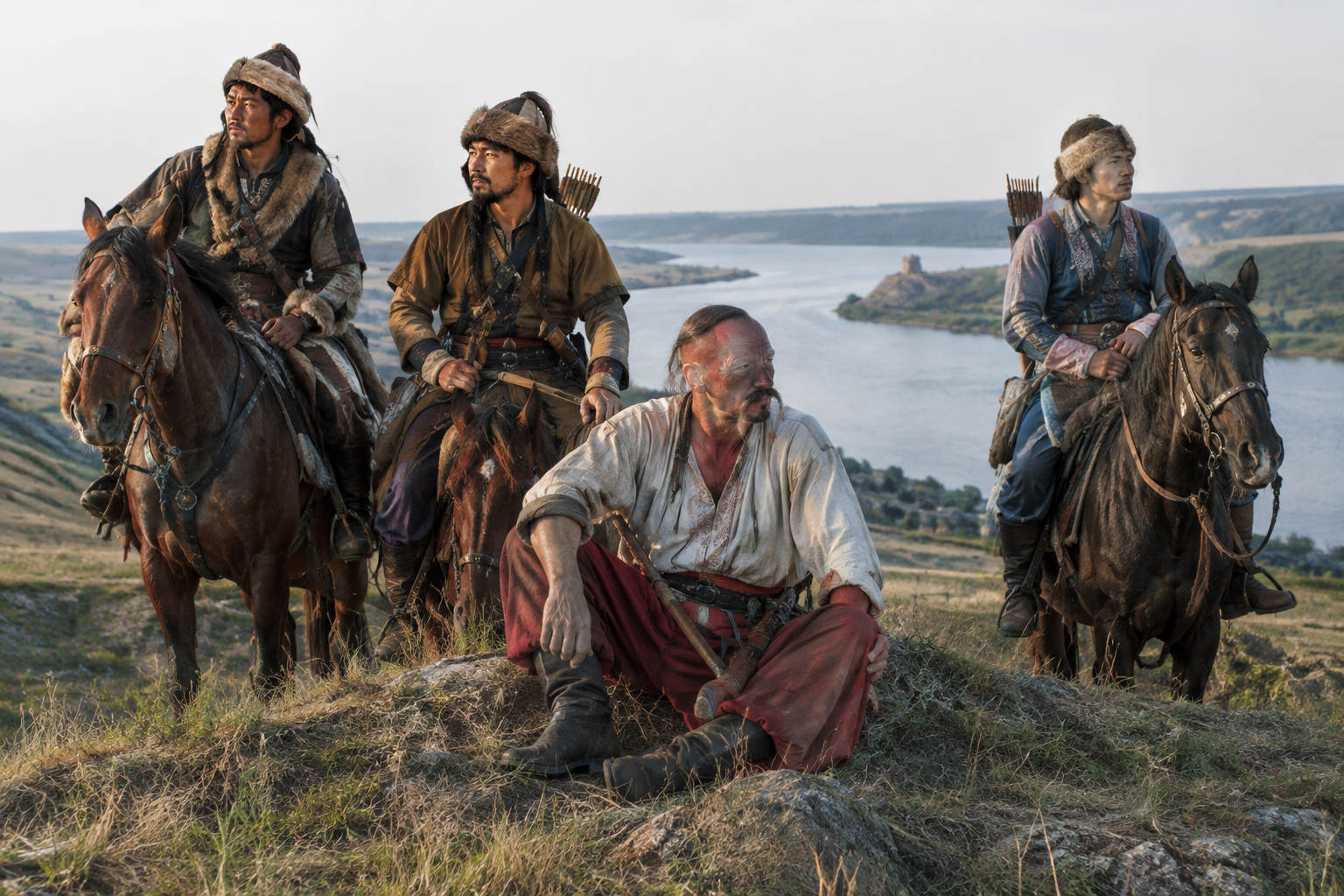
Haplogroups and Noble Lines Haplogroup R1b1a1a1a At Mamay-Gora in the Zaporizhzhia region of Ukraine, one medieval burial adds a sharp little point of focus to a much larger history of movement across the steppe. The individual known as UKR016, dated to about AD 1450, belongs to the Y-DNA haplogroup R1b1a1a1a. That label is not a biography, By Caterina • 4 min read