The Capell Family

– 3 min read


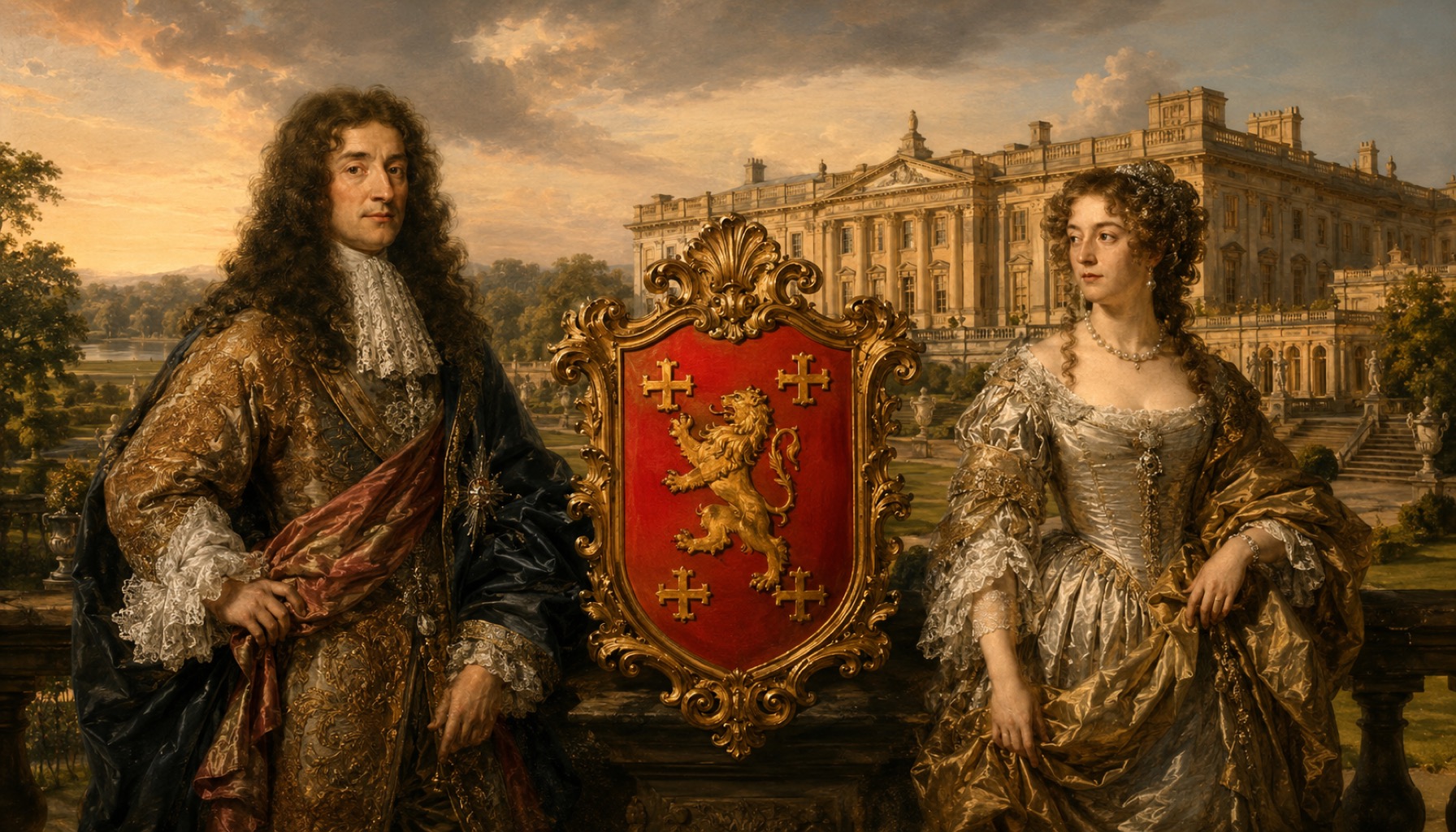
The Capell family, remembered as House Capell, was one of those distinctly English noble and landed houses whose story was built not in a single dramatic moment, but through the slow accumulation of land, office, marriage, and reputation. Their roots lie in the world of the English gentry, especially in Hertfordshire and the eastern counties, where county society mattered enormously and where a family could rise by serving crown and locality with equal care. In that sense the Capells are a very good example of how English elite identity worked: estates anchored status, heraldry advertised memory, and public duty turned local influence into national standing. For haplogroup context, the primary family haplogroup linked here is R1b1a1b1a1a1c1a1, part of a wider paternal lineage seen across many layers of European history.
The family name is strongly associated with the move from landed gentility toward full noble recognition. Over time the Capells became tied to titles, parliamentary life, and the culture of aristocratic continuity that shaped early modern England. This is the world in which a house was not simply a surname, but an institution: estates to maintain, alliances to cultivate, tenants to oversee, churches to patronize, and a family story to preserve for the next generation. Figures connected with the family include Arthur Capell, 1st Baron Capell of Hadham, a notable Royalist of the Civil War era, and later members of the line who carried the family into the peerage and national political society. Hadham Hall stands at the center of that memory, not just as a residence but as a statement that the Capells belonged to the long tradition of English county power.
Hadham Hall, the Capell family's historic seat, is linked with Little Hadham in Hertfordshire, a village with deep medieval roots on the old route between London and East Anglia. Little Hadham is one of those places that looks quiet today but sits on a very old historical landscape, shaped by manor, parish church, farming, and river crossing. The village lies on the River Ash and has long been connected to the structures of local lordship and rural administration that underpinned English society for centuries. In practical terms, this was exactly the sort of setting from which a family like the Capells could build durable influence: not from fantasy-castle isolation, but from a functioning estate world tied to fields, roads, tenants, church life, and county politics. The hall itself does not survive in its full earlier form, but the village of Little Hadham and its historic environment can certainly still be visited, making it an important geographical anchor for anyone tracing the Capell story on the ground.
Read more about The Capell Family
From a DNA perspective, the Capell family is tagged here with haplogroup R1b1a1b1a1a1c1a1. That does not mean we can claim direct descent from any excavated individual, and it is important not to overstate such links. What we can say is that related or linked ancient samples carrying this branch appear across a strikingly broad historical map of Europe. They include Lombard-associated elite samples from Collegno in northern Italy such as COL_069, COL_069b, and COL_069x; medieval noble-linked individuals like Elek Bathory and Ferenc Bathory from Pericei; medieval burials from Denmark at Vor Frue Kirkegard Aalborg; several medieval individuals from Sint-Truiden in Belgium; Iron Age Belgic Suessiones samples from Bucy-le-Long in France; Batavi-associated samples from Valkenburg Marktveld in the Netherlands; early Anglo-Saxon burials from West Heslerton and Buckland Dover in England; a Norman-era sample from Lincoln Castle; and even deeper time examples ranging from Iron Age Britain and Roman Europe back to Bell Beaker and Bronze Age contexts. In other words, this haplogroup sits within a long, mobile, and thoroughly European paternal story, one that fits neatly with the layered ancestry behind many later English landed families.
Explore Roman and early medieval Britain DNA
If you are exploring the Capell family, the real fascination lies in seeing how paper records, place history, heraldry, and genetics can sit beside one another without collapsing into myth. The Capells belong to the very recognizable pattern of English noble-house history: local roots, careful advancement, public service, and a powerful attachment to estate and name. If you have DNA results, you can upload them to MyTrueAncestry and see whether you match the Capell family story or any of the related ancient DNA samples linked with haplogroup R1b1a1b1a1a1c1a1.



Comments