Haplogroups and Noble Lines Haplogroup J2a1a1a2b2a1a1a3 One of the clearest ancient signposts for the paternal branch J2a1a1a2b2a1a1a3 comes from an Avar-period grave in the Vienna Basin: sample CSK013, dated to around AD 650 at Csokorgasse in Austria. That is already enough to make the case interesting. The Avar world is often imagined as something purely " By Sara V • 5 min read
Haplogroups and Noble Lines Haplogroup R1b1a1b1a1a1c2b2a1b1b1a4b At Pont de Cornaux-Les-Sauges in Switzerland, two Late Iron Age men dated to around 200 BC stand out for a very specific reason. Recorded as sample IDs 3438 and 3438x, they are associated here with the Y-DNA lineage R1b1a1b1a1a1c2b2a1b1b1a4b - an extremely narrow paternal branch within the much broader R1b By Sara V • 5 min read
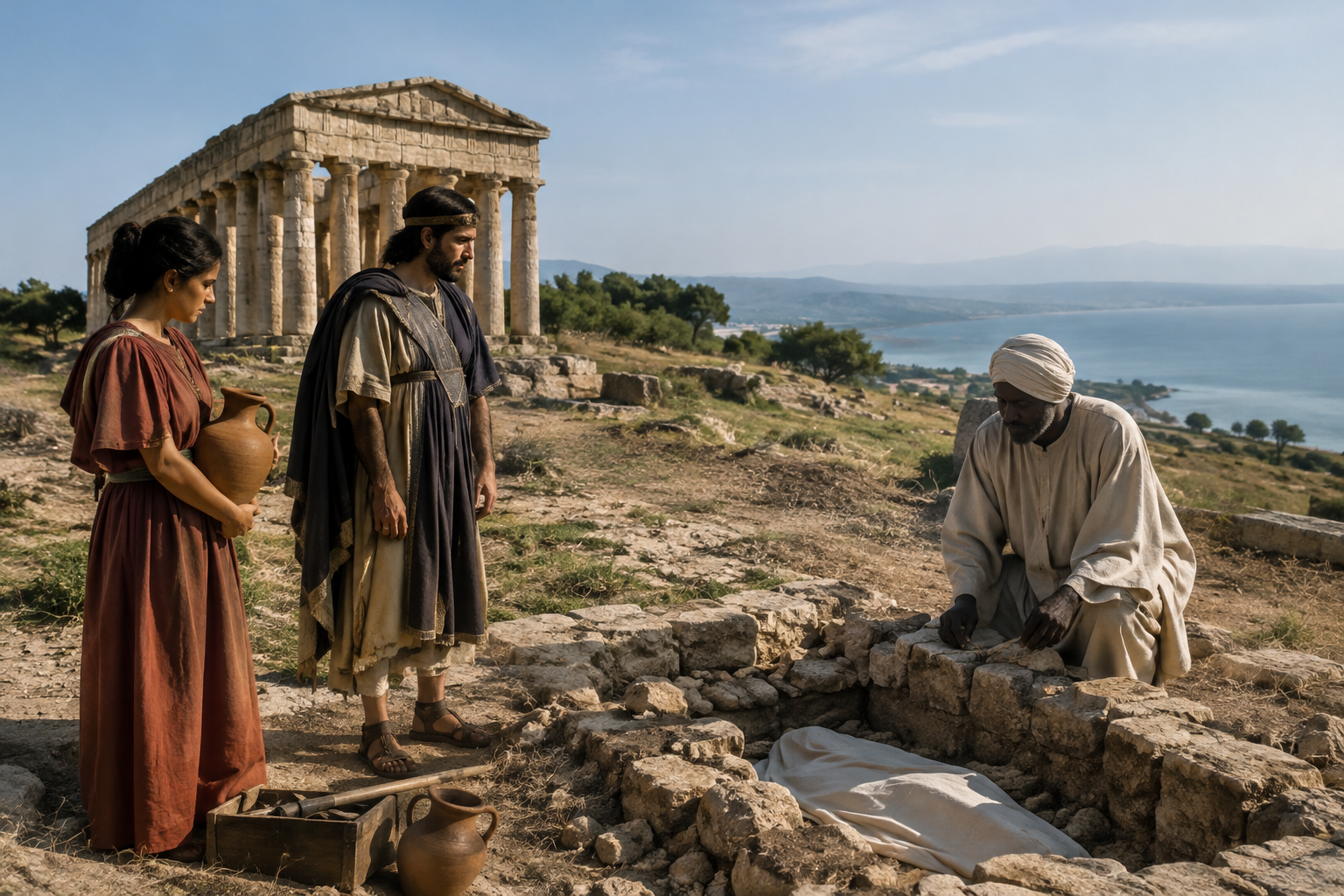
Haplogroups and Noble Lines Haplogroup E1b1b1b1b At Segesta in medieval Sicily, one excavated burial stands out not because it belonged to a king or a conqueror, but because it captures the island's human complexity in unusually direct form. The individual labelled SGBN2, dated to about AD 1200 and identified as an African Muslim grave, By Sara V • 5 min read
Haplogroups and Noble Lines Haplogroup R1a2a Around 675 BC, somewhere in the forest-steppe zone by the Dnipro River, a man now labeled UKR105 was buried in a landscape that sat between worlds. This was the northern Black Sea frontier: not quite the open steppe of mounted pastoral empires, not quite the settled farming belt to the By Sara V • 5 min read
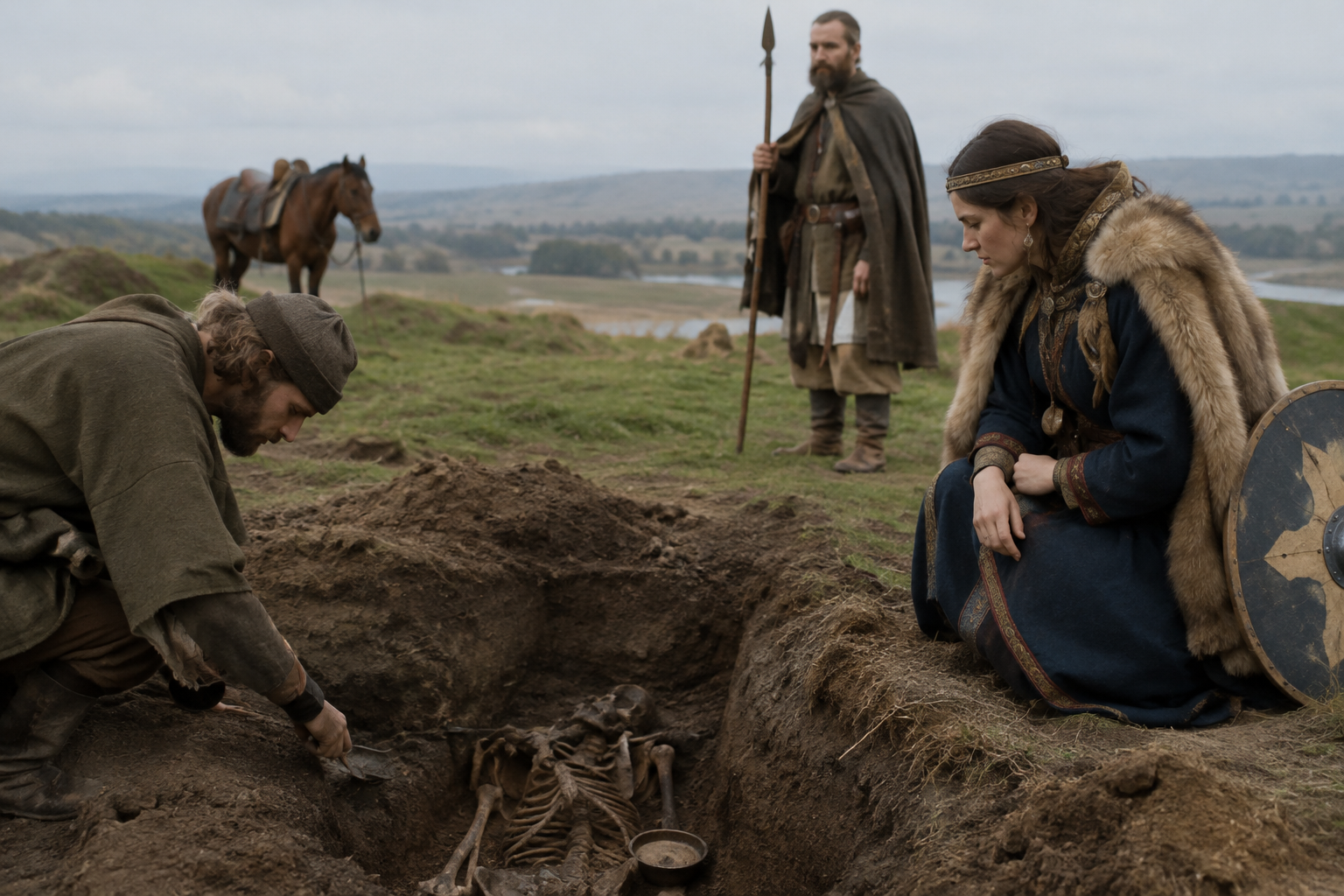
Haplogroups and Noble Lines Haplogroup I2a1a1 At Winterborne Kingston in Dorset, archaeologists uncovered the remains of a man identified as WBK03, dated to around AD 125 and associated with the Durotriges, the Iron Age people of this part of southern Britain. Finds like this are compelling because they sit right on a historical fault line: a By Sara V • 4 min read
Haplogroups and Noble Lines Haplogroup G2a2b2b1a1b At Asparn-Schletz in Lower Austria, the archaeology is grimly memorable. This early Neolithic enclosure has become famous for evidence of large-scale violence around 5000 BC, and among the men caught up in that world was sample I24886, associated here with Y-DNA haplogroup G2a2b2b1a1b. That matters because this is not a By Sara V • 4 min read
Haplogroups and Noble Lines Haplogroup G2a2a1a2a2a1 At Viminacium in Serbia, the cemetery known as the Rit necropolis has produced one of those wonderfully unsettling reminders that the Roman world was never as tidy as textbook maps suggest. Among the individuals dated to around AD 200 is sample I15489, assigned here to the Y-DNA haplogroup G2a2a1a2a2a1. That By Sara V • 5 min read
Haplogroups and Noble Lines Haplogroup I1a1a3a1 In 1197 AD, during the violent civil-war politics of medieval Norway, a dead man was thrown into a well at Sverresborg Castle near Trondheim. He is known simply as the "Well Man," and for years he hovered in that curious borderland between saga and archaeology: a body described By Sara V • 5 min read
Haplogroups and Noble Lines Haplogroup N1a1a1a1 In the early 15th century, a man identified as HUASper57 was buried in a prominent grave at a Benedictine monastery in Hungary and associated with the Royal House of Aba. That is already an arresting historical setting: a noble burial, a monastic landscape, and a family remembered in medieval Hungarian By Sara V • 4 min read
Haplogroups and Noble Lines Haplogroup R1a1a1b2a2a3c2 One of the more arresting appearances of haplogroup R1a1a1b2a2a3c2 in the ancient record comes from medieval Hungary, in a burial identified as HUAS82 from the Gothic Vault of the Royal House of Aba, dated to about 1405 AD. That is already enough to make an archaeologist pause. Here is a By Sara V • 5 min read
Haplogroups and Noble Lines Haplogroup R1a1a1b1a2b3a3a2g2 One of the clearest medieval appearances of the paternal line R1a1a1b1a2b3a3a2g2 comes not from a vague regional cemetery, but from named dynastic burials. Among the samples associated with this branch are PCA0575, identified with Kazimierz I of the Masovian Piast dynasty and dated around AD 1355, and HUASper55A, from the By Sara V • 5 min read
Haplogroups and Noble Lines Haplogroup E2(xE2b) At Prettejohns Gully in Kenya, one ancient male dated to around 2000 BC, sample I12533, offers a rare and useful glimpse of the Y-DNA branch E2(xE2b). That label is already a clue to the difficulty of the story. It places the individual within the broader E2 paternal line, while By Sara V • 5 min read
Haplogroups and Noble Lines Haplogroup T1a1a1b At Peqi'in Cave in the Upper Galilee, three men from the Chalcolithic period stand out for a very specific reason. The individuals labeled I1178, I1166, and I1170, dated to around 3900 BC, have been associated with the Y-DNA haplogroup T1a1a1b. That matters because Peqi'in is not By Sara V • 5 min read
Haplogroups and Noble Lines Haplogroup S1 At Willandra Lakes in southeastern Australia, one ancient individual in this set stands out for sheer chronological depth: WLH4, dated here to around AD 100. That is not the oldest human presence in Australia, of course, not by a very long way. But as a Y-DNA data point connected with By Sara V • 5 min read
Haplogroups and Noble Lines Haplogroup Q1a2a1c1 At Chandman Mountain in the Uyuk-Sagly region, two men dated to around AD 25 - samples CHN007 and CHN016 - offer one of those sharp little glimpses that ancient DNA occasionally gives us. They are linked here with the Y-DNA haplogroup Q1a2a1c1, a paternal branch turning up not in some By Sara V • 5 min read
Haplogroups and Noble Lines Haplogroup R1a1a1b2a2a1d1 At Uguumur Uul in Mongolia, an individual from the Xiongnu period, dated here to around AD 50 and identified as UGU010, offers the most arresting starting point for this branch. The reason is not that one burial can explain an empire. It cannot. The interest lies in the fact that By Sara V • 5 min read
Haplogroups and Noble Lines Haplogroup N1b2 At Yuroo II in the Selenge region of Mongolia, one Late Xiongnu individual dated to around AD 50 stands out for MyTrueAncestry users interested in Y-DNA haplogroup N1b2. The sample, YUR001, places this paternal line in a very specific archaeological setting: not in a vague story about "Inner Asia, By Sara V • 5 min read
Haplogroups and Noble Lines Haplogroup J2a1a1a2b2a2b At Kaargarden in Denmark, one Viking Age man has become a particularly useful clue in the long history of Y-DNA haplogroup J2a1a1a2b2a2b. The individual known as VK317, dated to around AD 950, places this paternal line in a Scandinavian setting that many readers might not expect at first glance. Not By Sara V • 5 min read
Haplogroups and Noble Lines Haplogroup N1a1a1a1a1a1a6 At Varnhem in Skara, in western Sweden, one Viking Age man dated to about AD 1050 was identified as sample VK399. On paper that may look like a dry laboratory label, but it is exactly the sort of clue that changes how we picture the north. VK399 is associated here By Sara V • 5 min read
Haplogroups and Noble Lines Haplogroup R2a At Ganj Dareh in the Zagros Mountains of western Iran, one early farming community has become unexpectedly important to the history of Y-DNA haplogroup R2a. Among the ancient individuals recovered there is sample I1947, dated here to around 8000 BC. That matters because Ganj Dareh sits near one of the By Sara V • 4 min read
Haplogroups and Noble Lines Haplogroup L1a2 At Konyr Tobe, part of the Otyrar oasis in southern Kazakhstan, one ancient male labeled KNT005 brings the Y-DNA haplogroup L1a2 into unusually clear historical focus. He belongs to a world around AD 300, when the great river-fed settlements of Central Asia were not remote outposts at all, but busy By Sara V • 5 min read
Haplogroups and Noble Lines Haplogroup I2a2a1b In the early Bronze Age layers of Bulgaria, one male individual labeled I2176 stands out not because we know his name or his possessions, but because his Y-chromosome points to a paternal line now identified here as I2a2a1b. Dated to around 3100 BC, he belongs to a moment when the By Sara V • 5 min read
Haplogroups and Noble Lines Haplogroup D1a2a1 At NAG012 and NAG037 in ancient Okinawa, both dated to around 680 BC, the striking point is not lavish archaeology or dynastic fame. It is continuity. Two male individuals from the Ryukyu island world, separated from the Japanese main islands by sea and by a rather distinctive history, have been By Sara V • 5 min read
Haplogroups and Noble Lines Haplogroup I2a1b1a1b2 At Cueva de las Lechuzas in Bronze Age Iberia, one ancient male labeled CLL004 offers a small but striking clue to the long history of Y-DNA haplogroup I2a1b1a1b2. Dated to around 2200 BC, he belongs to a period when Iberia was changing quickly: old local traditions persisted, while new population By Sara V • 5 min read