Haplogroup J2a1a1a2b2a1a1a3
– 5 min read


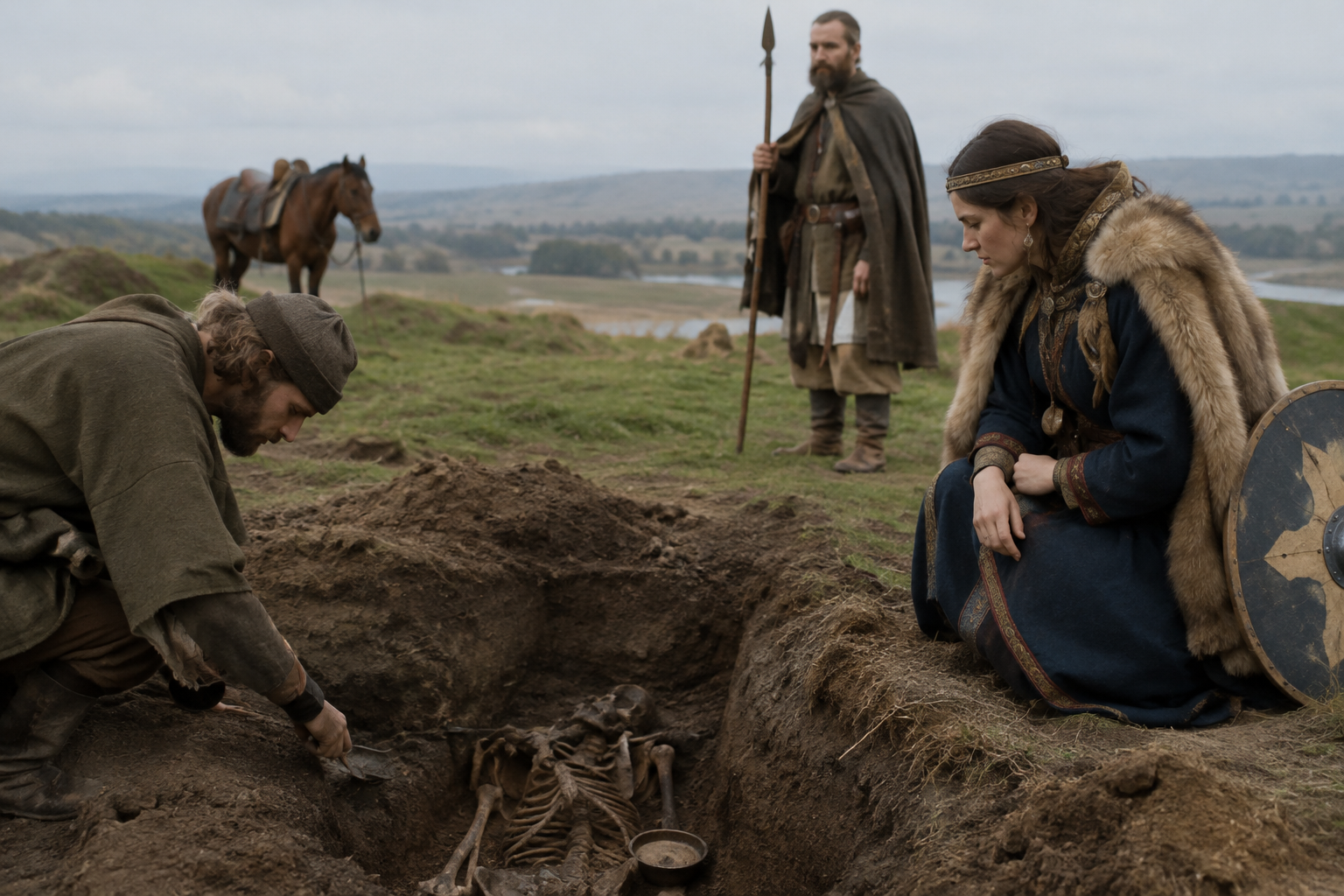
One of the clearest ancient signposts for the paternal branch J2a1a1a2b2a1a1a3 comes from an Avar-period grave in the Vienna Basin: sample CSK013, dated to around AD 650 at Csokorgasse in Austria. That is already enough to make the case interesting. The Avar world is often imagined as something purely "steppe," but graves in the Middle Danube tell a much more complicated story, with people, customs, and lineages meeting in a frontier zone that had already been Roman and would later become early medieval Central Europe.
A second ancient clue lies further west and earlier in time: DNA024 from an Alemanni grave at Basel-Waisenhaus in Switzerland, dated to about AD 310. Put those two finds side by side and the picture is immediately more interesting than any simple tribal label. This is not a lineage tied neatly to one people in one place. It appears in two quite different early historic settings north of the Alps, reminding us that Y-DNA tracks one direct paternal line only, while the communities carrying it could be culturally and genetically mixed in many other ways.
The long haplogroup label matters. J2a1a1a2b2a1a1a3 is a very narrow terminal branch within the much broader J2 family, a lineage with deep associations across the eastern Mediterranean, Anatolia, the Caucasus, and parts of the Near East. Broad J2 history, however, should not be lazily pasted onto every tiny descendant branch. What these samples actually show is something more modest and more useful: by the late Roman and early medieval periods, a paternal line linked here to J2a1a1a2b2a1a1a3 had reached communities in Central Europe and the Upper Rhine zone.
That matters because the Roman and post-Roman centuries were full of movement, recruitment, resettlement, alliance, intermarriage, and local continuity. A lineage like this could have arrived through several different historical channels long before either grave was dug. What the archaeology gives us is not a single migration arrow on a map, but evidence that this paternal branch was part of the human mixture of frontier Europe.
The grave of CSK013 sits in a region that had seen centuries of upheaval before the Avars entered the historical record of the Carpathian Basin. The Vienna Basin was not a remote edge of nowhere. It was a strategic zone, linked to Roman provinces, river routes, and later to the shifting political landscape of post-imperial Europe. By around AD 650, when this individual lived, the Avar Khaganate dominated much of the Middle Danube, yet that dominance rested on a population that was never likely to have been uniform.
This is exactly why a J2-derived paternal line is so revealing here. The presence of J2a1a1a2b2a1a1a3 in an Avar-period burial does not make the individual "Near Eastern" in any simple sense, nor does it overturn the steppe associations of Avar political power. It does show that Avar-period societies in Central Europe included paternal ancestry streams with deeper connections beyond the classic eastern steppe profile. In plain terms: an Avar grave can contain a lineage that speaks to the mixed and layered population history of the Danube frontier.
The Vienna Natural History Museum has published material on this archaeological setting, and the site context can be followed through the museum's research pages here: https://www.nhm-wien.ac.at/jart/prj3/nhm-resp/main.jart?rel=en&reserve-mode=reserve&content-id=1288702477099&mitarbeiter_id=1288170458831.
For family historians, this is often the most valuable kind of ancient match: not a grand imperial founder, but a real man from a documented burial horizon where empires, local communities, and mobile warrior elites all overlapped.
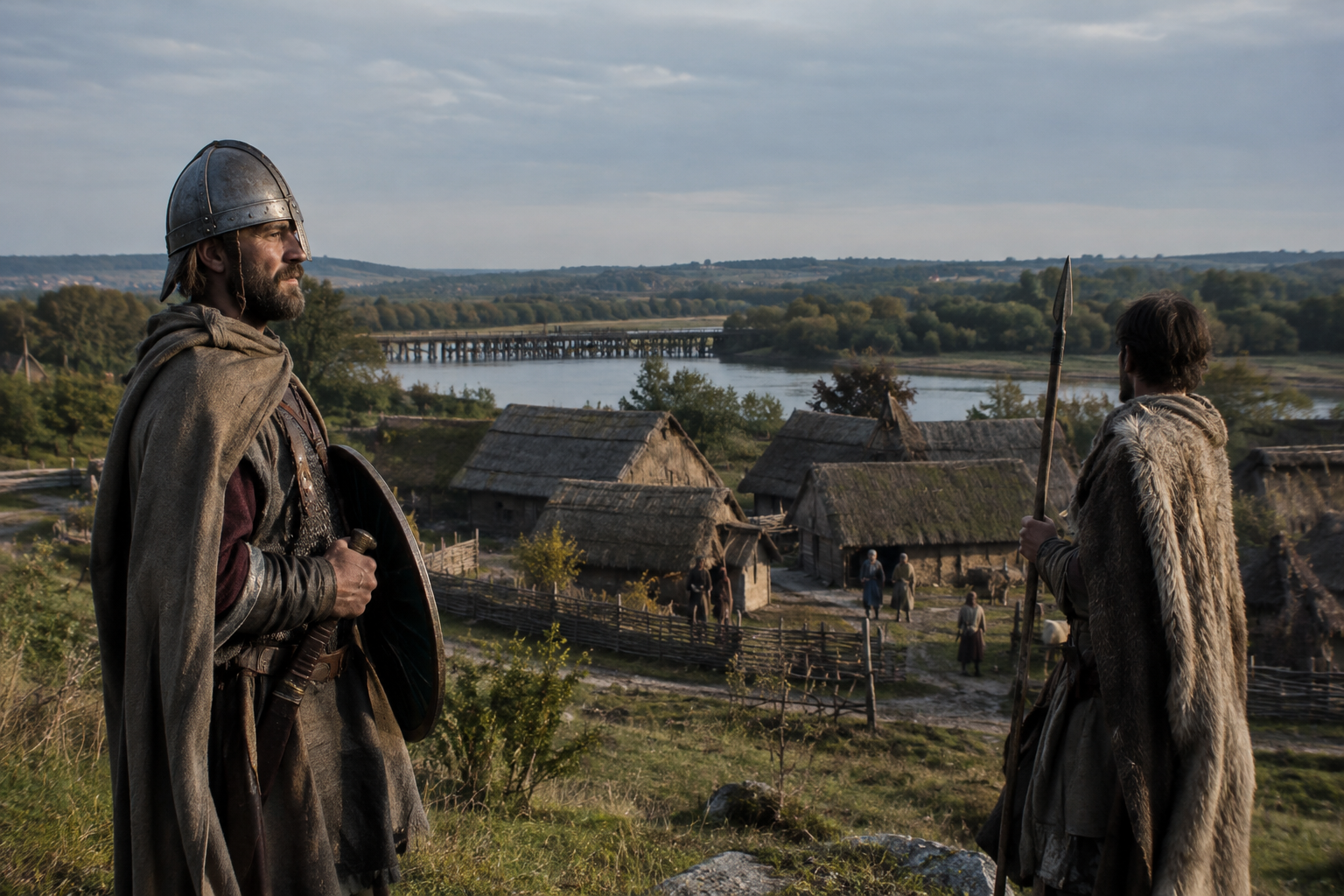
If CSK013 shows this branch in the Avar age, DNA024 shows it in a rather different world: an Alemanni grave from Basel-Waisenhaus, around AD 310. Basel sat in a sensitive borderland near the Rhine, where Roman military organization, local populations, and groups labeled by late antique writers as Alemanni all interacted. This was not a static ethnic block. It was a frontier society shaped by war, diplomacy, settlement, and service.
That is the real significance of finding the same narrow paternal branch associated with an Alemannic burial context. It suggests that the lineage was present in communities north of the Alpine and Danubian worlds before the high Avar period, and in a setting tied to the late Roman frontier rather than to the Avar khaganate. The two samples are not proof of a direct family chain between Basel and the Vienna Basin. But they do indicate that this paternal line had a footprint in Central European populations across several centuries of political transformation.
An ancient DNA study examining burials from this broader kind of post-Roman and frontier context is linked here: https://www.sciencedirect.com/science/article/pii/S2589004223011112. Without overstating any one paper's reach, research of this kind has steadily reinforced the same historical point: labels like Roman, Alemanni, Gothic, or Avar often sat atop biologically varied communities.
Two samples are not a population census. Still, these two are enough to say something concrete about J2a1a1a2b2a1a1a3. They place the branch in late Roman/early Migration-period Switzerland and in Avar-period Austria, both north of the Alps, both in historically mixed zones, and both in periods when political identities shifted faster than paternal lines did.
That pattern fits what archaeogenetics has been showing more broadly across Europe: elite confederations and named peoples were often assembled from diverse local and incoming elements. A lineage can persist while languages change, rulers change, and burial fashions change. In other words, a paternal branch may survive several different historical identities without belonging exclusively to any one of them.
Diverse early medieval origins
It is tempting to read ancient Y-DNA as if every branch came stamped with a single homeland and a single people. The archaeology here argues against that kind of tidy thinking. Basel and the Vienna Basin were both contact zones. Roman administration, military movement, traders, settlers, and later post-Roman polities all contributed to the human landscape. A branch nested inside J2 turning up in these settings is therefore historically plausible, because Central Europe was connected to much wider worlds.
This is also where the comparison with other MyTrueAncestry stories becomes helpful. We repeatedly see that early medieval cemeteries can preserve surprising combinations of ancestry, cultural practice, and historical label. The same broad lesson appears in work on Roman Hispania, on frontier communities of the Rhine, and on mixed post-Roman populations elsewhere in Europe: identity in the archaeological record is rarely reducible to one chromosome line.
For someone exploring J2a1a1a2b2a1a1a3 today, the most responsible takeaway is not a claim to one famous tribe or one dramatic migration. It is something subtler and, in a way, more historically satisfying. This paternal branch is already visible in ancient men from two separate Central European settings shaped by the late Roman world and its aftermath. That places your direct male line, at least in broad terms, within the kind of connected, mobile, and mixed societies that defined Europe between the fourth and seventh centuries AD.
Those societies were not simple. Neither is this haplogroup's past. But thanks to graves like DNA024 and CSK013, the branch can now be placed not in myth, but in real archaeological ground.
Comments