Roman–‘Barbarian’ Blending on the German Frontier, 400–700 CE
– 6 min read


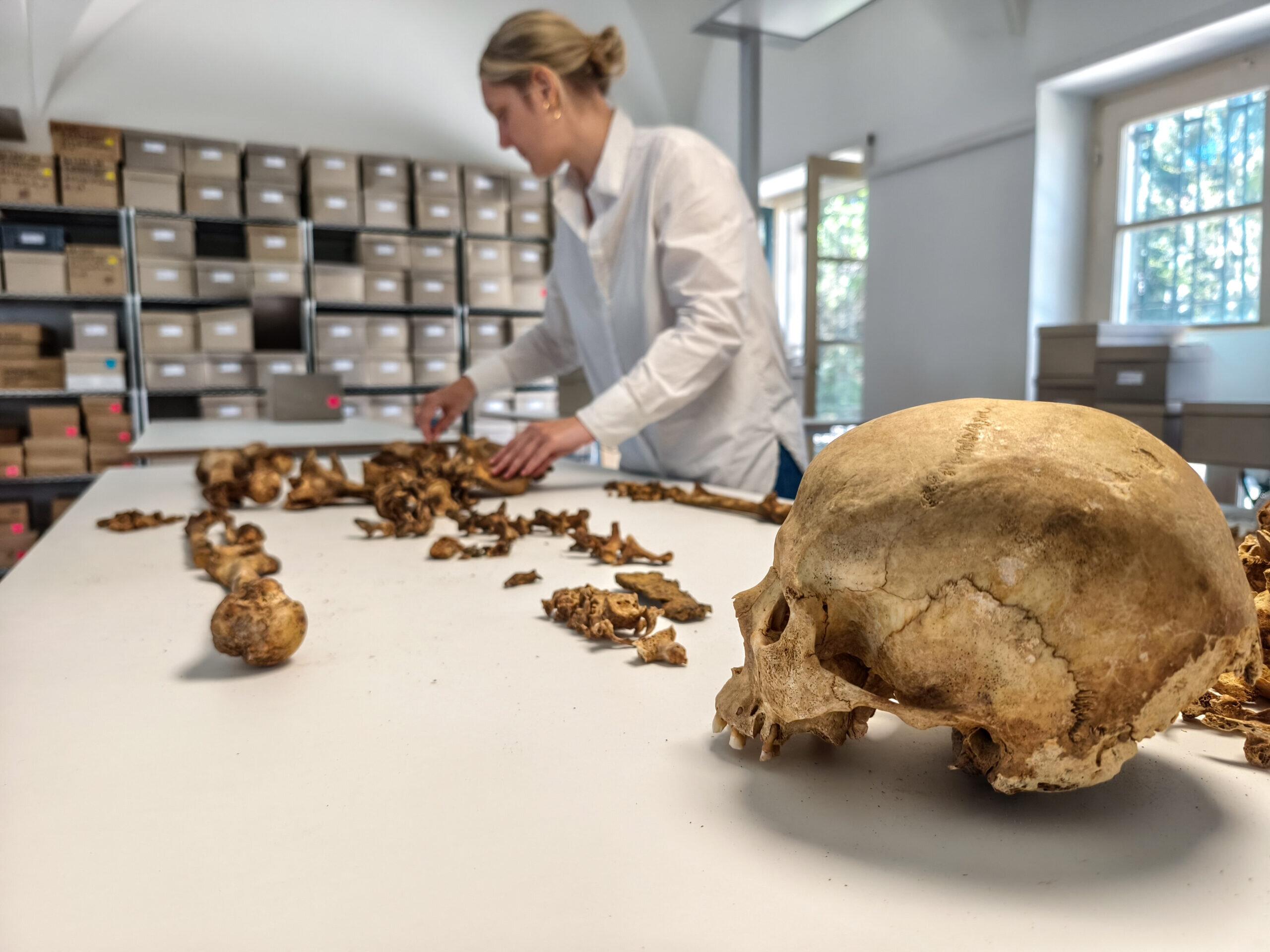
The article plunges the reader into the thick of one of the most dramatic demographic moments in late Roman and early medieval Europe: a sweeping population shift, centred roughly on the year 470 CE, when people with roots in northern Europe began to mix intensively with communities descended from the Roman provinces along the old frontier in what is now southern Germany.
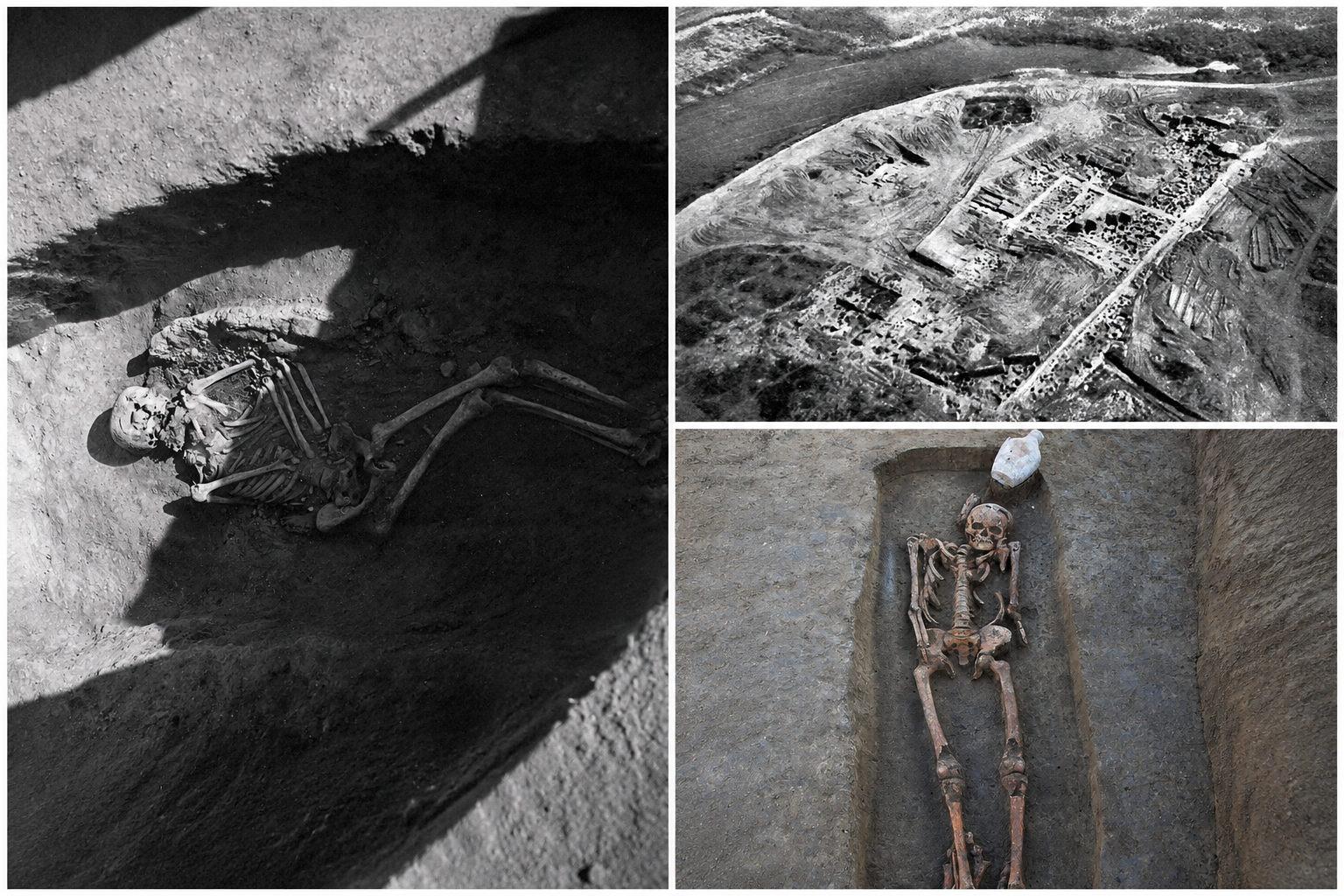
The story is told through cemeteries, not chronicles. The key sites lie along the former Roman frontier: Other linked sites such as Weilheim, Michaelsbuch, Eltville and Wölfersheim, together sketching a broad frontier landscape.
From about 450 CE, these landscapes fill with so-called Row-Grave cemeteries: long, orderly rows of inhumations, many furnished with personal belongings. The graves themselves are small time capsules: By the later fifth century, Christian symbols begin to appear in some graves, hinting at changing beliefs within the same communities.
It is these graves, rather than any imperial decree or royal charter, that reveal how northern and Roman provincial ancestries met, mixed, and settled down.
Altheim is the best-documented centrepiece of the article, a rural community whose graveyard was used from the early fifth to the mid-seventh century. Genomes from the burials reveal three broad phases of ancestry:
In the earliest phase, only a few dozen people were alive in the community at any one time. The buried individuals, and their close kin reconstructed from genetic links, tend to form a tight cluster: Their DNA most closely resembles Iron Age northern Europeans, especially people from what is now northern Germany, the Netherlands and Denmark. Two early graves in particular, Alh_61 (dated around 400–425 CE) and Alh_98 (around 412–414 CE), stand out as among the very first "northerners" in the cemetery. Yet they are buried in ways that show familiarity with Roman-influenced customs: ordered rows, furnished dress graves, and a style of inhumation that would soon spread across the region.
The article suggests that these early Altheim folk may not have been fresh invaders sweeping over the border. Rather, they could be descendants of soldiers, settlers or peasants already living for a generation or more in the frontier zone of the Roman Empire – people with northern ancestry but thoroughly entangled in a Roman provincial world.
Around 470 CE, things change sharply. The article shows that this period coincides with the collapse of Roman state structures in the region – forts abandoned, tax networks crumbling, old legal bonds weakening – and with this political transformation comes a striking demographic reconfiguration.
In the middle phase at Altheim: The number of people in the community expands rapidly; by about 550 CE there may have been around 70 individuals alive at once, over half of whom have been sampled genetically. Genetic profiles suddenly fan out across Europe: some individuals still look like northern Europeans, but others resemble people from Italy, the Balkans and even further afield. A key source is a distinct ancestry associated with Roman Southeastern Europe – think of the Balkans – strongly represented earlier in nearby Roman military cemeteries, and now appearing in Altheim.
Strontium isotope measurements, which indicate childhood origin, add a vivid detail: among the earliest newcomers with non-local signatures are six women. Their teeth suggest they grew up elsewhere, probably not at great distances but still beyond the immediate Bavarian foothills. By about 470 CE, roughly a third of the people alive at Altheim had this "non-local" signal; by 540 CE, that number plummets to under a tenth and disappears entirely after 620 CE. Mobility, at least of first-generation migrants, drops away as the community settles.
One of the article's most striking findings is that this was not a story of separate ethnic enclaves glaring at one another across the graveyard. Using family trees reconstructed from DNA and a new method for inferring the ancestry of missing relatives, the authors show: No clear pattern tying rich or poor grave goods to any particular ancestry. A person with strongly Roman-linked DNA might be buried with modest items; someone with clear northern ancestry might be furnished only sparsely.
The article contrasts this with nearby Burgweinting, where two burial groups sit side by side in the same cemetery: One group comprises women of nearly pure northern ancestry, buried with lavish objects – high-status dress fittings, ornate jewellery. The adjacent group shows mixed ancestry and humbler grave goods. Altheim, by contrast, looks like a simpler agrarian village, where social distinctions were less sharply drawn and where ancestry and material display were largely decoupled.
By the early seventh century, the genetic kaleidoscope settles: People buried at Altheim cluster with modern and Iron Age northern and central Europeans, but with a noticeable pull towards southern and southeastern European profiles, thanks to the earlier admixture. The sample size from this later period is smaller, but the kin patterns suggest that, by now, the various strands – northern, Italian, Balkan and more – have been braided into a population that already resembles present-day southern Germans.
A few fascinating outliers remind us that the frontier was never closed: A man from Altheim (Alh_245, dated around 528–553 CE) carries about two-thirds East Asian ancestry and one-third ancestry from western steppe populations. He shares long stretches of DNA with individuals from the Berel necropolis in modern Kazakhstan, suggesting a life-story rooted far beyond the Roman frontier. A contemporary man from Wölfersheim (W67) has a similar, though less pronounced, Asian component.
The great demographic shift around 470 CE is not simply the arrival of northerners; it also reflects Roman provincial groups leaving their old bases and moving into the countryside: At the Roman cemetery of Azlburg, attached to a military base in the same region, earlier burials show a blend of Balkan, Italian and even some northern ancestry – the cosmopolitan mix of the Late Roman army and its dependants. After 470 CE, people with these Azlburg-like ancestries start appearing in Altheim and other rural Row-Grave cemeteries, indicating that those with roots in forts and towns were now settling in new agrarian communities.
The article links this directly to the wider unravelling of Roman power: The collapse of military and fiscal structures freed dependent peasants and estate workers from their legal attachment to specific landlords. As garrisons disbanded and imperial offices disappeared, families and small groups – not armies – began to move, seeking land, security and opportunities in the hinterland.
In southern Germany, this means that the genetic imprint of the Roman provinces did not vanish with the legions. Instead, it seeped into the new rural societies, to be diluted but never erased.
The article extends its gaze beyond Altheim, showing similar patterns in other cemeteries in southern Germany: At Weilheim (about 480–540 CE), people can be modelled as a blend of northern ancestry, Azlburg-like Roman provincial ancestry and a noticeable British component. If some of that northern ancestry derived from Roman military contexts, then the majority of Weilheim's ancestry in this period may well have been fundamentally Roman provincial in origin.
In the Rhine–Main region, sixth-century individuals from Eltville, near the old legionary centre at Mainz, resemble the mixed middle phase at Altheim, although with subtle differences: more influence from Britain, Baltic areas and eastern central Europe, and less from Italy. Slightly later communities at Büttelborn and Mömlingen preserve the same general recipe: a strong northern component stirred together with diverse Roman provincial strands.
Taken as a whole, the article paints a picture in which: Around 470 CE, as Roman political structures collapse, people with Roman provincial ancestry – particularly from the Balkans and Italy – begin to move into the countryside, appearing in Row-Grave cemeteries. For about 150 years, roughly from 470 to 620 CE, these groups intermarry intensively, dissolving older genetic distinctions while preserving the memory of many origins in their DNA. By the early seventh century, the result is a population genetically very close to modern central Europeans, and especially to present-day southern Germans: primarily shaped by northern input, but with a stubborn and enduring undercurrent of Roman provincial ancestry.
The grave goods and burial patterns, far from marking rigid ethnic blocs, reveal a world where people of different backgrounds shared fields, families and faith – and where the old Roman frontier became the cradle of a new, mixed population whose genetic echoes can still be traced in Germany today.
Original source article: https://phys.org/news/2026-04-rome-genomic-insights-southern-germany.html
Comments