Genetic Links Between Ancient Corinth and Its Colony Amvrakia Revealed by Ancient DNA
– 6 min read


Ancient Greek Colonisation and the Corinth-Amvrakia Network: A Genetic Study
This comprehensive study examines the genetic relationships between the Corinthian settlement of Tenea and its colony Amvrakia (later the Roman Ambracia) within the broader context of Greek colonisation between the 8th and early 4th centuries BCE. Using ancient DNA from real burials and archaeological contexts, we trace the movement of people across the Mediterranean and reveal how colonisation worked on a biological level.
Greek colonisation was not chaotic migration, but deliberate policy. Greek cities sent out groups of citizens to found new settlements called apoikiai (literally "home away from home") in carefully chosen coastal locations. Corinth emerges as one of the great organisers of this movement, creating a chain of colonies and trading stations linking the Aegean to western Greece, the Adriatic, and Sicily. Famous names like Syracuse in Sicily, Corcyra (Corfu), Leukas, Epidamnus, Apollonia, and Potidaea all form part of this Corinthian network.
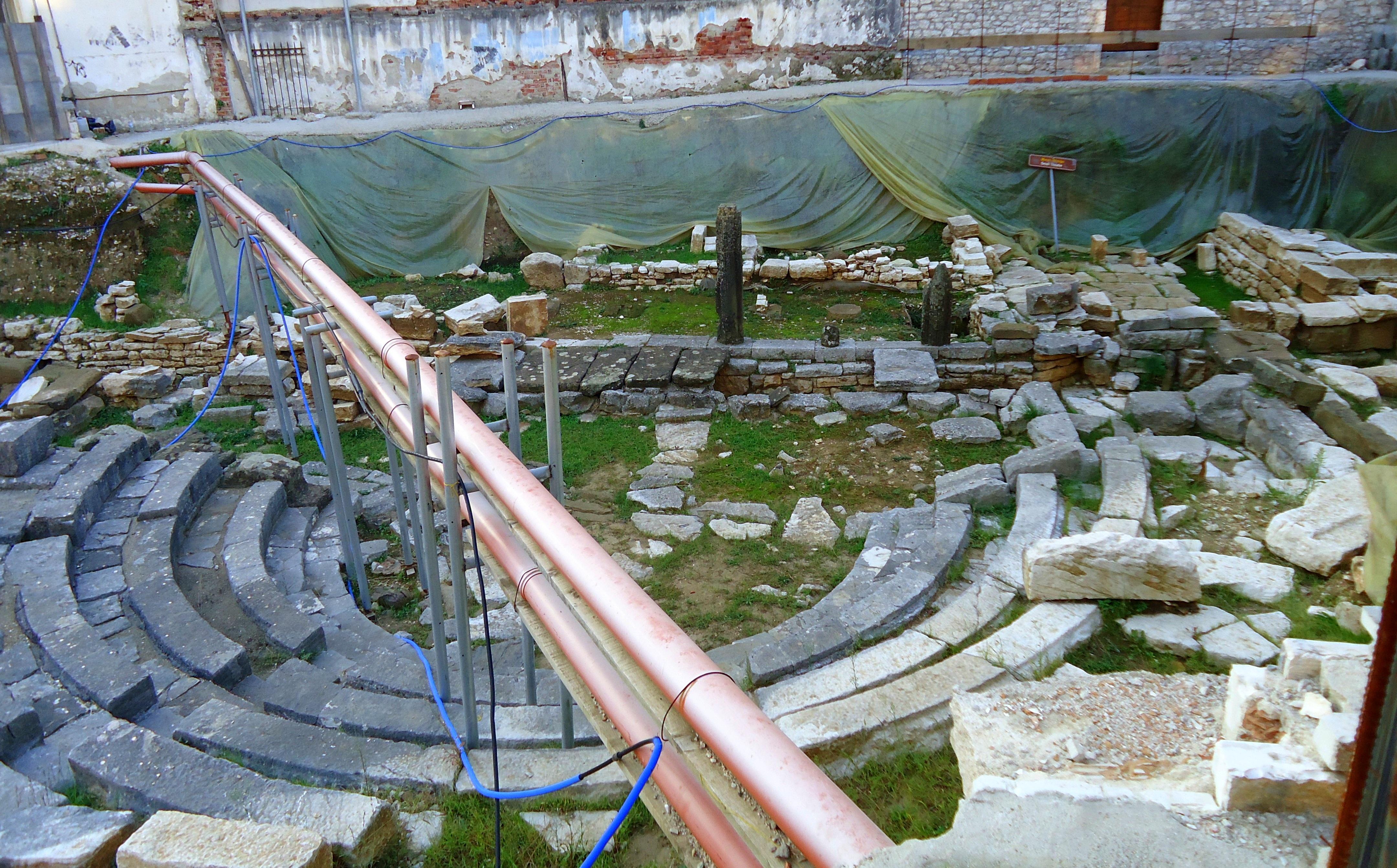
Amvrakia was a key node on this western route. Founded in the second half of the 7th century BCE on the banks of the river Arachthos (modern Arta in Epirus), it guarded the passage inland and northwards towards Apollonia and the Adriatic. Archaeological evidence shows that a Corinthian trading station was already active there in the 8th century BCE, facilitating trade between southern Greece and the rugged northwest.
Ancient writers describe a standardised process for founding colonies. A parent city would send out citizens under a chosen leader, the oikistes, who consulted the oracle at Delphi for divine approval. The oikistes then laid down laws and customs (nomima): festival calendars, cults and temples, and tribal organisation. These institutions reproduced the metropolis abroad, giving new communities clear identity even when inhabitants came from mixed backgrounds.
Archaeologists typically trace these connections through material culture: Corinthian-style pottery, shared religious practices, and familiar architectural plans. In Amvrakia, such evidence is abundant, with Corinthian material culture, myths, and religious practices visible throughout the excavated city and cemeteries. Literary sources emphasise its early dependence on Corinth.
What this study adds is biological evidence: whole ancient genomes from people actually buried in these sites, allowing us to trace human movement and relationships with unprecedented precision.
To reconstruct the Corinth-Amvrakia relationship, researchers sampled bones and teeth from three main locations in Greece. The burials come from everyday community life: organised cemeteries with graves ranging from modest to wealthy, often containing ceramics, jewellery, and occasionally painted monuments and coins. The study does not rely on grave goods to identify colonists versus locals, but uses archaeological contexts to anchor genomes in time and social setting.
From Ammotopos, a Late Bronze Age site north of Amvrakia (roughly 1275-1125 BCE), two individuals provide insight into the pre-colonial population. From Amvrakia itself, 24 individuals spanning Archaic through Hellenistic periods (6th-2nd centuries BCE) represent the colonial population over time. From Tenea, a large village in Corinthian territory, 13 individuals from Archaic to Roman periods show the metropolis perspective.
The genetic analysis reveals intimate biographical details buried in these cemeteries. Within Amvrakia's Classical graves, researchers identified family clusters: one woman genetically related to two sisters, and in the Hellenistic cemetery, a mother-daughter pair buried in the same city that had become the royal capital of Epirus. In Archaic Tenea, a mother-son pair appears among the graves, while Roman-period Tenea shows three children sharing maternal lineage but different paternal lines, suggesting an extended family with matrilocal residence patterns.
When plotted in genetic space using principal component analysis, individuals from all three sites fall within a southern Balkan and Aegean cluster, appearing "Greek" in the broad prehistoric sense as descendants of Bronze Age populations from mainland Greece, Crete, and nearby regions. However, more detailed analysis reveals significant patterns in the relationships between sites.
The most compelling evidence comes from long stretches of shared DNA known as "identity-by-descent" segments, inherited from recent common ancestors. These segments decay quickly through recombination, so their presence indicates genealogical relationships within the past few dozen generations. The study reports that Archaic Amvrakia and Archaic Tenea individuals share such segments in the 8-12 centimorgan range, pointing to common ancestors around the time of Amvrakia's foundation.
Mixture-modelling analyses show that Archaic Amvrakia can be explained almost entirely as descendants of a population like Archaic Tenea or other Iron Age Peloponnesians, with only tiny possible contributions from elsewhere. Crucially, Late Bronze Age Ammotopos does not appear as a direct source for Amvrakia's founders, despite geographical proximity.
The two Ammotopos individuals, buried centuries before Corinth's colonisation, provide rare insight into the Mycenaean-era population of inland Epirus. Their genomes closely match Mycenaean and Middle Bronze Age individuals from mainland Greece, Crete, and parts of Italy, representing a typical Late Bronze Age Aegean population.
While Amvrakia was not founded on empty land, the genetic data show that the specific group who founded Archaic Amvrakia appears anchored in the Corinthian rather than local Bronze Age gene pool. This suggests that colonisation involved substantial population movement rather than simply reorganising existing communities.
The relationship between colony and metropolis evolved over time. Initially, Archaic Amvrakia shows strong genetic ties to Tenea, consistent with recent migration from the Corinthian heartland. During the Classical period, Amvrakia maintained its Corinthian genetic character but became more endogamous, showing increased homozygosity levels indicating a relatively closed marriage network.
By the Hellenistic period, when Amvrakia became capital of the Epirote kingdom, the close genetic tie to Tenea visible at foundation had diminished. The population remained largely descended from original settlers but showed greater diversity, likely reflecting the city's enhanced political status and broader regional connections.
Tenea's genetic story mirrors regional political changes. A Late Hellenistic-Early Roman individual from Tenea maintains genetic similarity to Classical-Hellenistic Greeks from both Amvrakia and Tenea, indicating continuous local ancestry into the Roman era. However, Roman-period burials show new influences, with ancestry modelling revealing contributions from Bronze Age Levant and Iron Age Egypt, reflecting the cosmopolitan character of the Roman Empire.
The Roman-period family group of three related children sharing maternal but not paternal lineages provides evidence of matrilocal practices in this mixed yet rooted community, with local women maintaining residence while incorporating diverse male lineages from across Roman trade networks.
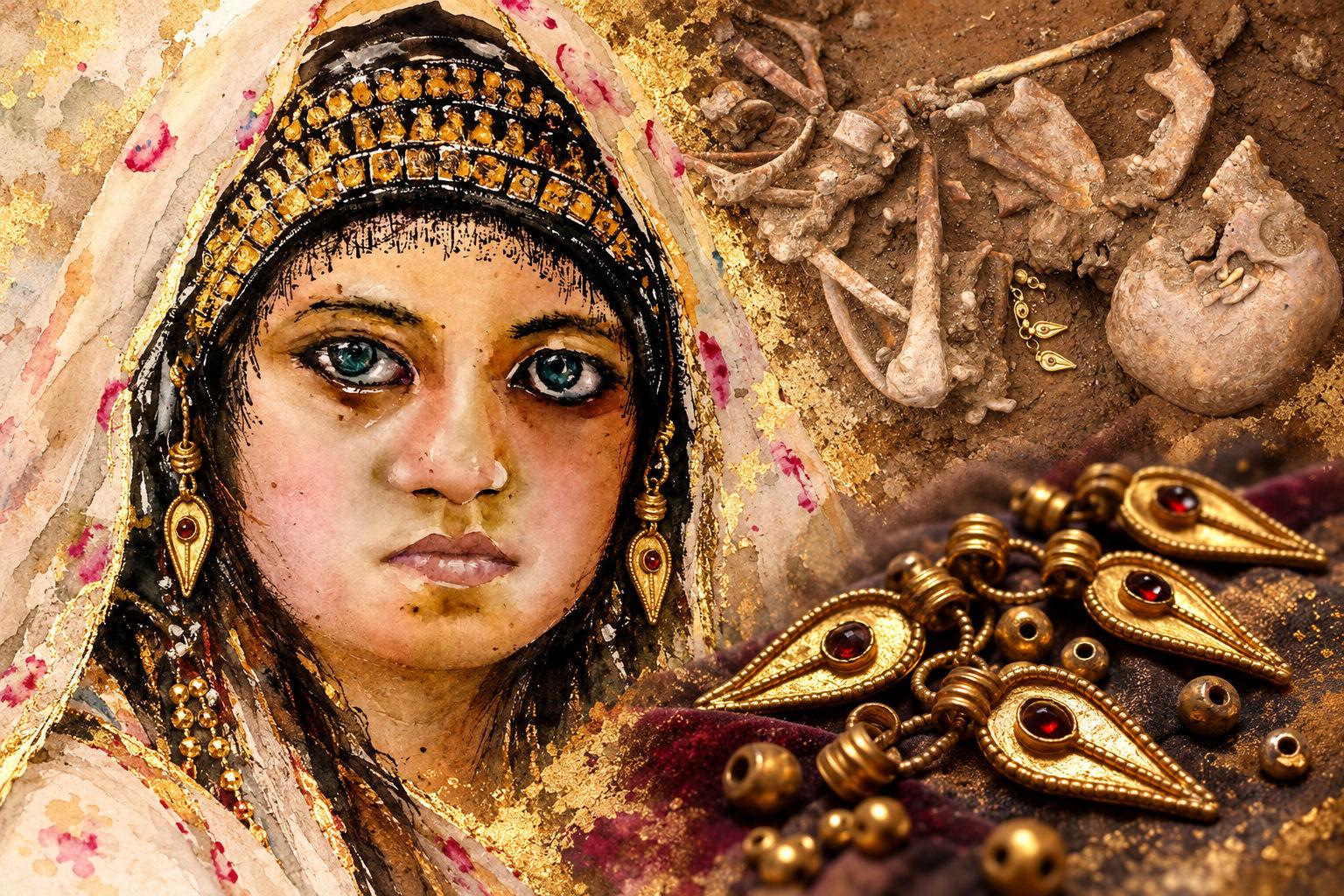
Genetic reconstruction of visible traits reveals consistent patterns across time periods. Almost all individuals had brown eyes and predominantly brown or dark hair, with intermediate skin tones fitting the southern European spectrum. One notable exception is a Late Hellenistic-Early Roman Tenea individual with high probability of red hair, representing one of the few confirmed red-haired ancient individuals in southern Europe.
Health-related genetic markers show that none of the tested individuals were likely lactose tolerant as adults, even into the Roman period. This fits broader patterns where genetic ability to digest milk spread more slowly in the eastern Mediterranean than in central and northern Europe. Similarly, no individuals carried common variants for beta thalassemia, despite this condition being frequent in modern Greece.
Screening for ancient pathogens in bones revealed no systemic infections, though dental material contained typical oral bacteria including species causing severe gum disease. These findings remind us that even successful colonists and prosperous villagers struggled with everyday health problems including dental pain and inflamed gums.
This study transforms abstract debates about colonisation into concrete biological narratives. The genetic evidence strongly supports historical accounts of deliberate Corinthian colonisation, showing that Amvrakia's founders came primarily from the Corinthian world rather than representing reorganised local populations. The presence of actual family relationships - mothers, daughters, sisters, and cousins - in colonial cemeteries emphasises that colonisation involved real communities of related individuals, not just anonymous groups of settlers.
Over subsequent centuries, Amvrakia evolved from colonial outpost to independent regional power while maintaining genetic continuity with its founding population. Tenea simultaneously transformed from Corinthian village into a Roman crossroads, welcoming new genetic influences from across the Mediterranean while retaining its fundamentally Greek character.
The study demonstrates how ancient DNA can illuminate historical processes previously accessible only through material culture and texts. By following specific individuals and families through time, we see colonisation not as a single event but as an ongoing process of movement, settlement, reproduction, and cultural evolution spanning many generations. The genetic links between Corinthian Tenea and its colony Amvrakia provide unprecedented insight into how ancient Mediterranean networks functioned at the most basic biological level, connecting households and families across vast distances through the shared project of Greek colonial expansion.
Original source article: https://doi.org/10.1186/s13059-026-03968-5

Comments