Ancient DNA Shows Papuan–East Asian Mixing Before First Settlement of Palau
– 12 min read


Ancient DNA and the Peopling of Palau: A Comprehensive Study
This comprehensive investigation takes readers deep into the limestone caves and rock islands of Palau, revealing how a genetic story that began long before anyone set foot on these remote Pacific islands can still be read in the bones of its earliest inhabitants. Through the analysis of twenty-one ancient individuals from four significant archaeological sites – Koror Quarry, Ucheliungs, Omedokl, and the Ngkeklau area of Babeldaob – researchers have successfully traced a remarkable chapter of Oceanic history that unfolded centuries before Palau itself was settled by humans.
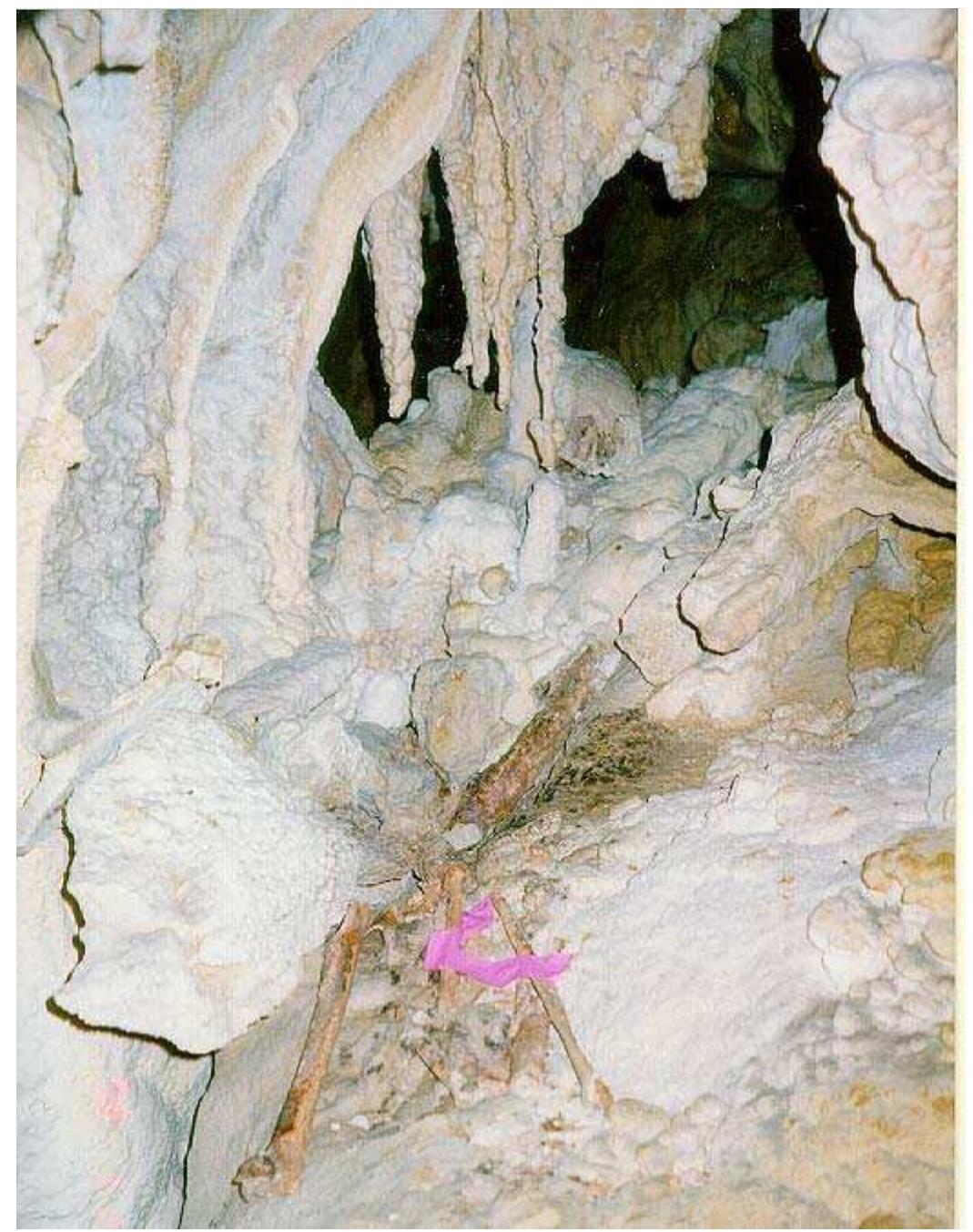
The central characters in this extraordinary story are not merely genetic markers, but the dramatic burial caves themselves, carefully chosen sacred places tucked away within Palau's rugged limestone landscape. These caves served as more than simple repositories for the deceased; they were deliberately selected ceremonial locations that formed part of an extensive ritual landscape stretching from the earliest colonization period through the magnificent earthwork-building centuries and into the sophisticated age of stonework villages. The individuals sampled from these sites – men and women, some buried nearly three thousand years ago – serve as voices through which this investigation reconstructs Palau's earliest human narrative.
What emerges as most striking from this research is that modern Palauans exhibit almost exactly the same genetic blend as these ancient burials. For nearly three thousand years, there has been remarkable genetic continuity: the people buried in Rock Island caves and on Babeldaob's volcanic flanks are, in genetic terms, essentially the same population as contemporary Palauans living on these islands today.
The study reveals that each ancient person's genome represents a complex patchwork of segments that can be matched to different ancestral populations. In Palau, this genetic mosaic can be divided into two primary ancestral components. The first strand relates to seafaring peoples of East Asia, ultimately connected to island populations in the Philippines and more broadly to Austronesian speakers throughout the region. The second strand connects to Papuan peoples, specifically those from the mountainous interior of New Guinea, rather than Papuan groups closer to the Bismarck Archipelago or the Solomon Islands.
By carefully measuring the lengths of continuous Papuan ancestry segments in the genomes of the oldest individuals, particularly specimen I41048 from Ucheliungs cave, researchers can estimate precisely when the mixing between Papuan and East Asian ancestors occurred. Longer, unbroken genetic segments indicate recent mixing, while shorter, more fragmented segments suggest that many generations have passed since the two ancestral groups first met and intermarried.
For individuals I41048 and I41049, the lengths of these ancestral segments indicate that the major mixing event between Papuan and East Asian ancestors took place approximately 3880–3430 years ago, nearly a full millennium before the earliest archaeological evidence of human presence on Palau, which dates to around 3200–3000 years ago. This remarkable finding means that by the time the first voyaging canoe landed on Ulong island, or the first burials were placed in Rock Island caves, the ancestors of Palauans were already a well-established, blended Papuan–East Asian population.
When placed within the wider context of Pacific settlement, Palau's genetic history reveals a unique pattern that distinguishes it from other regions of Remote Oceania. In the southwest Pacific, particularly in the famous Lapita archaeological sites of Vanuatu and Tonga, the earliest settlers possessed almost entirely East Asian-related ancestry, with Papuan ancestry arriving only centuries later, primarily through male migrants from regions such as New Britain. Similarly, in the Marianas Islands of Guam and Saipan, the earliest Unai period burials also lack significant Papuan ancestry, with genetic mixing occurring during later periods.
Palau presents a fundamentally different pattern. The burial caves of Ucheliungs, Omedokl, and the ridge cave of Koror contain, from the very beginning of human settlement, individuals already carrying a substantial Papuan genetic component approaching 40–45 percent of their total ancestry. This proportion remains remarkably stable for nearly three millennia. Rather than Papuan ancestry gradually arriving later, as observed in Vanuatu and parts of central Micronesia, Papuan heritage is present from the first day of Palau's archaeological record.
The genetic patterns also provide insights into migration dynamics and population movements. The Papuan ancestry is more strongly represented on the autosomes than on the X chromosome, suggesting that a significant portion of the Papuan genetic contribution came through male lineages. However, in Palau, Papuan mitochondrial lineages, such as the P1 haplogroup typically found in Papuan, Melanesian, and Indigenous Australian populations, demonstrate that Papuan ancestry arrived through both male and female lineages, creating a more balanced genetic contribution than observed in other Remote Oceanic regions where Papuan ancestry is predominantly male-derived.
The investigation then turns from the burial caves back to the open ocean, seeking to identify the geographic origins of this already-mixed Papuan–East Asian population before they colonized Palau. The genetic evidence points toward a likely source region in eastern Indonesia, specifically within the area known as Wallacea, encompassing islands such as Halmahera and Morotai in the Northern Maluku region.
Ancient individuals excavated from Morotai Island, specifically from the archaeological sites of Aru Manara and Tanjung Pinang and dating to approximately 2100 years ago, exhibit a similar blending of East Asian and Papuan ancestry. Their East Asian genetic component most closely matches the particular strand observed in Palau. While these Morotai individuals are too recent chronologically, and possess slightly different ancestry proportions to be direct ancestors of the first Palauans, they appear to represent cousins from the same broader source region.
Archaeological evidence supports this connection, with pottery-using communities appearing in northern Sulawesi and Halmahera by approximately 3500 years ago. As sea levels fell and coastlines expanded during this period, these populations of expert seafarers would have had compelling reasons to explore outward, following chains of small, previously uninhabited islands toward new territories.
Modern computer-based voyaging simulations provide additional support for this proposed route. These models, which incorporate detailed data on winds, ocean currents, and island spacing, demonstrate that people departing from the arc of islands stretching from Mindanao through Halmahera to northern Sulawesi could realistically have reached Palau, particularly if they possessed advanced skills in long-distance ocean travel and navigation. Intriguing cultural parallels, such as rock art traditions in both Palau and the Maluku Islands that favor red pigment applications on striking coastal cliff faces, add compelling cultural evidence to support this proposed maritime route.
One of the most remarkable findings of this comprehensive study is the extraordinary genetic continuity observed in Palau over almost 2800 years. Throughout this extended period, the people of this small archipelago maintained almost exactly the same blend of ancestries that characterizes modern Palauans: approximately 60 percent East Asian-related and 40 percent Papuan-related ancestry. In a Pacific region renowned for repeated migrations and dramatic population changes, Palau emerges as an exceptional case of long-term genetic stability.
The research team analyzed 37 skeletal remains from four distinct locations across Palau, representing burial caves, rock islands, and ancient settlements. These archaeological sites span almost the entire sequence of Palauan occupation, from the very edge of first settlement through to the late Stonework Period, enabling researchers to track ancestry changes through time against a well-established archaeological and chronological framework.
The most ancient genetic evidence comes from Ucheliungs, a burial cave situated within Palau's spectacular limestone Rock Islands. Two individuals from this cave, designated I41048 and I41049, provide crucial insights into the earliest phases of human settlement. These individuals lived within just a few centuries of Palau's first human colonists, yet their genomes already display the characteristic genetic blend that would persist for millennia: slightly more than half East Asian-related ancestry and slightly less than half Papuan-related ancestry.
Critically, this genetic blending did not occur in Palau itself. The study demonstrates that the major mixing event between these two ancestral populations occurred several centuries before anyone established permanent residence on Palau. By the time the first voyaging canoes reached the Rock Islands, their passengers already possessed genetic profiles virtually identical to modern Palauans.
The largest number of analyzed individuals came from the Ngermereues Ridge burial cave, commonly known as Koror Quarry, and from the Omedokl Rock Island cave. These burials primarily date to the Earthwork Period, approximately 1700–1200 years ago, when Palauan communities were dramatically reshaping Babeldaob's landscape through the construction of massive terraces, ditches, and elevated platforms.
Despite these significant changes in settlement patterns, architectural traditions, and social organization, the underlying genetic ancestry of the population remained remarkably stable. Individuals from Koror Quarry and Omedokl consistently display the same fundamental genetic pattern observed in earlier periods, with only minor variations in the precise proportions of ancestral components.
While there is some subtle variation across sites and time periods – the earliest Ucheliungs individuals possess slightly higher Papuan ancestry than later individuals from Koror, Omedokl, and Ngkeklau – these differences pale in comparison to the dramatic genetic upheavals documented elsewhere in Remote Oceania. Throughout more than a millennium of earthwork construction, social change, and evolving burial practices, the underlying population remained genetically consistent.
The genetic findings are situated within a rich archaeological context that illuminates the daily lives and cultural practices of ancient Palauans. Nearby sites such as Chelechol ra Orrak have yielded burials with isotopic evidence indicating mixed marine and terrestrial diets, along with mitochondrial lineages including B4, D4, E1, and M7 haplogroups that align perfectly with the East Asian–Papuan genetic story revealed by the new whole-genome data.
The study also considers Palau's ancestors within broader patterns of Pacific voyaging and cultural exchange. Decorative traditions, particularly the rock paintings executed on coastal cliffs throughout Palau, show striking similarities to those found in the Maluku Islands of eastern Indonesia. Computer simulations of ancient voyaging capabilities confirm that journeys from Mindanao, Halmahera, or northern Sulawesi to Palau were entirely feasible using traditional sailing technologies.
Genetic connections to Morotai Island in the Northern Maluku region are particularly significant. Ancient individuals from Morotai, dating to approximately 2000 years ago, share similar blends of East Asian and Papuan ancestry with Palauans, suggesting the existence of a broader zone of mixed populations in northern Wallacea that may have served as a source region for settlers dispersing into western Micronesia.
When compared to settlement patterns elsewhere in Remote Oceania, Palau's genetic history reveals the complexity and diversity of Pacific colonization processes. In Vanuatu, for example, the earliest Lapita people possessed almost purely East Asian ancestry, with Papuan ancestry only arriving centuries later in a dramatic demographic shift. The Marianas Islands show their own distinct pattern, with early settlers closely related to Lapita populations but following an independent evolutionary trajectory.
Central Micronesian islands such as Pohnpei and Chuuk were settled later than Palau and the Marianas, and their genetic history reflects yet another distinct pattern of population mixing. In these islands, the combination of East Asian-related and Papuan-related ancestries occurred approximately 2500–2000 years ago, but involved different source populations and mixing dynamics than those observed in Palau.
The Papuan ancestry in central Micronesia derives from mainland New Guinea rather than New Britain, while the East Asian component originates from Lapita-like Southwest Pacific sources rather than the Palauan founding lineages. Even the gender dynamics of population mixing differ, with Papuan ancestry in central Micronesia being predominantly male-derived, while the Lapita-like component shows stronger female transmission patterns.
Rather than supporting a simple model of Pacific settlement involving a single wave of seafarers spreading from Taiwan through the Philippines into Micronesia, the evidence reveals a complex pattern of multiple routes, distinct founding populations, and repeated episodes of mixing between people carrying East Asian and Papuan ancestries. Each major island group or region appears to have its own unique settlement history, involving different combinations of source populations, timing, and cultural traditions.
The genetic data distinguishes at least three related but separate founding East Asian-derived lineages, each associated with different regions of Remote Oceania: a southwest Pacific branch carried by Lapita colonists of Vanuatu and Tonga, a Marianas branch borne by the first settlers of Guam and Saipan, and a Palauan branch representing the earliest divergence, which today constitutes the majority of East Asian-related ancestry in Palau.
The study establishes a precise chronological framework for Palau's settlement through careful radiocarbon dating of human remains, taking into account the complex effects of marine diet on radiocarbon ages. Archaeologists have traditionally divided Palau's human occupation into four distinct periods: the Colonization Period (3200–2800 years ago), the Expansion Period (2800–2400 years ago), the Earthwork Period (2400–1100 years ago), and the Stonework Period (1100 years ago to European contact).
The dated individuals in this study span virtually this entire chronological sequence, providing an unprecedented biological record extending from the first centuries of settlement through the era of monumental earthworks and stone architecture. The oldest individuals from Ucheliungs cave date to approximately 2924–2710 years before present, placing them at the very dawn of Palauan settlement history.
Radiocarbon dating in Palau presents particular challenges due to the marine-focused diet of ancient inhabitants. The study addresses these complications through careful selection of dating materials, application of marine reservoir corrections, and sensitivity analyses that test the robustness of conclusions under different dietary assumptions. Even when these parameters are varied within reasonable ranges, the fundamental conclusions regarding the timing of ancestry mixing remain unchanged.
Several ancient individuals emerge as particularly important reference points in Palau's deep history. Individual I41048 from Ucheliungs cave, dating to approximately 2924–2710 years ago, represents one of the earliest genetically characterized inhabitants of Palau. His genome provides crucial evidence for the timing of Papuan–East Asian mixing, indicating that this blending occurred centuries before Palau's initial settlement.
Individual I41049, also from Ucheliungs and dating to approximately 2822–2735 years ago, confirms and reinforces the patterns observed in I41048. Together, these early individuals establish that the genetic foundation of Palauan population was already established by the time of first settlement, rather than developing through subsequent mixing within Palau itself.
Later individuals from the Earthwork Period, such as those from Koror Quarry dating to approximately 1700–1400 years ago, demonstrate the remarkable stability of this genetic heritage through periods of significant cultural and technological change. These individuals lived during the era when Palauans were constructing the massive earthwork complexes that still dominate Babeldaob's landscape, yet their genetic composition remained fundamentally unchanged from their predecessors.
The findings from Palau have significant implications for understanding Pacific settlement processes more broadly. Rather than supporting models of simple, unidirectional migration from Asia into the Pacific, the evidence reveals a complex network of interactions, mixing zones, and multiple dispersal events that shaped the genetic landscape of Remote Oceania.
The identification of eastern Indonesia, particularly the Maluku region, as a likely staging area for Pacific settlement adds a new dimension to our understanding of these processes. This region emerges not as a mere waystation on the path from Asia to the Pacific, but as an active zone of cultural and genetic mixing that generated the founder populations for multiple Pacific archipelagos.
The study also highlights the importance of considering both archaeological and genetic evidence in reconstructing settlement histories. While material culture provides evidence for shared traditions and cultural connections across the Pacific, genetic data reveals the complex population histories that underlie these cultural patterns. In many cases, similar material culture may mask quite different population histories, while shared genetic heritage may persist despite significant cultural change.
This comprehensive investigation of Palauan population history opens numerous avenues for future research. Additional sampling from other Pacific islands, particularly in the poorly understood regions of western and central Micronesia, could further illuminate the complex patterns of settlement and interaction revealed by this study.
The identification of potential source regions in eastern Indonesia suggests that expanded ancient DNA sampling from archaeological sites throughout Wallacea could provide crucial insights into the formation of the mixed populations that ultimately settled much of Remote Oceania. Such research could help identify the specific mechanisms and timing of Papuan–Austronesian interaction in this critical region.
Methodological advances in ancient DNA recovery and analysis may also enable the investigation of additional aspects of Pacific settlement, including questions of social organization, marriage patterns, and cultural transmission that are difficult to address through archaeological evidence alone.
The burial caves of Palau serve as remarkable archives of Pacific prehistory, preserving not only the physical remains of ancient individuals but also the genetic evidence of complex population movements and interactions that occurred thousands of years ago. The individuals placed in the cool darkness of Ucheliungs, Omedokl, Koror Quarry, and Ngkeklau caves were not isolated islanders who appeared suddenly at the edge of Remote Oceania, but members of communities whose genetic heritage recorded centuries of contact and mixing in the complex archipelagos of eastern Indonesia.
For nearly three millennia, the descendants of these early settlers have maintained a remarkably consistent genetic profile, demonstrating an unusual degree of population continuity in a region characterized by repeated migrations and demographic changes. This stability suggests that once established, Palauan communities developed sustainable cultural and social systems that allowed them to maintain their distinctive identity while adapting to changing environmental and social conditions.
The story revealed by ancient DNA from Palau's caves ultimately transforms our understanding of Pacific settlement from a simple narrative of expansion from Asia into a complex tale of interaction, mixing, and multiple dispersal events. In those limestone caves, surrounded by Palau's turquoise lagoons and mushroom-shaped rock islands, lie the remains of the first Palauans – people whose lives were deeply rooted in Palau's unique landscape, but whose ancestry had been woven together in distant seas long before Palau itself became part of the human world.
This investigation demonstrates that the Pacific was never an empty canvas awaiting settlement by a single wave of voyagers, but rather a dynamic arena where multiple populations with complex histories came together to create the diverse genetic and cultural landscape that characterizes Oceania today. The caves of Palau, with their carefully preserved ancient remains, provide a unique window into this remarkable chapter of human history, revealing the deep connections that link the smallest Pacific islands to the broader story of human migration and adaptation across our planet's largest ocean.
Original source article: https://doi.org/10.1016/j.cell.2026.02.011


Comments