Neolithic Population Turnover and the End of Megalith Building in the Paris Basin

– 10 min read


Neolithic Decline and Demographic Collapse in North-Western Europe
The flourishing Neolithic world of north-western Europe began to unravel at the very end of the fourth millennium BC, marking a moment of profound crisis that would reshape entire regions. Across territories stretching from the Paris Basin to southern Scandinavia, the great stone tombs known as megaliths suddenly stopped being built, agricultural fields were abandoned to returning forests, and whole communities seem to have disappeared or been replaced by newcomers carrying different genetic signatures and cultural practices.
At the centre of this dramatic transformation stands the allée sépulcrale of Bury, located approximately 50 kilometres north of modern Paris. Through the analysis of DNA extracted from 132 ancient genomes recovered from this seemingly silent stone tomb, researchers have transformed our understanding of this critical period, revealing detailed records of population collapse, large-scale migration, and fundamental changes in social organisation that affected much of continental Europe.
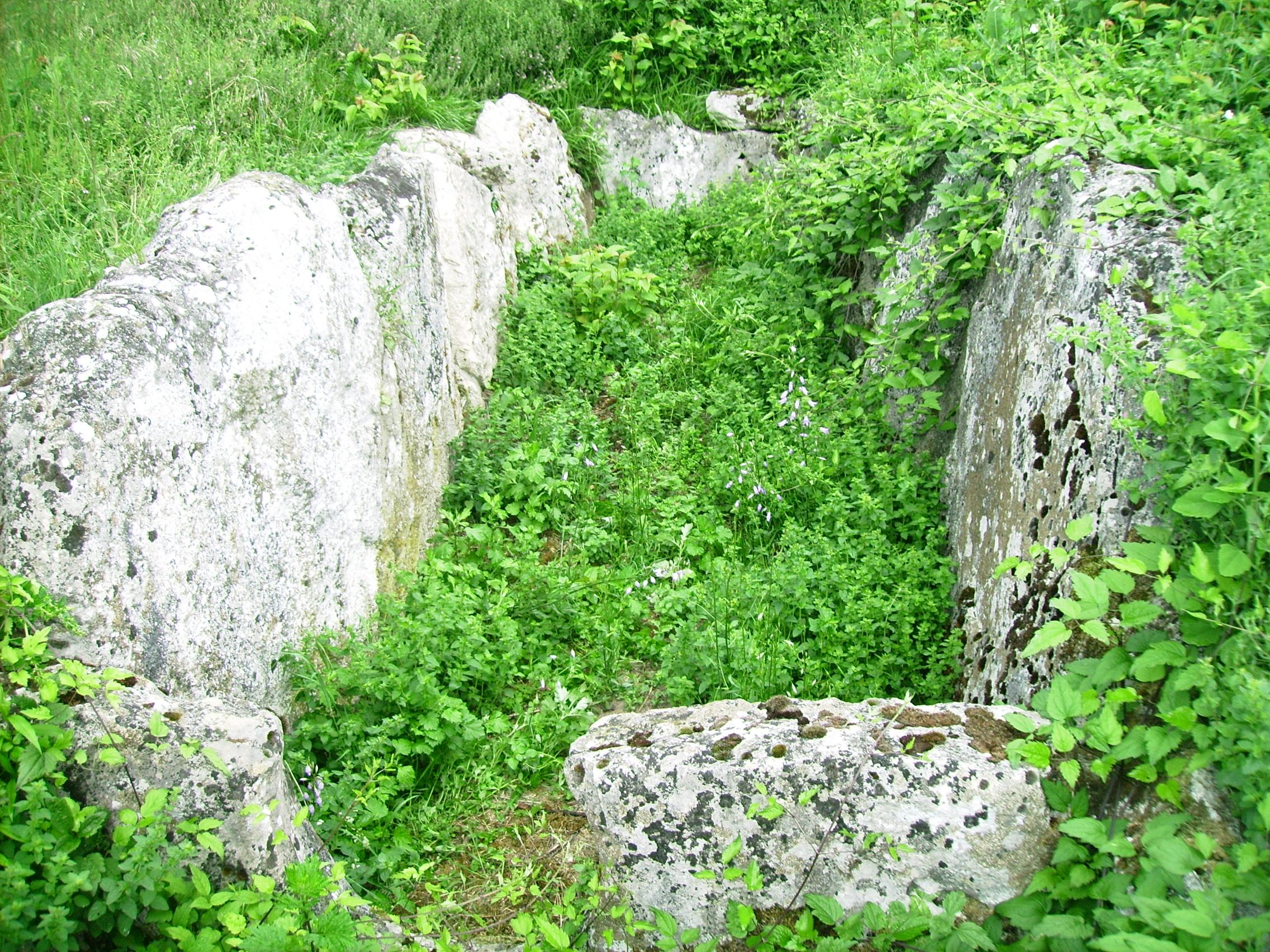
Bury represents a classic gallery grave of the Paris Basin, constructed as a long, semi-underground rectangular monument built with massive megalithic slabs and sophisticated dry-stone walling techniques. The tomb belongs to the Seine-Oise cultural tradition, one of several groups responsible for the dense concentration of collective burial sites that once dotted this fertile region during the height of Neolithic civilisation.
Archaeological excavations recovered the primary burials of 316 individuals within the monument's stone chambers. Detailed analysis of burial practices, grave goods, and radiocarbon dating reveals that the tomb was not used continuously throughout its operational period. Instead, two distinct phases of burial activity can be identified, separated by a significant gap during which no interments took place. The first phase spans approximately 3350 to 3100 BC, while the second phase occurs between 2900 and 2500 BC, with a clear hiatus of several centuries between these periods of use.
During the first phase, bodies were placed in extended positions along the main axis of the tomb, following consistent burial traditions. In contrast, the second phase shows a marked shift in mortuary practices, with bodies positioned in flexed, crouched postures without any preferred orientation. This fundamental change in burial ritual provides the first indication that something more significant than simple cultural evolution occurred between these two periods.
The genetic evidence reveals that Bury's two burial phases represent largely separate populations rather than a single community evolving through time. When researchers examined patterns of shared DNA segments between individuals, they discovered that people from each phase share more genetic material with other Neolithic groups from distant regions than they do with each other across the temporal divide within the same monument.
Computer simulations testing scenarios of continuous population descent demonstrate that the genetic data cannot support a straightforward story of one community persisting through a difficult period. Instead, the evidence points to a genuine population replacement, where the original builders and users of the tomb were largely succeeded by newcomers carrying distinct genetic signatures and following different social organisational patterns.
Throughout both phases, the tomb maintained a striking selectivity in terms of who was granted burial within its chambers. Genetic sex determination shows that approximately three-quarters of those interred were male in both periods, a ratio far too skewed to represent natural mortality patterns. This suggests that burial at Bury was a carefully controlled privilege, with the majority of women from the surrounding communities being excluded from this prominent mortuary monument and presumably buried elsewhere or according to different practices.
The earlier phase of burial at Bury reveals a complex social organisation based on extended patrilineal kinship networks. Genetic analysis allows for the reconstruction of detailed family trees spanning up to five generations, with approximately three-quarters of Phase 1 individuals having at least one close relative buried in the same monument. These extensive pedigrees transform the tomb into something approaching a genealogical archive, preserving the biological relationships that structured this ancient community.
The largest family group, designated as Pedigree 1.A, includes 29 sequenced individuals plus many more inferred relatives, all descended from three founding brothers identified by their excavation codes as BUR222, BUR174, and BUR343. The genetic evidence reveals instances of cousin marriage within this lineage, as several individuals carry long stretches of identical DNA on both chromosomes, indicating parents who were themselves related. Such marriage patterns suggest deliberate strategies to maintain property, memory, or burial rights within tightly controlled kinship groups.
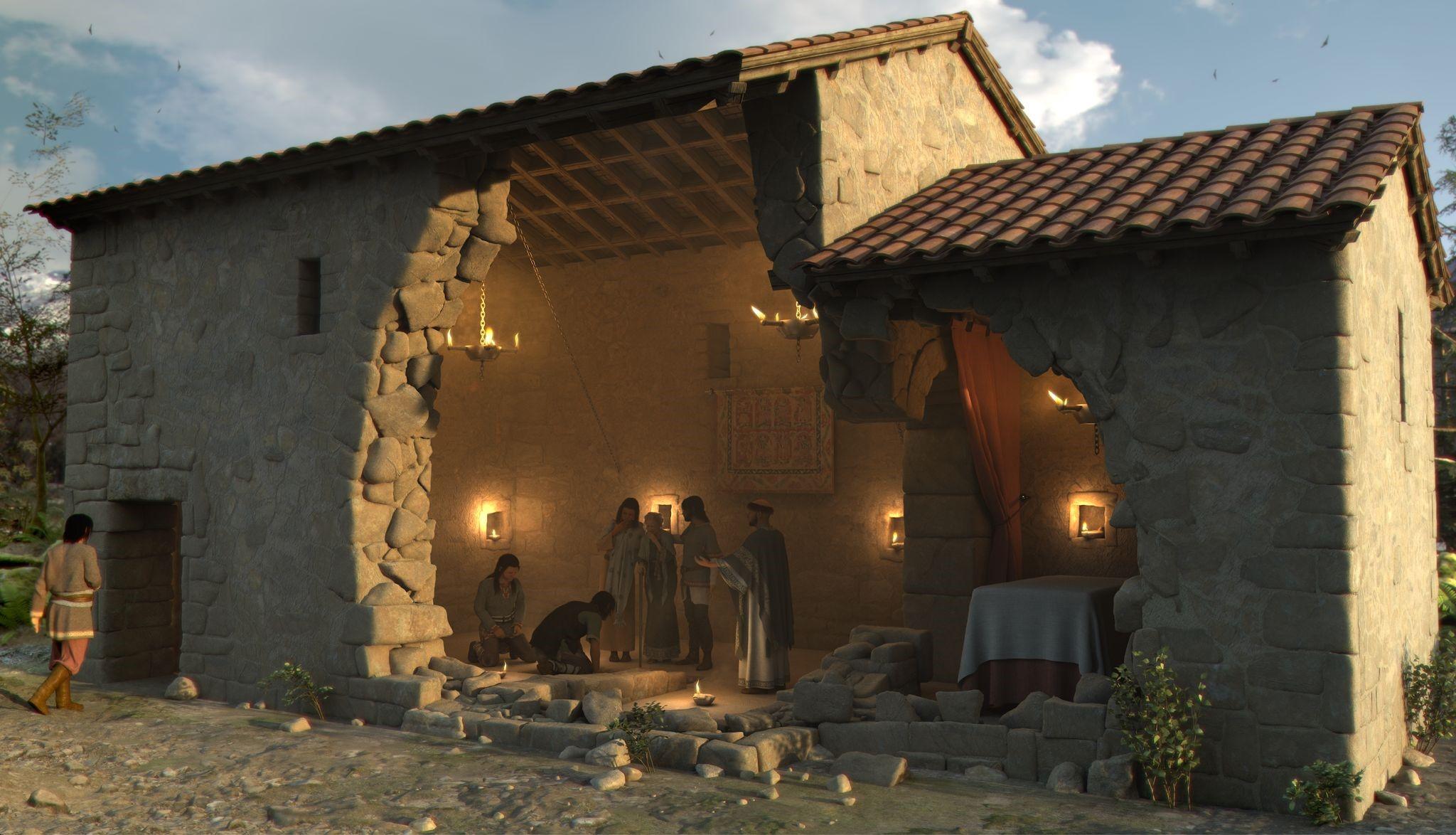
One of the founding brothers, BUR174, provides a particularly vivid glimpse into the violent origins of the monument. His nearly complete skeleton was discovered seated in the north-eastern corner of the grave, a position of architectural prominence. His skull bears three fatal wounds from a heavy, sharp weapon, most likely an axe, and around his body were deliberately arranged three children and a perinatal infant. Genetic analysis confirms that one of these children was his nephew, sharing the same maternal lineage as the founding brothers.
This dramatic arrangement had long been interpreted by archaeologists as representing a possible founding act for the monument, and the genetic evidence strongly supports this hypothesis. BUR174 sits at the root of one of the major family lines preserved in Phase 1, suggesting that Bury began its existence as the tomb of a violently established founding group, with the memory of this foundational violence literally built into the monument's structure.
The kinship patterns in Phase 1 demonstrate a system of female exogamy, where women typically entered the community from outside groups while men represented the enduring lines of descent. Almost all females in the tomb appear as mothers of children rather than as daughters with parents buried alongside them, indicating high female mobility between communities and the patrilocal nature of this society.
When burial activity resumed at Bury after the multi-century hiatus, the social organisation of the tomb had fundamentally changed. Only approximately 40% of Phase 2 individuals have close relatives buried in the monument, and the sprawling extended family networks of the earlier period have been replaced by much smaller, more focused kinship groups alongside many unrelated individuals.
The largest Phase 2 family group, Pedigree 2.A, takes the form of a tight patrilineal chain spanning four generations. Each generation is represented by exactly two brothers or half-brothers, but only one brother in each generation has descendants who are buried in the tomb. This controlled pattern of succession resembles a hereditary line, perhaps representing the inheritance of ritual or political roles tied to the monument's use and maintenance.
The demographic composition of Phase 2 also differs significantly from the earlier period. While maintaining the overall male bias in burials, the tomb now includes many more individuals who appear to be genetically unrelated to anyone else at Bury. Only two women in Phase 2 have first-degree relatives in the grave, consisting of one mother-son pair and one sister-brother pair. The overall impression is of a monument now used primarily to assert the continuity of a narrow male descent line while also accommodating various socially connected but biologically unrelated individuals.
This transformation suggests that the criteria for burial at Bury had shifted from primarily biological kinship to include other forms of social connection, status, or obligation. The tomb appears to have evolved from a broad community monument serving extended clan networks into a more exclusive space controlled by a specific lineage while serving wider social and political functions.
The genetic analysis reveals that despite sharing the same stone architecture, the populations of Phases 1 and 2 were not biologically continuous. When Bury genomes are compared with thousands of other ancient individuals from across Europe, the results show clear discontinuity between the two phases. Individuals from each phase share more genetic segments with contemporary Neolithic groups from other regions than they do with each other across the chronological divide within the same monument.
The Phase 1 population shows genetic diversity consistent with local Neolithic farming communities in the Paris Basin, carrying varying mixtures of ancestry similar to early Neolithic farmers in France and to fourth-millennium farming populations in Iberia. Some individuals show higher amounts of western hunter-gatherer ancestry, connecting them to long-standing local traditions of forager ancestry in the region.
In contrast, the Phase 2 population demonstrates much greater genetic homogeneity, with individuals sharing approximately 84% of their ancestry with Middle Neolithic farming groups from Iberia and southern France. This represents a fundamental shift in the genetic composition of the local population, indicating substantial migration and demographic replacement rather than simple cultural change.
By analysing ancestry patterns across hundreds of ancient individuals from western Europe, researchers have identified a stepwise northward spread of Neolithic Iberian-related ancestry that reached the Paris Basin around 2900 BC. This movement represents a significant population migration that predates the famous Bell Beaker expansion and the later arrival of steppe-derived pastoralist groups.
The genetic mapping reveals that by approximately 2900 BC, southern France and Iberia were dominated by this Iberian-style Neolithic ancestry. During the same period, the Paris Basin still maintained the more mixed genetic composition seen in Bury's Phase 1, representing a patchwork of local Neolithic groups with limited Iberian influence. Only after 2900 BC does this Iberian-related ancestry push further north, substantially replacing the existing genetic composition in the Paris Basin and producing the more uniform population represented by Bury's Phase 2 community.
This northward movement of Neolithic populations from Iberia and southern France may represent a response to demographic opportunities created by the Neolithic decline itself. As local populations contracted or disappeared due to various stresses, incoming groups may have moved into lands that had been emptied or weakened by crisis, establishing new communities in previously occupied territories.
The genetic analysis extends beyond human DNA to include screening for ancient pathogens preserved in dental remains. This investigation reveals evidence of several serious infectious diseases affecting the Bury population, including some of the earliest known strains of plague in European prehistory.
Four individuals tested positive for Yersinia pestis, the bacterium responsible for plague, with three cases from Phase 1 and one from Phase 2. The best-preserved plague genome, recovered from individual BUR218 and dated to approximately 3339-3042 BC, represents one of the earliest known lineages of plague in Europe, occupying a very early position in the bacterial family tree near contemporary strains found in hunter-gatherer populations from Latvia.
While only about 4% of successfully analysed Phase 1 individuals show evidence of plague infection, the presence of these early plague strains, combined with evidence of other serious pathogens such as louse-borne relapsing fever and yersiniosis, demonstrates that Neolithic populations were experiencing significant disease pressures. These infectious diseases, which in historical periods have often flourished during times of war, crowding, or famine, may have contributed to the demographic crisis affecting late Neolithic communities.
The unusual mortality profile of Phase 1, which shows excess deaths among juveniles compared to what would be expected in a stable farming population, supports the interpretation that this community was experiencing significant stress. Whether caused by disease, conflict, food shortage, or a combination of factors, the evidence suggests that the tomb's first phase of use occurred during a period of demographic and social crisis.
Pollen records from the Paris Basin and other well-documented regions provide crucial environmental context for the population changes observed at Bury. Between approximately 2900 and 2500 BC, pollen diagrams show clear evidence of forest regeneration, with trees reclaiming land that had previously been cleared for agriculture and grazing. Similar patterns of forest regrowth appear in southern Scandinavia, northern Germany, and central Europe during roughly contemporary periods.
Forest recovery on this scale typically indicates a marked decline in human activity, with agricultural fields falling out of use, pastures no longer being maintained through grazing, and settlements being abandoned. The environmental evidence provides a direct parallel with later historical events, such as the landscape changes following the Justinianic Plague and the Black Death, when major epidemics led to massive depopulation and the return of woodland to formerly cultivated areas.
This pattern of environmental change coincides directly with the hiatus in burial activity at Bury and similar monuments across the region, suggesting that the demographic crisis was sufficiently severe to reduce human impact on the landscape to levels that allowed substantial forest regeneration within a relatively short period.
The evidence from Bury fits within a broader pattern of megalithic decline across continental north-western Europe. The construction of large stone tombs, whether passage graves, gallery graves, or long barrows, peaks between approximately 4300 and 3100 BC before declining sharply after 3000 BC. This architectural silence represents more than a simple shift in mortuary fashion; it reflects a real demographic contraction affecting much of the region.
Sites across northern Germany, Denmark, and other parts of Scandinavia show similar patterns, with megalithic construction ceasing around 3100-3000 BC and contemporaneous evidence of landscape abandonment. The demographic profiles of the dead in these monuments, particularly the over-representation of juveniles, reinforce the picture of populations under significant stress during the final phases of megalithic use.
By the time megalithic construction ceased, Neolithic farming had already placed considerable pressure on local environments through soil degradation, extensive forest clearance, and high population densities. Under these conditions, the introduction of new pathogens transmitted through close-packed settlements and animal herds could have had devastating effects, leading to the prolonged demographic decline that characterises much of the late fourth and early third millennia BC.
One of the most intriguing aspects of the Bury evidence concerns the motivations and cultural understanding of the Phase 2 community. The genetic data clearly demonstrates that these later users represent a different population, with ancestry pointing to origins in Iberia and southern France rather than local continuity from the Phase 1 founders. Yet these newcomers deliberately chose to reuse a monument built by their predecessors, suggesting complex attitudes toward ancestral landscapes and inherited sacred spaces.
This pattern of monument reuse by genetically distinct populations is not unique to Bury, as similar phenomena have been documented at sites such as Frälsegården in Sweden, where individuals with steppe ancestry were interred in tombs originally constructed by earlier farming populations. However, Bury presents this phenomenon at an extraordinary scale and level of detail, allowing for detailed examination of how prehistoric communities navigated questions of ancestry, territorial rights, and cultural inheritance.
The Phase 2 community maintained certain organizational principles from the earlier period, particularly the preference for male burials and patrilineal descent, while adapting these traditions to focus on a narrower hereditary line and incorporating many unrelated individuals. This suggests that while the biological population had changed, certain cultural concepts about appropriate burial practices and social organization maintained some continuity across the demographic transition.
The detailed evidence from Bury provides unprecedented insight into one of the most significant demographic transitions in European prehistory. The combination of genetic, archaeological, environmental, and pathogen data reveals a complex process of population decline, migration, and cultural transformation that affected vast regions of continental Europe during the late fourth and early third millennia BC.
This research demonstrates that the famous population movements associated with Bell Beaker culture and steppe-derived ancestry were preceded by equally significant but less well-known migrations of Neolithic farming populations from southern Europe. These earlier movements may have been facilitated by the demographic opportunities created by the Neolithic decline, as incoming populations moved into territories that had been depopulated or destabilized by disease, environmental stress, and social collapse.
The evidence from Bury also highlights the complex relationship between biological and cultural continuity in prehistoric Europe. While the genetic composition of populations could change dramatically within a few centuries, certain cultural practices and social organizational principles might persist, be adapted, or be deliberately revived by newcomers seeking to establish legitimacy within inherited landscapes.
Perhaps most significantly, the Bury data illustrate how prehistoric monuments can serve as detailed archives of demographic change when subjected to comprehensive interdisciplinary analysis. The combination of ancient DNA, radiocarbon dating, archaeological context, and environmental data transforms what might otherwise be interpreted as gradual cultural evolution into a vivid record of crisis, population replacement, and social transformation that shaped the trajectory of European civilization for millennia to come.
Original source article: https://doi.org/10.1038/s41559-026-03027-z
Comments