Indigenous Genomic Diversity and Population Structure Across the Americas

Indigenous Genomic Diversity and Population Structure Across the Americas

The peopling of the Americas represents the final chapter in humanity's global expansion, yet this remarkable journey has remained one of the least explored regions genetically. Through the sequencing of 128 high-coverage genomes from 45 Indigenous communities across eight Latin American countries, researchers have revealed a far more complex narrative than the simple single-wave migration models previously proposed. This comprehensive genomic analysis uncovers intricate patterns of population movement, adaptation, and continuity that span over 15,000 years of human presence in the Americas.

Ancient Migrations and Beringian Origins

The genetic evidence indicates that the ancestors of today's Indigenous Americans began forming as a distinct population approximately 25,000 years ago in Beringia, the land bridge connecting Siberia and Alaska during the last Ice Age. After spending millennia in this northern refugium, these populations initiated their southward expansion at least 15,000 years ago, eventually spreading across diverse environments from Arctic tundra to tropical rainforests and Patagonian steppes.

This migration story is preserved not only in contemporary DNA but also in the remains of specific ancient individuals whose genomes provide direct windows into these prehistoric journeys. The study weaves together these ancient people with broader patterns of genomic variation, creating a comprehensive view that extends from the earliest hunter-gatherers through the complex societies of the late pre-Columbian period.

Key Ancient Individuals and Archaeological Contexts

The genomic narrative is anchored by several crucial ancient individuals, each representing different phases of American prehistory. The Anzick-1 burial from Montana, associated with Clovis stone points and ochre, represents an early branch of Southern Native American ancestry that served as a foundational lineage for many later populations. The Spirit Cave individual from Nevada demonstrates the genetic continuity between early North American populations and those who later spread throughout Central and South America.

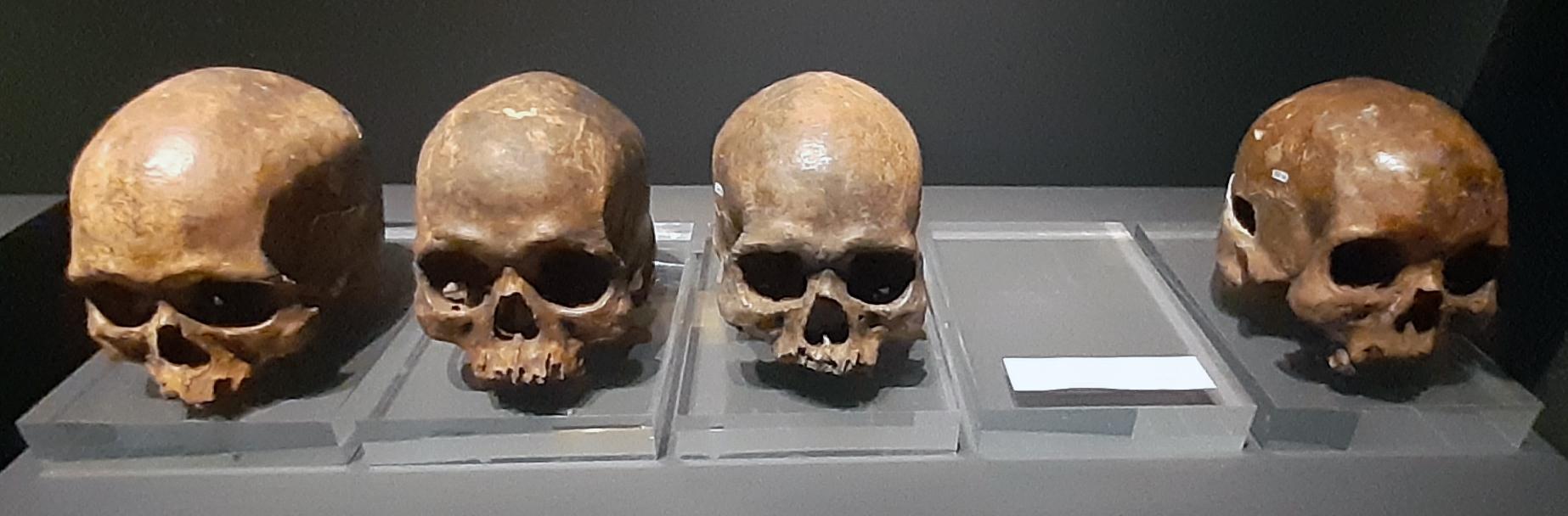
In South America, the Los Rieles skeleton from Chile's Pacific coast shows that early Southern Native American ancestry had already reached the continent's far south by 12,000 years ago. The Lagoa Santa burials from Brazil, particularly the Sumidouro individual dating to 10,400 years ago, are especially significant as they contain evidence of faint but persistent genetic links to Australasian populations, termed "Ypykuéra" ancestry by the researchers.

The Lauricocha individual from the high Andes helps establish an Andean genetic lineage showing continuity with present-day Quechua-speaking populations. Meanwhile, skeletons from the Pampas and Tierra del Fuego represent the southernmost extent of human migration, with clear genetic connections to modern Tehuelche and Mapuche-Tehuelche peoples.

Three Major Population Dispersals

The integration of ancient and modern genomic data reveals at least three distinct population dispersals into South America, each leaving characteristic archaeological and genetic signatures.

The First Dispersal: Early Southern Native Americans

The earliest dispersal, represented by individuals such as Anzick-1, Spirit Cave, Los Rieles, and the Lagoa Santa skeletons, established a broadly shared Southern Native American ancestry. This population appears to have been relatively undivided when it spread across the Americas, providing the genetic foundation for later regional developments. Archaeological evidence includes Clovis assemblages in North America, early coastal sites in Chile, and cave burials in central Brazil.

The Second Dispersal: Central American Origins

Around 9,000 years ago, a distinct genetic lineage emerged, initially appearing in southern Mexico, Belize, and Panama before spreading into northern South America. This ancestry is found in early Central American individuals and extends to ancient Venezuelan and Caribbean populations, as well as Middle Holocene sambaqui builders in Brazil. This dispersal corresponds with archaeological evidence of changing settlement patterns and technological innovations across various regions.

The Third Dispersal: Late Holocene Ceramic Connections

The most surprising discovery is evidence for a previously unrecognized third dispersal, rooted in Mesoamerican-related populations and clearly visible in the Ceramic-period Caribbean. This movement, which began at least 1,300 years ago, involved Taino ancestors and other pottery-using island groups. The genetic signatures of these Ceramic-period populations are shared with later sambaqui builders in eastern Brazil and many present-day Indigenous South Americans, indicating sustained contact networks between Mesoamerica, the Caribbean, and South America well before European arrival.

Regional Patterns and Long-term Continuity

The genomic analysis reveals strong correlations between genetic clustering and geographic regions, reflecting both ancient migration patterns and long-term local continuities. The Chaco region forms its own genetic branch, with groups like the Qom, Wichi, and Ayoreo showing population histories tied to this semi-arid interior zone. In North America, genetic divisions mirror archaeological distinctions between Aridoamerica and Mesoamerica.

Particularly striking is the genetic continuity observed in many regions over thousands of years. The Quechua peoples of the Peruvian Andes maintain genetic connections to ancient Andean individuals such as those from Lauricocha, while Tehuelche and Mapuche-Tehuelche populations show clear links to ancient Pampas and Southern Cone inhabitants.

The Ypykuéra Signal: Traces of Ancient Connections

One of the most intriguing findings is the detection of faint Australasian-related ancestry in some Indigenous American populations. This "Ypykuéra" ancestry, named after a Tupi word meaning "ancestor," appears consistently but at low levels in various ancient and modern populations, particularly in the southwestern Amazon and Chaco regions.

The signal is strongest in groups such as the Awajún, Ayoreo, Guarani, Karitiana, Sirionó, Suruí, and Tsimané. Remarkably, this ancestry pattern appears in the 10,400-year-old Sumidouro individual and persists at similar levels in modern populations, suggesting it has been maintained for over 10,000 years. The research indicates this signal represents admixture with an unknown Asian population related to Australasians, rather than direct descent from known Australasian groups.

Natural Selection and Adaptation

The study identifies numerous genetic regions showing evidence of natural selection in Indigenous American populations, particularly in pathways related to immunity, metabolism, and fertility. Genes such as IFIH1, involved in viral detection and immune response, show clear adaptive signatures. The FADS gene region, which helps process dietary fats, reflects adaptation to diverse food sources from marine shellfish to highland agricultural products.

Particularly noteworthy is the gene LINC00871, associated with fertility and reproductive behavior, which shows both strong selection signals and enrichment for Ypykuéra ancestry. This suggests that certain variants from the ancient Australasian-related admixture provided adaptive advantages that were preserved by natural selection over millennia.

Archaic Human Contributions

Indigenous American genomes also contain approximately 1.2% archaic ancestry from Neanderthals and Denisovans, inherited before their ancestors reached the Americas. Some of these archaic variants show evidence of positive selection, particularly in genes affecting skin and hair structure, immune responses, and metabolic pathways. Notably, archaic variants in chemokine receptor genes may have aided adaptation to new pathogens encountered in American environments.

The study demonstrates that archaic ancestry and Ypykuéra ancestry represent independent contributions to Indigenous American genomes, with minimal overlap between these two ancient components. This finding supports a model where multiple ancient population interactions shaped the genetic heritage of Indigenous Americans long before their arrival in the New World.

Implications for Understanding American Prehistory

This comprehensive genomic analysis fundamentally reshapes our understanding of how the Americas were populated and how Indigenous populations adapted to diverse environments over millennia. Rather than a simple south-to-north migration, the data reveal a complex pattern of multiple dispersals, regional continuities, and ongoing population interactions that continued well into the pre-Columbian period.

The genetic evidence for three major dispersals, combined with evidence of long-term regional continuity and ancient admixture events, paints a picture of the Americas as a dynamic landscape of human movement and adaptation. The persistence of ancient genetic signals like Ypykuéra ancestry, maintained through natural selection over 10,000 years, demonstrates the deep-time connections between Indigenous American populations and broader patterns of human diversity across the globe.

These findings emphasize that contemporary Indigenous communities represent not static remnants of ancient populations, but rather the latest chapters in continuous histories of adaptation, survival, and cultural development that extend back to the earliest human presence in the Americas. The integration of genomic data with archaeological evidence provides unprecedented insights into these long-term processes, revealing how genetic adaptations to American environments, ancient admixture events, and population movements all contributed to the rich tapestry of Indigenous American diversity observed today.

Source:

https://www.nature.com/articles/s41586-026-10406-w

Share this post

Written by

Comments