Climate-Driven Population Replacement and Expansion in Late European Neanderthals
– 6 min read


Neanderthals on the Move: A Population Upheaval Around 65,000 Years Ago
The story of Neanderthal Europe reveals a dynamic population far from static. Around 65,000 years ago, their world underwent dramatic transformation driven by climate and geography, leaving clear traces in both skeletal remains and stone tool assemblages. By combining genetic evidence from ancient mitochondrial DNA with data from hundreds of archaeological sites, researchers have reconstructed how Late Neanderthals across Europe descended largely from a dramatic population bottleneck centered in what is now southwestern France.
Between approximately 130,000 and 80,000 years ago, Neanderthals occupied a broad sweep of western Eurasia, from Iberia to the Black Sea. Archaeological sites of the Middle Paleolithic, especially those containing Mousterian stone tools, document their presence across hills, river valleys, and extensive cave systems. Yet this wide distribution proved unstable. Archaeological patterns from the ROCEEH database demonstrate that after about 80,000 years ago, Neanderthal sites become significantly fewer and more geographically concentrated.
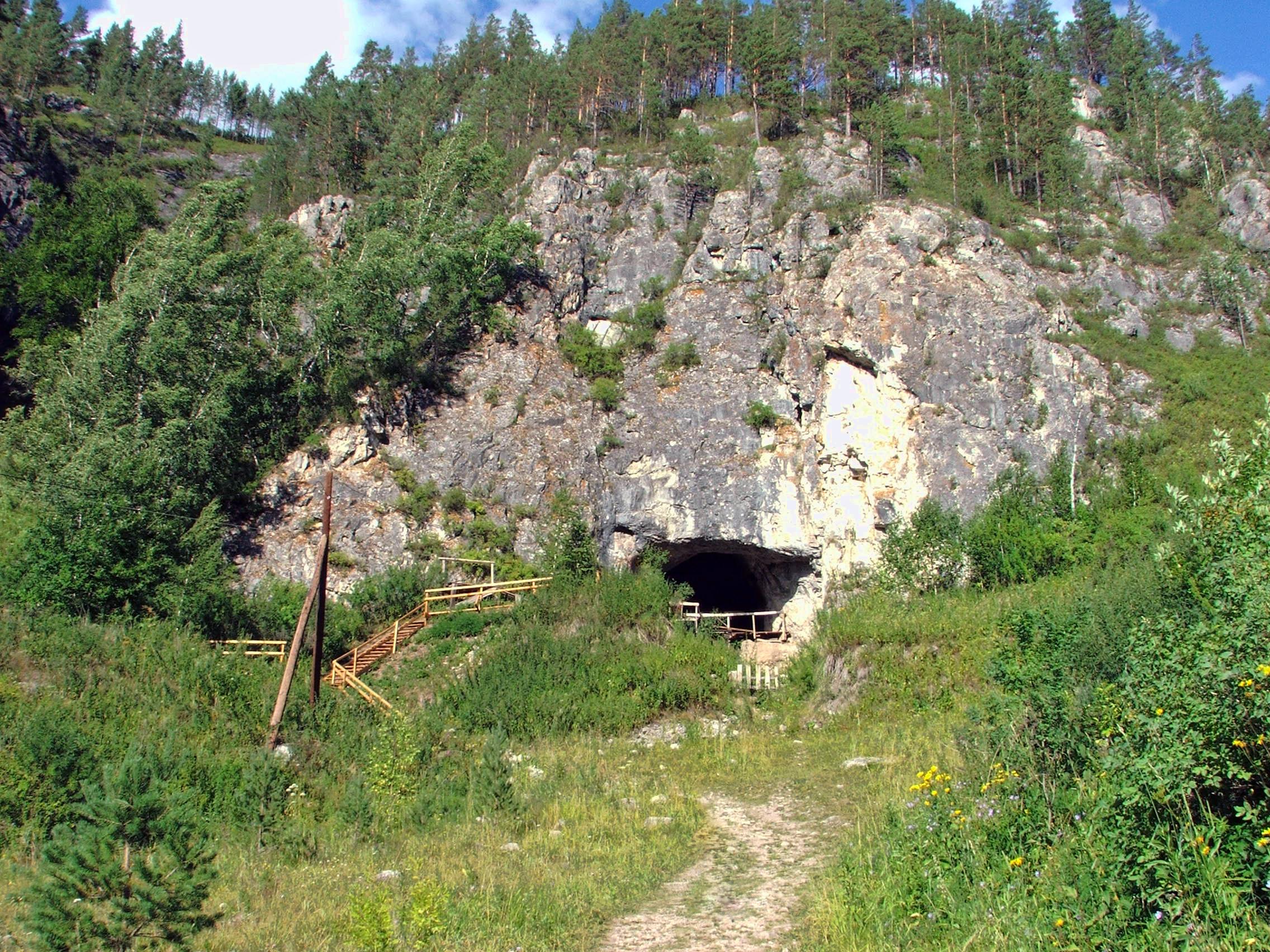
By roughly 70,000 to 60,000 years ago, the densest cluster of Neanderthal activity was concentrated in southern and southwestern France. This region, characterized by limestone cliffs and deep rock shelters, appears to have functioned as a crucial refuge during harsh glacial conditions. Here, Neanderthal communities could survive while other regions experienced population thinning or complete abandonment.
The Troisième caverne of Goyet in Belgium represents one of Europe's most extraordinary Neanderthal assemblages. The cave yielded numerous Neanderthal bones, many bearing cut marks and breakage patterns indicating processing similar to animal carcasses. Remarkably, Goyet's Neanderthal bones were sometimes reshaped into tools, suggesting complex and possibly ritualized treatment of the dead.
Three new Neanderthal mitochondrial genomes from Goyet reveal extraordinary genetic patterns. Within approximately 4,000 years (roughly 45,000 to 41,000 years ago), individuals from this single cave captured nearly the complete mitochondrial diversity observed among Late Neanderthals across Europe. Goyet essentially functions as a microcosm of Late Neanderthal Europe, with bones marked by butchery and tool modification, yet genetically connected to distant populations from Croatia and Italy.
Trou Magrite, another significant Belgian cave site, has long been central to Neanderthal studies. Among its sparse human remains, researchers highlighted a Neanderthal neonate from which mitochondrial DNA was successfully recovered. Although the precise archaeological context of this tiny individual remains somewhat unclear, genetically the child sits firmly within the Late Neanderthal lineage, demonstrating that even in Belgium, far from the supposed French refuge, Neanderthal populations participated in the same sweeping genetic narrative that unfolded after approximately 65,000 years ago.
La Roche-à-Pierrot at Saint-Césaire gained fame for its adult Neanderthal skeleton found within rich Mousterian layers, once central to debates about the final Neanderthals in western Europe. The study now highlights a Late Neanderthal neonate from the same site. This infant, discovered in Mousterian deposits dated to approximately 60,000-55,000 years ago, also belongs to the Late Neanderthal mitochondrial lineage. The presence of such young individuals, buried or deposited among stone tools and animal bones, suggests caves served not merely as hunting camps, but as comprehensive living, dying, and possibly mourning spaces for Neanderthal communities.
The Tourtoirac rock shelter in Dordogne, France, provides a crucial snapshot of Neanderthals before the great population turnover. The site preserves Quina-type Mousterian assemblages, representing distinctive stone tool manufacturing and use traditions. Three Neanderthal individuals from Tourtoirac, all dated to before 57,000 years ago, fall into two separate mitochondrial lineages, demonstrating that earlier Neanderthals in this region possessed far greater genetic diversity than their later descendants. This same southwestern French zone would subsequently become the likely origin point for the new Late Neanderthal lineage that spread across Europe after 65,000 years ago.
In Pešturina Cave, located in the limestone regions of southern Serbia, archaeologists uncovered a Neanderthal molar designated Pešturina 3. Its age of approximately 110,000 years places it firmly within the earlier phase of Neanderthal history, before 57,000 years ago. Genetically, this tooth falls within a major branch of older European Neanderthals also documented in Poland and the Caucasus. Pešturina demonstrates that before the great population contraction and turnover, Neanderthals in eastern and central Europe belonged to several distinct maternal lineages that would later vanish or become largely replaced.
Sesselfelsgrotte, a rock shelter in Bavaria, yielded one of the study's most poignant individuals: a Neanderthal fetus. Surrounding sediments have been dated to approximately 51,000-58,000 years ago. The fetus's mitochondrial DNA links it to older, pre-65,000-year lineages, suggesting this individual belonged to a population standing on the brink of replacement by the later, more homogeneous Late Neanderthal groups. The presence of fetal remains underscores how intimately caves were connected to complete Neanderthal life cycles, from before birth through death.
Comparison of ten new mitochondrial genomes with 49 previously published Neanderthal sequences revealed a striking evolutionary pattern. Older Neanderthals, from roughly 120,000 to 57,000 years ago across Europe and the Altai Mountains, fall into several deep, divergent maternal lineages. However, nearly all Neanderthals living between about 57,000 and 40,000 years ago carry mitochondria from a single branch that diversified around 65,000 years ago, following a prolonged period with no new mitochondrial branches appearing.
This genetic signature suggests that during a cold and dry glacial period, Neanderthal populations contracted both geographically and demographically. Many older maternal lines either disappeared entirely or were reduced to tiny refugial populations. From this contraction, a particular group, probably based in southwestern France, expanded as climate improved, sending descendants eastward and northward across Europe.
The archaeological record strongly supports the genetic narrative. Using thousands of entries from the ROCEEH Out of Africa Database, researchers tracked changes in Neanderthal site density through time. Between 130,000 and 80,000 years ago, Neanderthal-associated sites were distributed across much of western Eurasia with fluctuating but broad coverage. After 80,000 years ago, site densities contracted, with statistical analyses showing that main clusters of Neanderthal presence increasingly centered on western Europe, particularly France.
By 60,000-50,000 years ago, significant activity hotspots appeared in France while other regions lost their dense concentrations. As time progressed toward 50,000 and 40,000 years ago, the longitudinal spread of sites increased again. Even when younger time periods were mathematically downsampled to maintain constant site numbers, younger periods continued showing broader east-west geographic reach. This pattern suggests genuine Neanderthal reoccupation and expansion into more of Europe after the demographic low point, rather than merely reflecting better archaeological sampling of more recent periods.
Climate reconstructions reinforce this population story. Neanderthals' potential climatic niche - the environmental conditions in which they thrived - contracted markedly during the cold phase around 65,000 years ago. This narrowing of suitable habitat aligns perfectly with the genetic bottleneck and archaeological contraction, directly linking demographic events to environmental stress. The refugial areas that maintained suitable conditions corresponded precisely to regions showing continued archaeological activity during the harshest climatic phases.
During the final stretch of Neanderthal history, from about 57,000 to 40,000 years ago, Europe was populated largely by members of that single Late Neanderthal mitochondrial lineage. These individuals occupied vastly different settings - from Belgium's karst caves like Goyet and Trou Magrite, to Croatian sites such as Vindija Cave, to Italian shelters like Riparo Broion, and eastward to the Caucasus at Mezmaiskaya.
Despite their geographic separation, these populations remained remarkably similar genetically. A Neanderthal from Goyet could be more closely related maternally to individuals from Croatia or the Caucasus than to older Neanderthals from the same valley or region tens of thousands of years earlier. Sites like Goyet, Vindija, and Kleine Feldhofer Grotte in the Neander Valley preserve multiple individuals whose mitochondrial diversity is no greater than that of Late Neanderthals as a whole, suggesting that the entire Late Neanderthal population across Europe functioned genetically almost as one extended family network.
Rare exceptions existed. At Mandrin Cave and Les Cottés in France, some Late Neanderthal individuals still carried older mitochondrial lineages, implying that remnants of earlier diversity persisted within the very region that served as the glacial refuge. However, these cases were exceptional. The overwhelming pattern reflects widespread genetic replacement.
The study also examined how Neanderthal population size changed during their final millennia in Europe. Using coalescence timing in maternal lineages, researchers found evidence for a rapid drop in effective population size starting around 44,500 years ago, reaching its lowest point by approximately 42,000 years ago, just before Neanderthals disappear from the fossil record.
This steep decline coincides with both a reduction in their climatic niche and the period when modern humans were arriving and spreading through Europe. Against this backdrop, the earlier population contraction and re-expansion around 65,000 years ago appears not as a minor demographic fluctuation but as a crucial prelude: a fundamental reshaping of Neanderthal Europe that left Late Neanderthals genetically uniform and geographically widespread, but ultimately vulnerable to final extinction.
The combination of genetic, archaeological, and climatic evidence reveals Neanderthals not as a static population but as dynamic communities repeatedly challenged by environmental change, forced into refugia, and capable of remarkable demographic recoveries that nonetheless left them genetically impoverished and susceptible to final disappearance as modern humans entered their European homeland.
Original source article: https://doi.org/10.1073/pnas.2520565123





Comments