Sex‑Biased Genetic Mixing on Rome’s Dacian Frontier

– 7 min read


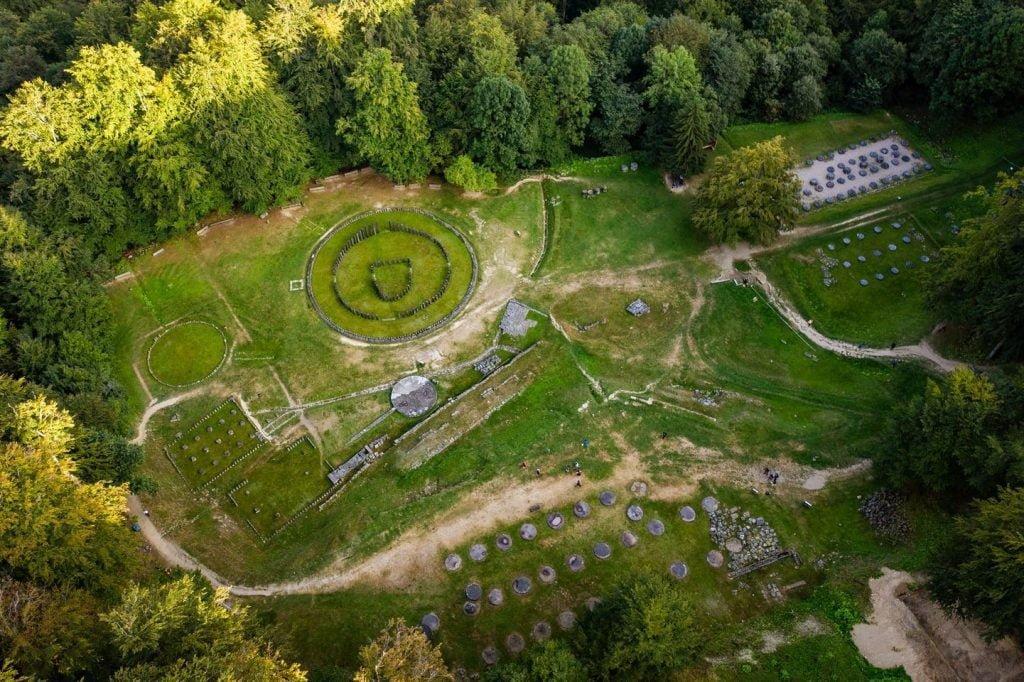
The province of Roman Dacia, perched north of the Danube River, represents one of the most fascinating examples of imperial frontier dynamics in the ancient world. Here, where the Roman Empire pushed into landscapes already shaped by local Dacians, Steppe nomads, and long-distance traders, a remarkable story of cultural and genetic mixing unfolds. Through ancient DNA analysis from the vast cemetery at Apulum (modern Alba Iulia, Romania), we can now understand how Dacia became a genuine frontier contact zone where diverse populations converged to create new forms of provincial society.
Genetic data from archaeological remains has transformed our understanding of migration, identity, and belonging. Seeing where your DNA overlaps with those findings can offer a new, personal lens on human history — explore it at www.mytrueancestry.com.
At the heart of this study stands Apulum, the most populous urban center in Roman Dacia. This was not a single settlement but rather a pair of closely linked communities that functioned as the administrative and military hub of the province. The first center, known as Apulum I, developed into a wealthy municipium filled with villas and trading establishments, earning the prestigious title "Chrysopolis" – the "City of Gold." The second center, Apulum II, grew from the canabae, the civilian settlement that clustered around the fortress of Legio XIII Gemina, one of Rome's most experienced legions stationed on this distant frontier.
Between these urban centers, along the busy roads that connected the civilian town to the military camp, lay a vast cemetery on Dealul Furcilor – "Forks Hill" – known in archaeological literature as the ADF necropolis. This burial ground followed classic Roman practice: the dead were placed outside the city walls, lining the approach roads in broad bands of tombs that served both practical and symbolic functions in defining the boundaries between the world of the living and the realm of the dead.
The ADF necropolis covers approximately 35 hectares, making it the largest known burial ground in Roman Dacia and one of the most extensive Roman cemeteries discovered anywhere in the Danube frontier region. Yet despite its impressive size, only around a quarter of the site has been systematically explored. By 2018, archaeologists had uncovered over 1,200 burials, including both inhumations (complete bodies laid in graves) and cremations, intermingled without clear separation – creating a striking bi-ritual landscape that hints at the cultural complexity of the community that used this cemetery.
The genetic analysis focuses on 34 individuals from ADF, dated primarily to the 2nd and 3rd centuries CE, during the height of Roman control in Dacia. While only three burials have direct radiocarbon dates, the chronological framework is securely established through associated artifacts: coins bearing imperial portraits, ceramic and glass lamps, jewelry, unguentaria (small bottles for cosmetics or perfumes), iron nails from military boots known as caligae, and various amulets and personal ornaments. These grave goods confirm that most burials belong to the golden age of Roman Dacia, spanning from Trajan's conquest in 106 CE to the eventual withdrawal of Roman administration in the late 3rd century.
Osteological analysis identified the remains as belonging to adult men and women as well as juveniles whose lives were cut short in this frontier province. These were real people – some buried with coins placed on their bodies for passage to the afterlife, others interred with modest personal possessions that speak to their daily lives and social status. Their DNA now provides unprecedented insight into what it meant to live, work, marry, and die in this cosmopolitan frontier city where multiple worlds converged.
When the genetic profiles of the ADF individuals are plotted against both ancient and modern populations from across Eurasia and North Africa, they do not form a neat, localized cluster as one might expect from an isolated provincial community. Instead, their genetic signatures spread across a remarkably broad geographic space, creating connections that link the Black Sea steppe to the Mediterranean coast, the Caucasus mountains to the Atlantic shores of Iberia, and the Carpathian Basin to the highlands of Armenia and beyond.
One individual, designated ADF_27 in the study, shows particularly strong genetic ties to populations from western Asia, while others align closely with groups carrying Mediterranean or Steppe-influenced ancestry. This pattern reveals that the cemetery was not simply the resting place of a closed, homogeneous Dacian community that had gradually adopted Roman customs. Rather, it served as the burial ground of a mixed frontier population that had been shaped by repeated waves of migration, ongoing cultural contact, and the complex social dynamics that characterize successful imperial frontiers.
The genetic analysis reveals that women at ADF often carried ancestry strongly linked to the Eurasian Steppe and the Caucasus region, showing particularly close relationships with Late Bronze Age and Iron Age populations from Moldova, southern Russia, and the Armenian Highlands. Their genetic signatures demonstrate clear connections to Scythian and Sarmatian groups, as well as to Iron Age communities in Hungary and Croatia that had long been part of steppe-influenced cultural networks.
Using sophisticated cluster analysis techniques, the researchers determined that ADF women share a dominant ancestry component that is most commonly found in populations from the Pontic Steppe, the Caucasus mountains, and eastern European groups that maintained pastoral and semi-nomadic lifestyles for centuries. This suggests that many of these women were either direct descendants of long-established local lineages with deep connections to steppe peoples, or represented more recent arrivals from mobile pastoralist communities whose territories stretched from the Carpathian foothills across the vast Eurasian grasslands.
Their mitochondrial DNA – the genetic material passed exclusively through the maternal line – strongly supports this interpretation. The women exhibit a diverse array of lineages, particularly in haplogroups U and H, along with K2a and several others, that are widely distributed across Eastern Europe, the Caucasus, and the Near East. These maternal lineages echo ancient population movements from the Bronze and early Iron Ages, representing genetic continuity that predates Trajan's legions by many centuries and connects these frontier women to deep-rooted regional traditions.
These genetic patterns align perfectly with archaeological and historical evidence for Dacia's pre-Roman past. Long before Roman annexation in 106 CE, the local Dacian kingdoms had maintained extensive connections with Scythian and Sarmatian nomads, who brought not only martial skills and horse culture but also distinctive artistic styles, religious practices, and trade networks into the Carpathian world. The women in the ADF cemetery, with their Steppe- and Caucasus-rich ancestry, embody the persistence of that older cultural world even as it adapted to life under Roman imperial rule.
The genetic profile of men buried at ADF tells a dramatically different story, one that speaks to the long-distance mobility that characterized the Roman Empire at its height. Male ancestry patterns form what can best be described as a Mediterranean mosaic, pointing toward origins in Italy and the central Mediterranean, Punic communities in Iberia and North Africa, and various eastern provinces of the empire that contributed soldiers, administrators, and civilians to Dacia's rapidly growing population.
One particularly striking ancestry component common among ADF men shows close genetic relationships with Punic populations from Iberia and North Africa – specifically matching individuals from Spanish and Tunisian sites associated with Carthaginian and later Punic coastal settlements. This suggests direct connections to communities that had maintained Phoenician cultural traditions long after the fall of Carthage itself. Another significant component links these men to Iron Age Italians and Etruscans, as well as to individuals from Romanized Balkan sites, reflecting the complex patterns of recruitment and settlement that characterized Roman military and civilian expansion.
Advanced statistical analyses confirm that ADF men share particularly strong genetic ties with Roman-period populations from Italy, Romanized communities in the Balkans, and individuals from Punic settlements across the western Mediterranean. Their Y-chromosome lineages – genetic markers passed exclusively through the paternal line – add crucial details to this picture of diverse male origins. The men with successfully identified Y-haplogroups belong to several distinct lineage groups that are broadly distributed across the Mediterranean basin, the Near East, and parts of the Eurasian steppe, creating exactly the kind of genetic diversity one would expect to find among soldiers, veterans, administrators, merchants, and perhaps enslaved individuals drawn from across the Roman world.
These genetic signatures fit perfectly with historical accounts describing men who traveled vast distances to reach Dacia's gold-rich frontier. Some may have traced their family origins back to the Italian peninsula or the western Mediterranean islands, others to the Punic cities of North Africa or the Levant, all eventually converging on Apulum where they contributed their skills, labor, and lineages to the creation of a new provincial society on the northern edge of the Roman world.
One of the most revealing patterns to emerge from this study is the clear evidence for sex-biased ancestry in the ADF cemetery, where women with strong ties to local and regional steppe populations were buried alongside men whose genetic backgrounds point to origins scattered across the Mediterranean world and beyond. This pattern reflects a social dynamic that is well-documented in both literary sources and epigraphic evidence: Roman soldiers and officials, frequently recruited from distant provinces and redeployed far from their places of birth, regularly settled in frontier regions where they established families with local women who provided crucial cultural continuity and local knowledge.
The genetic evidence suggests that in Apulum, local and regionally-connected women served as vital bridges between the pre-Roman Dacian world and the new imperial society that emerged after conquest. These women brought with them not only their genetic heritage but also their knowledge of local customs, religious practices, trade networks, and survival strategies that proved essential for successful frontier life. Over time, marriages and other relationships between these women and incoming Roman men helped create the mixed communities that became characteristic of successful frontier provinces throughout the empire.
The cemetery on Dealul Furcilor thus becomes a stage on which broader historical processes can be observed in remarkable detail: the genetic mixing of Dacians, Romans, and nomadic Steppe peoples, the arrival of Punic and Mediterranean lineages carried by soldiers and civilians, and the enduring importance of local women in maintaining cultural continuity during periods of rapid political and social change. Each burial represents an individual life story, but collectively they illuminate the complex human dynamics that transformed a conquered territory into a thriving provincial society.
https://www.biorxiv.org/content/10.64898/2026.04.18.719386v1
Discover how your DNA connects to ancient civilizations at www.mytrueancestry.com.



Comments