Life and Mobility in Late Bronze Age Central Europe Revealed by Ancient DNA, Isotopes and Burials
– 8 min read


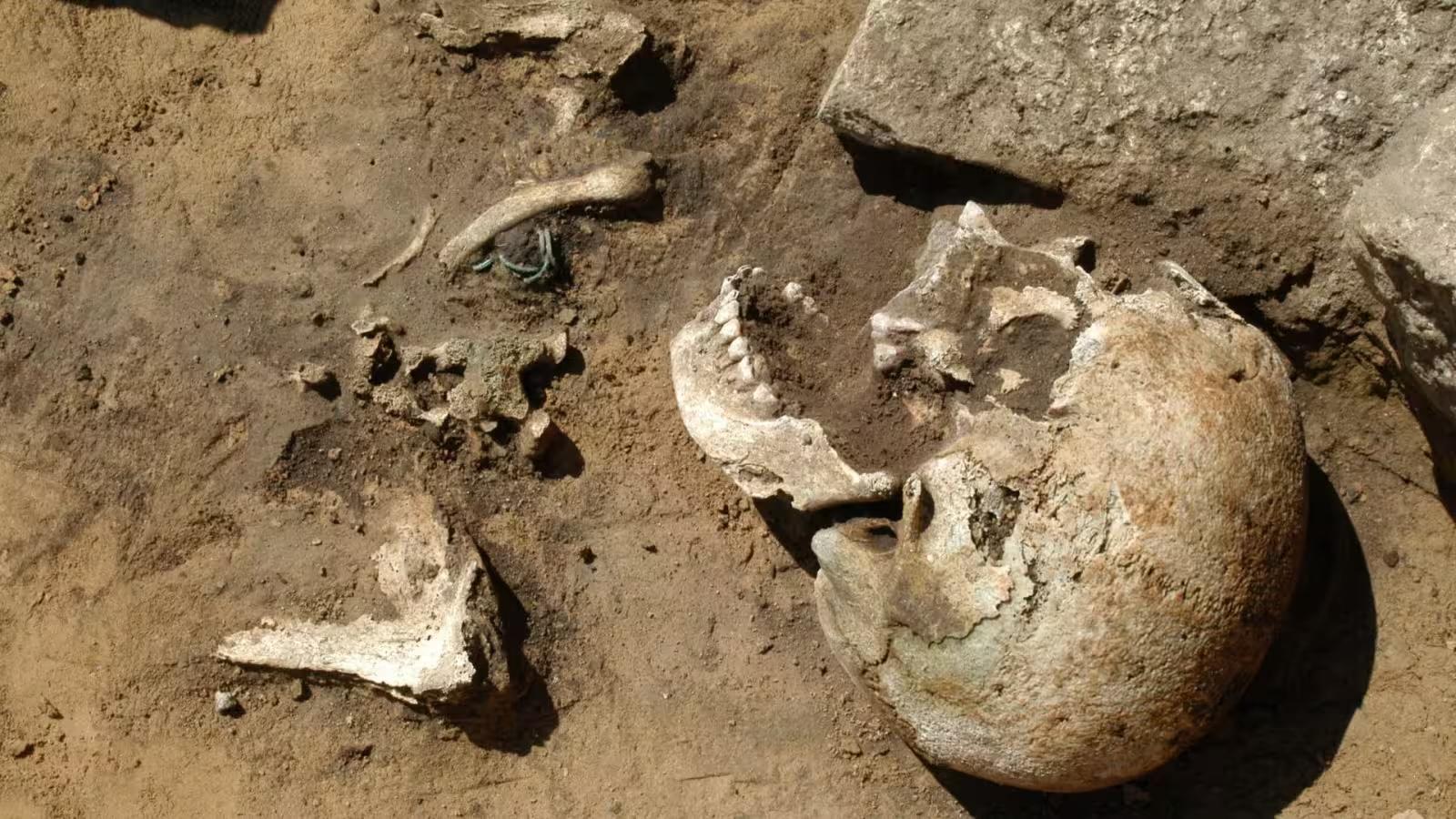
The Late Bronze Age communities of central Germany offer a fascinating window into a world balanced between continuity and change. In the Weida valley of today's Saxony-Anhalt, two remarkable sites—Kuckenburg and Esperstedt—reveal the complex lives of people who lived between approximately 1300-800 BCE. While most of their contemporaries had adopted cremation practices in the famous "urnfield" tradition, these communities maintained their ancient practice of burying some dead intact, providing archaeologists with unprecedented opportunities to study their bodies, movements, and ancestry.
Kuckenburg commands a strategic position on a spur overlooking the Weida river, clearly functioning as a fortified hilltop settlement. Across the valley lies Esperstedt, likely also fortified, creating a defensive network that protected the communities below. Between these sentinel sites spreads a remarkable bi-ritual graveyard—a cemetery where cremations and inhumations coexisted side by side, reflecting the complex religious and social practices of the time.
These settlements belonged to the Unstrut group, a distinctive local tradition that maintained inhumation practices for nearly five centuries, even as neighboring communities embraced the cremation customs sweeping across Europe. Archaeological excavations at Kuckenburg and Esperstedt have revealed an extraordinary diversity of mortuary practices, including whole body burials, skull-only deposits, cremated remains in ceramic urns, and complex multi-stage ritual deposits.
This diversity of burial practice represents a striking regional characteristic that mirrors broader Central European patterns of "special" or "atypical" burials found across Bohemia, the Upper Tisza region, Transylvania, Moravia, Austria, and southern Germany. Rather than representing isolated anomalies, these practices formed part of a widespread Bronze Age tradition of complex mortuary rituals.
One of the most compelling discoveries at Kuckenburg is feature 39/2018, a complex mortuary deposit that reads like a Bronze Age drama. Within this carefully constructed pit, excavators uncovered multiple human skulls arranged alongside cremated remains in ceramic vessels, animal bone deposits, and various ritual objects. The skulls belonged to individuals of different ages and sexes, while the cremations were contained in decorated urns typical of the urnfield tradition.
Radiocarbon dating places the inhumed skulls between 978-766 BCE, with one cremation possibly dating slightly earlier to approximately 1050-900 BCE. Isotopic analysis reveals that most individuals grew up locally, though at least two, including a juvenile male designated KUC023, show non-local strontium signatures indicating childhood spent elsewhere before joining this community.
KUC023 emerges as a particularly vivid individual from the archaeological record. This young male showed clear signs of cranial trauma, stress indicators visible in his eye sockets, and evidence of a hard life before his death. Another individual from the same feature, a woman designated KUC025, also bore severe cranial injuries and dental damage. Despite their shared burial context, genetic analysis reveals no close biological relationships among these individuals, suggesting that their association was social and ritual rather than familial.
This evidence points to feature 39/2018 functioning as a multi-stage ritual space where different types of human remains—skulls, cremations, and associated animal bones—were assembled according to cultural practices that transcended simple family relationships. The careful arrangement suggests ongoing relationships between the living community and their ancestors.
Genetic analysis across the Kuckenburg and Esperstedt burials reveals surprisingly few close biological relationships among the deceased. Only one clear family unit emerged from the extensive testing: a mother and her two daughters buried together in a triple grave, creating a touching domestic scene within an otherwise socially complex mortuary landscape. Beyond this single family group, most double and multiple burials involved individuals with no close kinship ties.
This pattern suggests that burial groups were defined primarily by social relationships rather than blood ties. The evidence supports interpretations of Bronze Age communities organized around chosen affiliations, shared activities, or ritual roles rather than simple genealogical descent. Similar patterns appear at other sites, including the all-male cemetery of Neckarsulm in southern Germany, where previous scholars had proposed that the thirty-two buried men formed a warrior band rather than a hereditary elite.
The genetic evidence strongly supports these social interpretations. Even in elaborate multiple burials, biological relatedness is rare, and some individuals, such as NES021 from Neckarsulm, stand out both genetically and isotopically as non-local, suggesting they joined established communities as adults, perhaps bringing specialized skills or fulfilling particular social roles.
Strontium and oxygen isotope analysis provides detailed insights into mobility patterns during the Late Bronze Age. These chemical signatures, preserved in teeth and bones, reveal where individuals spent their childhood years and whether they moved significant distances during their lifetimes. At Kuckenburg and Esperstedt, the vast majority of both inhumed and cremated individuals display strontium values within a tightly defined local range, indicating they grew up in the immediate region.
Only a small number of individuals show clear non-local signatures, with values suggesting origins in neighboring regions rather than distant lands. These non-local individuals likely came from areas within a few days' travel, representing normal patterns of marriage exchange, craft specialization, or social alliance rather than long-distance migration or conquest.
Oxygen isotope values reinforce this pattern of limited mobility. The lack of clear outliers suggests that even those with non-local strontium signatures came from climatically similar regions nearby rather than distant territories with markedly different environmental conditions. This evidence points to a world of localized movement and regional networks rather than long-distance population displacement.
Importantly, cremated individuals show the same isotopic patterns as those who were buried intact, indicating that mortuary practice choice was not determined by geographic origin. Both local and non-local individuals might be either cremated or inhumed, suggesting that ritual decisions were made according to social, religious, or personal factors rather than ethnic or geographic identity.
Comprehensive genetic analysis of thirty-six Late Bronze Age individuals from central Germany demonstrates remarkable population continuity extending back to the earlier Únětice culture of the Early Bronze Age. These communities maintained their fundamental genetic character over many centuries, showing the same basic mixture of ancestral components that had characterized the region for generations.
However, subtle changes did occur over time. While Early Late Bronze Age populations were virtually indistinguishable from their Early Bronze Age predecessors, later Late Bronze Age individuals from Kuckenburg and Esperstedt show slightly increased early farming ancestry and correspondingly reduced steppe ancestry. This shift appears to result from limited gene flow from southern and southeastern regions, including areas such as the Lech valley in Bavaria, Bohemian Tumulus culture territories, and populations connected to Switzerland and northern Italy.
The pattern clearly indicates long-term population stability rather than large-scale migration. Instead of dramatic population replacement, the evidence points to sustained local continuity enriched by occasional newcomers and gradual shifts in ancestry proportions over several centuries. This process likely involved normal patterns of marriage, trade relationships, and individual mobility rather than organized migration movements.
Dietary evidence adds another important dimension to understanding Late Bronze Age life at these sites. Carbon isotope analysis reveals that during the early Late Bronze Age, many individuals consumed significant amounts of millet, a drought-tolerant grain that produces distinctive isotopic signatures. By the later Late Bronze Age, local diet had largely shifted back to traditional crops such as wheat and barley.
Interestingly, millet consumption does not correlate with non-local origin, suggesting that this crop represents a local adaptation to changing environmental conditions rather than the arrival of foreign agricultural traditions. The later dietary shift away from millet coincides with the subtle genetic influences from southern regions, but this may reflect shared agricultural innovations and cultural exchange rather than population replacement.
A fascinating detail emerges from comparing millet consumption with strontium isotopes: individuals who relied heavily on millet often show slightly elevated strontium values compared to those eating traditional crops. This suggests that millet may have been cultivated on fields with different geological characteristics—perhaps marginal lands or specialized plots—even within the same general region, creating subtle but detectable differences in the isotopic signatures of community members.
The preservation of intact skeletons at Kuckenburg and Esperstedt provides rare opportunities to examine the physical realities of Bronze Age life. The evidence reveals communities facing typical challenges of ancient life: joint stress from physical labor, dental problems from abrasive foods, and signs of childhood nutritional stress during difficult periods.
Dental health was generally reasonable, with moderate calculus buildup and occasional cavities typical of agricultural societies. Some individuals showed severe dental disease, corresponding to the detection of bacterial DNA from oral pathogens associated with tooth decay and gum inflammation. One individual from Esperstedt may have suffered from Yersinia enterocolitica, a gastrointestinal pathogen, though further research is needed to confirm this diagnosis.
Despite the fortified nature of these settlements and their location during a period often associated with warfare, evidence for violent death is surprisingly limited. Apart from cases of possible fatal trauma, such as those affecting KUC023 and KUC025, most skeletons show no signs of violent death. The evidence suggests that everyday challenges of disease, work-related injuries, and childhood mortality were more significant threats than organized violence.
Comparing the central German evidence with contemporary sites across central Europe reveals significant regional variations in both genetic ancestry and cultural practices. Southern German communities, exemplified by the warrior cemetery at Neckarsulm, show markedly different patterns from their northern neighbors. The Neckarsulm men display higher levels of early farming ancestry and stronger connections to Alpine and Italian populations, while maintaining the same basic European Bronze Age genetic structure.
In Bohemia, communities associated with the Knovíz culture show their own distinctive patterns, with most individuals carrying ancestry similar to earlier local populations but occasional outliers displaying genetic signatures more similar to central German groups. This suggests ongoing population movement and cultural exchange across the regional networks of Bronze Age central Europe.
Southwest and central Poland present yet another variation, with Late Bronze Age Lusatian culture communities showing gradual increases in farming-related ancestry but following their own chronological patterns. These regional differences reflect the complex mosaic of related but distinct cultural groups that characterized Late Bronze Age central Europe, each adapting shared cultural innovations to their own local circumstances and traditions.
One of the most remarkable aspects of the Kuckenburg and Esperstedt communities is their determined maintenance of inhumation practices during the height of the urnfield cremation tradition. Rather than representing simple conservatism, this persistence appears to reflect active cultural choice and creative adaptation. These communities developed sophisticated mortuary practices that combined traditional inhumation with innovative ritual elements, including skull curation, multi-stage burial processes, and the integration of cremated remains into inhumation contexts.
The evidence suggests that different mortuary practices coexisted within single communities, with cremation and inhumation used simultaneously rather than representing successive traditions. This sophisticated ritual flexibility indicates communities that were both deeply rooted in local traditions and actively engaged with broader cultural developments across central Europe.
Settlement burials, particularly common for children in later phases, represent another distinctive element of local mortuary tradition. The practice of burying individuals within living spaces creates a powerful connection between daily life and ancestral presence, suggesting cosmological beliefs that emphasized the ongoing participation of the dead in community life.
The Late Bronze Age communities of Kuckenburg and Esperstedt emerge from this comprehensive analysis as sophisticated societies that successfully balanced local continuity with selective adoption of external innovations. These were not isolated backwaters but actively engaged participants in the broader cultural networks of Bronze Age central Europe, choosing which elements of foreign culture to adopt while maintaining their own distinctive traditions.
The evidence reveals communities that were simultaneously rooted and connected. They maintained strong local genetic continuity spanning centuries, developed distinctive mortuary practices adapted to their own beliefs and needs, and created stable settlement systems anchored in defensible locations. At the same time, they participated in regional exchange networks, adopted new crops when environmental conditions demanded, incorporated occasional newcomers into their communities, and adapted their ritual practices to accommodate changing cultural circumstances.
Rather than representing static traditionalists or constantly mobile populations, these communities exemplify the sophisticated cultural strategies that allowed Bronze Age societies to thrive in a world of gradual change. They demonstrate how deeply rooted local communities could maintain their essential character while continuously adapting to new circumstances, integrating new people and ideas without losing their fundamental identity. This balance between continuity and change represents one of the great achievements of Bronze Age European civilization, enabling communities to survive and flourish across many centuries of cultural and environmental transformation.
The story of Kuckenburg and Esperstedt ultimately illustrates the complex humanity of Bronze Age life, revealing communities that faced the same fundamental challenges that confront all human societies: how to honor the past while adapting to the present, how to maintain community identity while remaining open to beneficial change, and how to create meaningful lives and deaths in an uncertain world. Their success in meeting these challenges, evidenced by centuries of continuous occupation and cultural development, offers valuable insights into the resilience and creativity of ancient European communities.
Original source: https://doi.org/10.1038/s41467-026-69895-y

Comments