Ancient DNA reveals Hungary’s Árpád dynasty burials
– 13 min read


The Royal Burials of Székesfehérvár: Árpád Dynasty Archaeology and Ancient DNA
The Royal Basilica at Székesfehérvár stands at the heart of one of medieval Europe's most dramatic burial stories. Founded by Saint Stephen and long used as the coronation and burial church of Hungarian rulers, the basilica was for centuries the symbolic centre of the kingdom. Kings were crowned there, and many were carried there in death. To be buried within its walls was to belong to the core of Hungarian royal power. Yet centuries of war, rebuilding, looting, and neglect reduced it to ruins, scattering graves, displacing bones, and dissolving identities into dust. What survived was not a neat royal crypt but a tangled ossuary of remains gathered from inside and around the church across excavations spanning the nineteenth century to the early twenty-first.
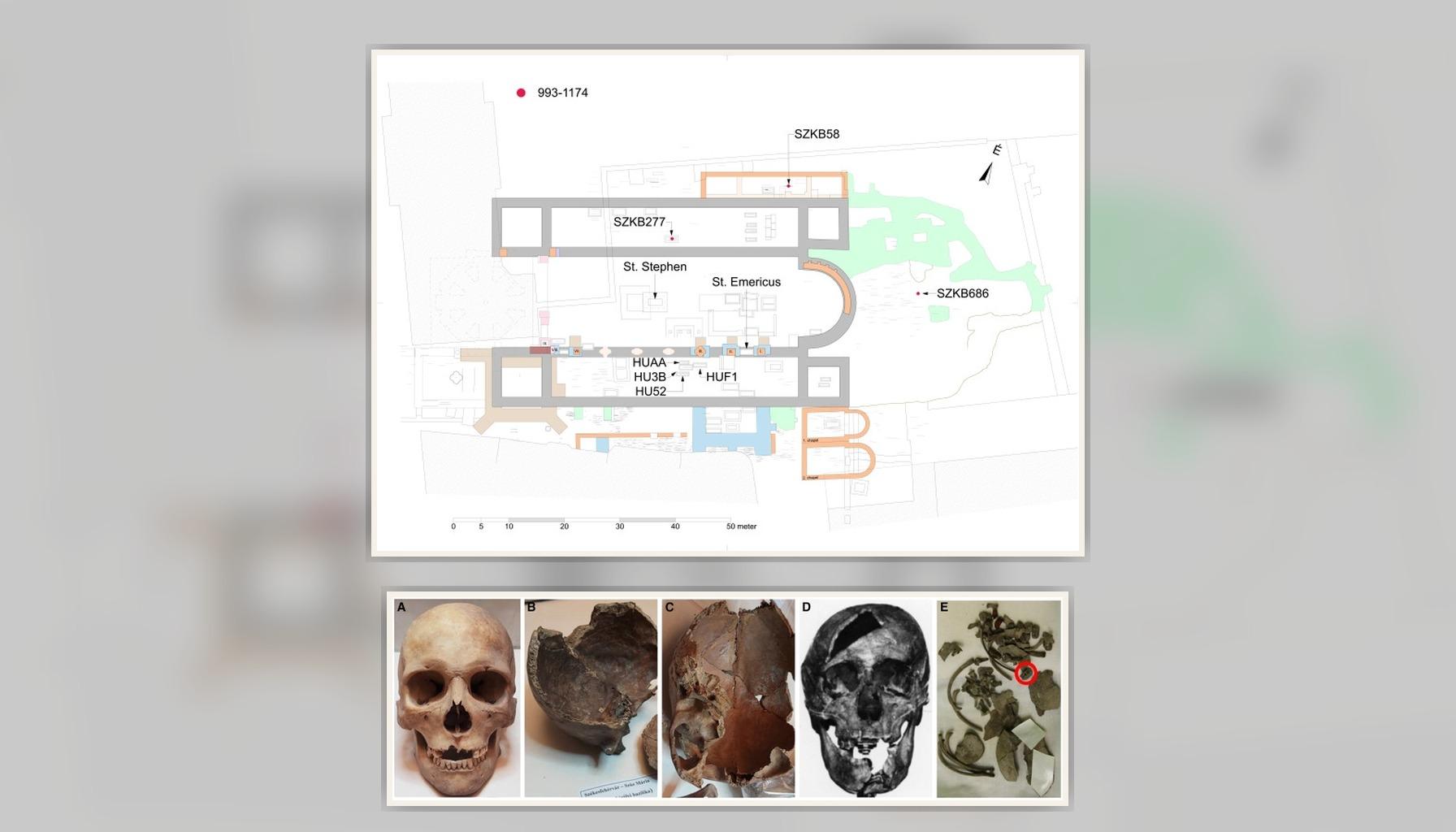
The excavation context matters enormously throughout this story. Where a skeleton was found, whether inside the basilica, beside known royal tombs, outside the original church walls, or in later reburial contexts, shapes every interpretation. A skull found in a royal burial area means one thing; a skeleton placed beyond the basilica walls suggests something rather different. The reconstructed ground plan of the basilica helps place individuals back into their medieval setting, with burials associated with different building phases and chapels showing that these graves were part of a living royal monument that changed over centuries.
Historical sources suggest that at least ten members of the Árpád dynasty, including eight kings and two princes, were buried in the basilica before its destruction. From the vast and mixed collection that excavations eventually recovered, researchers focused on those individuals most likely to belong to the ruling house. Out of this confusion, working with bones, tomb positions, coins, grave contexts, and ancient DNA, the study succeeded in identifying additional dynasty-linked individuals and returning them to the royal family story with remarkable precision.
One of the most dramatic moments in the entire history of the site began not with a grand research programme but with pure accident. In 1848, while a drainage canal was being dug near the basilica, workers uncovered several undisturbed tombs. Among them were the graves of King Béla the Third and his first wife, Queen Anna of Antioch. Nearby tombs held other individuals: an adjacent male skeleton, and a tomb containing a pregnant woman together with the remains of her unborn child.
This small cluster of graves became one of the most important reference points in all subsequent research. Because the identities of Béla the Third and Anna of Antioch were securely tied to specific tomb contexts, they provided fixed anchors in a sea of disturbed remains. The royal couple were later reburied in the Matthias Church in Buda, and their remains had already been studied before the present work. In this research, Béla the Third becomes the centre of a spider's web: once his identity is secure, the strands leading outward can reveal sons, grandsons, uncles, and more distant kin. His bones are the reference against which newly tested individuals from the ossuary are measured, and from him the researchers begin to map the wider royal family.
The adjacent male skeleton, known in the study by the catalogue designation HU52, had already attracted particular attention and was previously suggested to be the grandson of Béla the Third, most likely Prince Andrew, son of Andrew II. The article treats this identification as an important bridge between the securely confirmed king and later generations of the dynasty. In simple terms, Béla the Third is the known face in the crowd, and from him the study begins to assemble the rest of the family.
From more than seven hundred sequenced individuals drawn from the basilica zone, the study found three additional men carrying the same dynastic paternal marker already established from confirmed Árpád dynasty members. The Y-chromosome passes down through the male line much like a family surname. If several men buried in the royal church share the same rare male-line signature, there is a strong probability that they belong to the same dynasty. This identification of three more candidates from a sea of anonymous bones is the central dramatic achievement of the research.
The first and most exciting of these men is the individual labelled SHRG-299 in the study, whom the researchers identified with strong confidence as King Béla the Second, known to history as the Blind. The second man, labelled SHRG-49, proved to be a close relative of Saint Ladislaus but could not be securely named, representing one of the most tantalising open puzzles in the study. The third, labelled SHRG-496, carried the same broad dynastic paternal heritage but did not show close enough shared DNA links with the known royal individuals to place him neatly inside the immediate family circle, suggesting a more distant kinship with the ruling house.
Together these findings raised the number of known dynasty-line males from the basilica assemblage from four to seven. That is a major step forward in a cemetery where identities have so often vanished without trace, and it shows how ancient DNA can restore order even in an ossuary of disturbed and mixed remains.
The identification of SHRG-299 as King Béla the Second is one of the study's most extraordinary results. Béla the Second was one of the most vivid figures of Hungarian medieval history: the king who had been blinded as a child during the brutal dynastic struggles of the twelfth century, yet who still rose to the throne despite that terrible injury. To recover him archaeologically from the ruins of the basilica is an act of historical restoration that no written chronicle could achieve alone.
The identification rests not on wishful thinking but on a tight cluster of family relationships. This man proved to be a second-degree relative of Béla the Third and a third-degree relative of Saint Ladislaus. That pattern fits Béla the Second exactly in the family tree. The study combines two lines of evidence: the Y-chromosome, which points to the dynasty, and broader inherited DNA, which shows how closely individuals were related across the whole genome. Together they place SHRG-299 as a close dynastic relative in precisely the position where Béla the Second should stand.
The archaeological recovery was far from straightforward. Unlike Béla the Third, Béla the Second was not found in an untouched, clearly labelled royal tomb. He had to be recovered from among the mixed remains of the basilica and recognized through his place in the royal family network. The study also encountered a frustrating complication: radiocarbon dates for this skeleton were inconsistent between laboratories, with one result appearing more than a century too early. Rather than concealing this problem, the article uses it to illustrate how dating can be messy and why archaeologists must weigh scientific dates against burial context, historical records, and family relationships simultaneously. The family evidence was ultimately strong enough for the identification to stand despite the dating uncertainty.
The individual labelled SHRG-49 proved to be a second-degree relative of Saint Ladislaus and a fourth-degree relative of Béla the Second. That places him very close to the royal house indeed, yet his exact identity cannot yet be pinned down with certainty. He may have been Saint Ladislaus's paternal uncle rather than his grandfather, and the study explores how the pattern of shared inherited DNA can sometimes distinguish between a direct line and a side branch. A grandfather passes on DNA in a slightly different way from an uncle, and the study uses that difference to narrow the possibilities.
Archaeology adds compelling physical detail to this figure. Coins found near his burial point to the reigns of Saint Stephen and Peter Orseolo, suggesting an early date that suits the generation around the first kings of Christian Hungary. These modest objects carry enormous interpretive weight: a handful of coins can anchor a burial in time and connect a body to a political world of rulers, ceremony, and exchange. The burial context therefore does not simply decorate the identification; it helps set the historical scene and narrows the field of possible candidates.
The skeleton itself adds another arresting detail. The skull showed a pronounced malformation caused by the early closing of the cranial suture, a physical feature dramatic enough to invite comparison with named historical figures, even if the study remains appropriately cautious about drawing firm conclusions from it. Here the story briefly transforms an abstract dynastic puzzle into an encounter with a real body, a real face, and a real person who once moved through the early Hungarian royal court. The article leaves the door open, presenting this burial as one of the most compelling unresolved royal mysteries at Székesfehérvár.
The third newly identified man, SHRG-496, carried the same broad paternal heritage as the Árpád dynasty but did not show a close enough shared DNA link with the known royal individuals to place him among the immediate kings and princes traced in the study. He belonged to the wider male branch of the dynasty rather than its central ruling core, and yet he was interred in the Royal Basilica, the kingdom's most prestigious burial ground.
His burial is significant precisely because of that contrast. It hints at how medieval royal burial space may have functioned: not exclusively for crowned kings, but for a larger circle of blood relations who carried recognized dynastic ties and whose presence in the great church reflected acknowledged status within the royal kindred. Medieval kingship never existed in isolation. Around every king stood cousins, uncles, nephews, and collateral branches jostling in politics, inheritance, and ceremony, and this burial offers a glimpse of that wider human world behind the crown.
Notably, the article records that this man was found in a position outside the original basilica walls rather than within the main burial precinct of the church. That detail is not incidental. It may reflect the difference between a place of honour at the heart of the royal church and a slightly more peripheral status, even for someone of recognized dynastic blood. Archaeology here does not simply confirm a name or a rank; it maps the social geography of sacred royal space.
One of the most haunting episodes in the study concerns a burial that belongs to no category of kings or princes. A pregnant woman was laid to rest in a tomb adjacent to Béla the Third, and the remains of her unborn child were also recovered and studied. The foetus was estimated to have been approximately seven to eight and a half lunar months old at the time of death.
The genetic analysis of the foetal remains produced a result both unexpected and deeply moving. The unborn child showed shared DNA with several members of the Árpád dynasty, including Béla the Second, Béla the Third, and HU52, and also with a member of another major medieval Hungarian noble family. That does not yet reveal the mother's identity, but it places this tiny burial firmly within the orbit of the royal family network. A child who never lived to claim a place in any written chronicle can still be located within the web of medieval elite kinship through the patient reading of ancient DNA.
This is the sort of detail that transforms a royal burial study from an exercise in identification into something more intimate and more human. The basilica was not only a stage for coronations and dynastic display. It was also a place of family tragedy: mothers, pregnancies, infants, and lives cut short before they entered the historical record. The presence of this burial beside the tomb of a king gives the entire site a dimension that no list of crowned rulers could supply.
The article gives an unusually honest and instructive account of how archaeologists date human remains from a site as complex as the basilica. Two principal methods are used, and both carry limitations that the study does not attempt to conceal.
Coins found with or near a burial can suggest when a person was laid to rest, placing them within a known period of minting and circulation. For SHRG-49, the close relative of Saint Ladislaus, coins dating to the reigns of Saint Stephen and Peter Orseolo pointed to an early eleventh-century burial, providing a crucial chronological clue that helped narrow the range of possible identities. These are small, easily overlooked objects, but in the right context they carry tremendous evidential weight, connecting a body to a specific political world of rulers and exchange.
Radiocarbon dating measures the decay of organic material and can place remains within a date range, but it is not infallible. The case of SHRG-299, identified as Béla the Second, illustrates this frankly. One laboratory produced a date more than a century earlier than expected, sitting outside the historical window for that king. Rather than forcing a tidy result, the study acknowledges the inconsistency and explains why the kinship evidence outweighs a single anomalous date. A grave's position, the architecture surrounding it, the company the dead person keeps in burial, coins, and family relationships all contribute to the final interpretation. The strongest identifications emerge when multiple lines of evidence converge rather than when any single method delivers a solitary verdict.
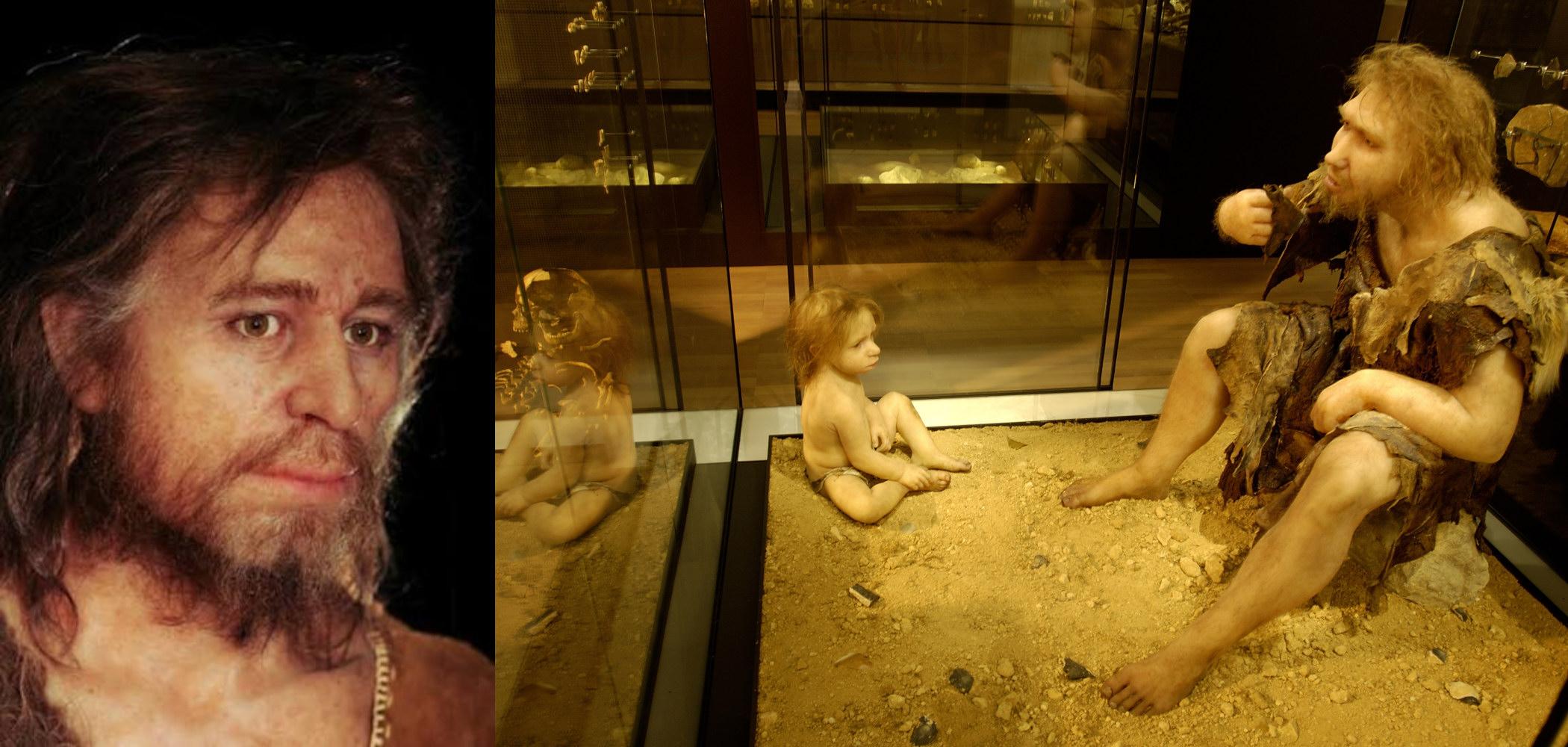
Among the most immediately vivid sections of the study are the phenotype predictions derived from ancient DNA: estimates of eye colour, hair colour, and skin tone for individuals who left no reliable written description and whose artistic portraits, where they exist at all, are products of later centuries and uncertain accuracy.
Most of the individuals studied were predicted to have had brown eyes, brown or very dark hair, and a medium skin tone. But several stand out from this general picture. Saint Ladislaus was predicted to have had blue eyes and lighter skin, a detail that sits interestingly alongside his later reputation as one of the most celebrated figures of the medieval Hungarian kingdom. Béla the Second was also predicted to have had blue eyes. Béla the Duke of Macsó and the royal foetus were both predicted to have had darker blond hair, while one unidentified male was reconstructed as having a somewhat darker complexion than the others.
The study is careful not to overclaim. These predictions are broad statistical tendencies derived from known genetic variants, not painted portraits, and the article presents them as such. Yet they are wonderfully evocative. They shift the story away from bare bone and towards living faces: a blue-eyed saint-king, a blinded king also carrying blue eyes, dark-haired royals, and a murdered prince whose appearance can now at least be sketched in outline. Archaeology here does something that chronicles alone cannot do: it offers at least a shadow of physical presence to people who stood at the centre of medieval power.
The study also reaches beyond the basilica itself to draw in Béla, Duke of Macsó, whose skeleton was excavated in 1914 during work at the Margaret Island Monastery in Budapest. This burial brought its own vivid drama to the research. The bones showed clear signs of sharp-force injuries: major blows to the skull, cuts to the face and jaw, and other wounds consistent with a violent death remembered in historical sources. The skeleton made the political violence of medieval elite life directly legible in physical evidence.
Genetic analysis confirmed that Béla, Duke of Macsó, belonged to the Rurikid paternal line, in keeping with what written sources suggested about his descent. More importantly for the study's broader argument, the analysis showed that he shared ancestry with the Árpád dynasty in a pattern consistent with the dynastic marriage ties recorded in historical documents. This does not mean the Árpáds and Rurikids shared a single male line; they did not. Rather, it reveals a dynastic connection through family marriage and descent, exactly the kind of political alliance network that structured medieval European kingship.
The Margaret Island burial therefore does more than confirm one princely identity. It connects different burial sites into a wider map of royal and aristocratic Hungary, linking monasteries, churches, and dynastic graves into a single larger story. It also shows how ancient DNA can confirm named medieval individuals outside the basilica and extend the evidence base for understanding elite kinship across the kingdom.
One of the study's most far-reaching findings concerns the genetic origins of the Árpád paternal line itself. The male-line ancestry of the Hungarian ruling house was not simply local to the Carpathian Basin. It belonged to a broader eastern world of mobile peoples whose history stretched across the Eurasian steppe, placing the dynasty's paternal roots in a lineage with deeper connections to that vast continental grassland zone rather than to the populations already settled in the basin before the Hungarian conquest.
Yet the study also traces change across generations. The earliest confirmed members of the dynasty carried the strongest eastern ancestry overall. Saint Ladislaus showed less of this eastern component. By the time of Béla the Second, Béla the Third, Prince Andrew, and the foetus from the adjacent grave, the family clustered much more closely with other Europeans on the genetic maps used by the researchers. That shift is exactly what historians would expect from a ruling house that contracted successive marriages with other European royal and aristocratic families across several generations. A dynasty rooted in the steppe conquest can begin with a pronounced eastern genetic profile, then gradually dilute that heritage through dynastic marriage until its descendants look genetically much more like the rest of medieval continental Europe.
On the genetic relationship networks used by the researchers, Árpád dynasty individuals consistently clustered with elite burial individuals from the conquest period of the tenth century. This is a major historical observation made concrete in biological evidence: the ruling house was not a later legendary construction hovering above the conquest narrative, but was tied by actual descent to the population associated with the Hungarian conquest of the Carpathian Basin. The dynasty began where the conquest began, and the bones of its members still carry that origin.
Beyond the dynasty itself, the study detected genetic links between Árpád dynasty members and several major medieval Hungarian noble families, including the Aba clan, the Báthorys, and the Corvins. The Aba family was one of the principal aristocratic kindreds of the early Hungarian kingdom, and the study notes that the detectable links between them and the Árpáds fit the historical record, including marriage ties involving the early royal house. Noble alliances recorded in chronicles become visible in the bones of people excavated from churches and cemeteries.
The connections to the Báthorys and Corvins are more distant but no less historically interesting. These are not ties of close kinship but detectable links in the wider dynastic web built up through generations of marriages, inheritances, and political alliances. Medieval power was constructed through exactly these long-range family networks, and the study shows that some of those connections can still be picked up in ancient DNA centuries after the marriages that created them.
Some of the most intriguing population links identified in the study point northward. Shared ancestry was detected between Árpád dynasty members and certain early medieval Scandinavian individuals. The study interprets this not as evidence that the Hungarian kings were themselves of Scandinavian origin, but as the likely genetic contribution of royal wives from northern or eastern dynasties. Queens and princesses carried ancestry across great distances when they moved between royal courts, and their descendants blended those lineages into the royal house of Hungary. In the case of Béla the Third, the study points to his maternal ancestry as a likely route for such northern connections, making the political geography of medieval royal marriage visible in the genetic record.
The study is frank about the limits of what has been achieved. Of the eight kings of the Árpád dynasty known from historical sources to have been buried at Székesfehérvár, only two are now securely confirmed through the research: Béla the Second and Béla the Third. Others may be hiding among poorly preserved remains, skeletons lacking the petrous bone fragments necessary for DNA extraction, or bones too damaged to yield sufficient material for full analysis. The western section of the basilica still lies partly beneath later buildings and has never been excavated. More royal burials may literally be waiting underground.
https://www.cell.com/iscience/fulltext/S2589-0042(26)01740-2
Comments