Genomic evidence for female exogamy in a Tang Dynasty clan
– 4 min read


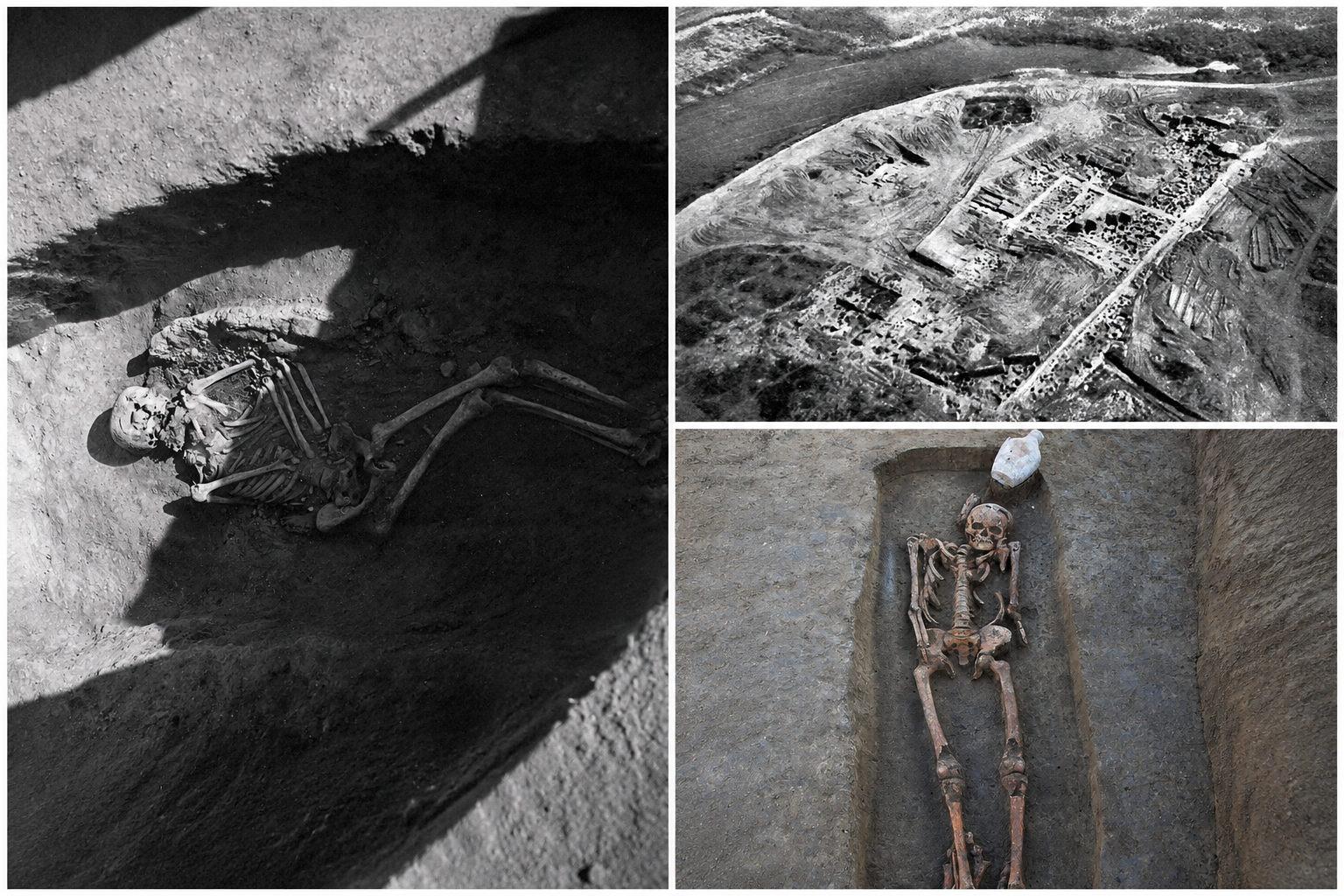
On the southern bank of the Yellow River, near the Kubuqi Desert in Inner Mongolia, the Naobaowan cemetery is not simply a cluster of old graves. It is a family landscape frozen in brick, dust, and memory. The dead belonged to an elite Chen clan during the early eighth century Tang period, when northern China was tied into a vast web of movement stretching across steppe, oasis, and imperial heartland.
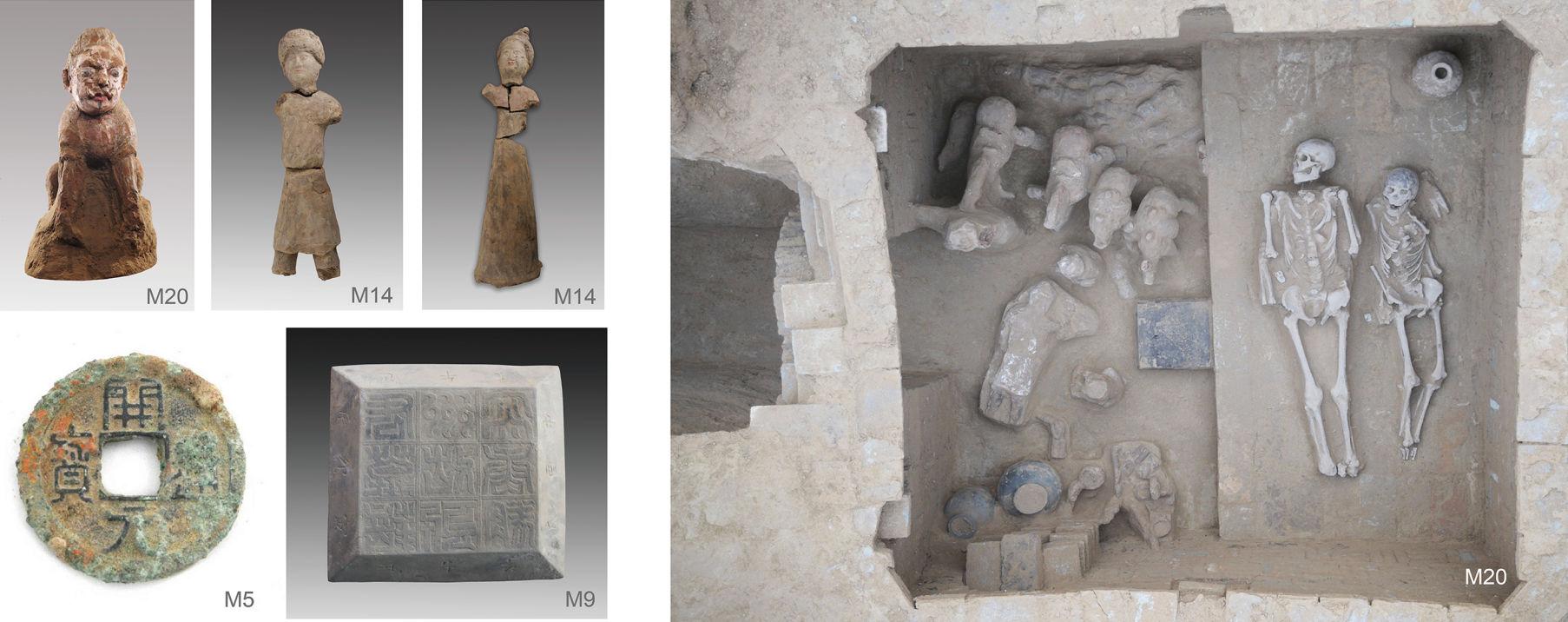
Twenty tombs were revealed, built in several distinct forms: classic brick chamber tombs with sloping passageways, smaller boat-shaped graves, and others with side chambers. These were not random differences. They spoke of rank, family development, and changing tastes. The cemetery's structured layout reflected social order, with the most important family groups at the core and lesser branches toward the margins. The cemetery was doing social work — it displayed belonging.
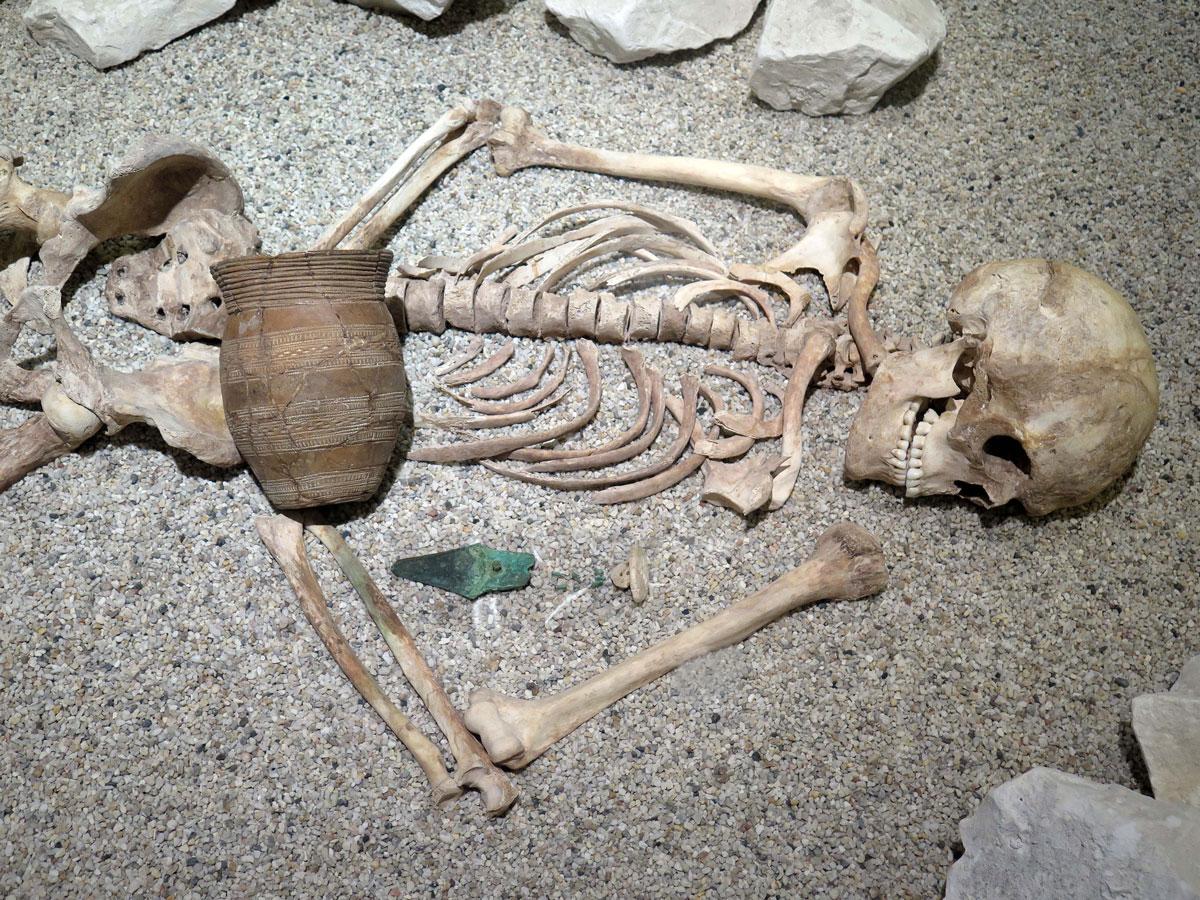
Even with many graves robbed in antiquity, enough remained to give a vivid impression of funerary life: pottery guardian beasts, clay figurines wearing frontier dress, female attendant figures, Kaiyuan Tongbao coins placed with the dead, and animal bone offerings. The combination tells everything — military frontier, imperial currency, local ritual, family memory.
Epitaphs bring individuals into focus. Zhang Jun, buried in 713 at age sixty, held military titles and was interred with his wife according to proper rite. Chen Xingbin, with official and military standing, was remembered alongside his wife born of the Xue clan. Naobaowan shows that frontier life was about households as much as armies — husbands and wives buried together, generations expanding across the cemetery, hierarchy preserved alongside affection.
The cemetery's most dramatic revelation is its strongly patrilineal clan structure, visible in tomb layout, epitaphs, and ancient DNA combined. Men of the Chen clan shared the same paternal line, showing descent from a common male ancestor. Three core family branches occupied the central zone, with one reconstructed household spanning four generations traceable tomb by tomb.
The epitaphs anchor this biological story in social language. Men like Chen Xingbin and Chen Chongshun carried military titles confirming their integration into Tang frontier administration. Their orderly burial reflects a clan that valued paternal continuity and inherited honour — yet was not rigidly inflexible. Zhang Jun, identified as a son-in-law, shared no paternal line with the Chens yet was buried prominently within the cemetery. Social belonging could be created through marriage as well as birth.
Conjugal households were recognisable throughout: adult male-female pairs buried together, children interred nearby. Some individuals sharing tomb space were not close blood relatives, reflecting household dependants, marriage kin, or other social bonds. The cemetery did not flatten hierarchy — it arranged it, staging the clan's identity in earth and architecture.
While the male line forms the backbone of Naobaowan, the women provide its most fascinating movement. The cemetery reveals consistent female exogamy — women married into the clan from outside, some from strikingly distant ancestral backgrounds.
The most remarkable figure is M16b, buried in the core family line beside local man M16a. Her ancestry connected strongly to populations far to the west across the Eurasian steppe. Yet she was buried according to the same local brick chamber traditions as all family members, lying alongside her husband and descendants, fully incorporated rather than marked as foreign.
Their son M17a shows mixed ancestry sitting between both parents — exactly what biology would predict. In later generations, that western component gradually diminishes as male descendants marry local women, creating a layered family history: a woman arrives from a distant background, her children inherit both sides, and within generations the clan carries a biological memory of that earlier connection.
Other women, M18a and M14b, also showed substantial western steppe-related ancestry, suggesting a regular pattern rather than isolated curiosity. Epitaphs name wives from the Xue and Zhang families, women remembered through both natal and marital identities, because marriage tied not just individuals but entire lineages together.
This reveals one of history's most intimate mechanisms of cultural contact. Grand narratives discuss trade and military expansion, but Naobaowan shows how empires turn movement into kinship. The men maintained the line; the women expanded its world. The grand movements of Eurasian history were carried not only by armies and caravans, but by brides.
Naobaowan captures in miniature the wider cultural world of the Tang frontier — a broad zone of interaction where Turks, Uyghurs, Sogdians, steppe groups, and local communities coexisted. The cemetery preserves this mixture materially: tomb architecture follows north Chinese brick chamber traditions, yet grave goods evoke frontier and steppe worlds. Wind-cap figurines hint at northern dress traditions; camel models signal long-distance Inner Asian connections.
Crucially, cultural interaction did not dissolve local social order. The Chen clan remained a patrilineal lineage with its own hierarchy and customs. Outside women were married in, steppe-linked ancestry entered the family line, frontier imagery appeared in clay figurines — yet the family continued burying its dead according to a recognisable mortuary system. This is how cultures actually interact: not replacing one another, but layering habits, symbols, and people.
A western ancestral component enters through marriage, becomes visible in children, then diminishes over generations through further local marriages. This is not one side winning. It is blending within a stable social framework — the family changes without ceasing to be itself.
The cemetery's confident order tells the deeper story. The clan did not conceal mixture; it folded it into continuity. Naobaowan therefore becomes a microhistory of Eurasia: brick tombs, guardian beasts, military titles, marriage alliances, and named individuals combining to show how large historical currents entered the texture of daily life. A wife from distant ancestry entering a Chen household; a husband serving in a frontier garrison; children inheriting mixed backgrounds; descendants expanding the cemetery around them. This is not background to history. It is history itself, at its most tangible.
https://www.cell.com/current-biology/abstract/S0960-9822(26)00864-X
Comments