Roman Hispania’s Lasting Genetic Legacy

– 4 min read


Before Rome, the Iberian Peninsula was a patchwork of local communities. Then came one of western Europe's great turning points. Iberia became a central province in a vast system stretching from the Atlantic to Syria, transformed not just by conquest but by movement. Soldiers settled, traders followed opportunity, enslaved people were forced across the sea, and families built lives far from their origins. The result was not replacement but a dense, lively human mixture.
Cemeteries preserve remarkable traces of this transformation. Graves reveal identity, ritual, and status, showing a Hispania connected by shipping routes, military circuits, and commercial networks on an unprecedented scale. The population became measurably more varied than in the Iron Age, with individuals showing ties to the eastern Mediterranean and North Africa. The empire made mobility normal, useful, and often unavoidable.
This reframes familiar ruins. The streets of Roman Hispania were full of accents, customs, and family histories from across the known world. Romanization was not merely about Latin or bathhouses; it was bodily, happening through migration, marriage, enslavement, and trade. Crucially, the Mediterranean connected rather than divided Europe and Africa, making North African ancestry in Iberian burials not an exotic interruption but an expected feature of the story.
When Roman authority weakened, Iberia did not empty and refill. New groups arrived—Suebi, Vandals, Alans, Visigoths—and mattered enormously in power and identity, but they did not erase Roman Hispania's human legacy. Most of the local population remained in place. Towns changed hands, elites changed costume, but no complete demographic overturning occurred.
Political dominance does not equal numerical dominance. A warrior elite can reshape laws and symbols while remaining a minority. Archaeology confirms this: graves in Germanic style appear within a broader landscape still reflecting Roman-era diversity. Material culture associated with new elites could also spread by imitation, meaning someone could appear "Visigothic" in burial display while having deep local roots. Identity and ancestry were not the same thing.
The newcomers entered a society already cosmopolitan, built on Roman roads, cities, and agricultural systems that continued functioning. Rather than a dark collapse, this period is better understood as contested remaking, with continuity and disruption tightly intertwined.
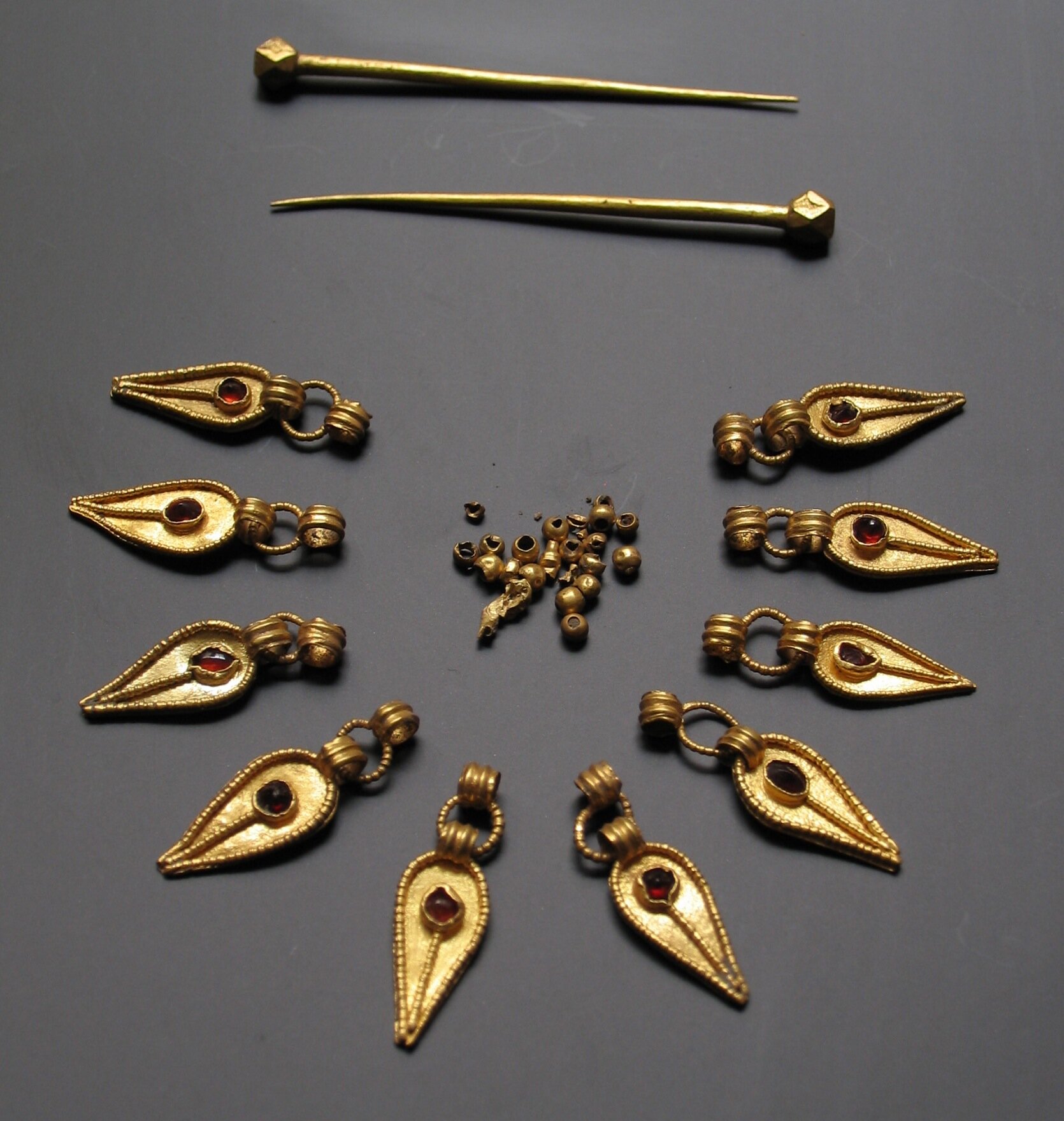
Among the most arresting discoveries is not a kingdom but a brother and sister, buried roughly 725 kilometers apart—one in Mérida, one at the road station of Ildum in Castellón. Both graves contained gold pins in a Germanic style, and both individuals appear to have been first-generation migrants with Central European ancestry. Abstract migration trends suddenly become personal.
Even after imperial authority frayed, Roman roads remained, structuring movement across a changed landscape. This sibling pair traveled and died at two separate nodes in that inherited network. Their story captures migration as families actually experience it: linked households moving through existing corridors, sometimes arriving together, sometimes dying apart, with only archaeology to notice they were ever connected.
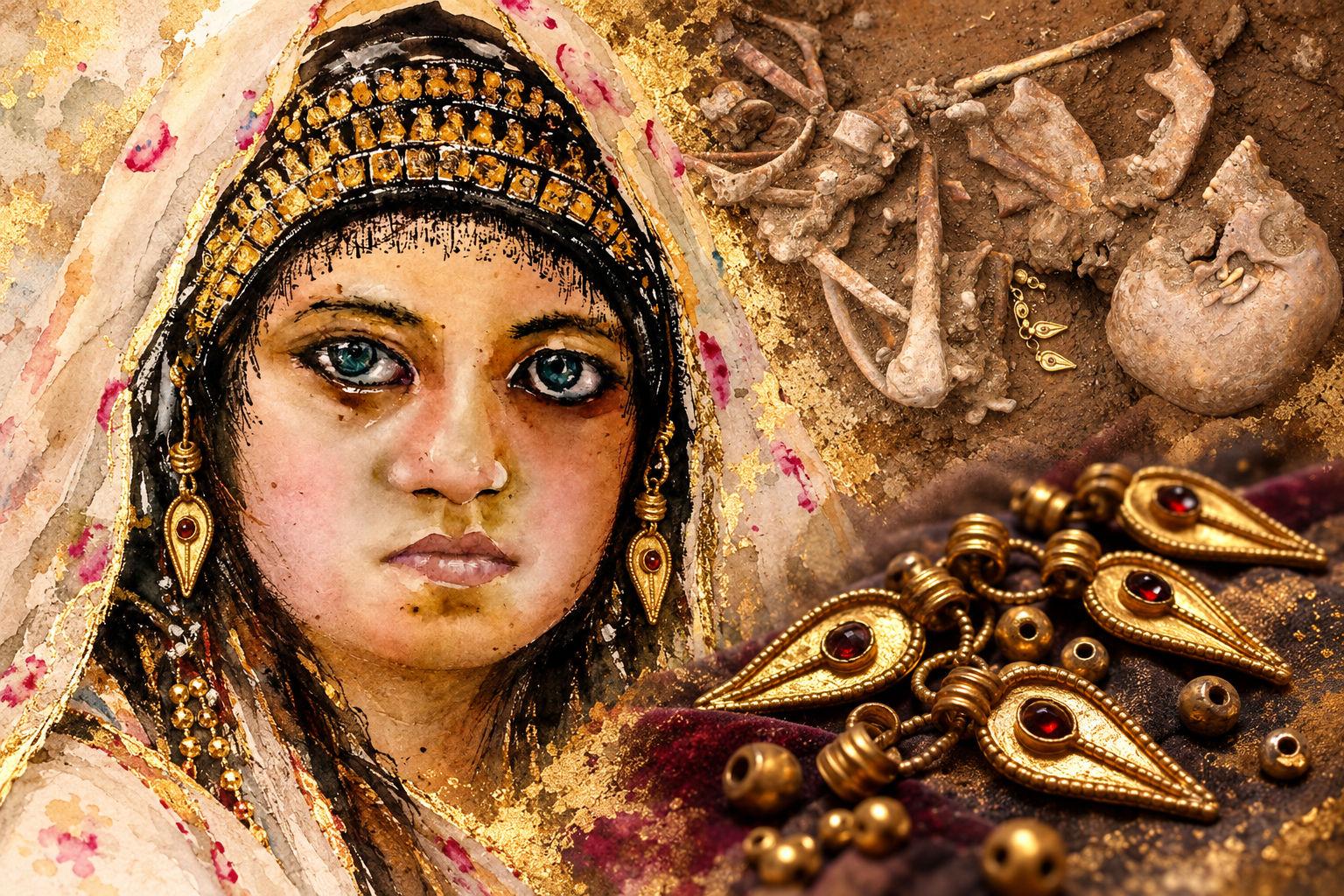
Rich female graves from post-Roman Iberia are among the period's most vivid evidence. Gold pins and dress fittings signal rank, lineage, and cultural affiliation. Yet one woman buried in Mérida with unmistakably elite Germanic-style goods appears to have had local ancestry—a result that makes the archaeology far more human and interesting.
A local woman buried in Suebian style suggests marriage alliance: newcomer elites securing legitimacy by joining established local families, blending claims to status in a single person. There is also a darker possibility. Several of these women may have died during a succession struggle, making their jewelry not merely elegant but tragic—surviving witnesses to political crisis that written sources barely record.
These women demonstrate that elite identity could be forged through marriage and allegiance rather than inherited through blood alone, and that power in a changing world traveled through households as much as through armies.
Remarkably, Late Antique Iberians were in some ways more genetically mixed than many populations in the peninsula today. History rarely moves in one straight line. After the Visigoths came Islamic conquests, Christian kingdoms, frontier migrations, conversions, expulsions, and centuries of medieval change—each episode reworking what came before.
This stops the ancient evidence from becoming a simple origin story. No single moment made Iberia. The peninsula was shaped by recurring encounters: Roman connectivity, selective post-Roman migration, elite alliance, and quieter forms of movement that left little trace in political narratives but transformed communities nonetheless. Cemeteries matter precisely because the dead preserve histories that texts ignored.
Beneath the great labels—Roman, Suebian, Visigothic, medieval—lie countless personal histories of travel, marriage, and adaptation. The archaeology of Iberia reveals not a succession of peoples replacing one another, but a crowded, changing peninsula where older legacies endured even as new powers rose, making its buried ground one of the most compelling archives for understanding how Europe was made after Rome.
 Max Planck Society
Comments