The House Knollys
– 3 min read


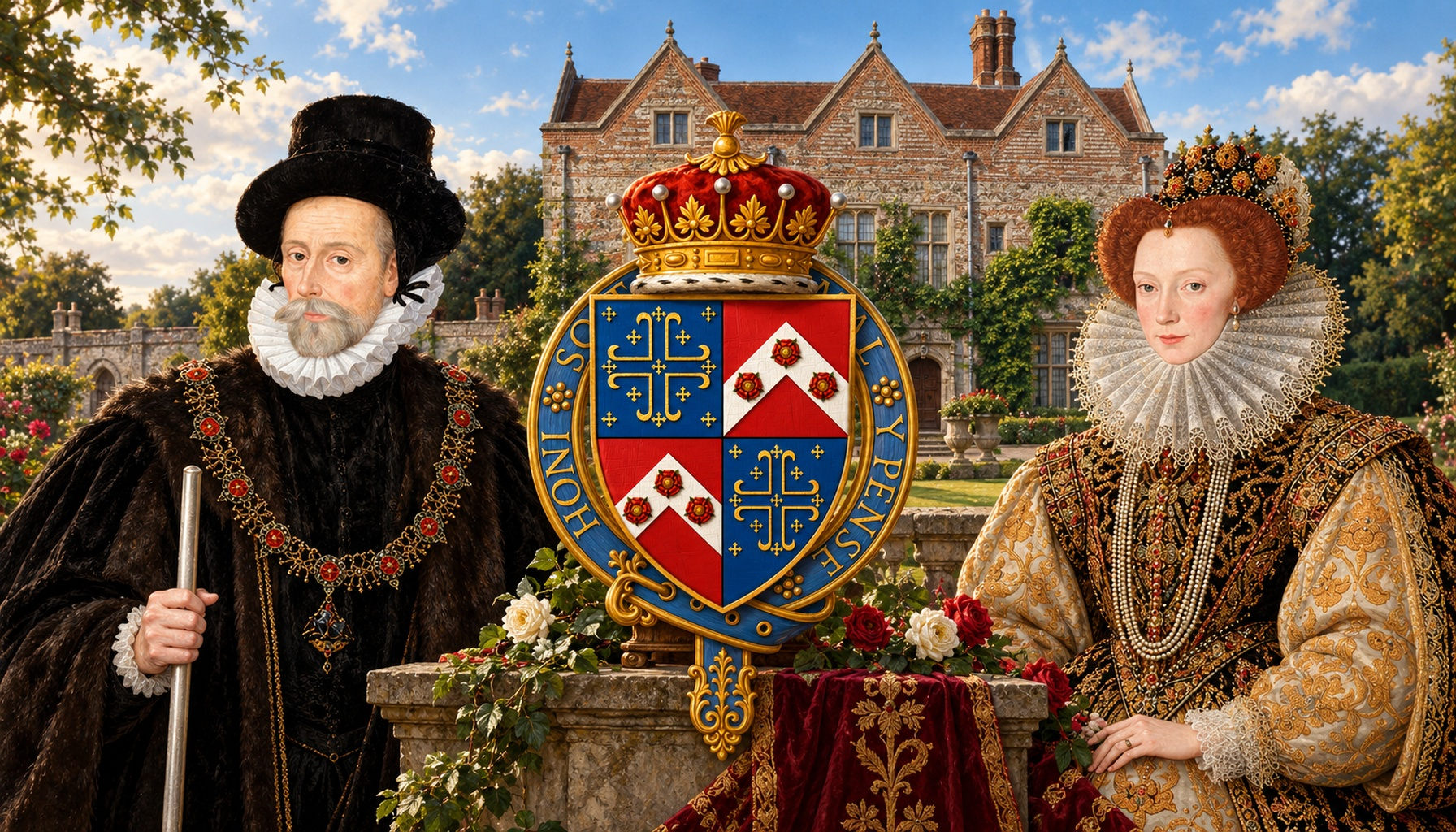
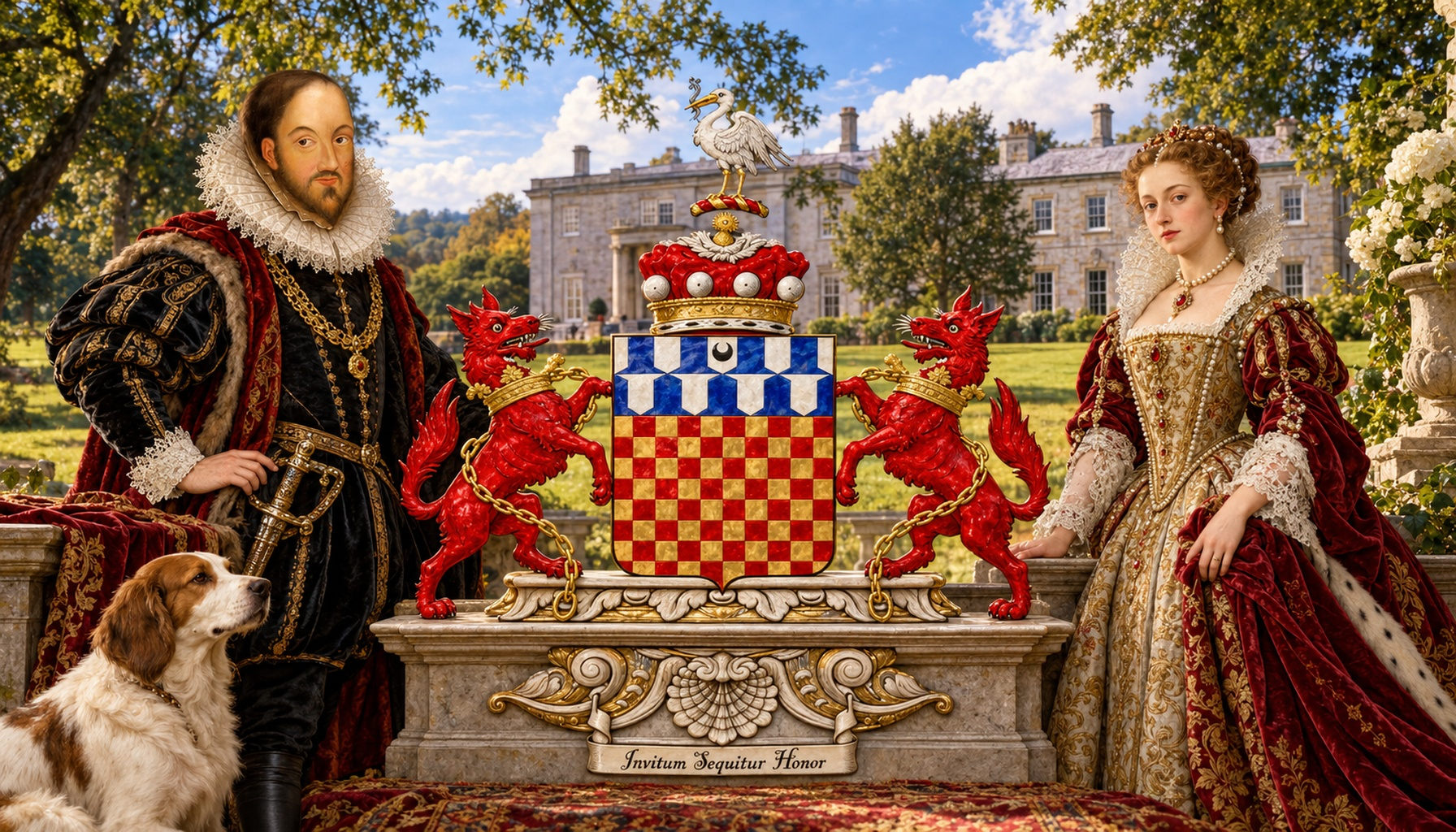
The House Knollys was an English noble and courtly family whose fortunes rose through service, proximity to the crown, and careful marriage into the political world of Tudor England. Linked here with the primary family haplogroup R1b1a1b1a1a2c1a5a, the Knollys story is not one of some misty, unreachable feudal legend, but of a family that climbed by doing what Tudor government most rewarded: serving hard, serving visibly, and serving close to power. Their roots lie in England's urban and administrative world before they became fully associated with the landed and aristocratic culture of the sixteenth century.
That earlier background matters. Thomas Knollys (1350-1435), a prominent London figure and twice Lord Mayor, belongs to the phase when the family was tied to civic authority, mercantile wealth, and the machinery of governance in late medieval England. By the time of Robert Knollys (1521) and, above all, Sir Francis Knollys (1514-1596), the family had moved decisively into the orbit of the Tudor monarchy. Francis Knollys became one of Queen Elizabeth I's most trusted servants: courtier, diplomat, administrator, councillor, and a notable Protestant grandee in an age when religion and politics were inseparable. The House Knollys represents, rather perfectly, that Tudor pattern of advancement through royal administration, dynastic marriage, landed status, and relentless attendance at court.
Read more about the House of Cecil
Greys Court in Oxfordshire became one of the best known seats associated with the Knollys family, and it is one of those places where architecture does the talking if you let it. Near Henley-on-Thames, the estate preserves layers of English history in a very literal sense: a medieval manor house, traces of an earlier fortified enclosure and moat, later Tudor and Georgian alterations, and gardens that reflect centuries of changing taste. The site takes its name from the de Grey family, who held it in the Middle Ages, but its later associations with the Knollys help anchor the family in the landscape of gentry and noble England rather than merely the shifting chambers of court. Greys Court passed through several hands over time, yet it still conveys the world the Knollys inhabited: country-house authority, local influence, and connection to the national political stage. It is now in the care of the National Trust and can still be visited, which is rather wonderful, because it allows the family story to be read not just in documents but in stone, timber, gardens, and setting.
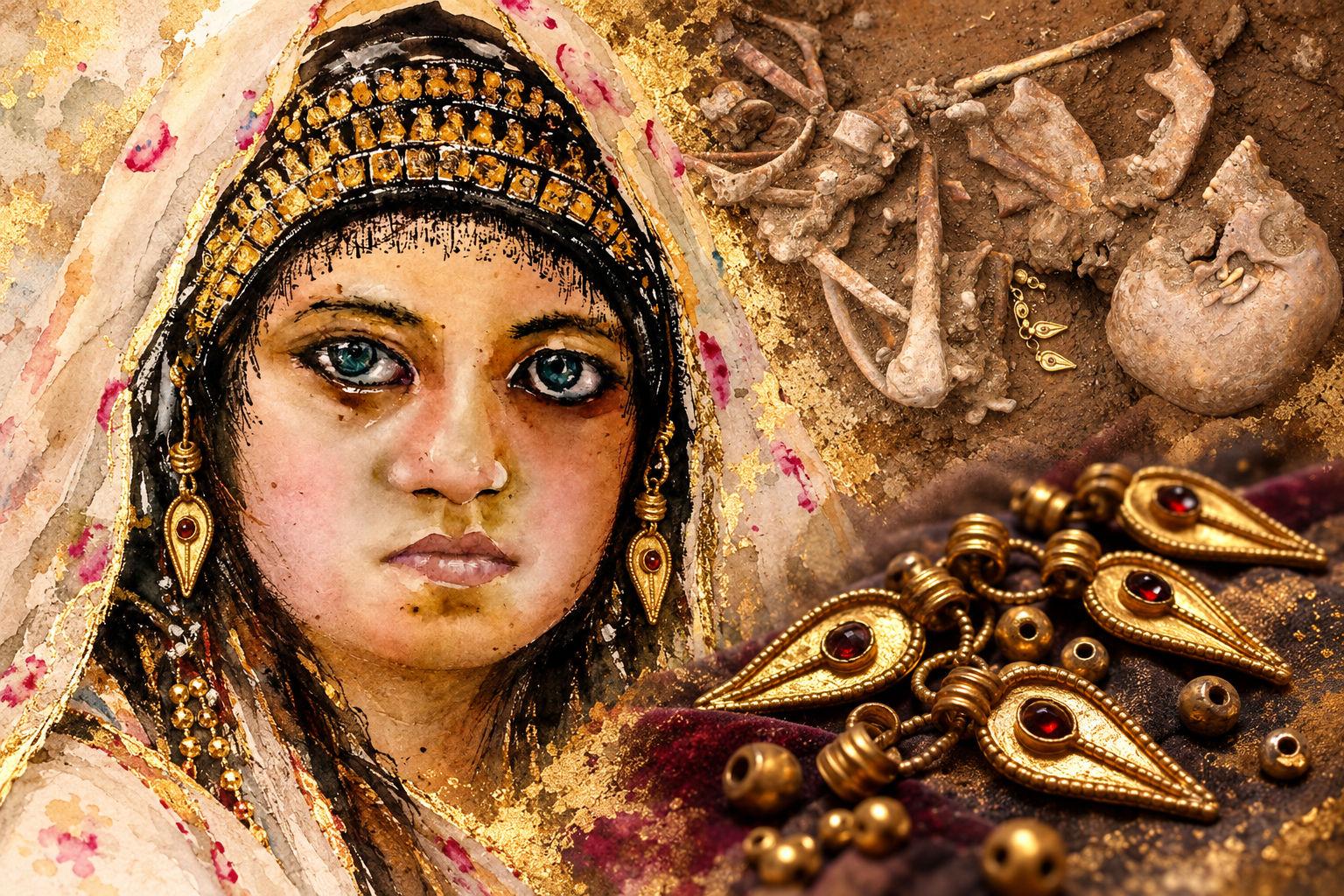
For the DNA side of the story, the Knollys haplogroup tag R1b1a1b1a1a2c1a5a links the family to a wider web of ancient and medieval paternal lines found across Britain and western Europe. Related or linked samples include numerous Iron Age and Romano-British individuals from England, especially Celtic Durotriges burials from Winterborne Kingston such as WBK12, WBK20, WBK29, WBK41, WBK05, WBK30, WBK43, WBK06, WBK08, WBK18, and WBK191, as well as Celtic Parisi and Arras culture burials from Wetwang Slack and Pocklington in East Yorkshire. Other linked examples stretch from Bronze Age Britain, including Orkney and Wessex, to Dark Ages and medieval Las Gobas in northern Spain, Gallic-associated samples from Verona, and later early medieval and Saxon-period burials in England and northwest Europe. None of this proves direct descent from any one excavated individual, of course. What it does show is that the Knollys-linked paternal signature sits inside a deep historical pattern that was already present among ancient communities in Britain and connected Atlantic and western European zones long before the Tudor court ever existed.
Explore Iron Age Britain and ancient DNA
If you are researching the House Knollys, the real thrill is seeing how family history, court politics, landscape, and deep ancestry can sit in the same frame. Upload your DNA to MyTrueAncestry to see whether you match the House Knollys profile or related ancient DNA samples linked to R1b1a1b1a1a2c1a5a, and place your own story alongside the long human past behind Tudor England.
Comments