The House Musgrave

– 3 min read


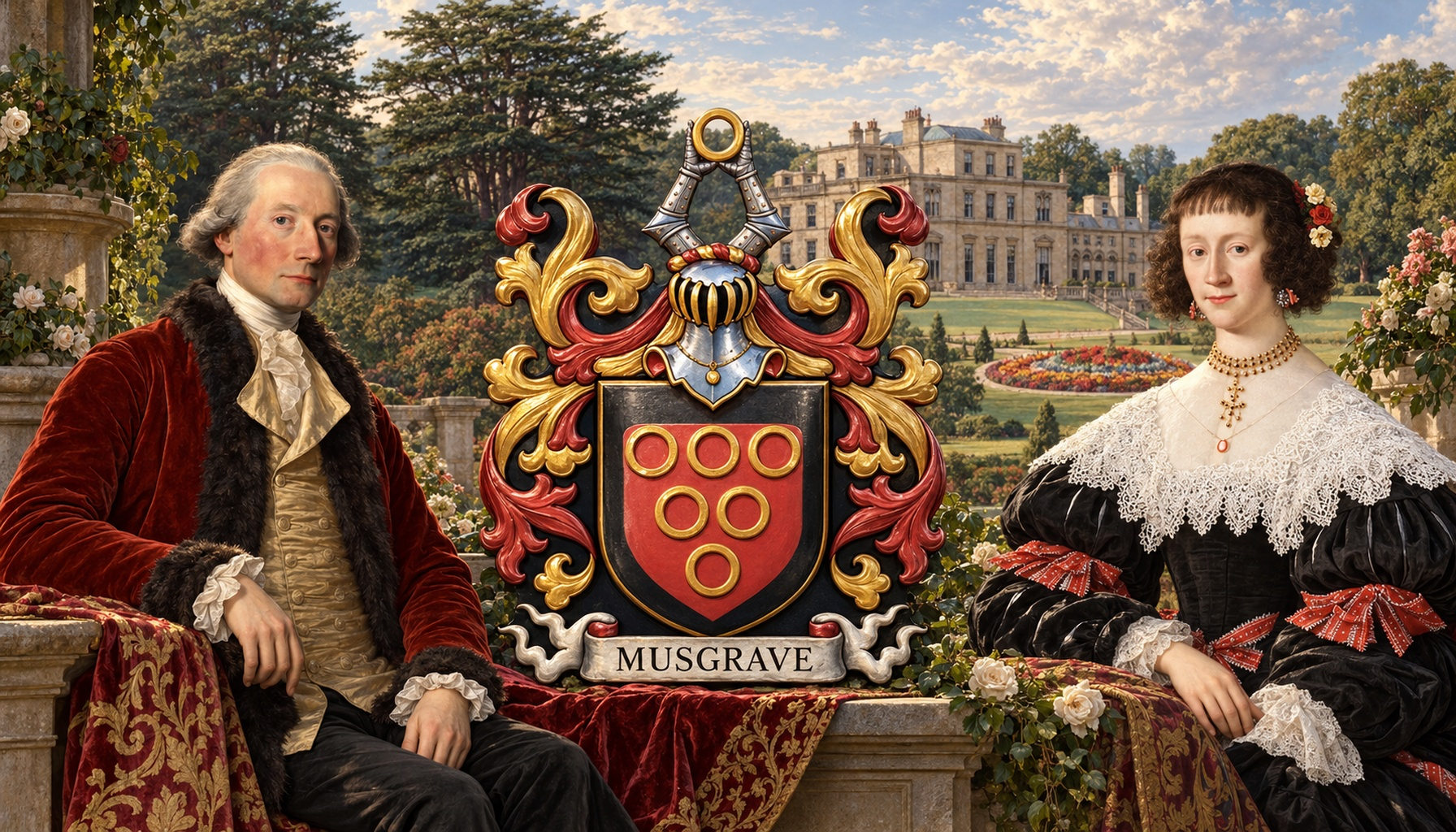
The House Musgrave was one of the old noble families of northern England, rooted in Cumberland and Westmorland and shaped by the hard political weather of the Anglo-Scottish border. Their story is not that of courtly ease in the south, but of a lineage built on estate power, military readiness, royal service, and the constant business of keeping order in a frontier zone where raids, feuds, allegiances, and war were never very far away. The primary haplogroup linked with the family is R1b1a1b1a1a2c1a4b2c1, a paternal line found in a number of ancient and medieval samples from Britain and nearby regions.
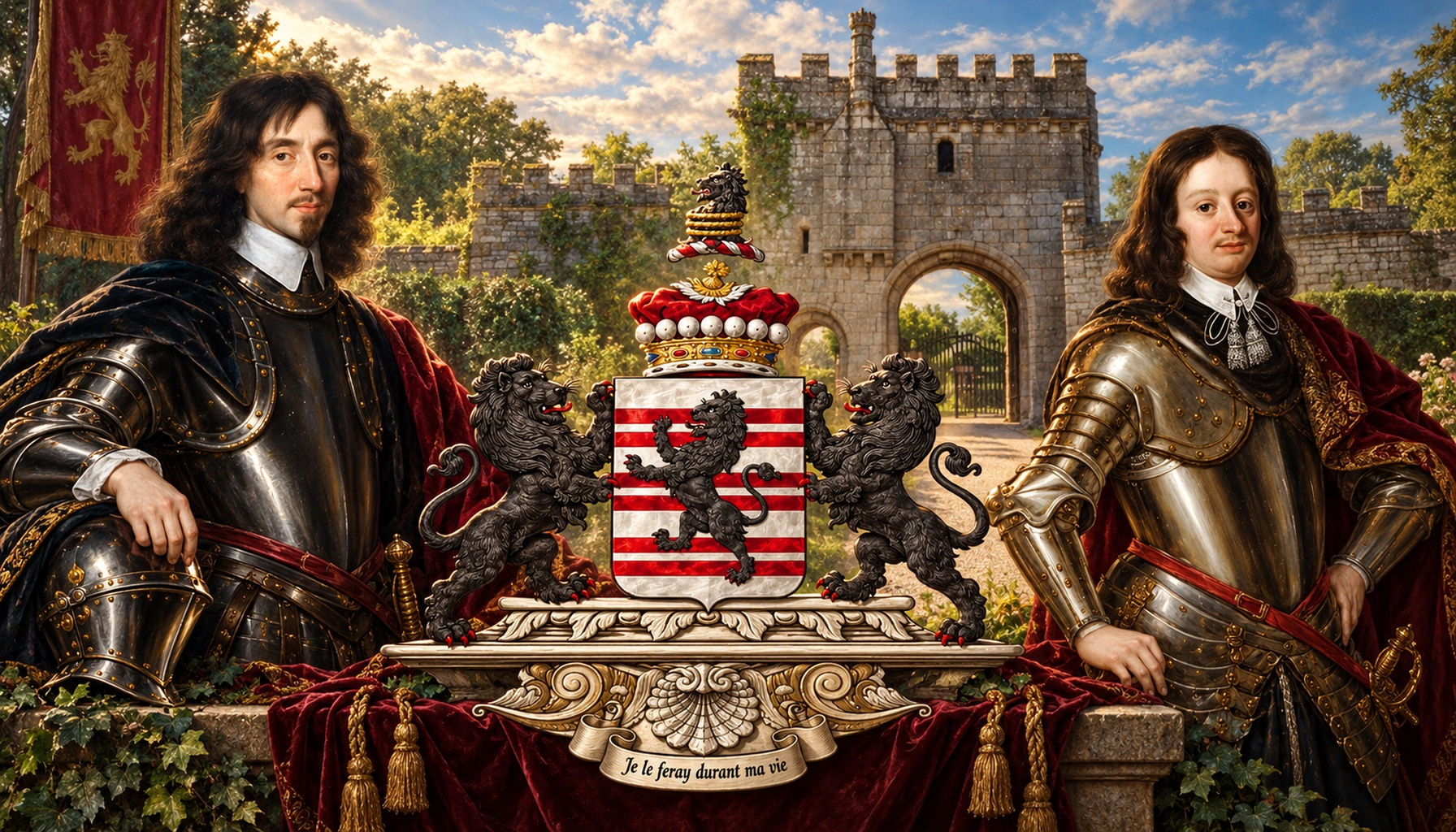
The name Musgrave is generally understood as locational, tied to a place in northern England and to the medieval habit of surnames growing out of landholding and lordship. In that sense the family emerged from the landscape itself: a northern landed house rising in a region where kings needed dependable men on the marches. Over the centuries Musgraves served as knights, sheriffs, soldiers, wardens, and political figures, and they became woven into the governing fabric of the border counties. Among the named figures remembered in the family's medieval record are Thomas de Musgrave (1280-1314), Richard de Musgrave (1301), and Thomas de Musgrave, 1st Lord Musgrave (1310-1385), whose life belongs squarely to that rough-edged world of service, lordship, and frontier responsibility.
Read more about Clan Armstrong
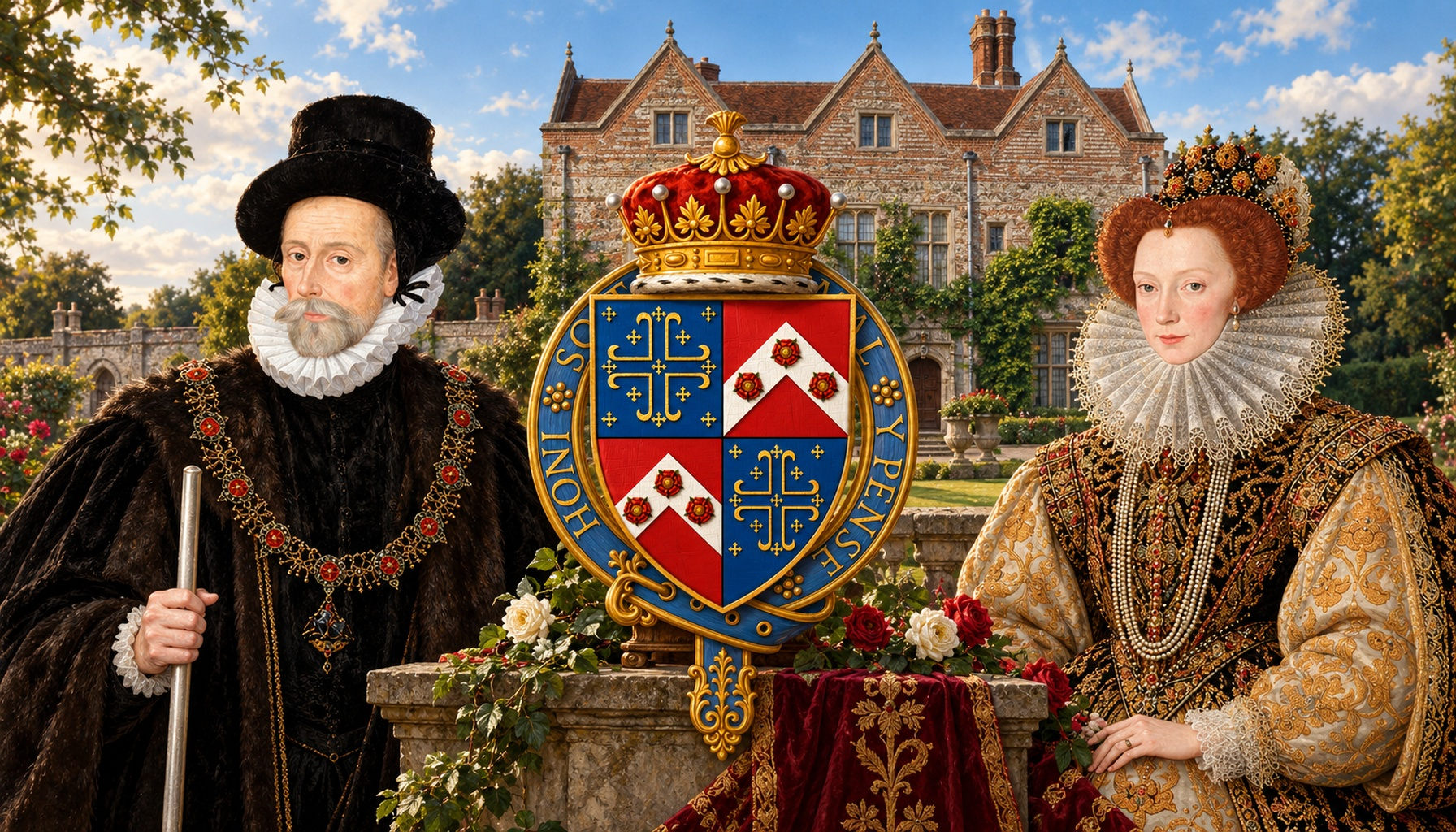
Eden Hall became the best known ancestral seat of the Musgraves and remains the place most closely associated with the house. It stands near the River Eden, not far from Penrith in Cumbria, in a setting that says a great deal about the family itself: prosperous, regionally powerful, and firmly planted in the north. Historically, the estate developed around an older hall and later mansion, and it became famous not only as a family seat but also through the long-lived legend of the so-called Luck of Edenhall, a glass vessel said to protect the house so long as it remained unbroken. That mixture of landed continuity, architectural change, and local legend is very English, and very revealing. Eden Hall still exists, and the village of Edenhall and the surrounding area can certainly be visited today, making it a tangible anchor for anyone tracing the Musgraves in the landscape rather than only on a pedigree chart.
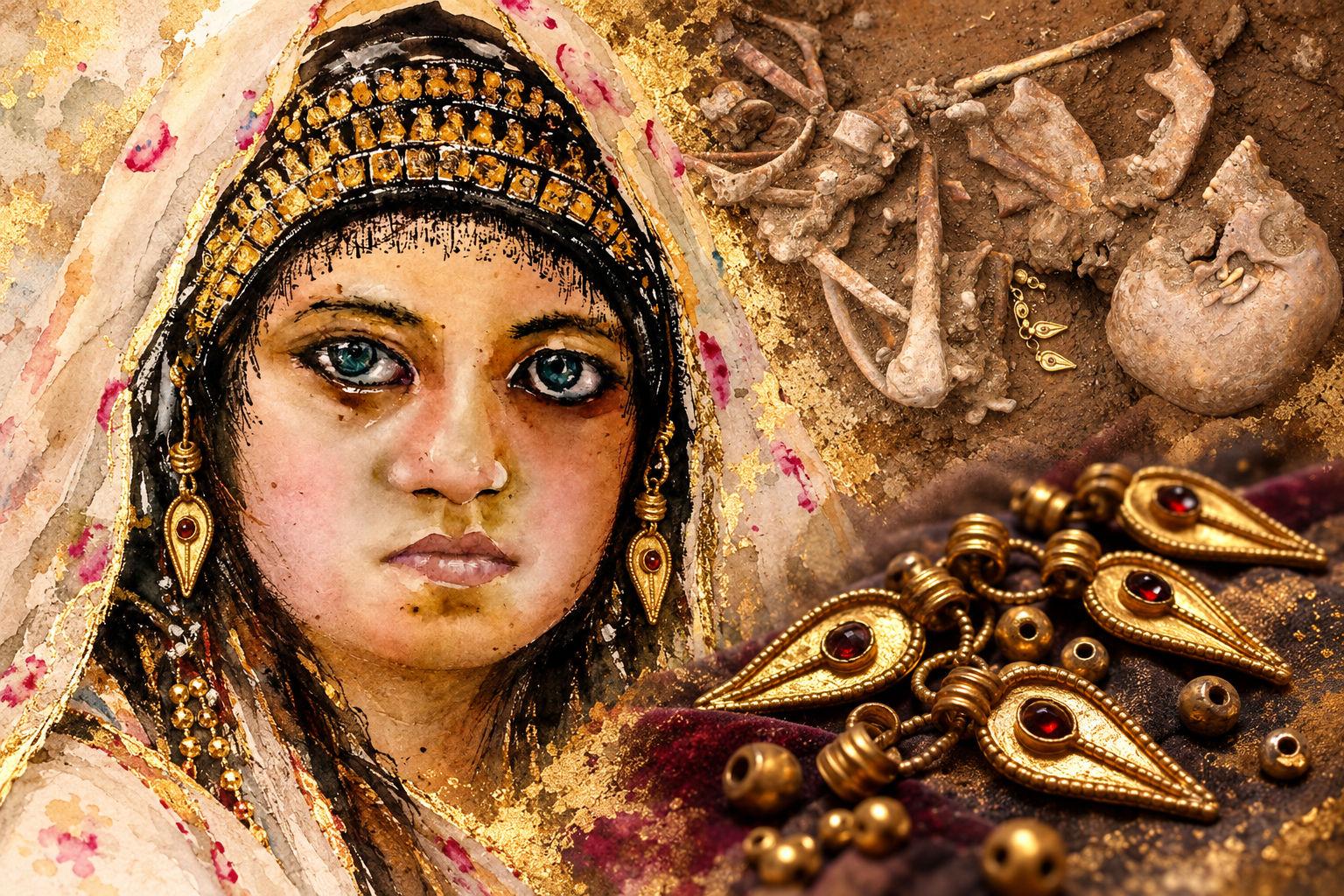
From a DNA point of view, the Musgrave-linked paternal signature R1b1a1b1a1a2c1a4b2c1 sits within a much deeper story stretching across Britain and northern Europe. Related or linked ancient samples include Medieval England Cambridge St Johns Hospital (ATP_PSN_192), Late Medieval England Clopton Cambridgeshire (ATP_PSN_1268), and a striking cluster from Iron Age East Yorkshire associated with the Celtic Parisi and Arras Culture, including Wetwang Slack individuals I36850, I36846, I36825, I31007, I30993, I36894, I36898, and I39730, as well as Melton I28922 and Burton Fleming I28928. Further linked examples appear in Bronze Age Germany at the Tollense Valley battlefield (WEZ59), at the Belgic-linked hillfort of Danebury in Hampshire (I17264), in Early Viking Age Oland Sweden (VK349), Viking Age Staraya Ladoga (VK218), and Bronze Age Trumpington in England (I7640). None of these samples should be presented as direct ancestors of the Musgraves without specific evidence, but together they sketch the wider paternal world from which a northern English noble house could ultimately emerge.
The Musgraves embody a very particular kind of English history: not simply nobility, but border nobility, where land, war, office, and survival all went together. If you have Musgrave ancestry, northern English roots, or simply an interest in how family history meets archaeology and DNA, you can dig further than the written record alone. Upload your DNA to MyTrueAncestry to see whether you match the House Musgrave story or related ancient samples connected with haplogroup R1b1a1b1a1a2c1a4b2c1.
Comments