The House Wingfield

– 3 min read


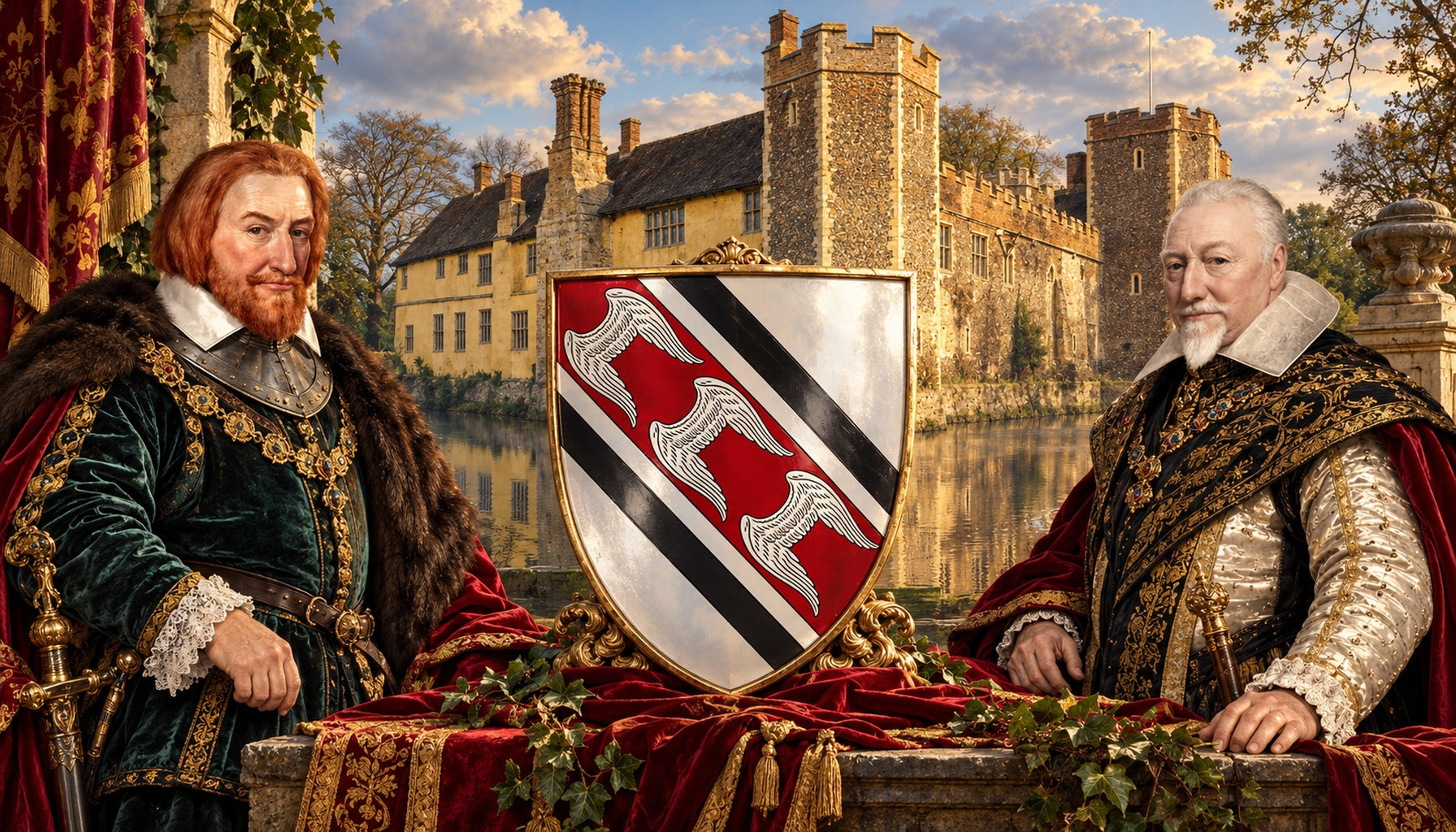
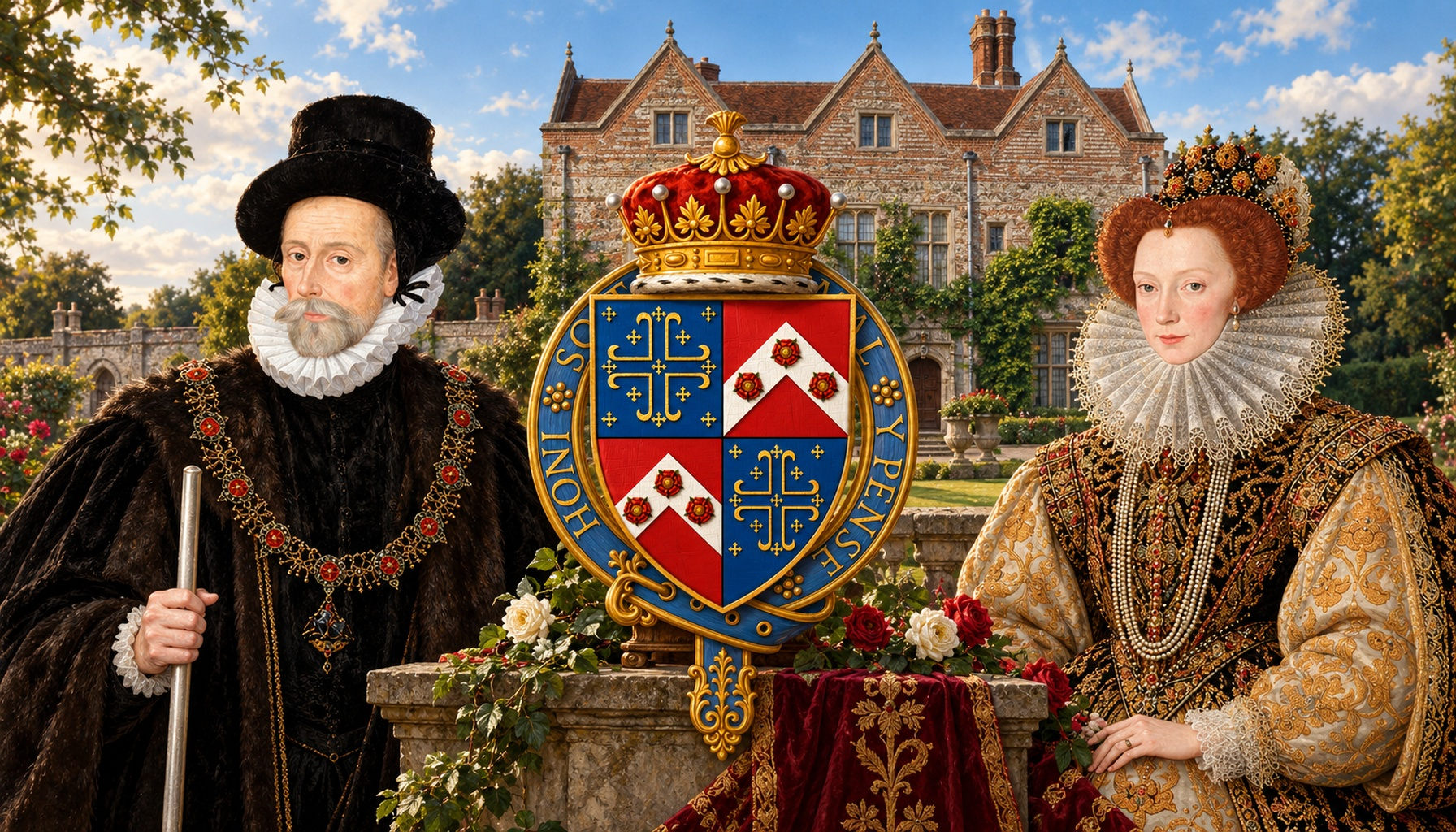
The House Wingfield was a medieval English noble family rooted in Suffolk, its name taken from the place of Wingfield itself, and in genetic tagging terms it is linked here with the primary family haplogroup R1b1a1b1a1a2b. That is a very English sort of beginning: a family growing out of a landscape, then turning that local identity into rank, property, service, and memory. The Wingfields rose especially in the fourteenth and fifteenth centuries, when noble standing was made not just by ancestry, but by proving oneself useful in war, in county politics, and at court. They belonged to that hard-edged late medieval world in which land, loyalty, military reputation, and marriage strategy all had to work together.
What makes the Wingfields so interesting is that they were not simply ornamental gentry with a good surname. They became important through action. Members of the house served kings and magnates, took part in campaigns in France, and held offices in both the royal household and local administration. Their story is tied to the great East Anglian web of power, where families advanced by careful alliances as much as by the sword. Among the notable figures are Robert Wingfield of Letheringham (1372-1409), Robert Wingfield of Letheringham (1403-1454), and John Wingfield of Letheringham (1428-1481), all of whom stand within the family's ascent from local landed status to wider political significance. Their later seat at Letheringham, and their connections by marriage to leading houses including the de la Poles, helped make the Wingfields one of the recognizable noble lineages of late medieval eastern England.
Explore The House of De La Pole
Wingfield Castle was the family's great symbolic anchor in Suffolk, and it still gives a vivid sense of what noble ambition looked like in brick and moat. Built in the late fourteenth century, it is one of the earliest and most impressive brick castles in England, a reminder that this was a period when display, defensibility, and modern taste could all be rolled into one residence. The castle was associated above all with Sir John Wingfield and his descendants, and it became a visual statement of the family's arrival among the leading houses of the region. Later, it also entered the orbit of the de la Pole family, which says a good deal about the level at which the Wingfields were operating. Though partly ruined, Wingfield Castle survives as a major historic site, with substantial remains including gatehouse and walls, and it can still be visited through arranged access and heritage events, making it more than a name in a pedigree: it is a place where the family's medieval presence is still tangible.
From an ancient DNA perspective, the Wingfield haplogroup tag R1b1a1b1a1a2b belongs to a broad and well-attested western and central European paternal network rather than to one single dynasty alone. Related or linked ancient samples under this haplogroup appear across a striking span of time and place: Iron Age and Roman Britain examples such as Roman Era England Northwest Cambridgeshire Eddington (NWC009), Roman Era Fenstanton Cambridgeshire (FEN008), and Celtic Durotriges burials from Winterborne Kingston including WBK106 and WBK17; medieval and dark-age Iberian examples from Las Gobas such as ldo066, ldo037, ldo046, and ldo062; elite continental burials such as Magdalenenberg (MBG013), Asperg-Grafenbuehl (APG001), Hochdorf (HOC001), and Lombard Collegno (COL_150). Taken together, these are not evidence of direct descent from any one of those individuals to the Wingfields, and we should be careful about that. But they do place the Wingfield paternal signature within a deep archaeological horizon stretching from Bronze Age and Iron Age Europe into Roman, early medieval, and medieval populations, including lineages found among local Britons, continental Celtic elites, later noble groups, and medieval English samples.
Explore Roman and Early Medieval Britain DNA
If the House Wingfield catches your imagination, the next step is to test whether your own DNA shows links to this family story or to the wider ancient populations associated with haplogroup R1b1a1b1a1a2b. Upload your DNA to MyTrueAncestry and see whether you match the Wingfields, related medieval English lines, or the deeper ancient samples that help frame their long genetic backdrop.

Comments