The House of De La Pole

– 3 min read


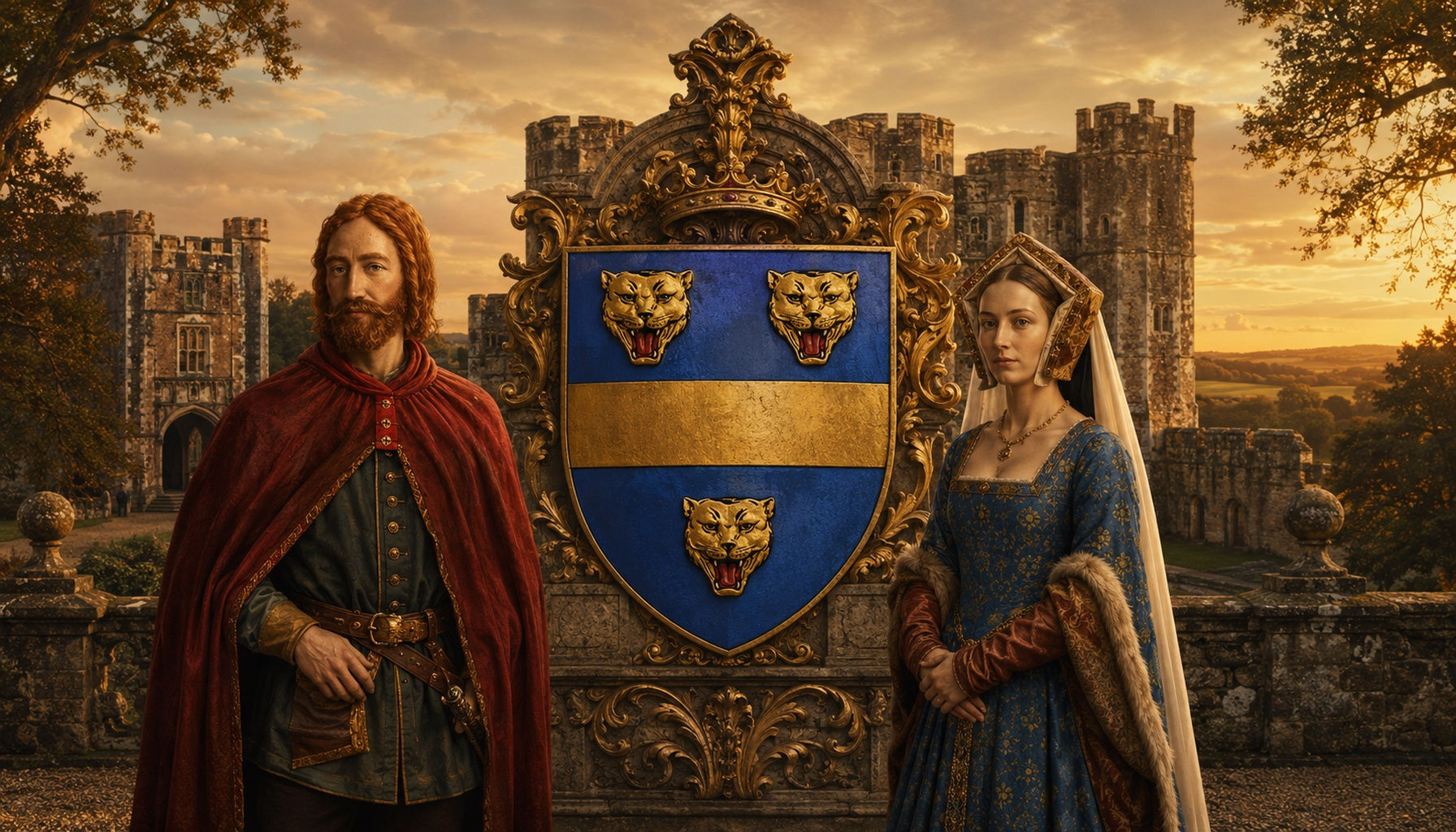
The House of De La Pole was one of the great success stories, and cautionary tales, of late medieval England: a family that rose from commerce into the highest ranks of the nobility, rooted above all in Suffolk, and drawn deep into royal service, court politics, and the dangerous game of dynastic ambition. Their story begins not as an ancient warrior clan of the misty past, but as a family of practical wealth and sharp opportunity, connected with the trading world of Hull and eastern England before becoming earls and dukes through service, marriage, landholding, and royal favour. In haplogroup terms, the primary family line here is tagged as R1b1a1b1a1a2b1a, a branch within the broad R1b family so common across much of western Europe.
That is what makes the de la Poles so interesting historically. They embody a very English late medieval pattern: money becoming status, status becoming office, office becoming political influence, and influence becoming peril. The family name became associated with Suffolk, with heraldry, estates, and carefully built alliances, but also with the volatility of aristocratic life under the later Plantagenets and into the Wars of the Roses. Among the best-known figures was William de la Pole (1290-1366), a merchant and financier whose wealth and royal connections helped set the family on its upward course. From such beginnings the de la Poles moved into the peerage and eventually into the orbit of the crown itself, where proximity to kings could make a house glitter magnificently and collapse just as quickly.
The family's great location anchor is Wingfield Castle in Suffolk, one of the most tangible surviving monuments to de la Pole power. Wingfield Castle began as a fortified manor and was developed in the 14th century, becoming closely associated with Michael de la Pole, the first Earl of Suffolk, and his descendants. Architecturally it is a fine example of a moated manor-house castle of the later medieval period: less a frontier fortress than a statement of status, lordship, and secure residence in a settled but politically competitive landscape. Set in the Suffolk countryside, it helped express exactly what the de la Poles had become - no longer merely wealthy men, but territorial magnates with a seat that advertised lineage, authority, and permanence. The ruins still stand today, and the site can still be visited, which gives modern visitors a rare chance to encounter the physical backdrop of one of England's most dramatic noble families.
From a DNA perspective, the de la Pole family is here linked with haplogroup R1b1a1b1a1a2b1a. As ever, that does not mean we can claim direct descent from named ancient individuals, only that a wide range of ancient and medieval samples fall on related branches of the same broader paternal story. These include medieval and dark age individuals from northern Spain such as Las Gobas samples ldo066, ldo037, ldo048 and ldo062; Iron Age and Roman era Britain including Durotriges samples WBK36 and WBK13, Roman Fenstanton FEN008, Clopton Cambridgeshire ATP_PSN_1217, Lakenheath LAK003, and other British-linked cases from Yorkshire, Kent, Cornwall, Suffolk and Sussex; elite Celtic burials from Germany such as Asperg-Grafenbuehl APG001 and APG003 and Ludwigsburg Roemerhuegel LWB001; Gallo-Celtic and Gallic material from Switzerland and France including Pont de Cornaux-Les-Sauges 3434x, 3434 and 3439; and an even deeper Bronze Age spread in central Europe through Unetice and Bell Beaker associated samples like LEU024, LEU025, LEU055, LEU056, I7249, I7278, I4069, I4073 and I4074. Taken together, these linked samples sketch the long west and central European time-depth behind an R1b lineage of the sort often found in later medieval noble families of England. They do not prove the de la Poles came from any one of these people, but they help place the family's haplogroup within a much older continental and British pattern.
If you want to see how your own DNA connects with noble houses like the de la Poles, and with the deeper ancient world behind haplogroups such as R1b1a1b1a1a2b1a, upload your DNA to MyTrueAncestry and explore the links for yourself.
Comments