Scottish Traveller Genetic Origins and Founder Disease Risk
– 6 min read


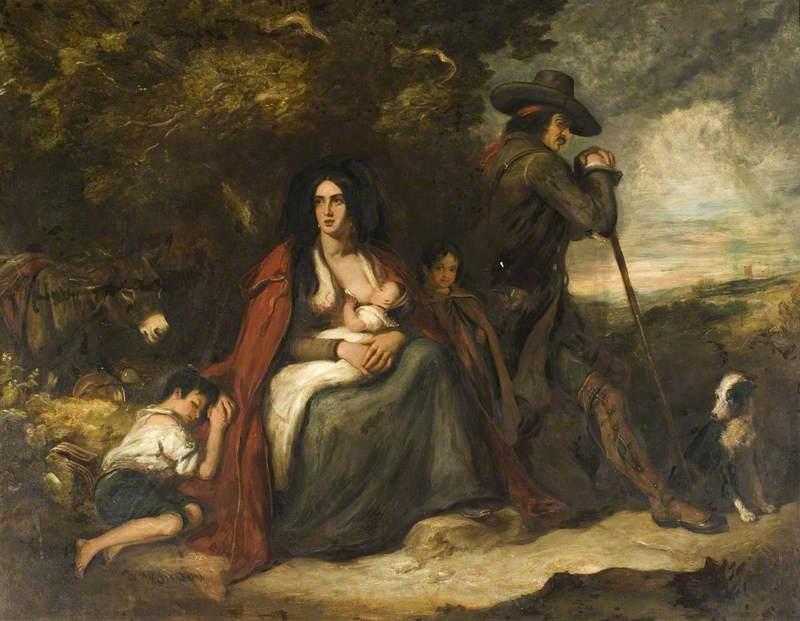
Who are the Scottish Travellers, and where do they come from? For generations, answers were shaped by myth and prejudice rather than evidence. What emerges from research is something far more grounded: Scottish Travellers have overwhelmingly Scottish ancestry, yet form a strikingly separate community with a history all their own.
They are not simply a local version of Irish Travellers, nor a branch of English Gypsies, nor an offshoot of European Roma. They form their own distinct population — close kin to settled Scots, but not identical to them. Their history was made in Scotland.
Traditionally nomadic, Scottish Traveller families moved along established routes, living in bow tents, working trades suited to mobile life: berry picking, basket making, pearl fishing, horse dealing and tinsmithing. Their language, music and storytelling became celebrated. Found from the Northern Isles to the Borders — strongly in Aberdeenshire, Perthshire, Caithness and Argyll — their world was woven into Scotland's landscape.
Yet the written record is sparse and often hostile. Medieval laws mentioned travelling people in passing. Later, acts against so-called "Egyptians" allowed extreme punishments. Twentieth-century forced settlement policies tried to break patterns of movement lasting centuries. Where official archives failed, family lineages carried in the body become uniquely revealing.
Scottish Travellers cluster genetically with Scots rather than with Roma — a finding that reshapes the entire story. They share broad ancestry with settled Scottish people, especially from northern and western Scotland, yet stand clearly apart as their own cluster. Picture not a tribe arriving from outside, but a community growing from Scottish populations and remaining relatively separate for centuries, marrying largely within itself.
The surnames give this human texture. Of 260 identified grandparents born between the mid-nineteenth and mid-twentieth centuries, just seven names — Stewart, McPhee, Williamson, Townsley, Reid, MacDonald and Whyte — accounted for more than half of all ancestors. Nearly half of Stewart grandparents came from Aberdeenshire; most McPhee grandparents from Caithness. This is not random. It reflects long-established circuits of movement and repeated return to familiar regions.
Detailed pedigrees reveal extraordinary closeness. In one Orkney individual, six of eight great-grandparents shared the surname Newlands. In one generation from the 1860s–1870s, five siblings from one family married five siblings from another related family. Similar patterns appeared across Williamson, Whyte and Stewart lines. A community becomes distinct not only because outsiders label it so, but because people marry within it, travel within it and pass identity through those ties.
Among younger participants, mixed ancestry with settled Scots has become more common — suggesting that boundaries once very firm have loosened recently. This only sharpens how solid those boundaries were before. Behind the statistics stand grandparents from Caithness, Perthshire and the Isles; cousins marrying cousins; names recurring like refrains across more than a century.
The Scottish Traveller population is not genetically uniform. Two subgroups exist: one more isolated and shaped by internal marriage, the other showing more mixing with surrounding Scottish populations. This opens a window onto different historical experiences within the same community.
Long stretches of identical genetic material — the mark of cousin marriage within a small pool — were far more extensive among Scottish Travellers than in mainland Scottish or Irish reference groups. The difference is not subtle; it is massive, confirming what reconstructed family trees suggest: repeated marriage within a limited circle across generations.
Most dramatically, both subgroups show evidence of a severe population bottleneck — a sharp reduction in ancestors — occurring roughly within the last seven to nine generations. This places it not in remote antiquity but within the last few centuries, brushing directly against recorded social history. Scottish Travellers endured legal persecution, forced settlement, child removal and intense hostility. A people under such pressure can fragment, shrink and become more enclosed. The bottleneck signal fits that landscape precisely.
Mobility and isolation are not opposites. A community can range widely across a landscape and remain socially enclosed — as merchants, herders and craftspeople have done throughout history. Scottish Travellers ranged across Scotland yet remained internally close: wide geography, tight kinship. Through centuries of social separation, a deeply Scottish population became unmistakably distinct.
Maternal lineages — traced through mitochondrial DNA — offer a different angle on Traveller origins. The most striking result is what is absent: none of the maternal lines associated with South Asian Romani origins appear among Scottish Travellers. All identified maternal lineages were western European, powerfully supporting the conclusion that the community is rooted in Scotland rather than descended from Romani migration.
Among Scottish Traveller maternal lines, one lineage alone accounts for nearly a quarter of the sample. Eight founder lines together comprise almost two thirds of the maternal pool — a classic signature of bottleneck and long internal marriage. These lines spread widely through the community, carried by generations of women across roads and seasons, from market to moor.
Several founder lines appear across both subgroups, suggesting shared ancestry before they diverged — like finding the same burial custom in two later branches of a culture. Most maternal lines point to local Scottish origins, with exact or near-exact matches in settled Scottish people.
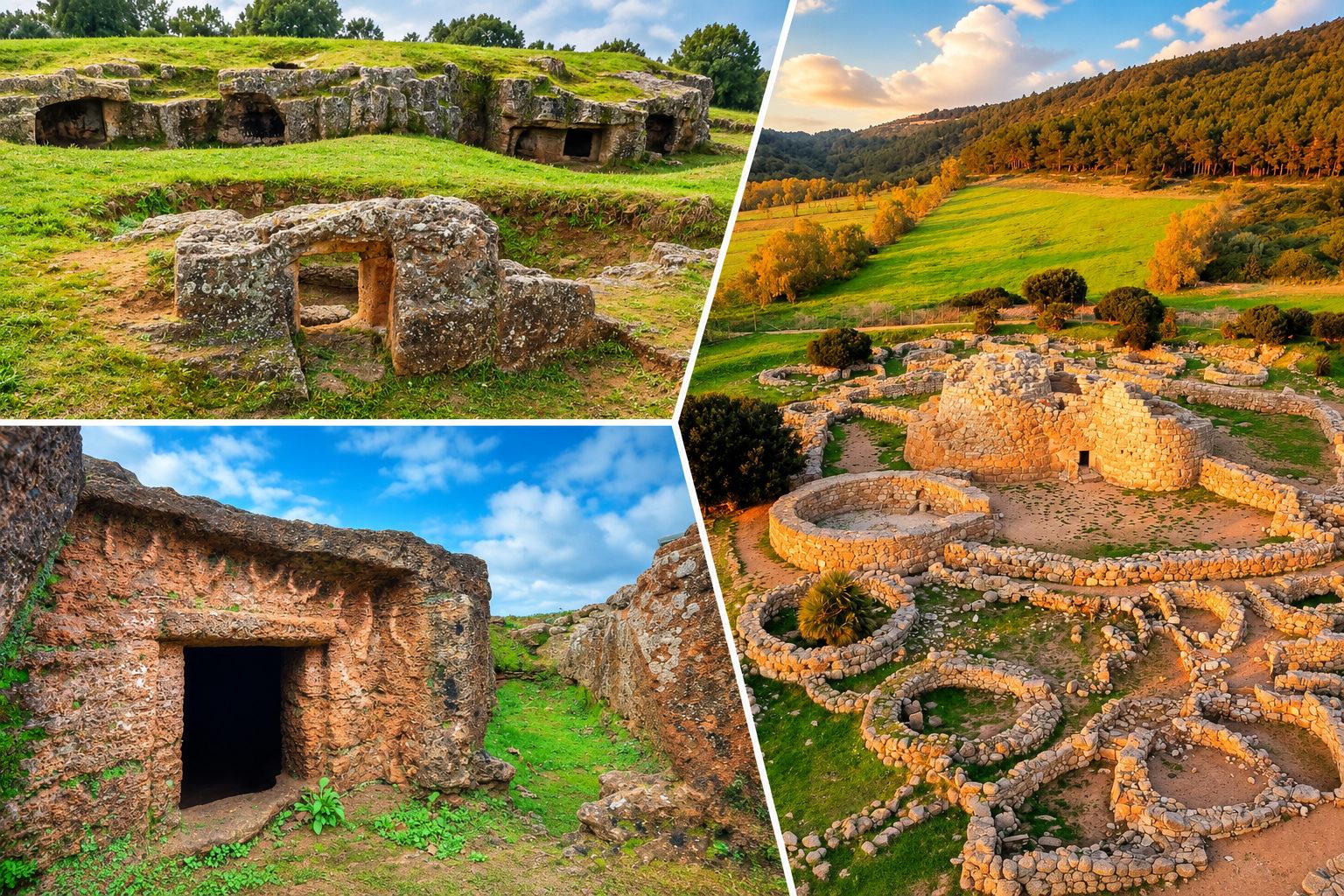
Then comes a surprise. A few maternal lines connect more closely with southern or eastern Europe — branches linked to Spain, Italy, Sardinia or the Near East. These are not standard Romani-associated lines. They hint at ancient Mediterranean contributions, perhaps through traders, soldiers or sailors moving through Britain over millennia. Like a rare imported vessel found at a Scottish site, they do not overturn the community's overwhelmingly Scottish ancestry — they are exotic traces within it, survivals of older encounters otherwise lost.
When a quarter of a population carries one maternal line, that founding woman's legacy is immense even if her name is lost. In a history where Traveller women have often been ignored, there is something moving in seeing how central they are to the deep structure of the population.
The same history of isolation and repeated marriage that created a distinctive Traveller genetic profile has also increased the frequency of rare inherited disorders. This is where historical story becomes medical reality.
In large populations, harmful variants remain rare. In small, close-knit populations, chance can magnify them through founder effects. The study found a notable enrichment of rare harmful variants among Scottish Travellers, particularly those causing disease only when a person inherits two copies from both parents — a risk dramatically amplified by long-term endogamy.
Several variants stand out. One linked to serious kidney disorder appears thousands of times more common than in broader European data. Others are associated with severe skeletal disorder, oxalate overproduction causing kidney damage, nerve-muscle connection problems, and lymphatic disease. Some variants were elevated not by a small margin but by hundreds or thousands of times — the genetic echo of history speaking loudly.
These are not standard variants clinicians would automatically expect. The Scottish Traveller profile is its own medical landscape, shaped by its own history, meaning general assumptions may miss what matters most. Many individuals carried more than one harmful variant, meaning the community as a whole carries a substantial load of rare recessive disease risk.
Scottish Travellers already suffer some of Scotland's worst health outcomes alongside poverty, discrimination and poor access to services. Lack of representation in genetic studies deepens this inequality, leaving harmful founder variants unrecognised while genomic medicine advances for the majority.
The findings point strongly toward community-based carrier screening, designed with Traveller involvement and trust at its centre — not stigmatising a people, but ensuring they benefit from informed healthcare available to others. Crucially, this research began after an approach from the community itself and was developed with Traveller participants throughout. Science done collaboratively can begin to repair what science done badly has historically deepened.
Carriers are not patients. Most people identified with these variants were healthy volunteers. The point is that a specific historical experience has produced specific genetic risks — calling for sensitivity as much as science. The findings illuminate the past and speak directly to the future: Scottish Traveller history deserves recognition, and Scottish Traveller health deserves equal seriousness. For a community so often written out of the national story, that is no small thing.
 Ashwini Shanmugam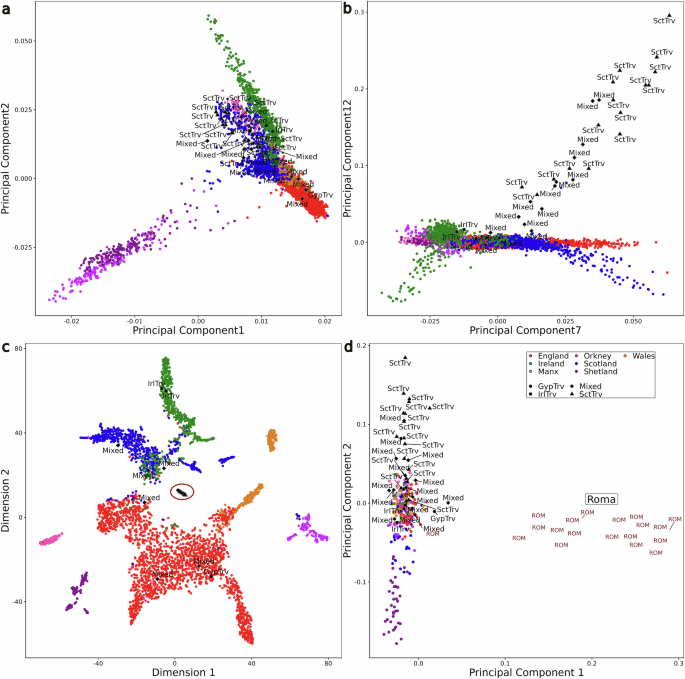

Comments