DNA and Contamination Analysis of the Turin Shroud Samples

– 6 min read


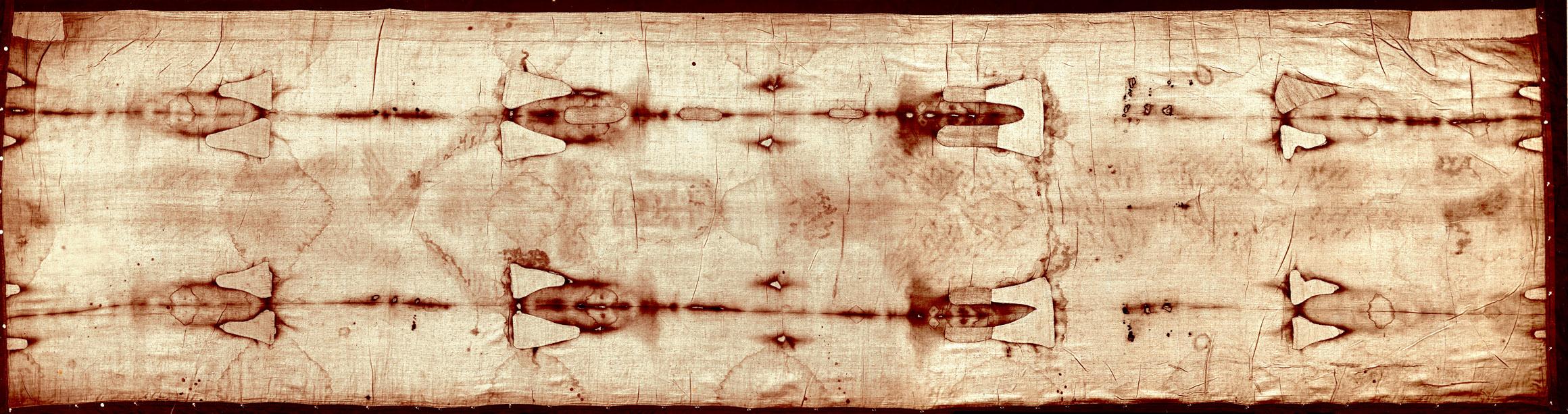
The Turin Shroud sits at the crossroads of faith, power, and disaster. It is a long linen cloth marked with the front and back image of a man bearing brutal wounds. For centuries it has drawn pilgrims, doubters, rulers, and scientists. What makes it gripping is not only the image, but the extraordinary route it seems to have travelled.
The first firm stop is medieval France. In the mid-fourteenth century the cloth appeared in Lirey. From there it entered the orbit of the powerful House of Savoy, who understood that relics were political treasures as much as religious ones. By 1453 it was in Chambéry, and by 1578 it had reached Turin, where it became rooted in the ceremonial life of the city.
Its most dramatic moment came in 1532 when fire broke out at Chambéry. Molten silver from the reliquary dropped onto the folded cloth, burning through it in places. Those scars became part of its visible history. In 1534, Poor Clare nuns carried out repairs, sewing patches over the damaged areas. That detail is marvellous because it brings real people into view: women bent over burnt linen, needle in hand, preserving what others believed to be sacred. Further conservation followed in 1694. In 1997, fire struck the chapel in Turin, and again the cloth was rescued.
The cloth's earlier route before medieval France is where speculation becomes irresistible. Some traditions place it in Jerusalem, then through Edessa, Constantinople, and possibly Athens after the sack of 1204. Whether one accepts these identifications or not, the fascination is obvious. If true, the Shroud would have passed through the most important cultural corridors of the ancient Mediterranean and Near East.
The gaps in the written record have been called the "missing years." Silence is not proof of anything, but neither is it surprising. Ancient archives are patchy and biased toward what powerful institutions chose to record. What makes this exciting is that the Shroud's story is preserved not in text alone. Threads, dust, fibres, and biological traces become witnesses too. The object becomes its own archive.
Researchers examined material taken in 1978 from official samples: linen filaments, dust, and tiny fragments. What emerged was not one ancient voice, but a crowded chorus of later contacts. The strongest human signal came from a very specific person: the official collector from 1978, Pierluigi Baima Bollone. His genetic signature matched the main mitochondrial line found in several tested samples. Some of the most visible human trace appears to come not from remote antiquity, but from the man who handled the material during modern collection.
Other lineages appeared too. Some belonged to European backgrounds. One rare lineage also appears today among the Druze of the Near East, which is intriguing but requires care. Human movement is complex, and later contact can carry distant ancestry into unexpected places.
The samples contained overlapping traces from several individuals rather than one person. Clergy who displayed the cloth, nuns who repaired it, nobles who supervised its movements, visitors during exhibitions, and modern teams who sampled it: all left something behind. Great relics attracted crowds precisely because people wanted contact. Touch was not incidental. It was the point. The human traces are therefore not merely contamination. They are evidence of devotion, ritual, and social significance.
Only a tiny fraction of the DNA showed damage expected in truly ancient material. Most looked more modern, which should not surprise anyone. The cloth has spent centuries in environments where new material could constantly arrive. This limits grand claims. The evidence cannot identify an original body trace, confirm DNA belonged to the man in the image, or date the cloth by genetics. But limitation is not failure. The human traces reveal a social biography: a cloth carried, unfolded, kissed, repaired, stored, displayed, and rescued from fire.
Bacteria, fungi, and salt-loving archaea were all detected in the samples. These tiny organisms tell stories about touch, storage, humidity, and environment. They are a kind of environmental residue, as revealing as soot in a hearth.
Bacteria commonly found on human skin appeared in abundance, especially in samples from peripheral areas. Edges are grasped, lifted, and folded, and in textiles as in manuscripts the margins bear the marks of handling most clearly. One sample linked to the hand region of the image also supported the idea of direct contact, consistent with generations of viewers drawn to emotionally charged areas.
Salt-loving archaea were among the most evocative findings. Their presence hints at environments shaped by salinity or dryness, possibly reflecting ancient flax-processing practices in brackish water. That detail drags the story out of chapels and into the working landscape of textile manufacture: water, fibre, craft, and labour.
Fungi linked to dry and salty conditions appeared strongly, alongside moulds associated with skin and scalp. This suggests storage conditions that were not always stable. The microbes do not provide a neat answer to the cloth's age, but they support a picture of long exposure, repeated handling, and complex preservation conditions. The cloth did not live alone. It lived among people, in containers, chapels, and changing rooms. The microbes are the residue of that life.
The most unexpectedly vivid results came from plant and animal traces. Out of the samples came signs of crops, domestic animals, marine life, insects, and weeds, not as visible bones and seeds but as genetic residue.
Carrot stood out most strongly. Researchers found it matched cultivated forms descending from orange carrots developed in late medieval and early modern Europe, pointing strongly toward relatively recent contamination. Wheat and cereals evoke the long history of Mediterranean agriculture. Bananas, oranges, maize, peanuts, tomatoes, peppers, and potatoes suggest contact in periods when such crops had entered European life through long-distance trade. The cloth accumulated history and did not remain sealed in one original environment.
Animal traces were equally revealing. Cats, dogs, chickens, cattle, goats, sheep, pigs, horses, rabbits, and deer all appeared, alongside rats, mice, insects, and mites. This is the fauna of domestic life, storerooms, and human proximity. Among the most remarkable finds was red coral, a Mediterranean species used for ornaments, amulets, and prized decorative work. Its presence hints at maritime connections and the circulation of luxury materials through ports and merchants.
What emerges is a social and environmental mosaic. The cloth moved through worlds shaped by agriculture, trade, domestic animals, marine goods, and repeated human use. Sacred and ordinary coexisted, as they always do. A revered cloth acquired traces of market vegetables and Mediterranean coral alongside signs of ritual display. History clings not in grand inscriptions alone, but in the tiny scraps of living worlds that settle into fibres and stay there.
Two threads linked to material collected from the reliquary gave date ranges fitting strikingly well with known repair episodes. The first overlaps with the aftermath of the 1532 Chambéry fire and the subsequent mending by the Poor Clare nuns in 1534. The second overlaps with conservation work in 1694. Physical evidence lines up with documented events to produce a grounded conclusion.
This is deeply important because a repaired textile is a composite object. It may contain original fabric, later patches, sewing threads, and conservation residues. Archaeologists recognise the same problem constantly: a burial mound may contain ancient bones and later disturbance, a church wall may include reused Roman stone. The Shroud is similarly layered by intervention.
The dating work does not solve the question of the cloth's ultimate origin, but it does something more disciplined. It anchors part of the material history to known events. If sampled material comes from repaired areas, results may reflect later intervention rather than the original textile. Context is everything. A sample without perfect context can mislead, especially in an object with a long conservation history.
Repair is not an embarrassment. It is evidence of esteem. A mended amphora tells of continued use. A patched cloak speaks of value. The Shroud's repairs reveal a biography of care: the emergency after the fire, the assessment of damage, the planning, the stitching of patches, and the later reinforcement. These episodes are every bit as historical as royal ownership or ceremonial display. The dated threads stand as small but eloquent witnesses, reminding us that relics survive not by miracle alone, but by mending hands and the stubborn determination of people who refused to let them perish.
 Gianni Barcaccia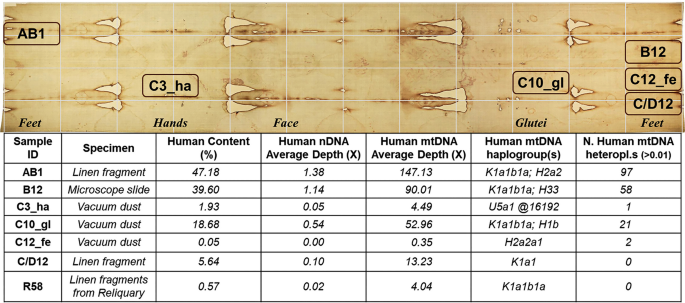






Comments