6,000 Years of Genomic History in the Middle Yellow River
– 3 min read


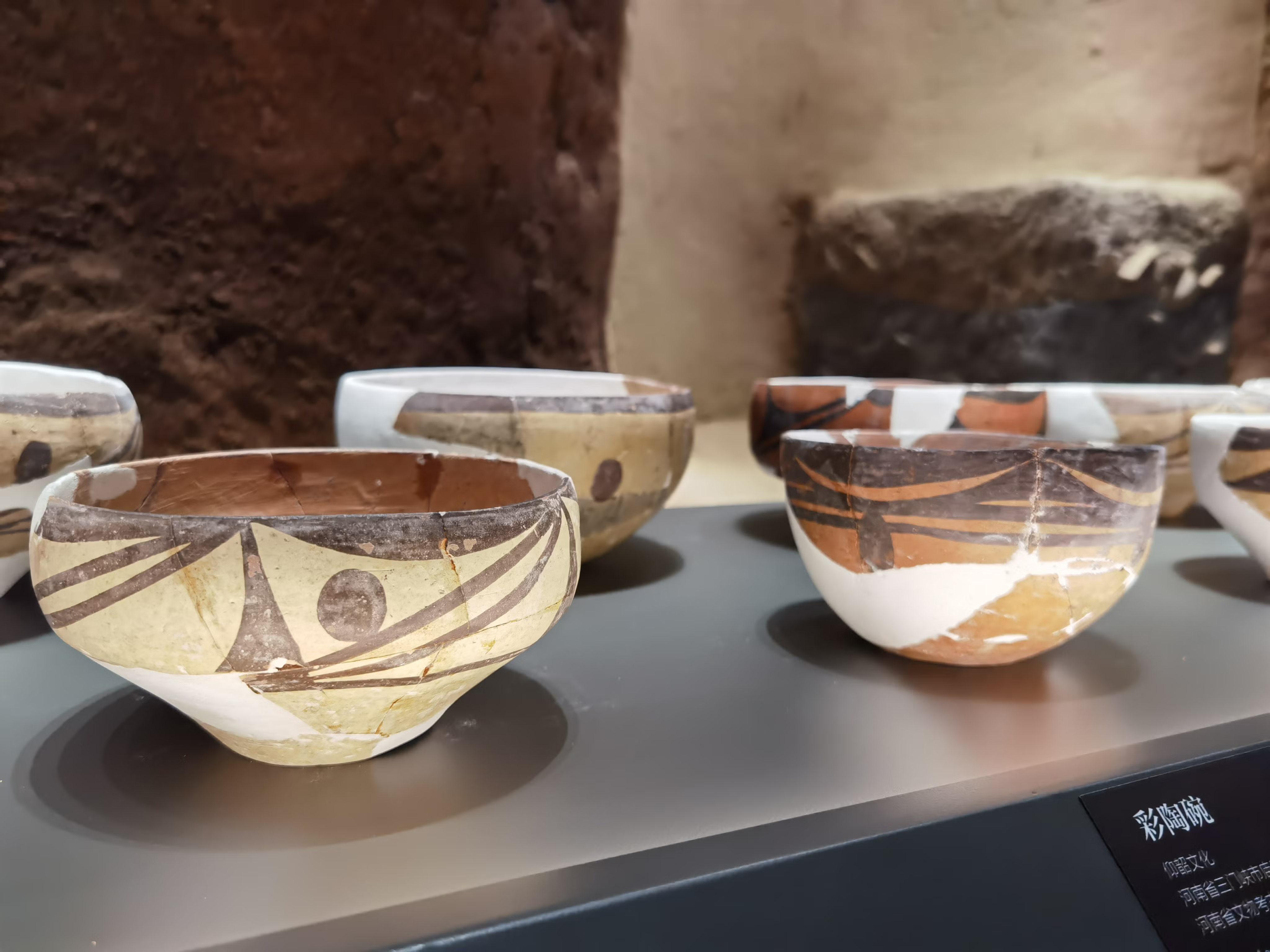
More than six thousand years ago, in the heartland of the Yangshao world along the middle Yellow River, some of the earliest farming communities in northern China took root. One key site was Xiaowu in western Henan, where the buried dead have yielded rare genetic evidence from the core of this ancient cultural zone.
The individuals recovered from Xiaowu lived around 6,200 years ago. What the evidence reveals is striking: later Yangshao communities in the region looked genetically very much like descendants of the Xiaowu people. The Yangshao heartland was not merely an archaeological label — it was a real biological community rooted in place across many centuries. These were farmers who worked the same landscapes as their descendants, buried their dead in related traditions, and passed on ways of life through generations. Their bones now help tell the opening chapter of a six-thousand-year human history.
Around 4,500 to 4,000 years ago, the middle Yellow River story becomes visibly more dramatic. At Yangpingzhai, also near Lingbao, the evidence points to a landscape where at least two distinct ancestral strands were present — a striking contrast to earlier Yangshao continuity.
Some individuals showed strong ties to earlier local populations, but others revealed close connections to the Shimao world of northern Shaanxi — one of late prehistoric China's most astonishing sites, a vast stone-built monumental center. Another individual carried ancestry linked to southern East Asian populations already known from central Henan. In a single cemetery, different human stories converged. People, not just pottery, were moving between major regions. Yangpingzhai captures a vivid moment of diversity before a later, broader consolidation swept it away.
From around 3,000 years ago onward, something remarkable happened: the genetic landscape of the Central Plain became far more uniform. Sites spanning the Shang period through the Ming and Qing dynasties — NanWa, Shangshihe, Beiyangping, Dongxiaoli-Bailong, and WanHua — reveal people who look genetically close to one another across centuries of change.
A central Henan related ancestral profile expanded and smoothed out earlier regional differences. Even the Shang dynasty, with its cosmopolitan networks drawing in goods from distant regions, shows no dramatic outside population replacement. The people of the Shang heartland were descendants of earlier local populations. Later periods of supposed turmoil — Eastern Zhou, Han, with their frontier wars and nomadic neighbors — likewise show surprising genetic continuity. Different kinds of evidence speak in different tones: written history loves dramatic invasions; the bones suggest absorption and persistence. The grand story is one of consolidation — local complexity giving way to a durable shared gene pool that outlasted every dynasty.
Dating to the Spring and Autumn period, the cemetery at Shangshihe in Yima City offers a rare social map laid out in earth. Tombs were arranged in two orientations — north-south and east-west — apparently reflecting high and lower status. The recovered genomes of thirty-eight individuals reveal whether this social distinction matched biological family lines. It did.
Fifteen pairs of close relatives were identified, and ten were buried in tombs of the same orientation, strongly suggesting that status was inherited within families. Recurring Y-chromosome lineages among the men point to patrilineal descent groups shaping burial order. Meanwhile, mitochondrial lineages were strikingly diverse even among close relatives, suggesting women married in from outside while men remained rooted in their paternal lines. Four of five related pairs buried across different orientations involved women — hinting that women acted as social bridges between status groups through marriage. Shangshihe shows social hierarchy reproduced through family structure, written not in texts but in bone and burial direction.
In the Han dynasty cemetery of Dongxiaoli-Bailong in Hebei, the question is not inherited rank but the social meaning of being buried together. Twelve individuals from six double-coffin tombs each contained one female and one male, similar in age, and not close biological relatives. The most persuasive explanation: these were married couples, honored as partners in death.
Crucially, parent-offspring pairs identified elsewhere in the cemetery were never buried together in the same tomb. The marital bond, not bloodline, determined co-burial. One tomb complicated the picture further: it contained an adult male and an unrelated girl of six to eight years, with signs of secondary burial. She was not his daughter. Her presence signals that tomb membership could reflect adoption, household attachment, or ritual obligation — social bonds wider than genetics. Dongxiaoli-Bailong offers a brilliant counterpoint to Shangshihe: another cemetery, another logic, another way of being family in ancient northern China, where attachment and alliance could matter as much as blood.
https://academic.oup.com/nsr/advance-article/doi/10.1093/nsr/nwag395/8719019?login=false

Comments