The Noble House of Harrington

– 3 min read


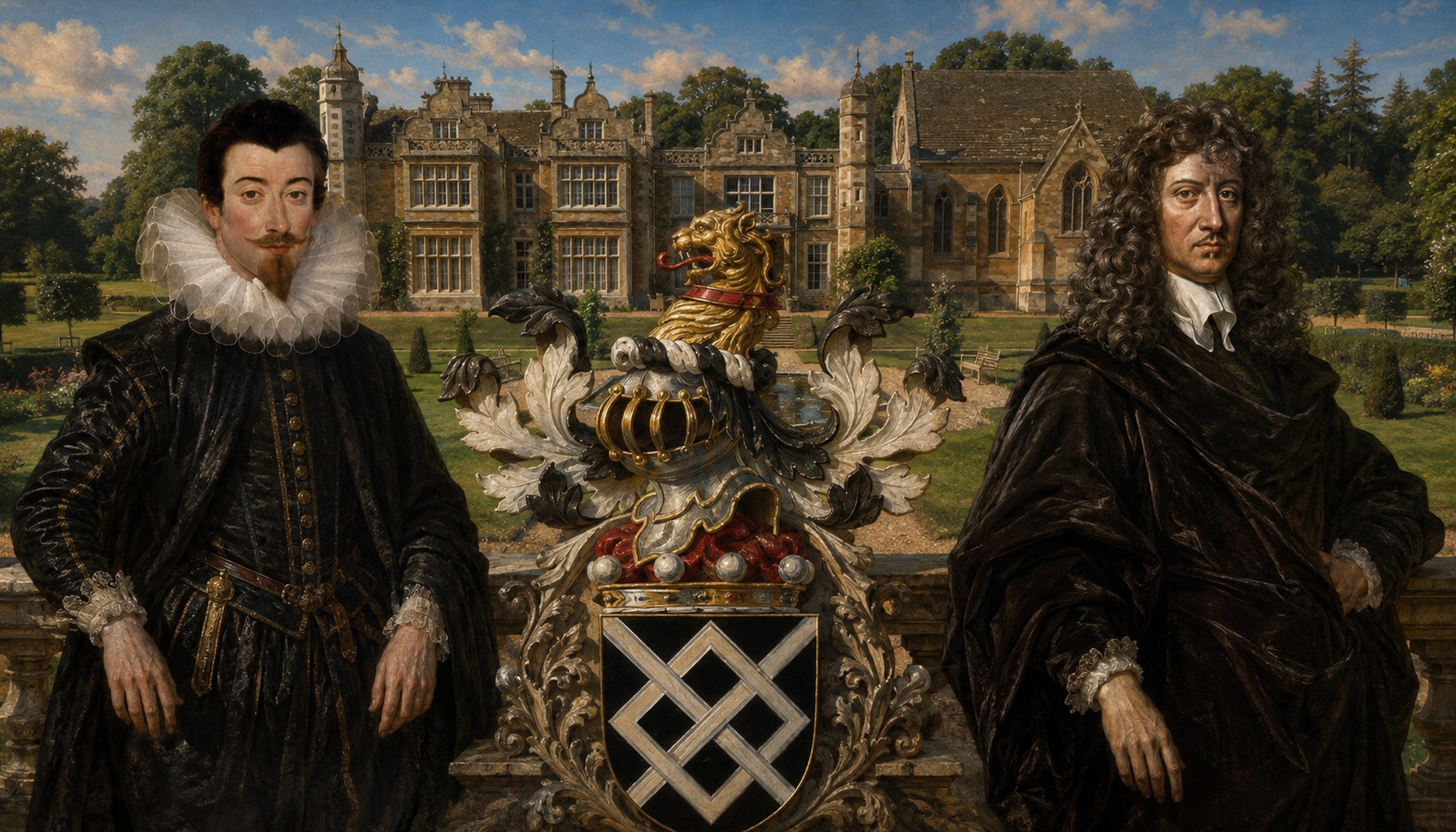
The House of Harrington, often also spelled Harington, was an English noble house rooted in the world of medieval lordship, landed authority, military obligation, and service to the crown. In historical terms, it fits the classic pattern of an English baronial family: a lineage built not simply on blood, but on estates, retainers, marriages, heraldry, and the very practical business of holding power on the ground. Their heritage is linked here with the Y-DNA haplogroup R1b1a1b1a1a2c1a4a, presented as the primary family haplogroup tag. Like so many noble houses of England, the Harrington story was shaped by loyalty, land, warfare, and the shifting favor of kings.
The family emerged from a distinctly English landscape of feudal relationships and territorial identity, with their name tied to place and to the medieval habit of becoming what one held. Over generations, the Harringtons developed through marriage alliances, public duty, and participation in the political and military life of the realm. This was not merely a family of titles on parchment. It was a house whose identity rested on baronial memory, estate management, and the visible language of nobility: coats of arms, halls, tombs, offices, and service. Among its notable later figures were Sir James Harington of Exton (1511-1592), a major figure in the family's Tudor-era standing; John Harington, 1st Baron Harington of Exton (1540-1613), who carried the family into the peerage; and John Harington, 2nd Baron Harington of Exton (1592-1614), whose short life is a reminder of how quickly a noble line's fortunes could rise and falter.
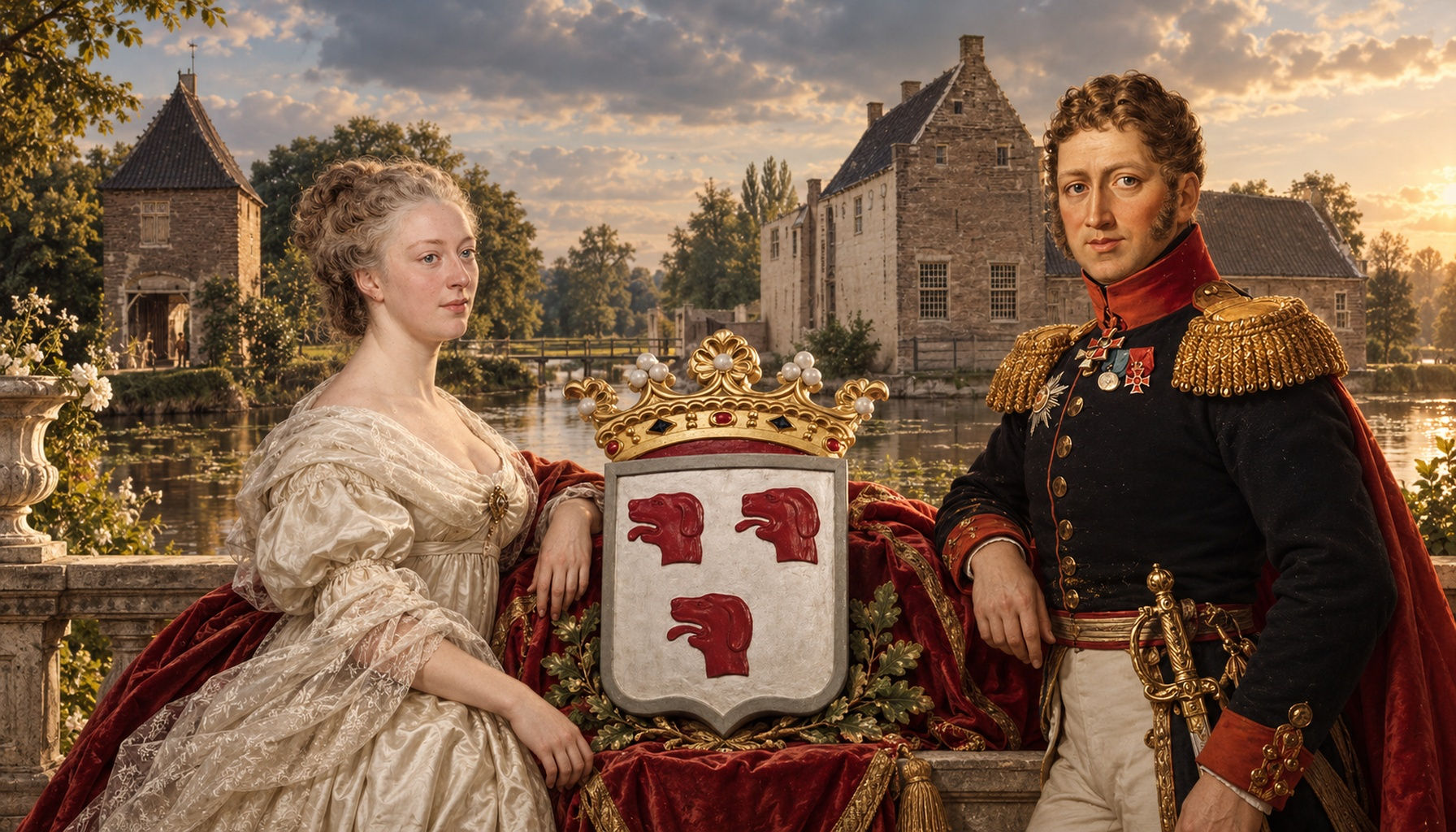
If one wants to find the Harringtons on the map rather than just in pedigrees, Exton is the key. Exton Hall in Rutland became the great seat associated with the Haringtons of Exton and later remained an important aristocratic house on the same site. The present building is largely a later country house, developed in the 18th and 19th centuries, but it stands on ground with much older noble associations, preserving the memory of the family's local authority in the county. This matters because noble power in England was always intensely local as well as national. A title at court meant little without rents, tenants, influence, and a recognizable seat in the countryside. Exton Hall and its parkland embody that continuity: not a frozen medieval survival, but a landscape where layers of family history accumulated over centuries. The house and grounds are in private hands, so access is not always fully open in the way of a public museum, but the site and village can still be appreciated and visited from the surrounding area, making Exton a real geographic anchor for Harrington memory.
Read more about the Howard Family
From a DNA perspective, the primary haplogroup tag associated here with the House of Harrington is R1b1a1b1a1a2c1a4a. That does not mean every person bearing the surname shared one simple paternal line, nor does it prove direct descent from any ancient individual. What it does offer is a fascinating web of related ancient and historic samples linked to the same broader paternal branch across Britain and beyond. Particularly evocative are the Celtic Durotriges individuals from Duropolis at Winterborne Kingston in Dorset, including WBK12, WBK20, WBK29, WBK41, WBK05, WBK30, WBK43, WBK06, WBK08, WBK18, and WBK191, alongside Iron Age and Celtic Briton samples from Yorkshire, Kent, Oxfordshire, Somerset, Hampshire, Bedfordshire, Wiltshire, Cornwall, East Lothian, Wales, and Scotland. Added to that are later linked individuals from Saxon Hinxton, Eastry, Buckland Dover, Lakenheath, Hatherdene Close, medieval Ireland, Belgium, Spain, Hungary, and even Roman-era Croatia and Portugal. In other words, this haplogroup branch turns up in a long archaeological arc stretching from Bronze Age Britain and Iron Age tribal communities to Roman, early medieval, and medieval populations. For a family like the Harringtons, whose historical identity belongs to England's layered past, that is exactly the point: the DNA does not give us a fairy tale of a single founder, but a deep and beautifully messy backdrop of populations connected to the same wider paternal story.
Explore Ancient DNA in Post-Roman Britain
The House of Harrington is a fine example of how noble history works in England: estates, service, heraldry, ambition, and memory all bound together across generations. If your own family story touches Harrington, Harington, Rutland, medieval lordship, or the wider British past, you can go a step further by uploading your DNA to MyTrueAncestry and seeing whether you match the family's haplogroup pattern or any of the related ancient DNA samples connected with this wider lineage.
Comments