Haplogroup G2a2a1a2a2c

– 5 min read


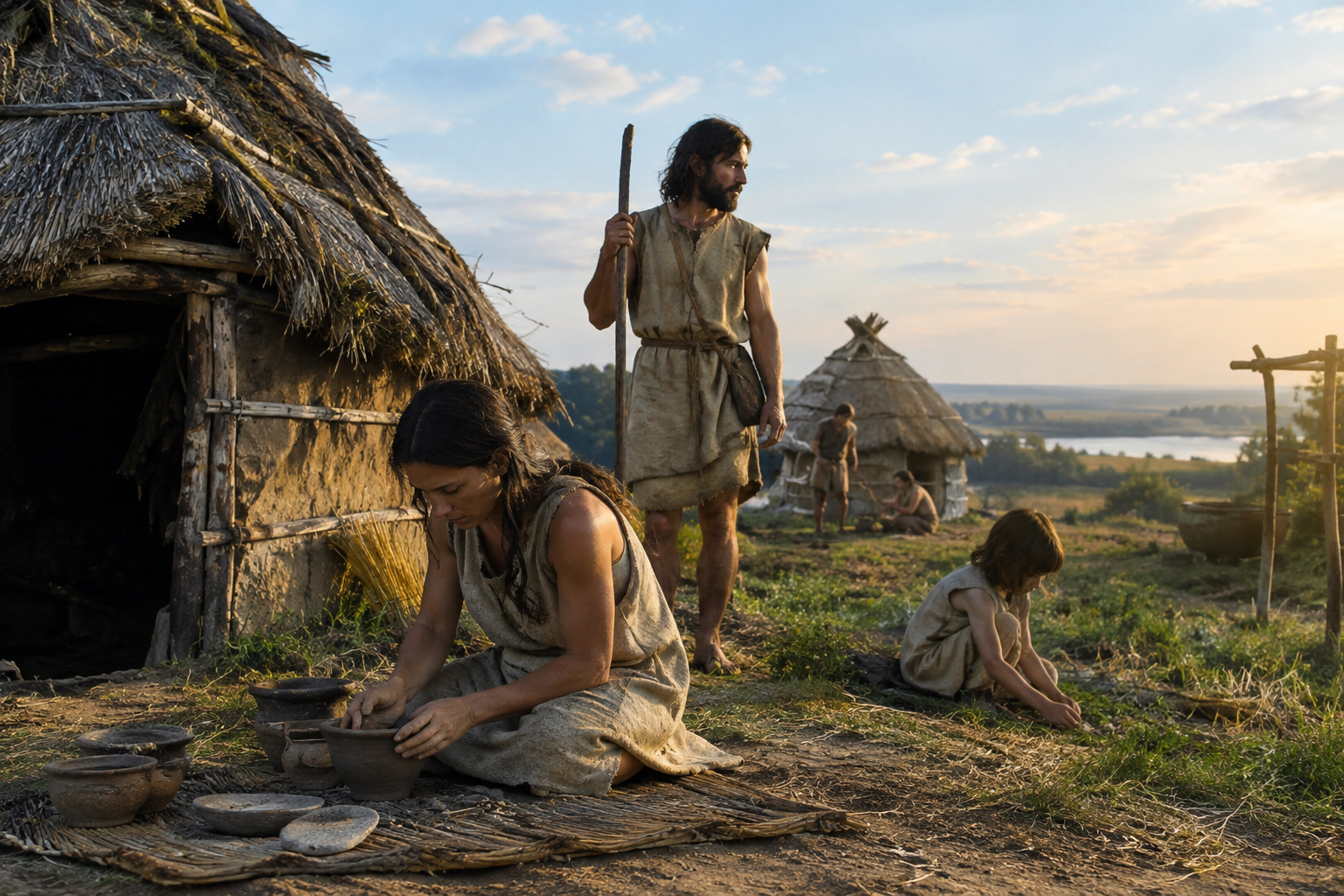
At Polgar Csoszhalom in eastern Hungary, one late Neolithic man, sample I16550, offers a small but striking glimpse into the paternal history of early farming Europe. Dated to around 4760 BC, he belongs to the Y-DNA haplogroup G2a2a1a2a2c, a branch nested within the wider G2a line that appears again and again in Europe's first agricultural societies.
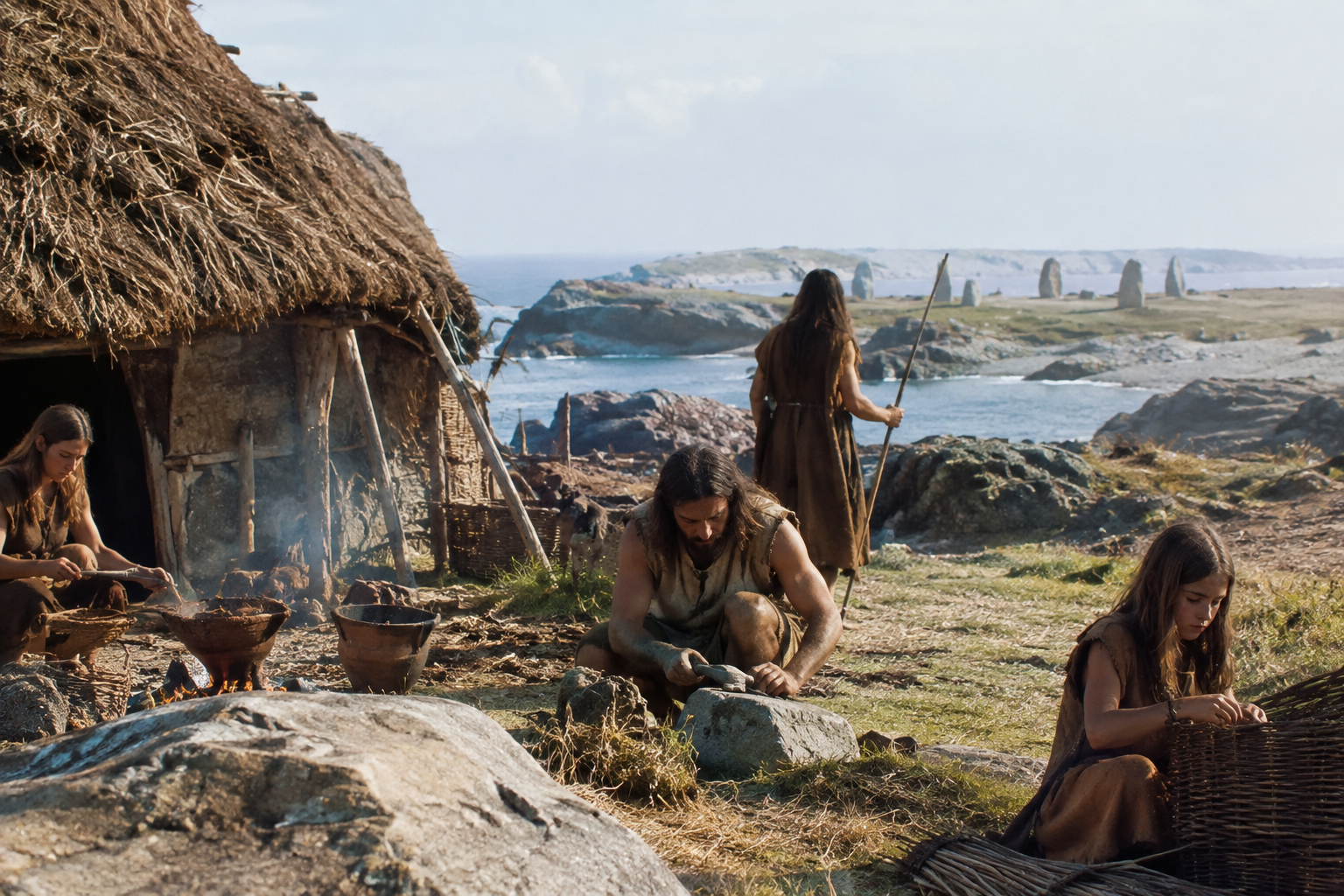
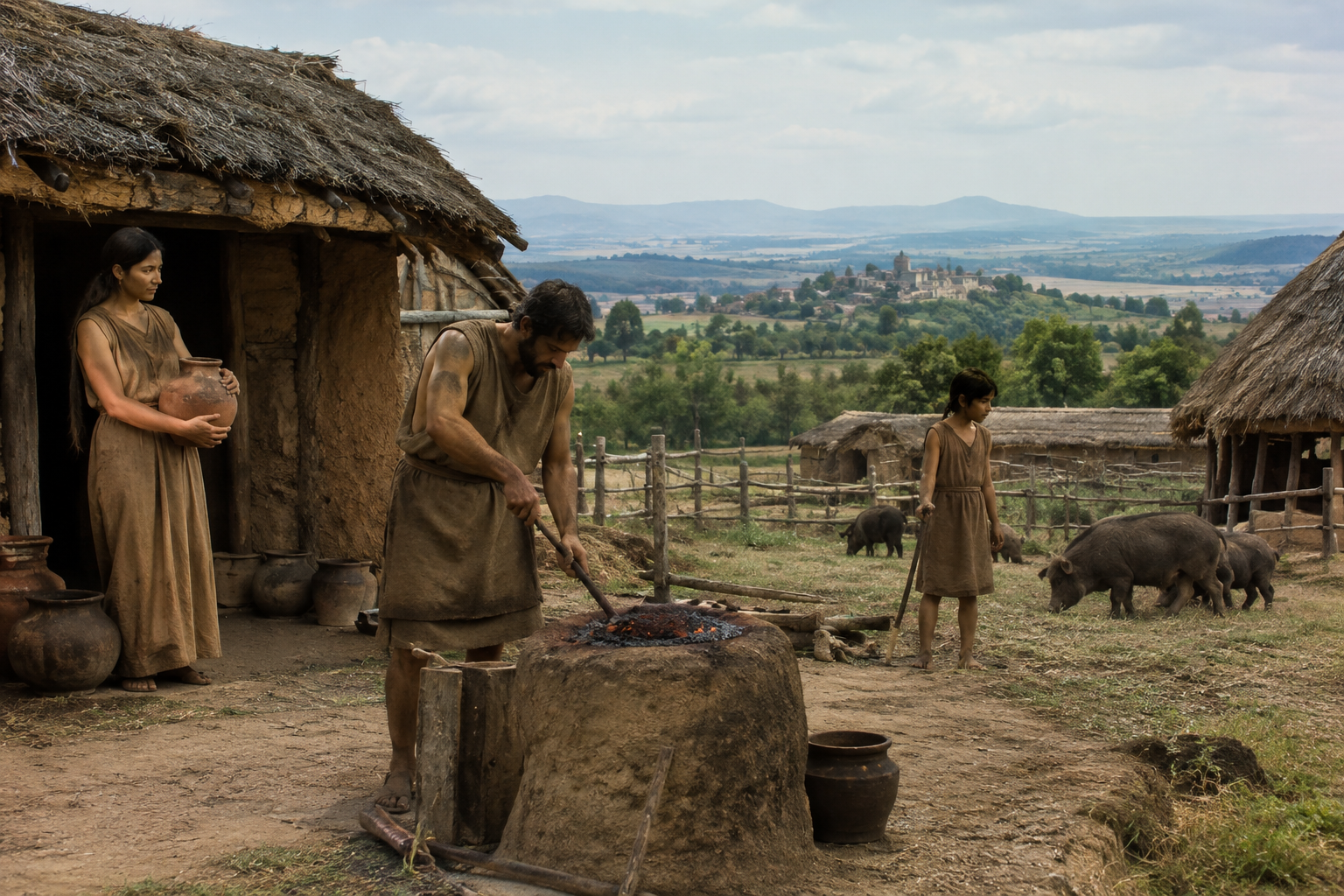
That matters because Polgar Csoszhalom was not some isolated hut in the marshes. It was part of the dense and innovative world of the Neolithic Carpathian Basin, where tells, settlements, exchange networks, and new farming lifeways had already transformed the landscape. A direct paternal lineage like G2a2a1a2a2c does not describe a whole person's ancestry or identity, but it can anchor one narrow family line inside that much larger social upheaval.
Polgar Csoszhalom is one of those sites archaeologists keep coming back to because it sits at the intersection of settlement history and social change. In the fifth millennium BC, communities in the Great Hungarian Plain were not merely surviving; they were building durable settlements, farming intensively, and participating in long-distance connections that linked the Carpathian Basin to wider southeastern and central European developments.
Sample I16550 comes from that late Neolithic horizon. Even with minimal personal detail preserved in the short record, the combination of place, date, and haplogroup is informative. G2a lineages are strongly associated with Europe's early farmers, especially those whose deeper roots lie in the spread of agriculture from Anatolia into the Balkans and onward into central Europe. By the time we reach Polgar Csoszhalom, that farming expansion is no longer brand new. It is established, local, and generations deep.
So this is not a story about the very first pioneer stepping into an empty land. It is more interesting than that. I16550 represents a later chapter, when farming communities in Hungary had already become old societies with their own local histories.
5th Millennium Carpathian Basin DNA
The exact branch in this article, G2a2a1a2a2c, is a fine-grained subdivision of the broader G2a family. That broader family is well known in ancient DNA because it appears frequently among Neolithic farmers across parts of Europe. But one should be careful here: the history of G2a as a whole is not automatically the history of every one of its later twigs.
What can be said safely is that I16550 fits a familiar Neolithic pattern in southeastern and central Europe, where G2a paternal lines are often found among farming populations. What cannot be said from a single sample is that every later bearer of this branch descends from Polgar, or that this one lineage maps neatly onto a language, tribe, or ethnic label. Ancient Y-DNA is narrower than that. It follows one father-to-son line through a population that was genetically and culturally more complex than any single haplogroup can capture.
Still, narrow evidence can be powerful when placed in context. In the Carpathian Basin, G2a's repeated presence helps mark the long demographic legacy of the Neolithic transition. A man like I16550 was living in a region that had become one of prehistoric Europe's great contact zones, where local continuity and outside links existed side by side.
Hungary is central to this story not because every important Neolithic development happened there, but because the Carpathian Basin acted as a corridor and a laboratory at once. Farming populations moving into Europe passed through and settled here early, and over time the region developed distinctive local traditions rather than serving merely as a route westward.
That makes a late Neolithic Hungarian G2a lineage especially useful historically. It reminds us that the spread of farming was not a single migration event frozen in time. Communities grew, split, intermarried, reorganized, and persisted for centuries. Paternal lines could survive through all that, even while the rest of a population's ancestry shifted through ongoing contact with neighbors.
Ancient DNA research on Neolithic Europe has repeatedly shown that the first farmers were not genetically identical from place to place. Regional histories mattered. In that sense, G2a2a1a2a2c at Polgar Csoszhalom is best understood not as a label for "the Neolithic" in the abstract, but as one thread in the local history of a mature farming community on the Great Hungarian Plain.
A broader introduction to how these early agricultural populations spread and changed can be found in this research resource associated with the ancient sample record, which is relevant here because it situates finds like I16550 within the expanding archaeogenetic picture of Neolithic Europe.
One of the most useful correctives from archaeology is that "farmer ancestry" should not conjure a uniform mass of people marching across a map. By around 4760 BC, the inhabitants of sites like Polgar Csoszhalom were already descendants of earlier settlers, but they were also members of settled regional communities with their own architectural habits, exchange systems, and social worlds.
That distinction matters for anyone exploring a haplogroup match. If your paternal line connects to a branch like G2a2a1a2a2c, the most responsible historical picture is not a romantic tale of a lone founder, but a connection to the long endurance of Neolithic male lines in farming societies. These were communities that had already put down roots, reshaped environments, and participated in the complicated mosaic of prehistoric Europe.
Hungary's ancient DNA record has become particularly important because it bridges several big historical phases: the arrival of farming, the consolidation of Neolithic lifeways, and later transformations in the Copper and Bronze Ages. Even when we only have one directly relevant sample here, that sample sits in a region where those long-term transitions are unusually well studied.
If there is a larger lesson in G2a2a1a2a2c, it is one of persistence. Many famous later European Y-DNA expansions are associated with Bronze Age and post-Bronze Age shifts, but G2a often points further back, into the age when agriculture, stock-keeping, and permanent villages were remaking European life. That does not mean such lines vanished later, only that their best-attested early archaeological context is often Neolithic.
In practical terms, I16550 is a reminder that some paternal lines in present-day people may reach back not to medieval dynasties or Iron Age war bands, but to the older and less glamorous world of settlement mounds, cultivated fields, and village continuity. That world is foundational. Without it, much of later European history never happens.
For members of the MyTrueAncestry community, G2a2a1a2a2c is most evocative when placed beside evidence like I16550 from Polgar Csoszhalom: a paternal line present in the late Neolithic Carpathian Basin, in a landscape shaped by long-settled farming communities. It points most clearly toward the deep history of early European agriculture rather than toward a specific later people, kingdom, or noble house.
That is, in its own way, a rather grand inheritance. Not a court pedigree, but a link to the men whose families lived through Europe's first great agricultural centuries and helped build the local worlds from which so much later history emerged.

Comments