Haplogroup Q1b2b

– 5 min read


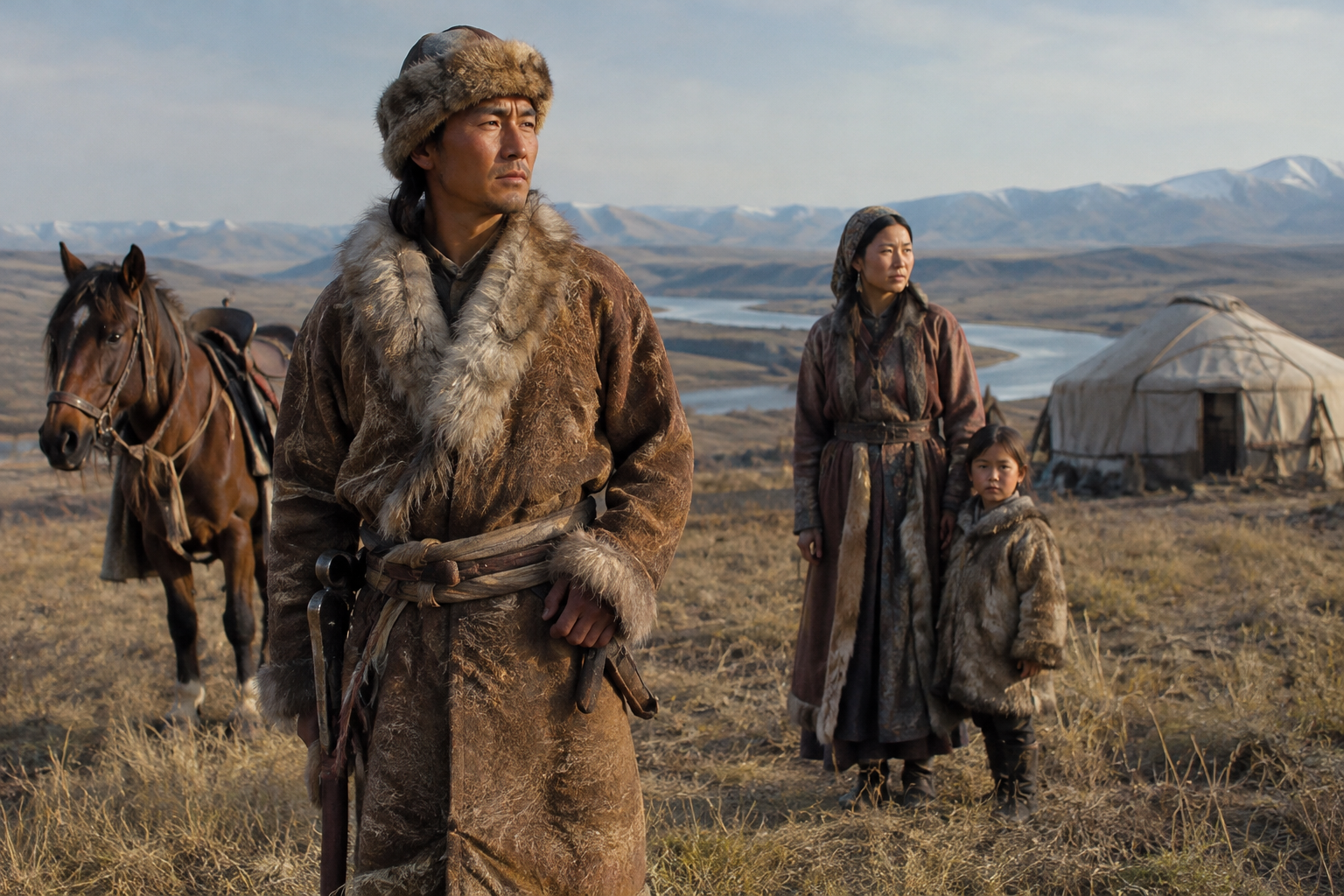
On the Upper Irtysh River in eastern Kazakhstan, one Late Bronze Age man has become a small but intriguing signpost in the history of Y-DNA haplogroup Q1b2b. He is known in the ancient DNA record as KKN093, dated to around 1640 BC at Koken. That is not a grand royal tomb or a famous historical burial. It is, in some ways, more useful than that: a firmly placed human life from the Bronze Age steppe zone, tied to a real landscape where populations, animals, technologies, and paternal lineages were on the move.
For people researching Q1b2b today, KKN093 matters because Y-DNA follows one direct paternal line, father to son across generations. It does not describe a person's whole ancestry, and it certainly does not assign a fixed ethnicity. But when a branch such as Q1b2b appears in an ancient individual from Bronze Age Kazakhstan, it gives us a concrete historical setting for at least one part of that lineage's story: the eastern steppe world, at a time when communities across Inner Eurasia were linked by mobility, herding, exchange, and shifting mixtures of ancestry.
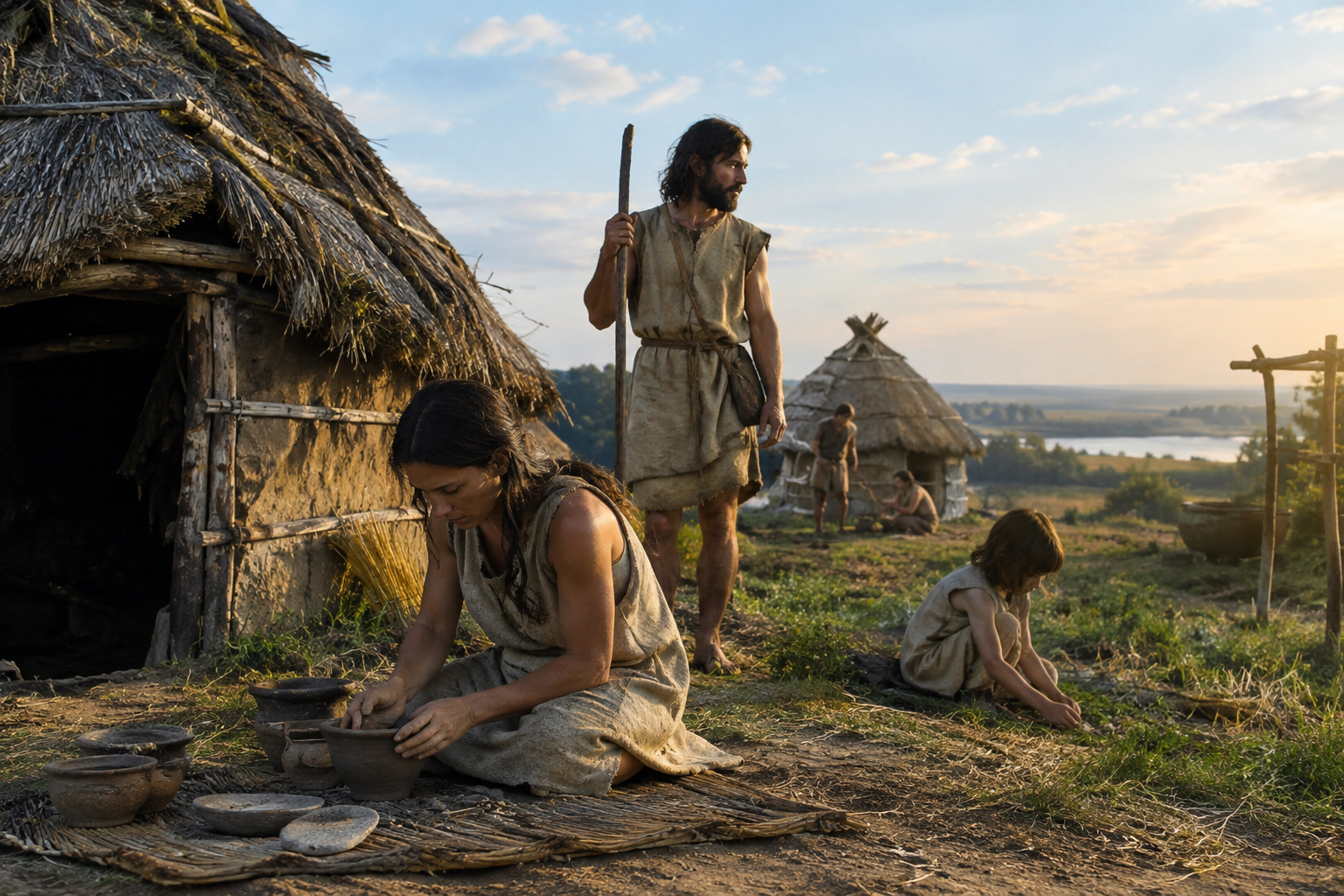
The Koken site lies in a region that was anything but isolated. The Upper Irtysh basin sits near a great meeting ground: the Altai, eastern Kazakhstan, southern Siberia, and the wider steppe corridor. By the middle of the 2nd millennium BC, this was a zone where pastoral lifeways, metalworking traditions, and long-distance contacts overlapped. A man like KKN093 belonged to that broad world, even if the surviving record gives us only a brief archaeological label and a date.
That sparseness can be frustrating, but it is also a useful discipline. We do not need invented grave goods or heroic biographies to see the historical importance of the sample. The significance lies in its position: a paternal lineage associated here with a Late Bronze Age individual in eastern Kazakhstan, at a time when the steppe was not a blank expanse but a web of local communities connected over huge distances.
Research on ancient populations across Inner Eurasia has repeatedly shown that this region was shaped by mixture rather than purity, continuity mixed with fresh arrivals, and local communities that could absorb influences from several directions at once. One broad study of that ancient steppe and forest-steppe world is available here: https://www.science.org/doi/10.1126/sciadv.adw8219.
Haplogroup Q is a large Y-chromosome branch with a deep history across northern Eurasia and, in other branches, the peopling of the Americas. That wider background is important, but it should not be lazily collapsed into the narrower label Q1b2b. A subclade is not the whole parent lineage in miniature. When we discuss Q1b2b, we are dealing with a more specific paternal branch whose detailed ancient distribution is still patchy.
KKN093 therefore should be treated as a valuable data point, not as the single origin story for everyone in this haplogroup. What it does show is that a line associated with Q1b2b was present in the Bronze Age Upper Irtysh region. That places at least one bearer of the branch in a part of Eurasia that often acted as a hinge between western steppe populations and eastern Inner Asian groups.
That matters because eastern Kazakhstan is precisely the sort of place where archaeologists expect complicated lineages. People moved through this region with herds, with marriage networks, with trading connections, and sometimes with entirely new population streams. A Y-line found here might represent local continuity, recent arrival, or integration into a wider steppe community. Without more closely related ancient samples, caution is not just polite; it is necessary.
Bronze Age Kazakhstan often appears in popular imagination as endless horse country, but the archaeology is far richer than that caricature. Different ecological zones supported different rhythms of life, and communities were tied into broader developments stretching from the Urals to the Altai and beyond. The Upper Irtysh area in particular sits near routes that later became famous as connectors between Siberia, Central Asia, and the eastern steppe.
That geographical position helps explain why a Q-line here is so interesting. Haplogroup Q is more often associated, in broad terms, with northern and Inner Asian paternal history than with the dominant west Eurasian Bronze Age lineages often discussed in Europe-focused articles. So when a branch like Q1b2b turns up in a Late Bronze Age male from Koken, it reminds us that the paternal history of the steppe was never a single-line story. It included multiple lineages living side by side, sometimes for long periods.
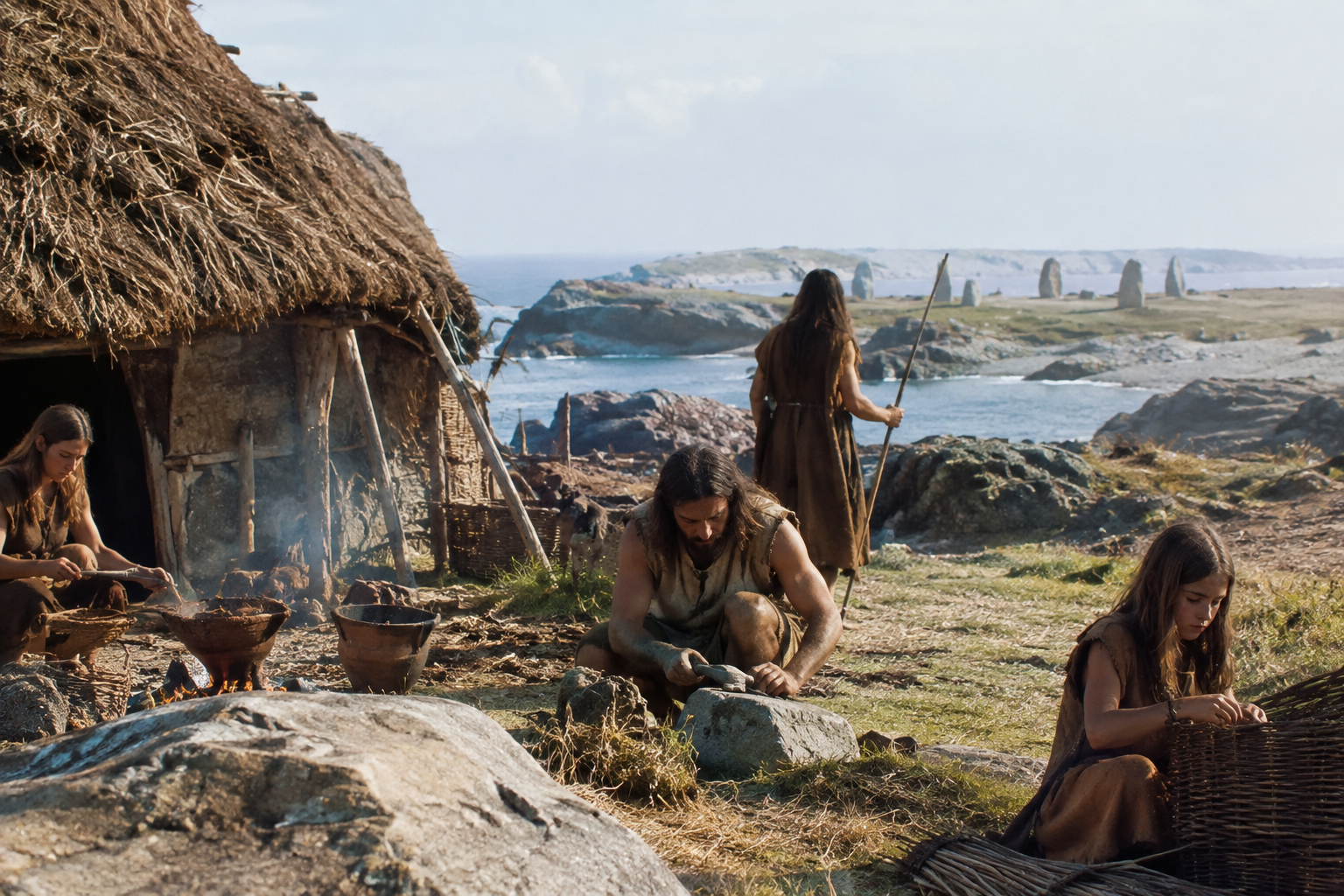
In archaeology, those mixed landscapes are usually the most revealing ones. They force us to think less in terms of neat ethnic blocks and more in terms of frontier societies, interaction zones, and communities that could be both local and connected. KKN093 fits that pattern rather well.
East-West Mixing in Inner Asia
With only one named ancient individual in the present evidence, the responsible approach is to widen the lens without overstating the claim. KKN093 does not prove that Q1b2b was common in Bronze Age Kazakhstan, nor that all later bearers descend from one local population on the Upper Irtysh. But the sample does place the lineage within a believable archaeological theatre: Bronze Age Inner Eurasia, where paternal lines could persist, spread, and recombine within mobile societies.
This is also where ancient DNA has changed the old historical picture. Earlier writing often treated the steppe as if whole peoples simply replaced one another in tidy succession. Genetics has made that view much harder to maintain. Again and again, ancient studies show mosaics: local ancestry surviving through cultural change, newcomers being absorbed, and paternal lines shifting in ways that do not always match pottery styles or historical labels.
That is especially relevant for a haplogroup article. Readers naturally want a straight route from ancient sample to modern identity, but the evidence almost never works that neatly. What it can do is give you plausible historical environments in which your paternal line may have been moving. For Q1b2b, KKN093 points toward one such environment with unusual clarity: the Late Bronze Age steppe-edge world of eastern Kazakhstan.
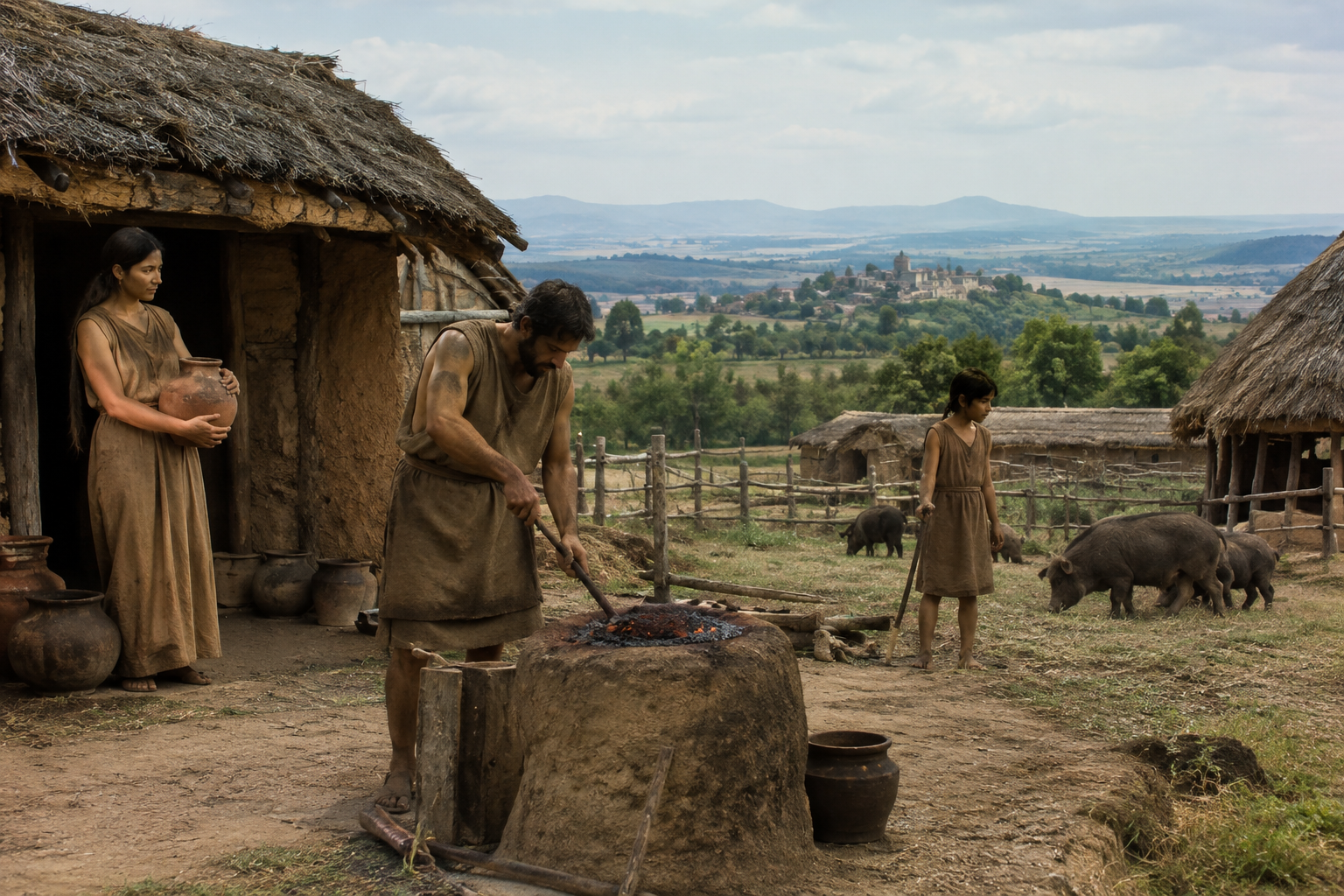
There is a temptation to see remote river valleys as marginal. The Upper Irtysh was not marginal. Rivers in steppe and forest-steppe settings are often connectors: routes for seasonal movement, channels for contact, and anchors for settlement. In later periods, this broader region would sit near major currents of interaction linking the Altai, Siberia, Xinjiang, and the Kazakh steppe. Bronze Age communities were already part of a long tradition of movement across these landscapes.
That is why a Q1b2b-associated male from Koken deserves attention out of proportion to the brevity of his entry in the record. He is not important because he can be made into a legend. He is important because he is ordinary in the best archaeological sense: an actual person from an actual Bronze Age community, carrying a paternal line that helps map the diversity of ancient Inner Eurasia.
For modern testers, that can be more valuable than a glamorous but weakly evidenced claim. It places the lineage in a world of herders, regional interaction, and shifting frontiers rather than in a fantasy pedigree. And that, in the end, is how ancient DNA is most interesting: not when it flatters us, but when it gives us a better map of the past.
Prehistoric Steppe Interactions
At present, the clearest ancient anchor in this evidence for Q1b2b is KKN093 from Late Bronze Age Koken, around 1640 BC on the Upper Irtysh in Kazakhstan. That does not reduce the haplogroup to one place or one people. It does, however, place part of its paternal history in a Bronze Age Inner Asian setting where movement, mixture, and regional continuity all mattered. For anyone tracing this lineage today, that is a solid and historically meaningful starting point: a branch present in the lived realities of the Eurasian steppe, not just in modern test results.
Comments