Ancient DNA and Genetic History of the Mongolian Steppe
– 5 min read


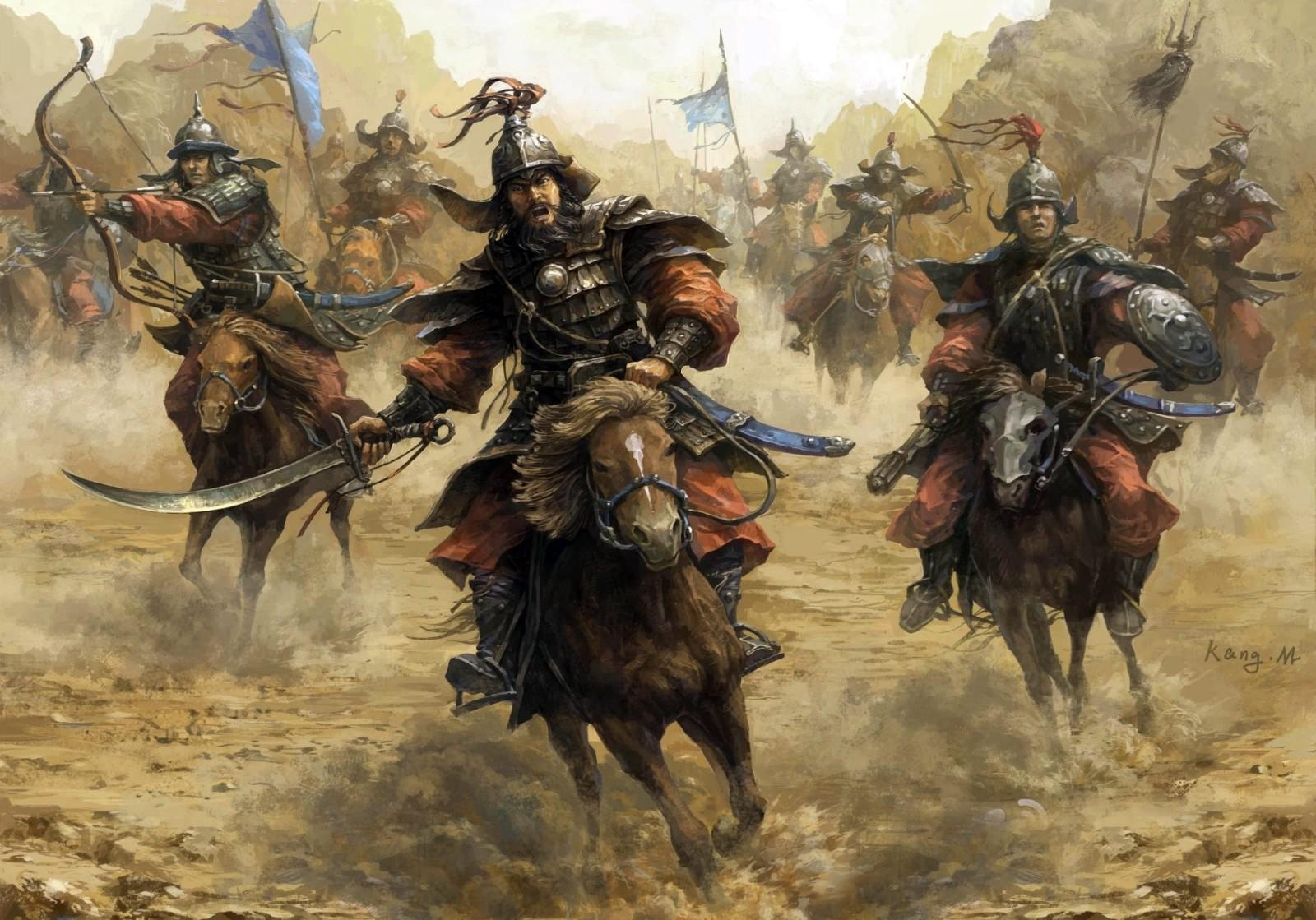
The Mongolian steppe stretches like an inland sea of grass—vast, wind-cut, and deceptively open. For thousands of years it hummed with movement: herders driving animals across seasonal pasture, traders carrying goods, warriors crossing vast distances, communities meeting, mixing, or avoiding one another. The tension is what makes it fascinating. People could travel far, yet drew firm boundaries. They lived mobile lives yet preserved strong identities.
Ancient graves, cemeteries, and burial mounds preserve not only bones but social choices—who lay nearby, how the grave was built, what objects accompanied the dead. Combining these visible remains with ancient DNA transforms what we can ask. Did different burial traditions belong to the same population or separate ones? Did empires unite communities or merely rule over them? Ancient DNA gives human bodies a new voice, speaking alongside grave construction and artefacts.
The steppe sat at the meeting point of worlds: western grasslands connecting toward the Black Sea, eastern Asian societies, powerful settled neighbours to the south, forest and mountain regions to the north. It was a bridge and a filter. Movement did not always mean blending—sometimes it created pockets of difference living side by side, shaped by pastoral life's channels, barriers, and moments of contact.
One striking lesson is that gene flow followed social rules. It could be restricted between neighbours, encouraged by long-distance migration, and varied by rank and period. In some cemeteries, high-status individuals appear more biologically similar, suggesting restricted marriage circles. Lower-status people show greater variety, hinting at broader networks. The Mongolian steppe is thus a laboratory of human connection and separation—intimate as well as grand.
In the Late Bronze Age, central Mongolia held communities sharing the same landscape but not the same human story. The Deer Stone–Khirgisuur complex—tall carved standing stones beside large stone mound enclosures—dominated the landscape as public statements of ceremony and memory. Figure-shaped and Ulaanzuukh burials expressed a distinctly different mortuary tradition. Ancient DNA delivered a vivid answer to the long-standing question of whether these were merely stylistic differences: these burial traditions corresponded to two clearly distinct genetic populations.
These groups overlapped in time and space, yet evidence points to limited gene flow between them—a powerful reminder that cultural boundaries can remain real even in highly mobile pastoral societies. The Deer Stone–Khirgisuur communities also carry a faint trace of long-distance western ancestry linked to earlier Afanasievo and Khemtseg populations, suggesting episodes of contact across enormous distances rather than any overwhelming flood of newcomers.
Bronze Age central Mongolia was therefore no single people under a single tradition, but a complex human mosaic. Neighbouring groups reinforced their identities through burial custom and mixed less than open terrain might suggest. The carved deer stones and massive khirgisuurs were not only ritual monuments—they belonged to a community that was, in important biological ways, distinct from others around it.
In the Early Iron Age, the expansion of the Slab Grave tradition marked a major demographic turning point. This was not a new fashion in funerary architecture alone—it was tied to substantial population replacement. Earlier Late Bronze Age groups were overtaken by communities carrying a different ancestry profile, transforming the human landscape as thoroughly as the archaeological one.
Slab graves, built with upright stone slabs forming a grave enclosure, spread widely with a stark, standardised dignity. Crucially, burial style here aligns with people, not just taste. The evidence points to genuine demographic turnover rather than local populations simply adopting new rituals. Shifts in economy, herding strategies, climate, or regional power may have made older communities vulnerable, though ancient DNA alone cannot resolve every question—it makes one thing unmistakably clear: the transition was biological as well as cultural.
A burial ground is one of the deepest expressions of social continuity. For one mortuary tradition to replace another suggests the very communities maintaining memory on the land had changed. The rise of the Slab Grave tradition swept into the older Bronze Age mosaic and fundamentally remade it—one of the steppe's central dramas, a pulse of reorganisation in which new populations stamped strong new identities onto the land through burial architecture.
By the Xiongnu Empire—roughly the second century BCE to the first century CE—the steppe had entered a new political age. Yet empire did not erase local complexity. Western frontier elite cemeteries reveal extraordinary genetic variety even within single burial grounds, almost mirroring the diversity seen across the empire as a whole. People of varied ancestry were drawn together not just empire-wide, but within individual communities.
This diversity was not evenly distributed—status mattered profoundly. Higher-status individuals showed lower genetic diversity; lower-status individuals displayed greater heterogeneity. The elite appear to have maintained restricted marriage patterns, preserving tighter lineage boundaries. Lower-status people were the main arena in which diverse ancestries mixed. Power shaped intimacy; rank shaped ancestry.
This is a powerful corrective to any picture of steppe empires as socially fluid in every respect simply because their people were mobile. Mobility was structured and channelled through rank and political need. The Xiongnu world was diverse yet stratified, uniting wide populations through social rules governing who mixed with whom. Individuals laid out in frontier cemeteries still preserve that social order in their bones—showing that ancestry was part of imperial politics in the most intimate sense of family lines and marriage circles.
If Xiongnu cemeteries reveal empire as diversity structured by rank, medieval eastern Mongolia reveals something equally striking: continuity. Across roughly 1,200 years—from the Xiongnu–Xianbei period through the age of the Mongols—individuals from this eastern region show a strong, persistent eastern Eurasian genetic profile with only limited heterogeneity. Despite centuries of political upheaval, this region remained surprisingly stable in its ancestry.
This contrasts sharply with central Mongolia, where medieval populations display greater heterogeneity and lower proportions of eastern Eurasian ancestry. Mongolia did not move through history as a single biological unit; different regions experienced different intensities of contact and mixture. Eastern Mongolia stands out as an area of relative stability, suggesting durable social networks, enduring kinship practices, and local institutions strong enough to reproduce themselves across generations.
Political integration does not automatically mean complete population mixing. Large empires can contain local continuity, and some landscapes drew in strangers far more intensively than others. A person buried in eastern Mongolia under the shadow of the Mongol Empire might be dressed in the material trappings of that vast political age, yet their genetic profile links them strongly to others in the same region hundreds of years earlier and later.
Eastern Mongolia's long continuity adds a final layer to the steppe's history. Under changing banners, through centuries of movement and empire, some communities remained recognisably themselves. The steppe's story is not only one of invasion, expansion, and mixing—it is equally a tale of persistence, every bit as dramatic as conquest.
Comments