Clan Scrimgeour

– 2 min read


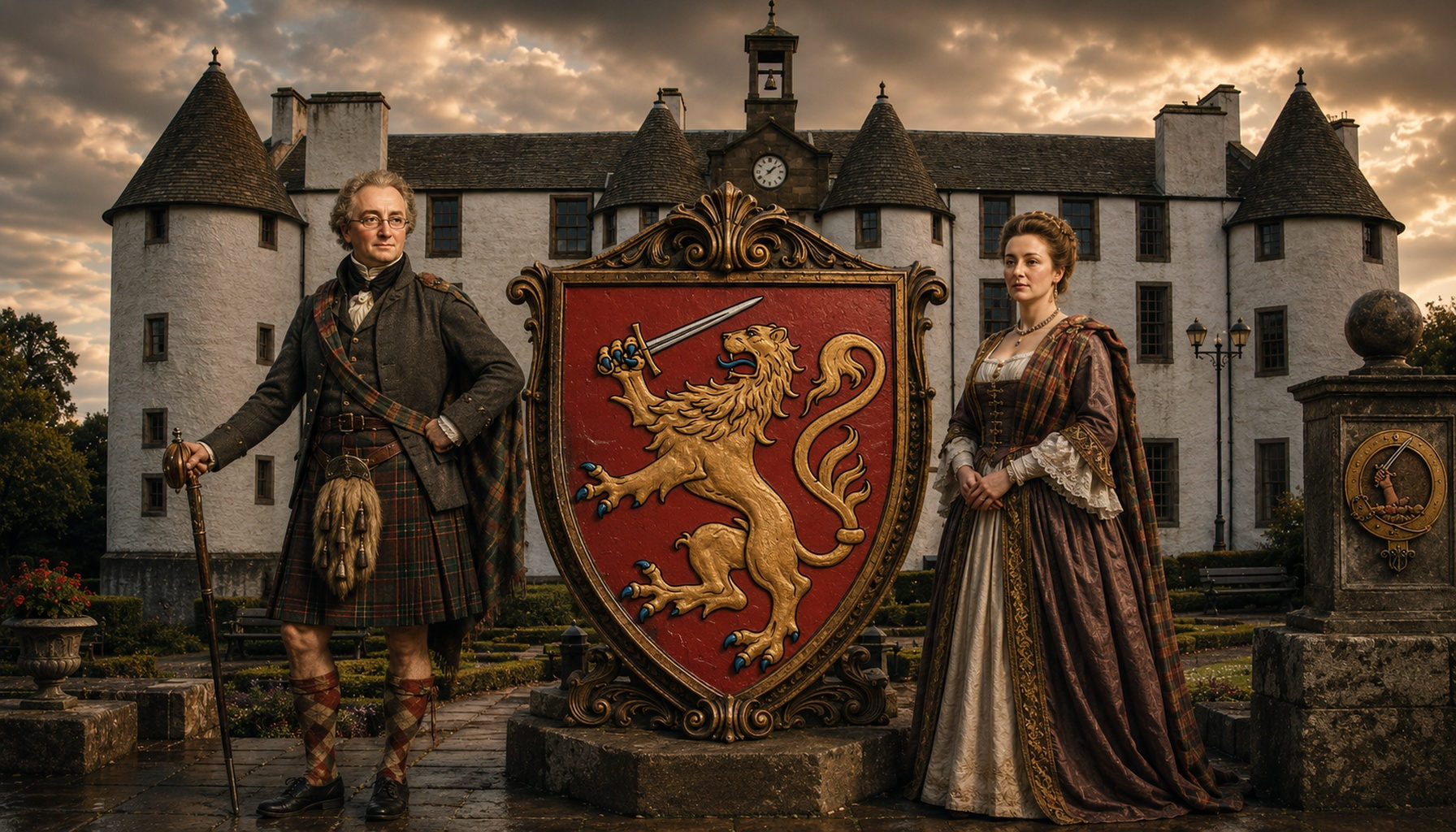
Clan Scrimgeour was a fighting family of eastern Scotland, closely tied to Dundee and long remembered for hereditary royal service, military duty, and the ancient office of Royal Standard Bearer of Scotland. Their primary linked haplogroup here is R1b1a1b1a1a2d1a1, a paternal line associated with many western European populations and with a deep archaeological footprint across Iron Age and medieval Europe. The family name itself is often connected with combat and skill at arms, which suits a house whose identity was built not simply on landholding, but on visible service to crown and kingdom.
In historical terms, the Scrimgeours are a very Scottish kind of clan story: loyalty rewarded with office, local authority reinforced by royal favor, and prestige expressed through heraldry, castle, and battlefield memory. From the medieval period onward, they emerged as significant figures in Angus and Dundee, defending both royal interests and civic standing. Sir Alexander Scrimgeour appears in the age of Robert the Bruce in 1306, already placing the family inside the great national struggles of Scotland. Later figures such as Sir James Scrimgeour of Dudhope (1550-1612) and John Scrimgeour, created 1st Earl of Dundee in 1668, show how the family moved from martial office into the noble and political life of early modern Scotland without ever losing that older military reputation.
The great location anchor for the family is Dudhope Castle in Dundee, long associated with the Scrimgeours and central to their status in the region. The castle began as a fortified tower house, probably in the late medieval period, and was later expanded into a more substantial residence as the needs of lordship changed from pure defense to display and administration. Sitting above the town, it was well placed both symbolically and practically: close enough to Dundee to dominate local affairs, but strong enough to embody the old world of armed authority. Over time Dudhope passed through alteration, decline, and restoration, as so many Scottish urban castles did, but it still stands today as one of the most tangible survivals of Scrimgeour power. Yes, it can still be visited from the outside, and the building survives within modern Dundee as a real and remarkably direct link to the clan's history.
From a DNA perspective, the Scrimgeour-linked paternal haplogroup R1b1a1b1a1a2d1a1 belongs to a wider network of lineages seen across different parts of ancient Europe. Related or linked examples include Viking Age Denmark from Tjaerby, Randers (CGG100918), Viking Age Norway from Tomeide, Nesna (CGG107023), a Celtic Briton from Pocklington, Yorkshire, England (I13754), and Iron Age Etruscan individuals from Casenovole, Italy (CSN003 and CSN010). These are not evidence of direct descent from the Scrimgeour family, and it would be wrong to claim that. What they do show is that the same broader paternal branch turns up in strikingly different historical settings: Scandinavian, Brittonic, and Italian alike. That is a useful reminder that a Scottish clan line sits inside a much bigger European story of mobility, warfare, local continuity, and the long afterlife of ancient paternal ancestry.
If you carry the Scrimgeour name, have roots in Dundee or Angus, or simply want to know whether your DNA connects with this family story or with related ancient R1b1a1b1a1a2d1a1-linked samples, you can explore that for yourself. Upload your DNA to MyTrueAncestry and see whether your results align with Clan Scrimgeour, its historic world of royal service and arms, or the wider ancient populations that illuminate its deeper background.
Comments