Haplogroup R1b1b2a

– 4 min read


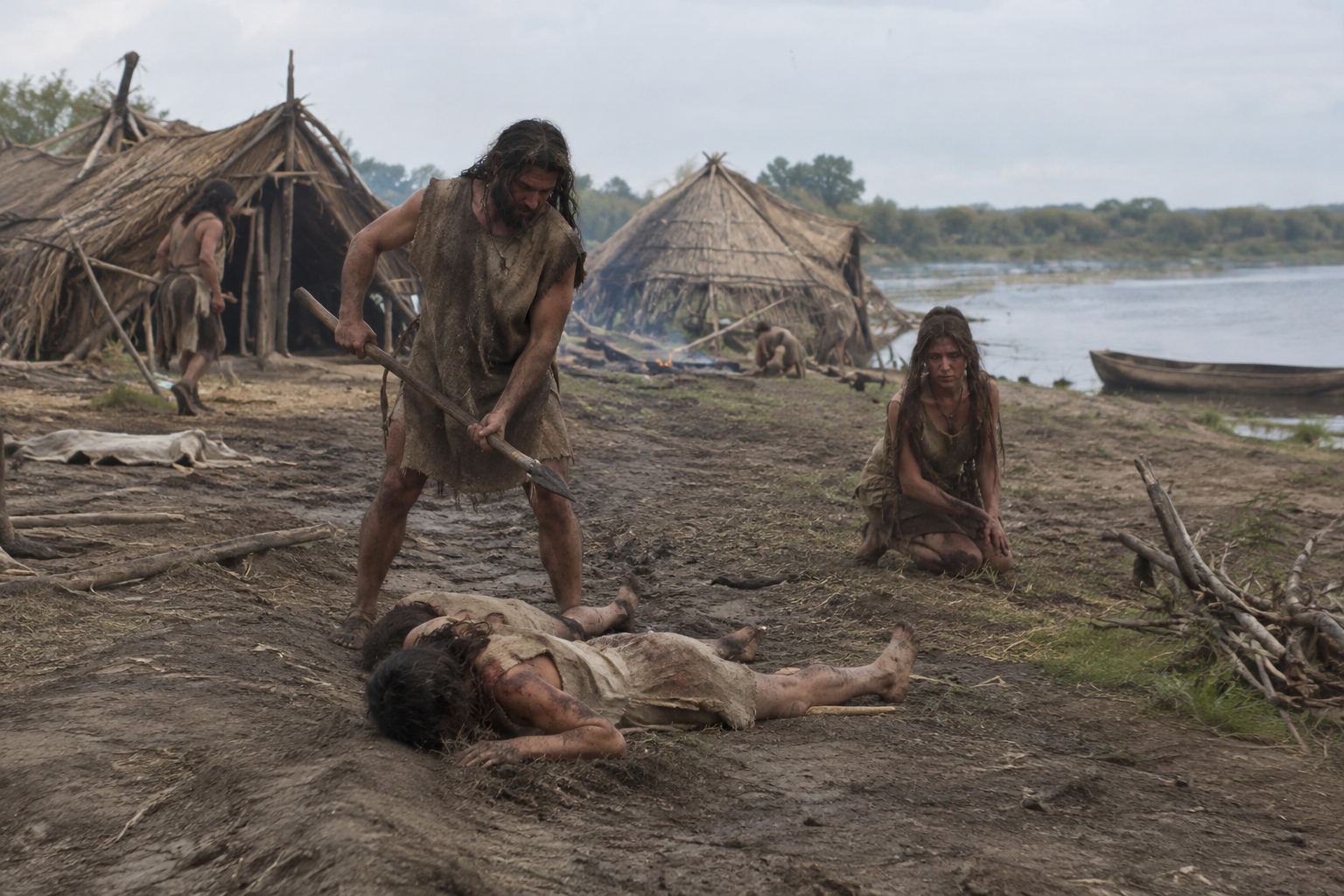
At Grotta Continenza in central Italy, one of the most revealing burials for this lineage comes from the Neolithic: sample R6, dated to about 5200 BC. The site is important in its own right, because Grotta Continenza preserves a long sequence of human activity from foragers into the farming era. That makes any Y-DNA assignment there especially interesting. A man associated here with R1b1b2a places this paternal line in a very early agricultural landscape, long before the later Bronze Age expansions that are so often discussed when people talk about western European R1b.
That is the first useful correction to make. R1b1b2a is a paternal branch within the wider R1b family, and Y-DNA follows only one line of descent: father to son to son. It does not stand for a person's whole ancestry, language, or ethnic identity. Still, when a branch appears in securely dated ancient individuals, it gives us a valuable thread. In this case, the thread runs from Neolithic Italy to a much later individual in west-central Africa, sample KIN004 from Kindoki in the Congo, dated to about AD 1750. The pairing is striking precisely because it is not a neat, single-region story.
Grotta Continenza lies in the Abruzzo region, near Lake Fucino, and has long been a key site for studying the transition from hunting and gathering to farming in Italy. A man like R6 matters because he belongs to that broad world of early settled life in which farming, herding, and new burial customs were reshaping the peninsula. The archaeology of such sites reminds us that the Neolithic was not a moment but a process, with older local traditions and incoming lifeways overlapping for generations.
For the haplogroup itself, this is a useful warning against over-simplification. When people hear R1b, they often jump straight to much later prehistoric narratives centered on Bell Beaker or steppe-linked expansions. But a Neolithic Italian individual associated with R1b1b2a shows that the deeper history of R1b-related paternal lines was already varied. Early branches could appear in local settings that do not fit the shorthand version of European prehistory.
A broader ancient DNA study of prehistoric Europe, published in Science, helped show just how complicated these transitions were across the continent. Even where farming spread widely, paternal lineages did not move in a single, uniform wave. Sites like Grotta Continenza matter because they anchor that complexity in a real place and time.
Ancient Y-DNA evidence is often frustratingly sparse. A single male burial cannot represent an entire valley, culture, or population. Yet a well-dated individual can still be historically valuable, because he proves presence. R6 tells us that a branch reported as R1b1b2a had reached, or persisted in, Neolithic Italy by the sixth millennium BC.
That matters especially in peninsulas and crossroads such as Italy, where population history is layered rather than tidy. The Italian peninsula repeatedly drew in people through maritime contact, local continuity, and later migration. MyTrueAncestry readers who match this haplogroup should be careful not to imagine a single homeland frozen in time. The better lesson is that some paternal lines were already moving through mixed early farming societies far earlier than popular summaries usually suggest.
Italy also keeps turning up in genetic studies as a place where local and incoming ancestries met and recombined over long periods. If you want a wider picture of how those later mixtures played out, the post below offers a useful regional comparison.
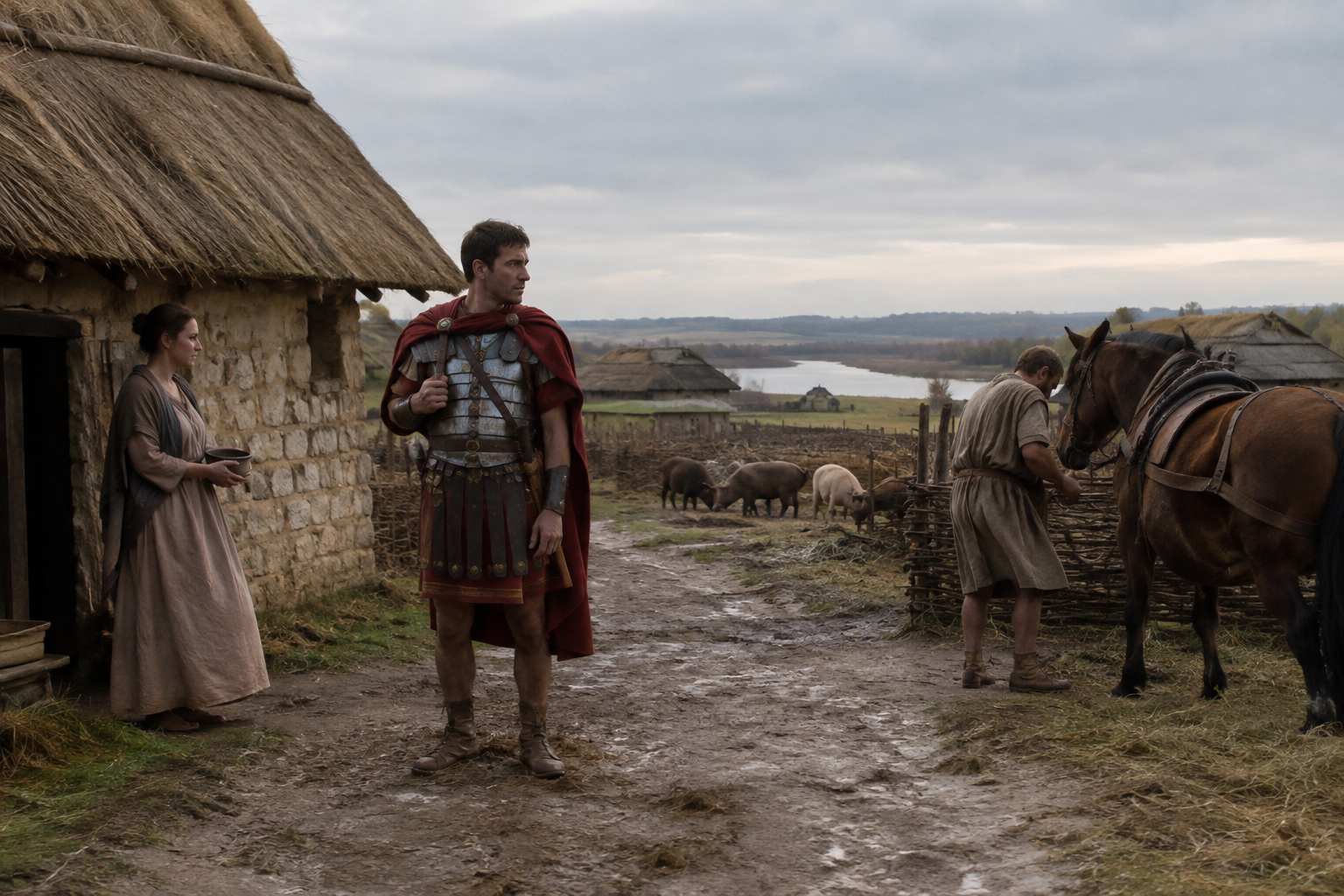
The second supplied individual could hardly be further removed in time and setting. KIN004 comes from Kindoki in the Congo and is dated to about AD 1750. Here, the significance is not prehistoric farming but the entangled human world of west-central Africa in the early modern period, when communities were living through trade, political change, and in many regions the violence and disruption of the Atlantic slave trade.
A reported association between KIN004 and R1b1b2a should not be treated as a shortcut to a single explanation. It does, however, fit a larger and very real historical fact: parts of central and western Africa contain paternal lineages from several different historical layers, including deeply rooted African variation as well as lineages affected by movements, contacts, and demographic upheavals over the last few thousand years. By the eighteenth century, the Congo was not isolated from the wider world; it was tied into regional kingdoms, trade networks, and European coastal contact.
Research on ancient and historical populations from Africa has increasingly shown that the continent's genetic history is every bit as dynamic as Europe's, though for a long time it was much less sampled. A study in Science Advances helped underline that point by examining ancient African genomes in ways that challenge any simplistic picture of static populations.
Put R6 and KIN004 side by side and the immediate temptation is to invent a grand migration story joining Neolithic Italy to eighteenth-century Congo. That would be a mistake. The evidence here does not document one continuous family trail between those individuals. What it does show is that a haplogroup label such as R1b1b2a can turn up in sharply different archaeological and historical contexts, and that those contexts must be interpreted locally.
In one case, we are looking at early farming Italy, a world of long-term transformation in prehistoric Europe. In the other, we are looking at central Africa in the early modern era, where lineages sit within a very different history of kingdoms, exchange, and coercion. The shared Y-DNA label is real, but the human stories are not interchangeable.
This is exactly why ancient DNA is most useful when kept close to archaeology. A haplogroup on its own is only a label in a branching tree. Once attached to a cave site in Neolithic Abruzzo or to a historical burial in the Congo, it becomes part of a richer and more disciplined account of the past.
For someone exploring R1b1b2a today, the most distinctive lesson is not prestige or certainty but breadth. This branch appears here in an early Neolithic Italian individual and in a much later Congolese one, which is a reminder that paternal lineages can travel across very different worlds and survive through very different historical processes. If your direct paternal line falls under this haplogroup, ancient DNA may not yet give you a single neat origin story, but it does place your lineage inside a genuinely old and geographically wide human history.
As more ancient samples are tested, what now looks like a scattered pattern may resolve into clearer regional branches. For the moment, R1b1b2a is best understood as a lineage whose ancient record already refuses easy stereotypes.

Comments