Haplogroup Q1b2a1

– 4 min read


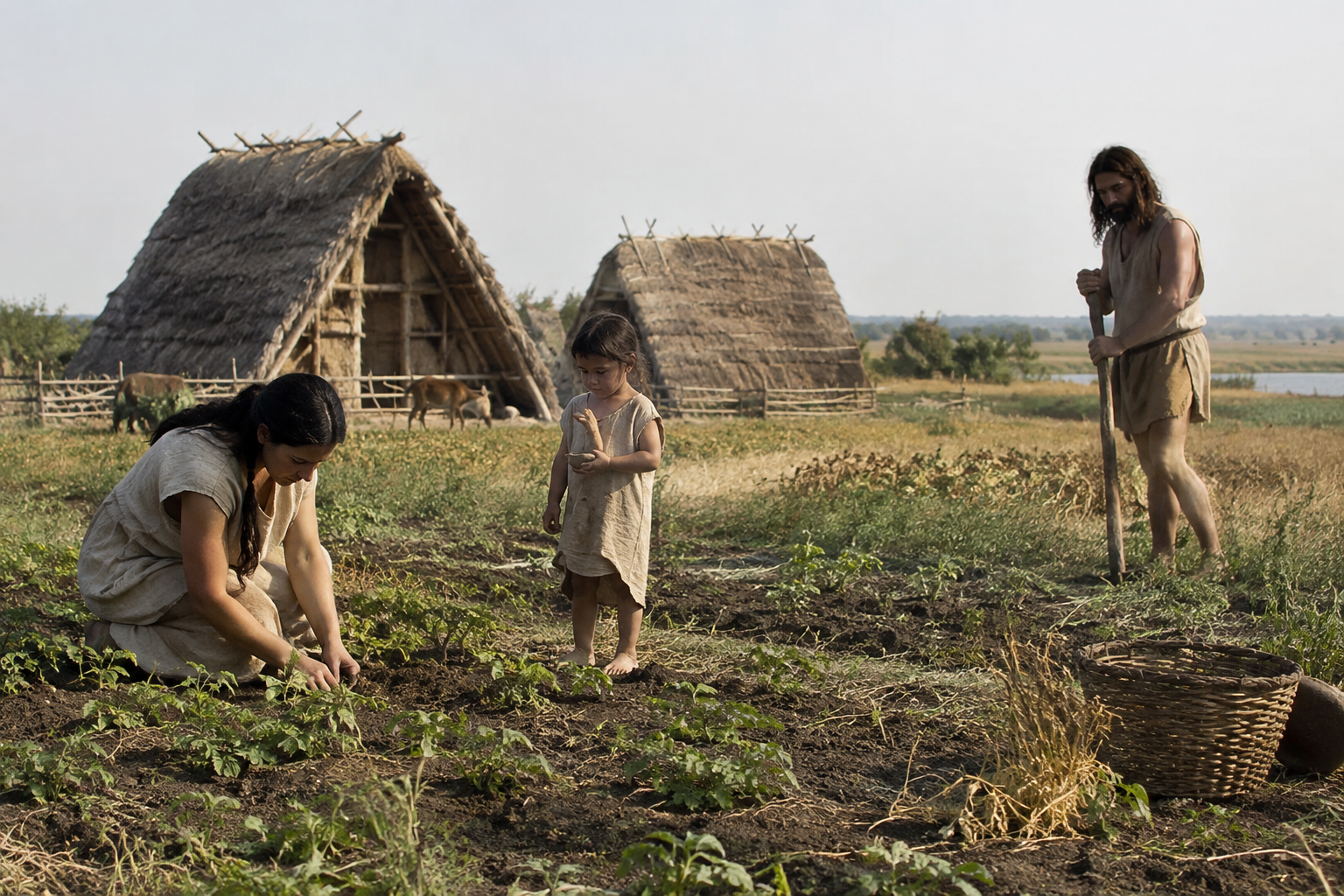
At Csongrad Kettoshalom-Bardostanya in Neolithic Hungary, one ancient male sample stands out for anyone interested in the paternal line now labelled Q1b2a1: I5124, dated here to around 4331 BC. That is already enough to make him arresting. Haplogroup Q is often discussed today in much broader Eurasian or American contexts, so finding a reported branch connection in a fifth-millennium BC farming landscape of the Carpathian Basin is precisely the sort of detail that stops you in your tracks.
The important thing is to keep our footing. Y-DNA traces one direct paternal line only, not a person's whole ancestry, language, or identity. Even so, a Neolithic Hungarian individual associated with Q1b2a1 is historically valuable because it reminds us that Europe's early farming world was not made up of just one or two paternal lineages moving in neat blocks across the map.
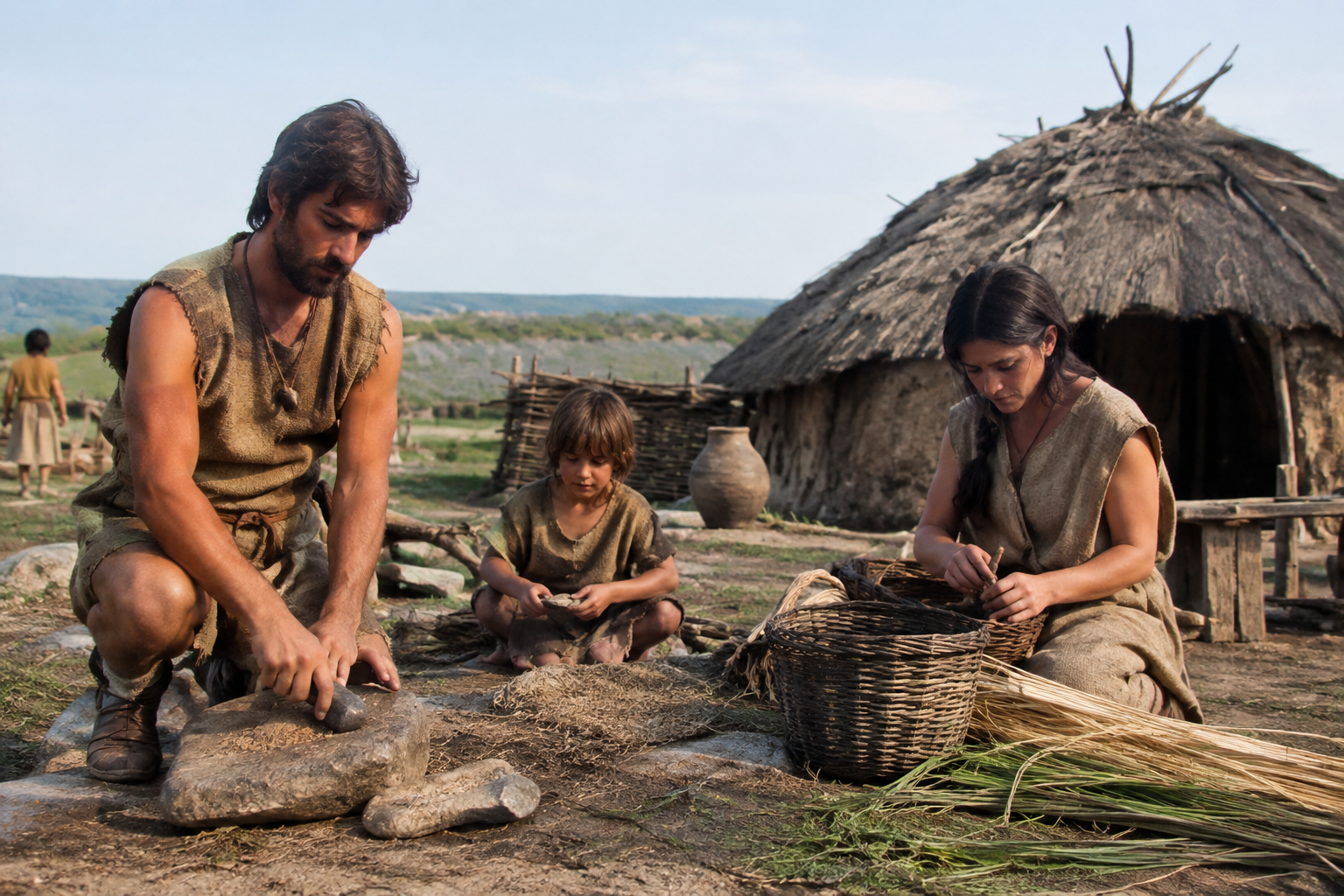
The site named for Csongrad Kettoshalom-Bardostanya belongs to the rich archaeological world of the Great Hungarian Plain, where Neolithic communities built settlements, farmed intensively, and participated in networks that linked the Balkans, the Carpathian Basin, and wider Europe. By the time of I5124, farming had long since arrived, but these communities were not frozen replicas of the first settlers. They were already generations deep into local histories of marriage, movement, and mixture.
That is where a lineage such as Q1b2a1 becomes interesting. In European prehistory, Q-lineages are much rarer in ancient datasets than the better-known paternal clusters often discussed for Neolithic and later populations. A reported appearance of Q1b2a1 in this context does not mean the site was dominated by that lineage, nor that everyone nearby shared it. What it does suggest is that some paternal lines with deeper Eurasian roots were present inside the social world of Neolithic southeast-central Europe.
An ancient DNA study connected with this regional material is available in supplementary form here. Without overstating what can be extracted from a single supporting link alone, the broader lesson is familiar from archaeogenetics: once enough burials are sampled, the tidy textbook version of prehistory starts to wobble, and the real population history looks more diverse, local, and human.
5th Millennium Carpathian Basin DNA
When people see a haplogroup label, there is always a temptation to leap straight to grand migrations. But the sensible historical question is smaller and better: what does this branch mean here, in this period, at this site? In the case of I5124, the value lies in its placement inside a Neolithic farming setting rather than on a steppe frontier or in a much later historic grave.
That placement matters because the Neolithic Carpathian Basin was one of Europe's great laboratories of population change. Farmers entering from the southeast met landscapes with earlier forager histories, and over centuries communities reorganised themselves again and again. The presence of an unusual paternal branch in that world hints that male-line diversity could persist or be introduced without rewriting the whole cultural picture.
In other words, Q1b2a1 here should not be treated as a badge of ethnicity. It is better understood as a thread within a larger fabric: one paternal descent line carried by one man in a settled agricultural society. Yet that single thread can still be revealing, because rare threads show just how much variation lies beneath broad labels like "Neolithic farmer."
Archaeologists hardly need convincing that the Carpathian Basin was a meeting zone. Rivers, plains, and ecological variety made it a place where people, animals, materials, and ideas moved. Ancient DNA has strengthened that picture by showing that even quite early communities could contain more genetic variety than older models allowed.
For a haplogroup article, this is the crucial historical backdrop. A lineage like Q1b2a1 did not have to arrive with a conquering people, a famous tribe, or a dramatic rupture. It could have entered the region generations earlier through ordinary family formation, low-level mobility, or ancestry already present in neighbouring populations. Prehistoric Europe was not built from sealed boxes.
This is one reason the Carpathian Basin keeps returning in genetic research. Again and again, it reveals continuity in some lines, change in others, and combinations that do not fit simple tales of replacement. For descendants exploring Q1b2a1 today, that is a useful caution and a useful invitation at the same time.
Because the evidence supplied here centres on a single ancient individual, restraint is part of good history. We can say that I5124 from Csongrad Kettoshalom-Bardostanya, around 4331 BC, is the key ancient point of reference in this article for Q1b2a1. We should not inflate that into a claim about an entire culture, village, or dynasty of men carrying the same branch.
Still, lone samples can be surprisingly important. They establish that a lineage was present in a time and place where one might not expect it. Later discoveries may show that I5124 was unusual, or they may reveal that this paternal branch had a wider foothold in the region than current sampling suggests. Ancient DNA often works like that: the first find is less a final answer than a pin driven into the map.
That is also why related regional studies matter. Material on Neolithic population change in surrounding parts of Europe helps frame such discoveries, even when it does not provide a direct paternal match. The wider discussion of farming transitions, ancestry mixing, and local survival gives context to why a lineage like Q1b2a1 might appear in a Hungarian Neolithic burial without needing a sensational explanation.
Neolithic Transition in Europe
If your direct paternal line falls under Q1b2a1, this Neolithic Hungarian case is not proof that your recent family came from Csongrad, nor that your line has been continuously rooted in the Carpathian Basin since 4331 BC. Genealogy does not work like that. But it does show that this branch, or a reported form of it, can appear deep inside Europe's prehistoric farming record.
That is the distinctive point. Rather than belonging only to some distant, abstract map of Eurasia, Q1b2a1 can be placed in at least one concrete archaeological setting: a Neolithic man from Hungary's Great Plain. For family historians, that turns a code into a person and a lineage into part of the lived history of early European communities.
The most responsible way to read Q1b2a1 is not as a ready-made migration legend, but as a paternal line with a documented foothold in the Neolithic Carpathian Basin through sample I5124. That is modest, but it is also rather wonderful: one man, one site, one branch, and a reminder that prehistoric Europe contained more paternal diversity than the old simplified stories ever admitted.

Comments