Haplogroup J2a1a2b2a
– 5 min read


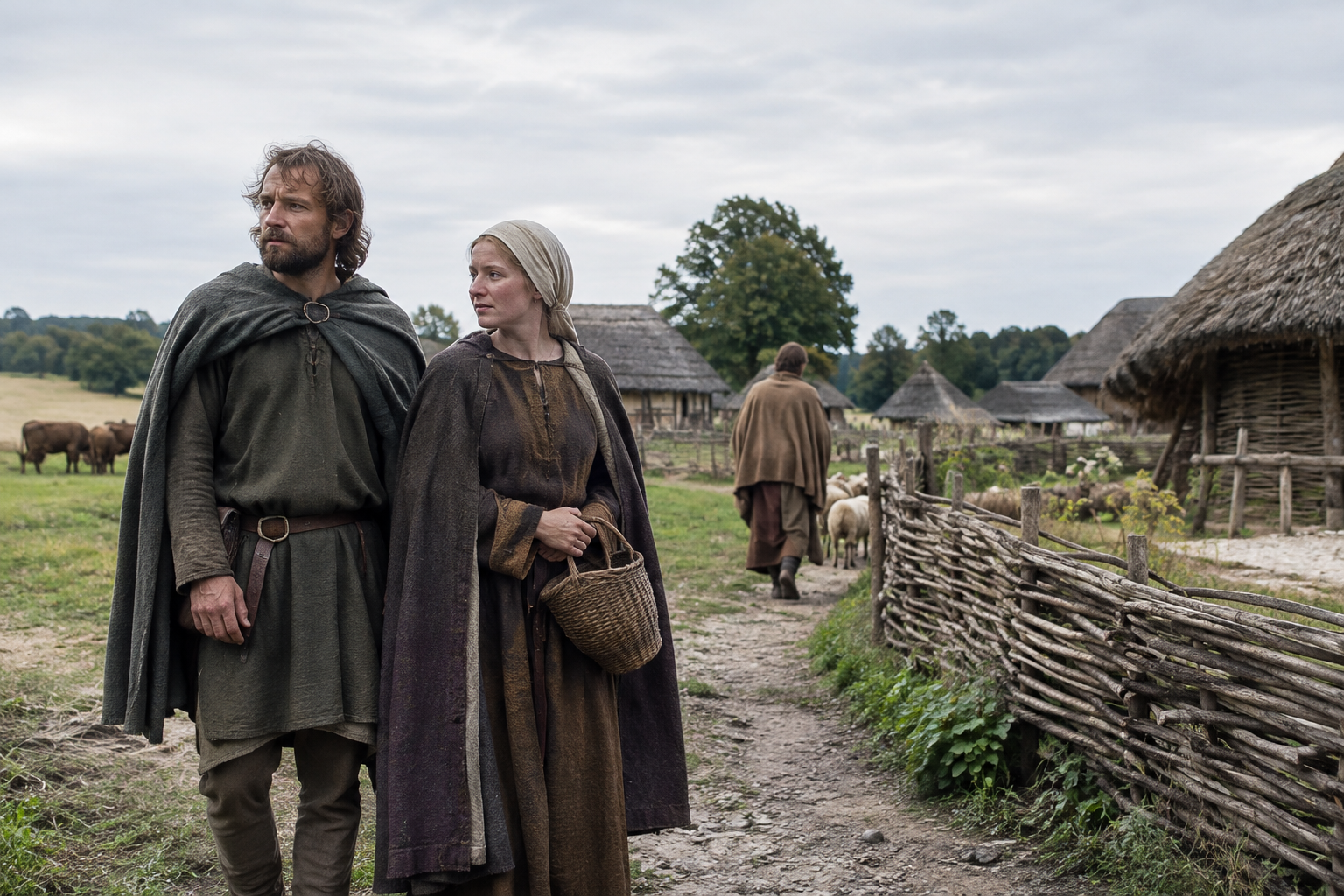
In around AD 1055, a man buried at Cherry Hinton in medieval England left behind more than bone and context. Sample ATP_PSN_937, from Cambridgeshire, is one of those quietly arresting finds that remind us how much of English history was lived by people who never made it into chronicles. His reported Y-DNA association with J2a1a2b2a is especially striking because this is not the paternal branch most readers would instinctively expect to meet first in an English medieval burial.
That is precisely why the sample matters. A Y-chromosome lineage traces one direct paternal line only, not a person's whole ancestry, language, or identity. But when a branch such as J2a1a2b2a appears in medieval England, it opens a very historical question: how did paternal lines more often associated, at broader J2a levels, with the Mediterranean, Anatolia, and the Near East become part of the human landscape of an English village community?
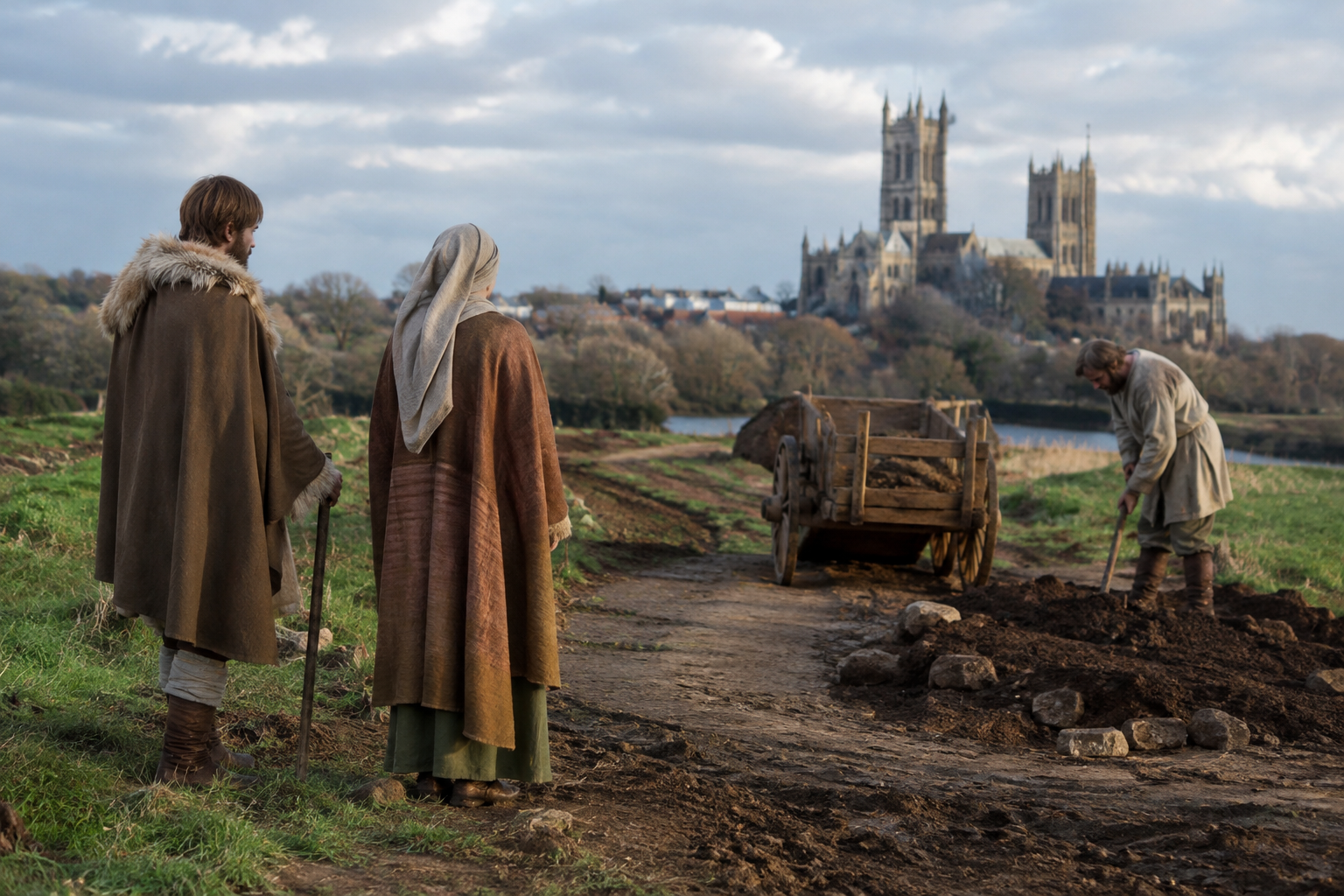
Cherry Hinton, now absorbed into Cambridge, sits in a region with deep archaeological layering: prehistoric remains, Roman influence, Anglo-Saxon settlement, and the reworking of landscape through the high Middle Ages. A burial dated around the mid-11th century belongs to a world just on the eve of the Norman Conquest, when eastern England was already long connected to wider networks of trade, church life, migration, and lordship.
Within that setting, ATP_PSN_937 is useful not because one man can stand for all of medieval England, but because he demonstrates that the paternal story was already more mixed than simple labels like "Anglo-Saxon" or "native English" suggest. If the sample's assignment to J2a1a2b2a is accepted as reported, then we are looking at a descendant of a much older male line that had travelled, branch by branch and generation by generation, well beyond its better-known southern and eastern strongholds.
An ancient DNA study examining medieval and earlier British genomes has helped underline exactly this broader point: England's past was shaped by repeated movements of people, with local continuity mixed together with fresh arrivals across different periods. Research connected to these questions can be found in this ancient DNA study, which is relevant to the wider population background even where individual sample-level interpretation must remain careful.
Roman and Early Medieval Britain
The haplogroup in this article is a narrow paternal twig inside the wider haplogroup J2. That wider family has a long and important history in West Asia and the Mediterranean world, and it appears in many archaeological settings linked to farming expansions, urban societies, trade, and later imperial movement. But one must not lazily pour the entire history of J2 into this exact subclade. A fine-grained branch like J2a1a2b2a may have had its own much more specific path.
So the sensible reading is modest but interesting. A medieval English man carrying J2a1a2b2a suggests that by the 11th century this paternal branch had already become embedded, somewhere along the line, in the population history of Britain. That embedding could have happened in many periods: during Roman rule, through movements in late antiquity, via the early medieval church and trade, or through smaller-scale family histories now lost to written record.
And that is very often how archaeogenetics changes the picture. It does not hand us a neat label for an individual. It shows that real populations were formed by accumulation: soldiers, migrants, craftsmen, merchants, converts, spouses, and children folded into local communities until a once-distant lineage no longer looked foreign at all.
If one is looking for historically plausible routes by which broader J2-related paternal lines could have entered Britain, the Roman period is impossible to ignore. Roman Britain was not a sealed island of local farmers suddenly interrupted by invaders. It was tied into a vast imperial system stretching across Gaul, Iberia, the Balkans, North Africa, the Levant, and Anatolia. Troops moved, officials moved, traders moved, and families moved with them.
This does not mean ATP_PSN_937 was "Roman" in any simple sense; he lived centuries after the formal end of Roman rule in Britain. But medieval paternal lines can preserve older movements. A branch introduced in late Roman or post-Roman centuries may continue quietly through local male descent, long after languages, kingdoms, and religious institutions have changed around it.
That makes J2a1a2b2a in England historically intelligible. It need not imply a dramatic individual migration in the 11th century. The more interesting possibility is that the lineage had already been naturalised within Britain generations earlier, its origin story submerged by time while the chromosome itself persisted.
Cherry Hinton also belongs to a part of England that was anything but cut off. Cambridgeshire sat within an eastern zone shaped by river systems, fenland travel, monastic estates, market exchange, and North Sea links. By the 11th century, this was a society with dense regional connections and a long memory of earlier movement, from Roman occupation to Anglo-Saxon settlement and Scandinavian contact.
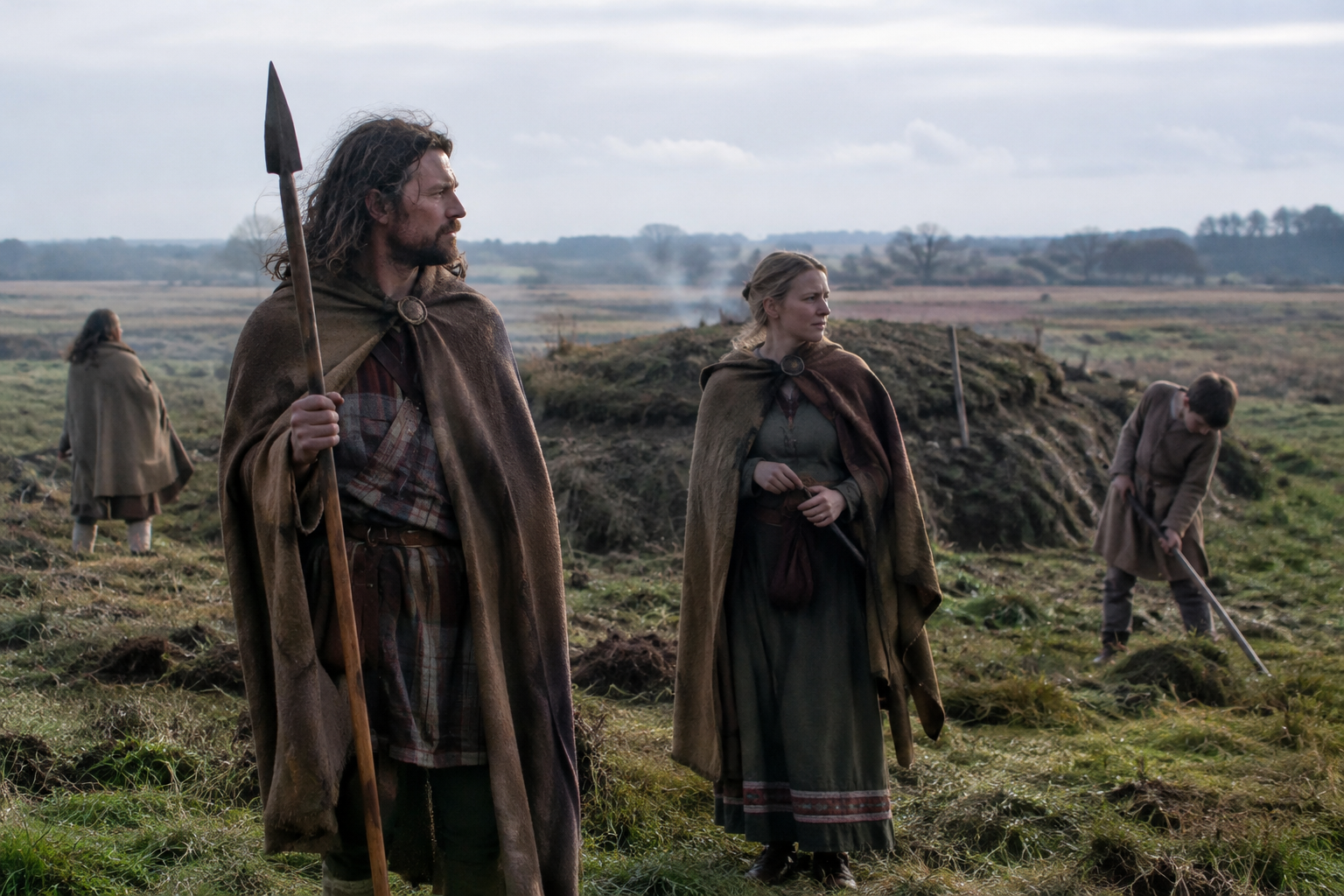
That matters because unusual paternal branches do not have to arrive with conquering elites. They can persist among ordinary rural people. A lineage may enter through a single man centuries earlier, then spread modestly through sons and grandsons until it appears in a burial ground with no outward sign that anything about the paternal line was unusual at all.
In other words, ATP_PSN_937 is valuable precisely because he does not need to be extraordinary. Medieval cemeteries are full of lives that look locally rooted in every cultural sense. Genetics sometimes shows that the making of those local communities was far more layered than the labels in textbooks.
There is always a temptation to dismiss a lone sample as too small to say much. Quite right too, up to a point. One burial cannot define a county, a kingdom, or a haplogroup's whole history. But one secure occurrence can still be historically important, because it fixes a lineage in a time and place where it might otherwise be invisible.
For J2a1a2b2a, the importance of ATP_PSN_937 is that he anchors this paternal branch in medieval England by roughly the mid-11th century. That gives genealogical researchers a hard historical reminder: lineages now found in the British Isles do not always have straightforwardly "British" deep origins, yet they can still be thoroughly part of British history for many centuries.
It also fits a growing pattern from ancient DNA work across Europe. Medieval populations were not made from single ancestral blocks. They were mosaics, with some lines deeply local, others recently arrived, and many impossible to classify without genetics. The dead of village cemeteries are often better evidence for that complexity than kings and chronicles.
What, then, should someone with haplogroup J2a1a2b2a take from this? Not a promise of one origin story, and certainly not a shortcut to ethnicity. The better lesson is historical: this paternal branch was present in at least one documented medieval English individual at Cherry Hinton, sample ATP_PSN_937, showing that such a lineage could be fully woven into local English life by around AD 1055.
That is a small finding, but a telling one. J2a1a2b2a in England points to the long afterlife of older population movements - perhaps Roman, perhaps earlier or later - preserved in one direct male line even as cultures and kingdoms changed overhead. The chromosome is narrow evidence, but it is real evidence, and in archaeology that is often where the best stories begin.

Comments