Haplogroup R1b1a2a1a2b1a1
– 5 min read


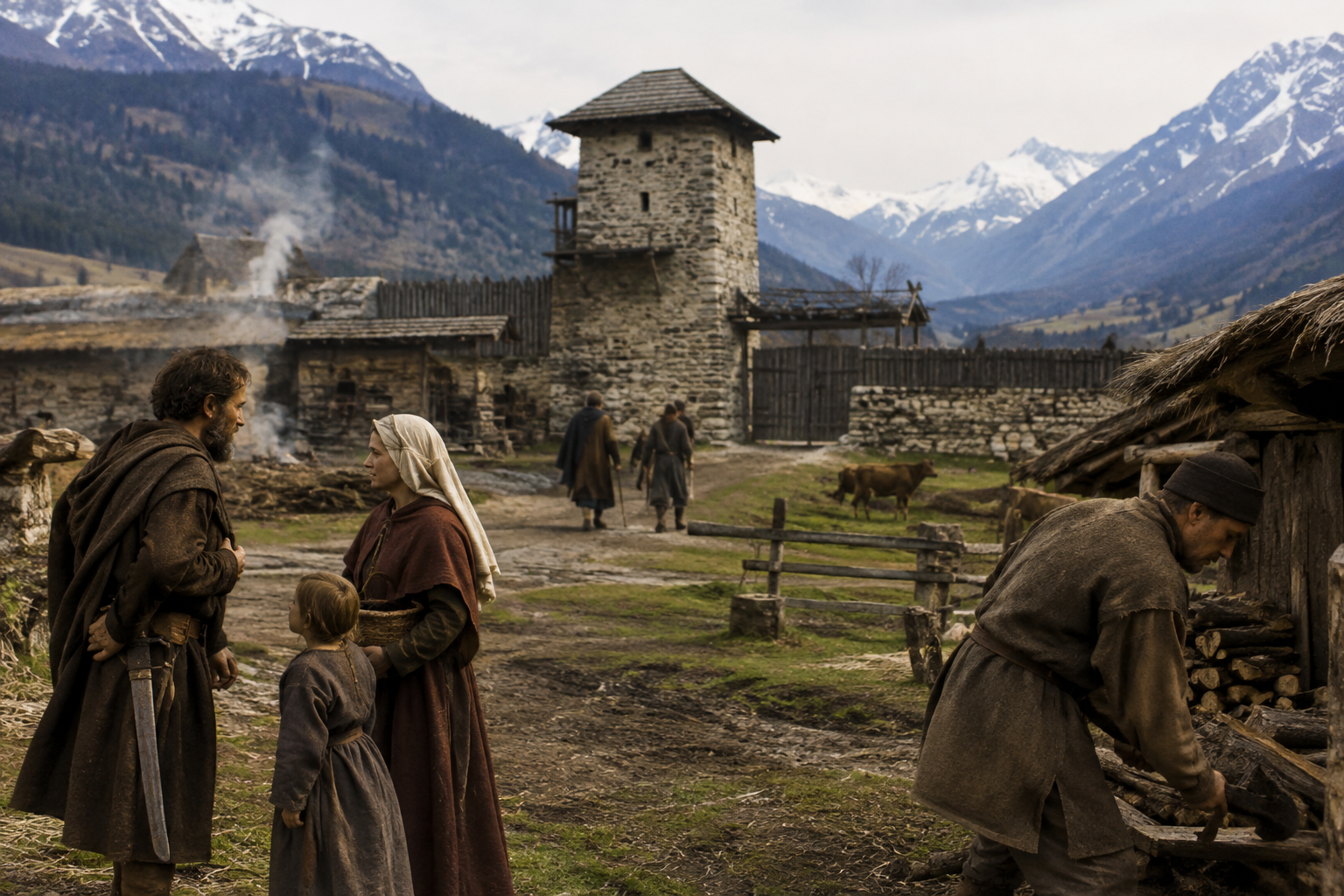
At Malles Burgusio Santo Stefano in South Tyrol, archaeologists recovered the remains of a man dated to around AD 450, a moment when the western Roman world was breaking apart and Alpine communities were adjusting to new political realities. In genetic terms, this individual, sample 1895, is associated here with the Y-DNA haplogroup R1b1a2a1a2b1a1, a very specific paternal-line label attached to one person from a borderland that was anything but simple.
That setting matters. South Tyrol was not a remote backwater waiting for history to arrive. It sat on routes linking northern Italy to the central Alps and beyond, and late antique life there unfolded amid military movement, regional continuity, and the arrival of new groups. A Y-chromosome result traces only one direct male line, not a person's whole ancestry, but in a place like Malles it can still illuminate how paternal lineages were present within a changing post-Roman population.
The date attached to sample 1895 places him in the later fifth century, exactly when Italy was moving from imperial administration into the patchwork politics of Late Antiquity. This was the era after the effective collapse of western Roman imperial power, but before the Alps became neatly divided into the medieval identities familiar from later centuries. A man buried in South Tyrol at this time belonged to a world of transition: Roman habits and institutions had not simply vanished, yet local communities were already being drawn into new networks of power.
That makes the paternal assignment especially interesting. The broad parent lineage, R1b, is common in many parts of western Europe, but R1b1a2a1a2b1a1 is a much narrower branch and should not be treated as if it automatically carries the whole prehistoric and historic story of every R1b lineage. What the Malles case gives us is something more precise and more useful: proof that this direct paternal line was present in the Alpine world of late antique northern Italy.
A genetic study of ancient individuals from the Alpine region, including material from near the Tyrolean zone, has helped show how much continuity and mixture could coexist in these mountain landscapes rather than yielding to easy ethnic labels. The broader regional context can be explored in this ancient DNA research on populations from the Alps and adjacent Italian regions.
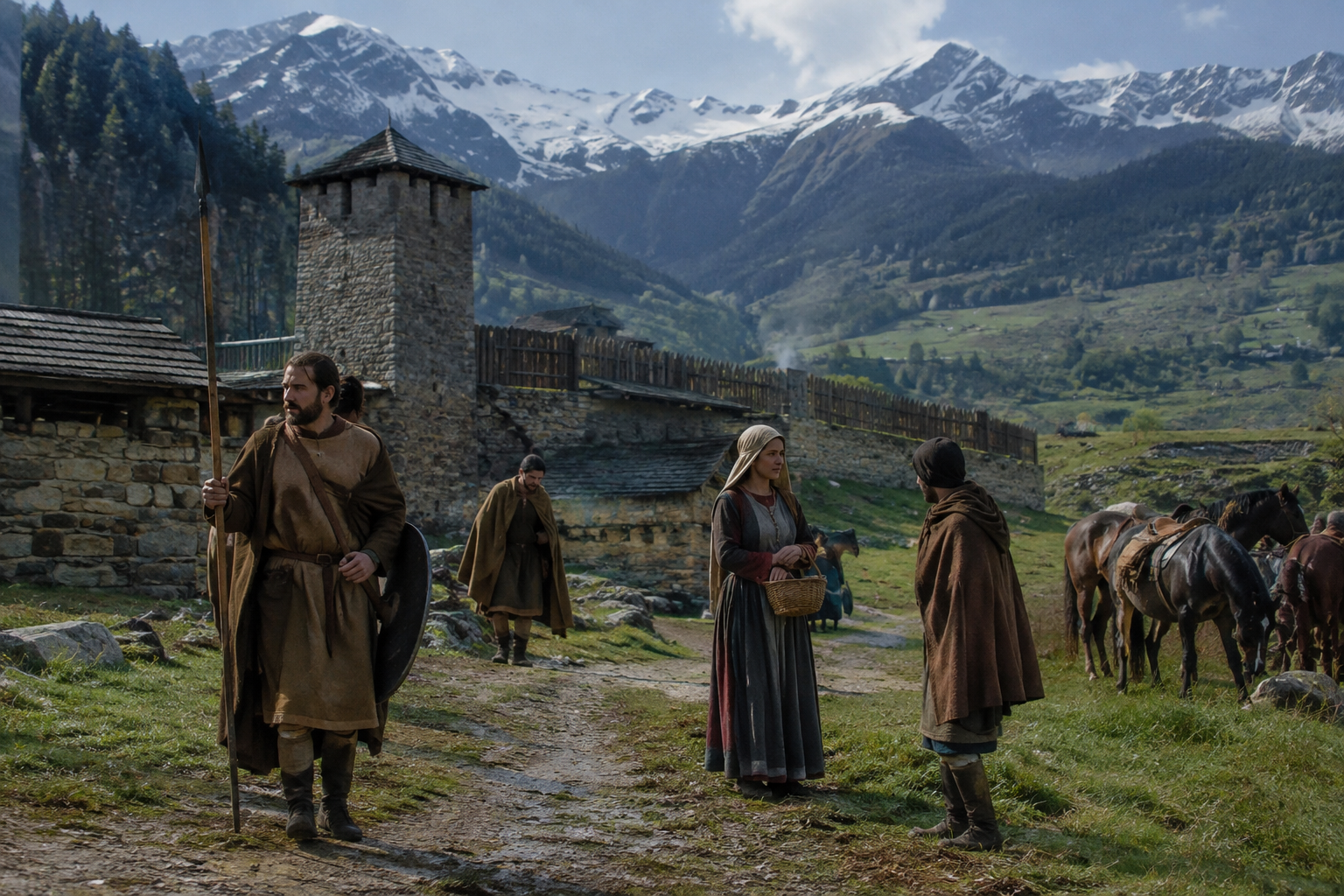
When people hear "Dark Ages Italy", they often imagine an empty stage after Rome's exit. Archaeology says otherwise. South Tyrol remained a corridor: armies crossed it, traders crossed it, officials crossed it, and ordinary families lived in the middle of all that traffic. That means a burial from Malles is valuable not because it can be forced into a single ethnic box, but because it comes from a zone where several histories overlapped.
Sample 1895 therefore belongs to an important category of evidence: not a king, not a legendary founder, but a real excavated individual from a real frontier landscape. In periods like the fifth century, such people are often more historically revealing than grand narratives about "Romans", "Germans", or "barbarians". A paternal lineage found here may reflect local continuity, movement from nearby Alpine regions, or integration within the mobile societies of late antique Italy. The honest answer is not a single dramatic origin story, but a historically crowded setting in which lineages circulated alongside languages, loyalties, and ways of life.
There is a temptation, with a long haplogroup name like R1b1a2a1a2b1a1, to treat it as if it were a complete biography. It is not. Y-DNA follows one line only: father to son across generations. That makes it powerful for tracing paternal continuity, but limited if we ask it to stand in for everything else about identity.
Still, narrow branches are useful precisely because they discipline the imagination. They tell us that a particular paternal line existed in a particular place at a particular time. For Malles, that means this branch was part of the human landscape of the Alps around AD 450. It does not by itself prove whether the man thought of himself in Roman terms, belonged to an incoming military network, spoke Latin or a Germanic language, or descended from any named people in the written sources.
This is one reason ancient DNA works best beside archaeology rather than instead of it. The burial site anchors the genetic result in geography and date. The chromosome label adds one thread of ancestry. Together they give us a sharper, if still partial, picture than either could alone.
The larger importance of finds like 1895 lies in what they do to older historical habits. For a long time, the end of Roman rule in the west was narrated through sharply separated peoples marching onto the map. Ancient DNA has been steadily complicating that picture. Communities in Italy during the Roman and early medieval periods could include long-rooted local ancestry, regional mobility across the peninsula, and links northward through the Alpine passes.
That is particularly relevant for South Tyrol. Its position means that ancestry there need not fit a simple north-versus-south model. A paternal lineage found in this region might have deeper roots in populations already established in the wider Alpine and northern Italian zone, or it might reflect more recent movement within late Roman and post-Roman networks. The point is that the archaeology of border regions rarely supports neat ethnic partitions.
Readers interested in how similarly complex these mixed settings could be elsewhere in post-Roman Europe may find a useful comparison in seventh-century Iberia, where burial populations also resist one-dimensional labels.
For someone who carries R1b1a2a1a2b1a1 today, the Malles individual is not a guaranteed ancestor in the genealogical sense, and certainly not a shortcut to a named medieval house. What he does provide is a historically grounded example of this paternal branch in late antique northern Italy, in a zone shaped by Roman administration, Alpine mobility, and early medieval transformation.
That is often the most meaningful kind of ancient match: not a fantasy of instant identity, but a well-placed clue. It suggests that one strand of this lineage was already present in a crossroads community during one of the most consequential centuries in European history. If your direct paternal line belongs to this branch, the Malles burial points toward an ancestry story that fits the Alps and northern Italy's complicated human geography rather better than any tidy legend would.
Sample 1895 from Malles Burgusio Santo Stefano does not give us an empire in miniature, and that is exactly why he matters. He anchors R1b1a2a1a2b1a1 in a real fifth-century Alpine setting where Roman legacies and early medieval change met face to face. For paternal-line research, that is a solid and useful insight: this branch belonged to the lived population history of late antique South Tyrol, not merely to abstract haplogroup maps.
Comments