Haplogroup R1b1a1b1a1a1c2b2a1b1a4b1c1a
– 4 min read


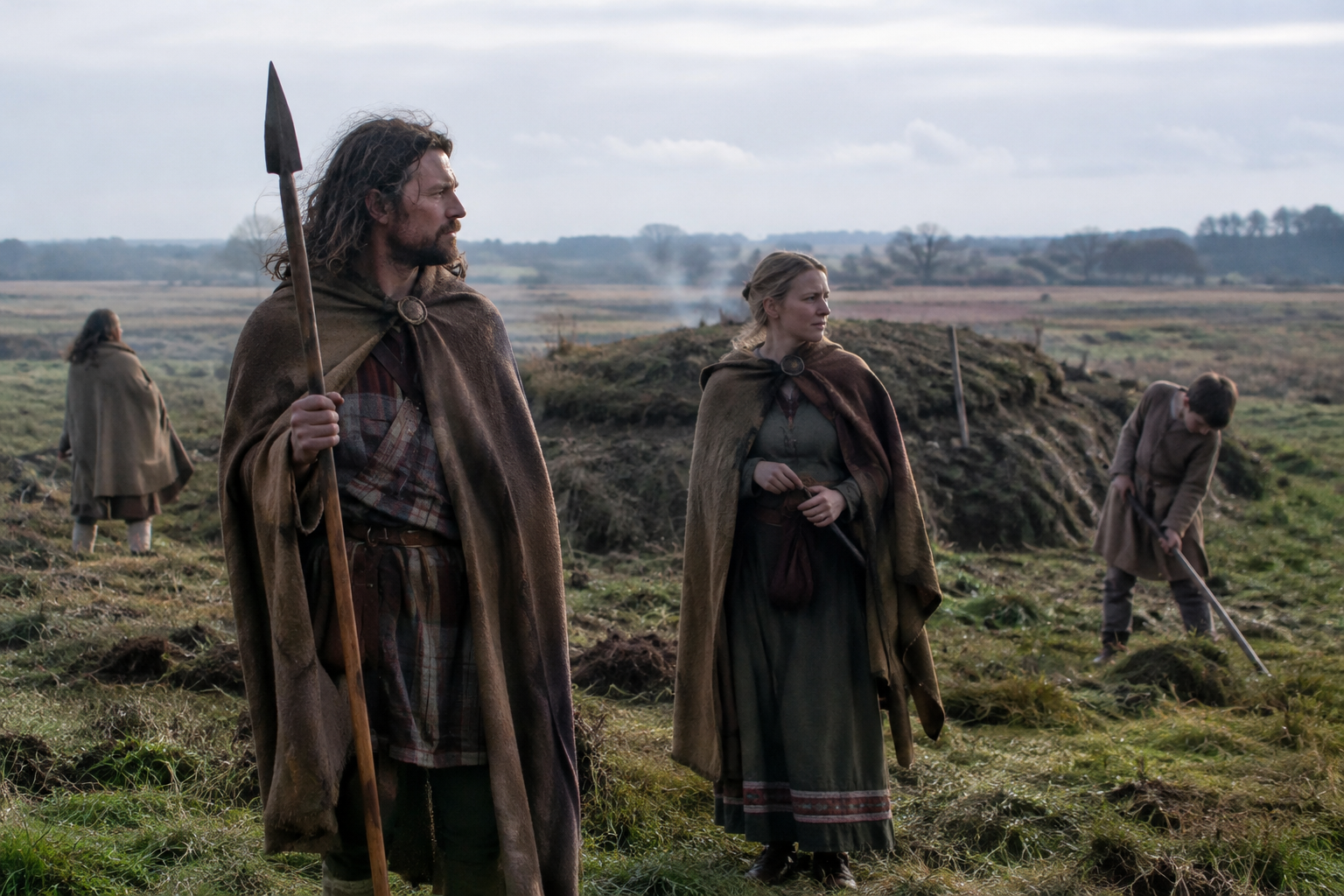
At Wetwang Slack in East Yorkshire, one ancient man offers a sharp little glimpse into the turbulent centuries after Rome withdrew from Britain. The individual recorded as C10427, dated to about AD 450, comes from Post Roman Iron Age England at a moment when old Romano-British systems were breaking apart and new communities were taking shape. For anyone exploring the Y-DNA haplogroup R1b1a1b1a1a1c2b2a1b1a4b1c1a, that matters because this sample anchors the lineage, at least in the evidence provided here, in a very specific landscape: eastern Yorkshire in the early post-Roman world.
This is the sort of find that reminds us how useful Y-DNA can be when handled carefully. A Y-chromosome lineage tracks one direct paternal line only, not a person's whole ancestry, language, or identity. Still, when a branch turns up in a dated burial from a well-known archaeological region, it gives us something precious: not myth, not surname legend, but a man in a real place at a real historical turning point.
Wetwang Slack is already a famous name in British archaeology because the Yorkshire Wolds have yielded burials spanning many centuries, especially from later prehistory and the Roman-to-early-medieval transition. That makes C10427 especially interesting. He was not living in a blank landscape, but in a countryside layered with older traditions, older cemeteries, and older claims to land.
By around AD 450, eastern Britain was not simply "Roman" one year and "Anglo-Saxon" the next. Different communities overlapped, adapted, and persisted. A paternal line associated here with R1b1a1b1a1a1c2b2a1b1a4b1c1a therefore sits in exactly the kind of setting where archaeologists must be cautious: continuity in one family line does not automatically mean cultural continuity, and cultural change does not automatically mean population replacement.
The first thing to say about R1b1a1b1a1a1c2b2a1b1a4b1c1a is that it is an extremely specific terminal branch name. That is not the same thing as the broad and very widespread haplogroup R1b, which has many different sub-branches across Europe and beyond. It would be quite wrong to take the entire prehistoric and historic story of R1b and simply paste it onto this one much narrower lineage.
What the Wetwang Slack evidence gives us is more modest, but more solid. It places a reported representative of this paternal branch in eastern England in the early post-Roman period. That alone is useful, because many family historians encounter a long haplogroup label and understandably want to know whether it belongs to a medieval migration, an Iron Age survival, or something else entirely. With only one ancient sample in hand, the honest answer is not a sweeping origin story, but a documented appearance in fifth-century Yorkshire.
That kind of restraint is not disappointing; it is how archaeogenetics stays trustworthy. The narrower the branch, the more tempting it is to over-interpret. Better to say that this lineage was present in a man buried in East Yorkshire around AD 450 than to invent a heroic tribal saga for him.
The date matters almost as much as the haplogroup. Around the mid-fifth century, Britain was moving through one of the most debated transitions in its history. Roman administration had collapsed, local power was fragmented, and eastern regions such as Yorkshire were part of wider North Sea networks that would soon shape early medieval England.
In this setting, a paternal lineage like R1b1a1b1a1a1c2b2a1b1a4b1c1a could have belonged to a man whose wider ancestry was locally rooted, recently mixed, or part of a family that had already lived through several earlier waves of change. The archaeology of eastern Britain keeps showing that the end of Roman rule was not a clean ethnic handover. Instead, it was a messy human process involving persistence as well as movement.
A broader ancient DNA discussion of Britain from the Roman into the early medieval period is explored in Genomic History and Natural Selection in Roman and Early Medieval Britain, which is useful background for understanding why one fifth-century Y-line cannot be made to carry the whole historical argument by itself.
Roman to Early Medieval Britain
One of the most public misunderstandings about haplogroups is the idea that a single ancient match reveals a complete ethnic label. But C10427 was an individual, not a tribe. His Y-DNA tells us about one male line; his full genome, burial context, local archaeology, and historical geography would be needed to say much more about his broader background.
Even so, single burials can be powerful when the context is good. They show that a lineage was not merely theoretical or modern, but embodied in a person who lived through a known historical phase. In this case, the phase is especially compelling because eastern Yorkshire lay near zones where late Roman traditions, indigenous British populations, and incoming influences all met.
That is why post-Roman Britain continues to attract ancient DNA research and popular interest alike. It is not only about invasions or replacements, but about how real communities reorganised themselves after imperial collapse.
Diverse England in the Early Middle Ages
East Yorkshire is a revealing place to find this branch because the region sits within a part of Britain where archaeologists have long tracked continuity and change side by side. Burial practice, settlement pattern, material culture, and now genetics all show that identities in early medieval Britain were not formed from a single source. Some lines endured locally; others arrived through migration; many were folded together over generations.
For a lineage under the giant umbrella of R1b, that may sound unsurprising. But the point is precisely that broad labels are not enough. The interest of R1b1a1b1a1a1c2b2a1b1a4b1c1a lies in seeing one fine-grained paternal branch attached to a particular man from a particular moment in Yorkshire's history. Once we zoom in that far, the conversation becomes less about stereotype and more about evidence.
Readers who want a wider frame for paternal and maternal patterns in Iron Age and later Britain may also find Ancient DNA and matrilineal kinship in Iron Age Britain useful, especially as a reminder that different lines of descent can tell different stories about the same region.
For now, the clearest ancient signal for R1b1a1b1a1a1c2b2a1b1a4b1c1a is a man from Wetwang Slack in East Yorkshire, around AD 450, identified as C10427. That does not prove that every modern carrier descends from post-Roman Yorkshire, nor does it attach the branch to a named people from the chronicles. What it does offer is something much better than fantasy: a documented paternal presence in one of the most important transition zones of early historic Britain. If this is your line, your deep paternal story is at least connected, by current evidence, to the human realities of Britain after Rome.
Comments