Ancient DNA reveals diverse origins at a 7th-century Madrid burial site

– 5 min read


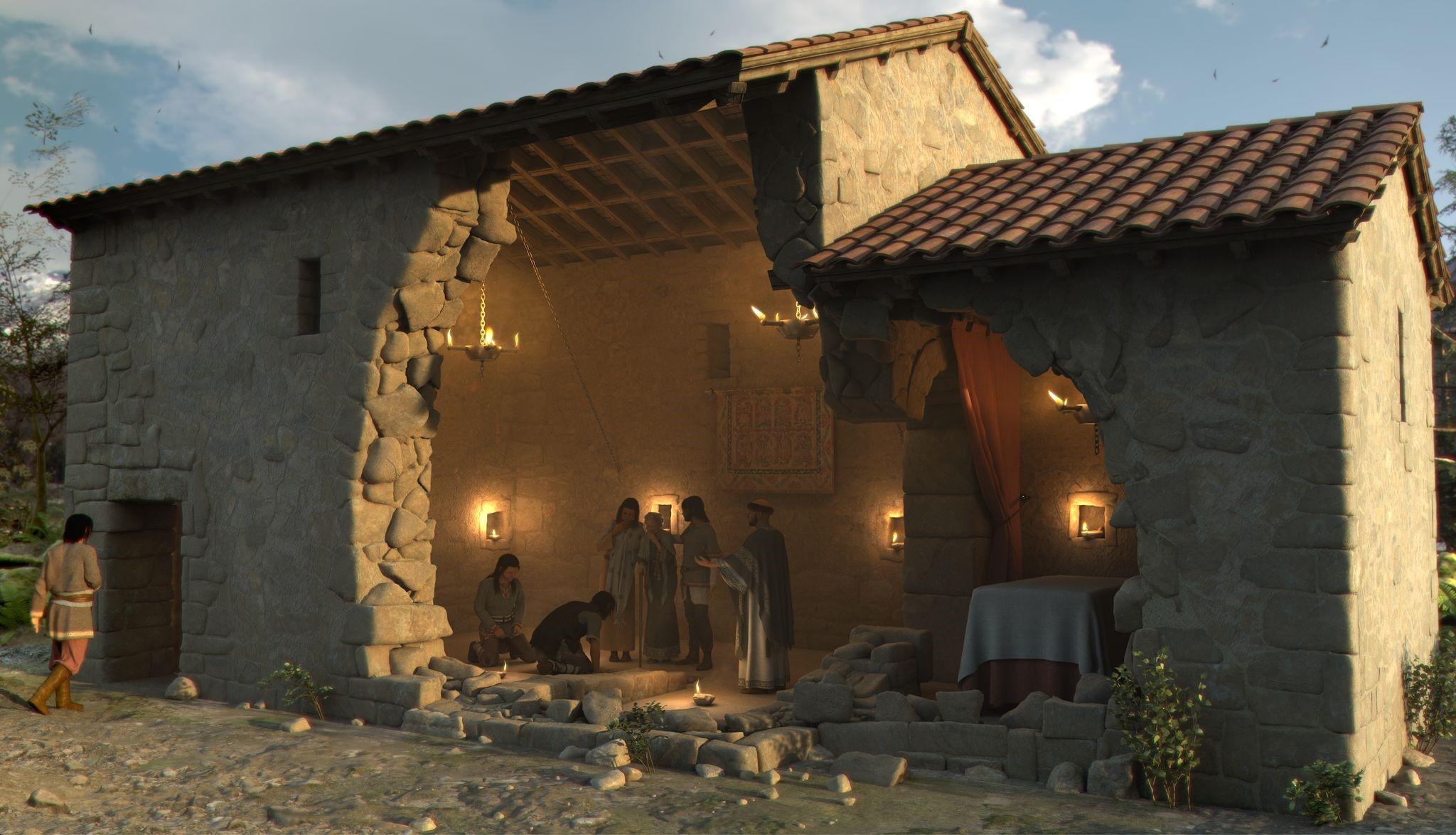
High in Spain's Sierra de Guadarrama, a seventh-century church at El Boalo served as both house of worship and house of the dead. At first glance it seems a remote, isolated place — yet the burials inside tell a far more vivid story of status, memory, and connections reaching well beyond the mountains.
The church had a single nave, a square eastern apse, and several entrances. Archaeologists found thirteen graves laid out east to west inside. Two stood apart immediately: granite sarcophagi, carefully made and richer in association than the others, suggesting this was no ordinary village cemetery.
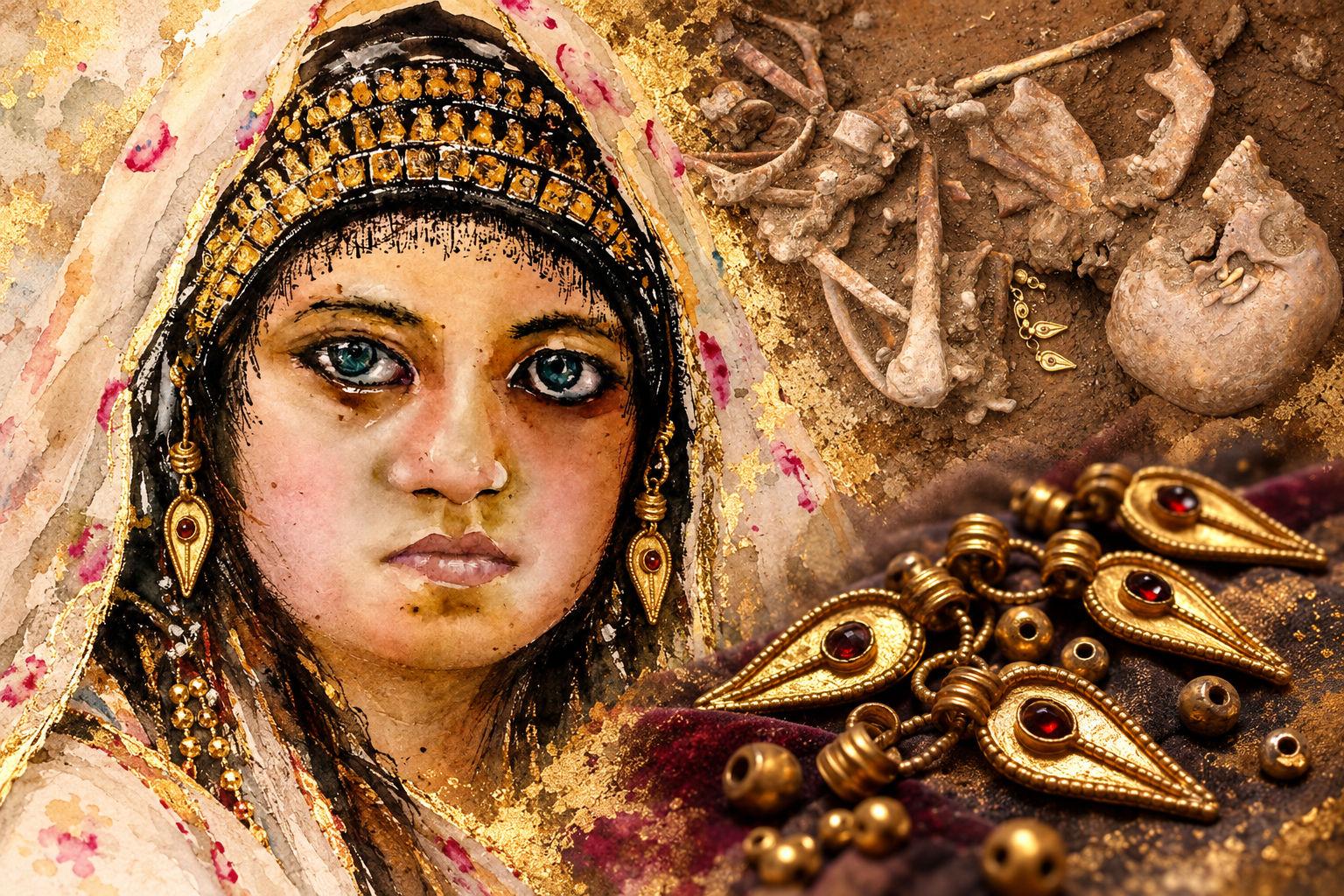
Tomb 4, in the north-west corner, contained two individuals — an adult man and a youth of about fifteen — sharing one prestigious space. With them lay a double-handled bottle, an evocative grave good sitting at the boundary between old custom and new Christian belief. Tomb 6, positioned closer to the chancel, held another adult man buried with two rings decorated in Late Antique style. Rings endure where flesh and cloth vanish; these once touched living skin. Outside the church, two perinatal infants were buried together — among archaeology's most emotionally powerful discoveries, reminding us that ancient communities were also made of mothers, grief, and barely-begun lives.
Radiocarbon dating fixes these people firmly in the seventh century — a moment when Roman authority had fractured, identities shifted, and Christianity shaped burial ever more strongly. Even in this mountain setting, communities engaged fluently in the social language of prestige burial.
The adult in Tomb 4 (Boalo 16) was around 1.71 metres tall, laid supine in Christian fashion alongside his bottle. His sarcophagus was later reopened to receive the fifteen-year-old youth (Boalo 17) — not a careless act, but a deliberate reuse of a privileged space. Then comes the remarkable twist: the youth carried a maternal lineage pointing toward the Horn of Africa. He need not have been a recent migrant; ancestry travels through generations of mothers and daughters. Yet the fact remains — a teenager buried in one of this site's grandest tombs carried a thread connecting seventh-century Madrid to a much bigger world.
The man in Tomb 6 (Boalo 19), buried near the chancel with his two rings, carried a maternal lineage linked in comparative analysis to central and north-eastern Europe. Again, no direct migration need be imagined, but the signal of broader continental connection is unmistakable.
Crucially, all three church burials had different maternal lines. Elite burial space was not reserved for one maternal family. Status was built through social relations — marriage, alliance, patronage, household ties — not simple bloodline. The two infants (Boalo 35 and 36), by contrast, shared the same maternal lineage, suggesting close kinship through their mothers, and carried ancestry deeply rooted in Iberia — quiet evidence of long local continuity sitting alongside the church burials' far-reaching connections.
El Rebollar offers an honest lesson in ancient genetic work. The skeletons looked beautifully preserved, but granite-derived soils had severely damaged DNA at the microscopic level. Nuclear DNA — inherited from both parents — had decayed beyond use. Mitochondrial DNA, passed through the maternal line and far more abundant per cell, survived well enough to analyse.
Researchers sampled teeth and, in the infants, the dense petrous bone near the ear. Repeated testing built secure maternal profiles for each individual. The results were immediately revealing: the two infants shared one lineage; the three church burials each had distinct ones. That single contrast delivered the site's key historical message — shared elite burial did not mean close maternal family.
Comparing El Rebollar's lineages with sites across Spain and Europe produced another surprise: the site clustered poorly with its nearest neighbours, appearing almost as a "molecular island" — distinctive even at the micro-regional level. The genetics sharpened every other line of evidence without replacing it. Tomb 4 was already unusual for holding two individuals and a bottle; after analysis it became more unusual still, its occupants shown to share no maternal line. The infants were already moving because of their joint burial; analysis revealed probable maternal kinship. Science restored movement and complexity to people long reduced to anonymous bones.
El Rebollar's most dramatic message is this: the community buried here was not biologically simple, not neatly local, and not sealed off from the wider late antique world. Five individuals produced a striking ancestral mosaic — deeply Iberian, broadly European, central European, and African maternal lines all present in one small churchyard.
The infants represent continuity; old Iberian ancestry endured beneath later cultural change. The church burials push outward. The youth's African maternal lineage — rare in European ancient datasets — makes nonsense of any picture of the early medieval interior as ethnically uniform. That this ancestry appears in a prestigious burial matters enormously: diversity was not merely tolerated but embedded in the site's highest-status funerary spaces.
This fits the late antique world well. Soldiers, clerics, traders, spouses, and migrants crossed old provincial boundaries continuously. Iberia remained woven into Mediterranean and continental networks, and El Rebollar shows what those large processes looked like filtered into one local burial ground. Comparative analysis did not support a simple link to eastward Gothic migration; instead the site suggested cosmopolitan mixture. These people were not a tidy ethnic package — they were an accumulated layering of ancestries, some old and local, some arrived across sea and land, all part of the lived reality of one Sierra de Guadarrama settlement by the seventh century.
El Rebollar overturns old expectations about inland Iberia after Rome. Local ancestry endured — the infants prove it — but alongside that continuity came clear evidence of broader connections. No simple binary of "Roman locals" versus "migrant peoples" holds. By the seventh century the population was already a blend, and the cemetery reflects it.
The burial evidence also urges a rethink of social organisation. Elite grave rights did not follow one maternal family line; they were negotiated through marriage, alliance, and local leadership tied to the church. The building was not merely a place of worship — it was a social centre where prestige, memory, and community identity were actively organised.
El Rebollar restores dignity to rural communities too often treated as passive recipients of change decided elsewhere. This was a society capable of incorporating people of varied origins, assigning status, reusing important tombs, and maintaining sacred space across time. The countryside was not lagging behind the world — it was one of the places where the world was being remade.
In the end, grand labels — Roman, Visigothic, local, migrant — are useful only up to a point. Look closely at actual graves and actual bodies and the neat edges blur. A youth with African maternal ancestry in a prestigious central Spanish tomb; a ring-wearing man with continental connections; two infants preserving an ancient local thread. This is not a history of pure categories. It is a history of entanglement — and El Rebollar tells it through graves, bones, bottles, rings, and faint maternal signatures preserved for more than a thousand years.
Comments