Genomic Evidence for Evolutionary Origins of the Industrial Revolution Sven October 18, 2026 – 5 min read Share this post Papers Tracing the spread of Germanic languages using ancient genomics Ancient DNA and the Archaeology of the Dead The story begins not with kings, but with bones on trays and teeth in labelled tubes. Across northern and western Europe, the search for the origins of Germanic speech drew strength from graves, bogs, barrows, and battle deposits — an immense gathering of By Caterina • 5 min read Papers Ancient Iranian mtDNA and skeletal identification Elam in the Lowlands of Khuzestan In southwestern Iran, on the hot plains of Khuzestan, one of the oldest great civilizations of the ancient Near East once thrived: Elam. Though often overshadowed by Mesopotamia, Elam commanded trade routes, labour, and ideas across the Iranian Plateau. Its territory stretched from Khuzestan By Sven • 4 min read Papers Ancient DNA reveals family ties, ancestry, sex, and bone disease in degraded Song Dynasty remains Zhangliu: A Song Dynasty Burial Ground in the Huai River World In the river-shaped landscapes of eastern China, the Zhangliu site opens a vivid window into the Song Dynasty world. Located in Huai'an, Jiangsu Province, this burial ground sits in the great meeting zone between north and south By Jamie L • 3 min read Haplogroups and Noble Lines Haplogroup I1a2a1a1d1a1a1b1 At Sedgeford in Norfolk, an early medieval burial identified as SED009 offers a small but telling glimpse into the paternal history behind haplogroup I1a2a1a1d1a1a1b1. The individual is dated to around AD 600, a moment when eastern England was already being reshaped by new political powers, new burial customs, and the By Sara V • 5 min read Haplogroups and Noble Lines Haplogroup E1b1a1a1a1c1b2a One of the most arresting ancient-DNA identifications for Y-DNA haplogroup E1b1a1a1a1c1b2a comes not from a king's tomb or a prehistoric barrow, but from an enslaved man in antebellum Maryland. The individual known in the lab record as I8086, described as an enslaved laborer from the Catoctin iron-working furnace, By Sara V • 4 min read Haplogroups and Noble Lines Haplogroup E1b1a1a1a1c2c At the Catoctin iron-working furnace in antebellum Maryland, one excavated individual is identified simply and starkly: Enslaved Laborer Catoctin Iron-Working Furnace Antebellum Maryland, sample I8095, dated around 1810 AD. That plain record tells us quite a lot. It places a man in one of the industrial landscapes of the early By Sara V • 4 min read Haplogroups and Noble Lines Haplogroup D1b1 In the ancient DNA record for Korea's Three Kingdoms period, one of the more intriguing names is AKG_10203, dated to around AD 300 and described simply as an Iron Age individual from Korea. That may sound modest, but it matters a great deal. A single Y-chromosome assignment By Sara V • 5 min read Haplogroups and Noble Lines Haplogroup J1a2a1a2d2b2b2c4c At Tarquinii in Etruria, one late Villanovan man has become unexpectedly important for the history of a very specific paternal line. Sample R10341, dated to around 500 BC, comes from the great cemetery world surrounding one of the best-known Etruscan cities. He is associated here with the Y-DNA haplogroup J1a2a1a2d2b2b2c4c, By Sara V • 5 min read Haplogroups and Noble Lines Haplogroup R1b1a1b1a1a1c2b2a1b1b At Polhill, near Sevenoaks in Kent, one early medieval burial has become unexpectedly useful for tracing a very narrow paternal line. The individual known as POH008, dated to around AD 600, belongs to the period when Kent sat at the busy edge of the North Sea world: post-Roman, increasingly Christian, By Sara V • 4 min read
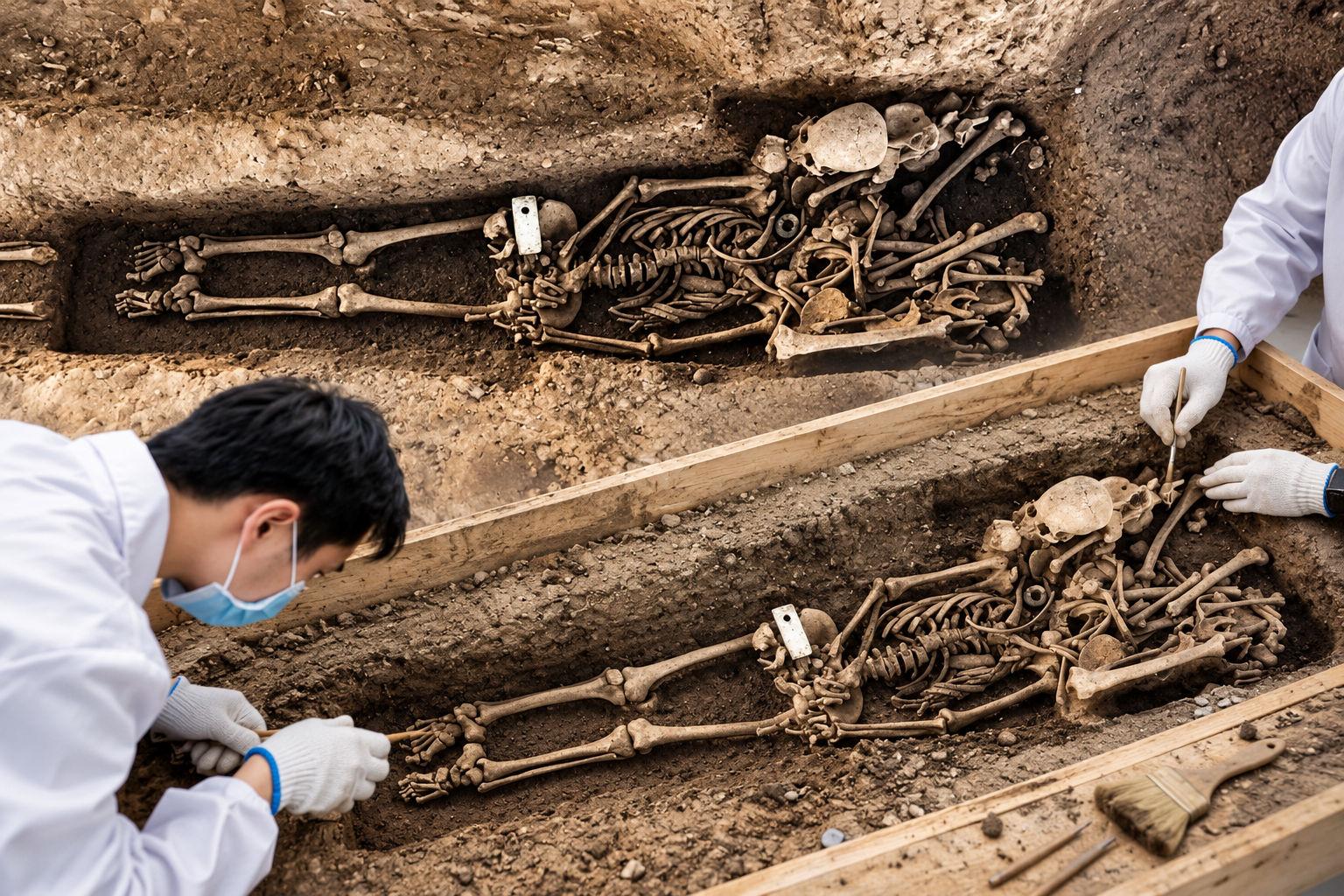
Papers Tracing the spread of Germanic languages using ancient genomics Ancient DNA and the Archaeology of the Dead The story begins not with kings, but with bones on trays and teeth in labelled tubes. Across northern and western Europe, the search for the origins of Germanic speech drew strength from graves, bogs, barrows, and battle deposits — an immense gathering of By Caterina • 5 min read
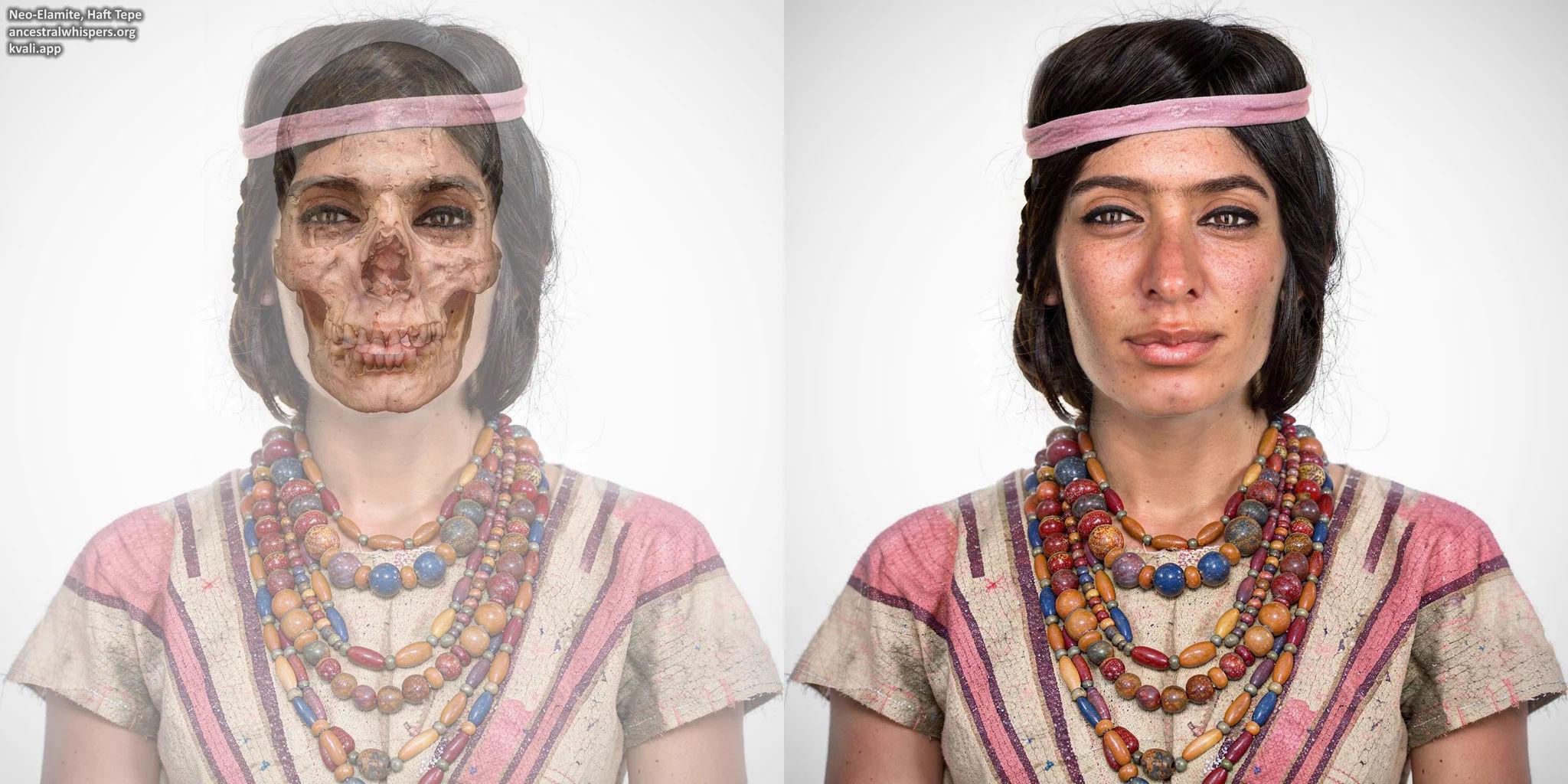
Papers Ancient Iranian mtDNA and skeletal identification Elam in the Lowlands of Khuzestan In southwestern Iran, on the hot plains of Khuzestan, one of the oldest great civilizations of the ancient Near East once thrived: Elam. Though often overshadowed by Mesopotamia, Elam commanded trade routes, labour, and ideas across the Iranian Plateau. Its territory stretched from Khuzestan By Sven • 4 min read
Papers Ancient DNA reveals family ties, ancestry, sex, and bone disease in degraded Song Dynasty remains Zhangliu: A Song Dynasty Burial Ground in the Huai River World In the river-shaped landscapes of eastern China, the Zhangliu site opens a vivid window into the Song Dynasty world. Located in Huai'an, Jiangsu Province, this burial ground sits in the great meeting zone between north and south By Jamie L • 3 min read
Haplogroups and Noble Lines Haplogroup I1a2a1a1d1a1a1b1 At Sedgeford in Norfolk, an early medieval burial identified as SED009 offers a small but telling glimpse into the paternal history behind haplogroup I1a2a1a1d1a1a1b1. The individual is dated to around AD 600, a moment when eastern England was already being reshaped by new political powers, new burial customs, and the By Sara V • 5 min read
Haplogroups and Noble Lines Haplogroup E1b1a1a1a1c1b2a One of the most arresting ancient-DNA identifications for Y-DNA haplogroup E1b1a1a1a1c1b2a comes not from a king's tomb or a prehistoric barrow, but from an enslaved man in antebellum Maryland. The individual known in the lab record as I8086, described as an enslaved laborer from the Catoctin iron-working furnace, By Sara V • 4 min read
Haplogroups and Noble Lines Haplogroup E1b1a1a1a1c2c At the Catoctin iron-working furnace in antebellum Maryland, one excavated individual is identified simply and starkly: Enslaved Laborer Catoctin Iron-Working Furnace Antebellum Maryland, sample I8095, dated around 1810 AD. That plain record tells us quite a lot. It places a man in one of the industrial landscapes of the early By Sara V • 4 min read
Haplogroups and Noble Lines Haplogroup D1b1 In the ancient DNA record for Korea's Three Kingdoms period, one of the more intriguing names is AKG_10203, dated to around AD 300 and described simply as an Iron Age individual from Korea. That may sound modest, but it matters a great deal. A single Y-chromosome assignment By Sara V • 5 min read
Haplogroups and Noble Lines Haplogroup J1a2a1a2d2b2b2c4c At Tarquinii in Etruria, one late Villanovan man has become unexpectedly important for the history of a very specific paternal line. Sample R10341, dated to around 500 BC, comes from the great cemetery world surrounding one of the best-known Etruscan cities. He is associated here with the Y-DNA haplogroup J1a2a1a2d2b2b2c4c, By Sara V • 5 min read
Haplogroups and Noble Lines Haplogroup R1b1a1b1a1a1c2b2a1b1b At Polhill, near Sevenoaks in Kent, one early medieval burial has become unexpectedly useful for tracing a very narrow paternal line. The individual known as POH008, dated to around AD 600, belongs to the period when Kent sat at the busy edge of the North Sea world: post-Roman, increasingly Christian, By Sara V • 4 min read