Haplogroup I2a1a2b1a1a1a
– 5 min read



At Gomolava near Hrtkovci in today's Vojvodina, one excavated medieval individual brings this very specific Y-chromosome branch into focus: sample I1116, dated to around 885 AD and associated here with haplogroup I2a1a2b1a1a1a. It is a small piece of evidence, just one man from one site, but it sits in a large historical crossroads. Medieval Serbia in this period was shaped by frontier politics, Slavic-speaking communities, older Balkan populations, and the pull of neighboring powers across the Danube basin.
That is what makes this sample interesting. A lineage like I2a1a2b1a1a1a is not a nationality, a language, or a complete ancestry profile; it tracks one direct paternal line only. Yet when such a line appears in an early medieval burial from the central Balkans, it becomes part of a bigger archaeological question: which paternal lines were present among the people living in the region as the early medieval Balkans took shape?
Gomolava is no obscure bump in the ground. It is one of those sites archaeologists keep coming back to because it preserves traces from multiple periods, making it unusually useful for long-term regional history. By the time of sample I1116, the place belonged to a world very different from its prehistoric phases, but the broader importance remained the same: this was a settlement zone in the Sava-Danube region, where movement, contact, and local continuity all mattered.
The date around 885 AD places the individual in the early medieval centuries after the great political and demographic transformations that followed the end of Roman authority in much of the Balkans. In that setting, a Y-line assigned here to I2a1a2b1a1a1a is especially suggestive because the wider haplogroup I2 has deep roots in European prehistory and later appears in a range of Balkan and eastern European contexts. What we should not do is pretend that one medieval man can stand for all Serbs, all Balkan Slavs, or all local continuity. He cannot. But he does provide a fixed point in a region where paternal histories are often discussed in sweeping and careless ways.
An ancient DNA study of populations from this broader historical zone, published in Cell, has helped sharpen discussion of how Balkan populations changed and persisted across time. Even when a single sample gets the spotlight, its value comes from being compared with many others across centuries and regions.
The exact article haplogroup is I2a1a2b1a1a1a, a very narrow twig on a much larger paternal tree. That distinction matters. It is easy to find broad statements about I2 in Europe - some accurate, some wildly overblown - but those claims do not automatically apply to this precise subclade. Without a larger cluster of securely published ancient samples at the same terminal resolution, caution is not just polite; it is necessary.
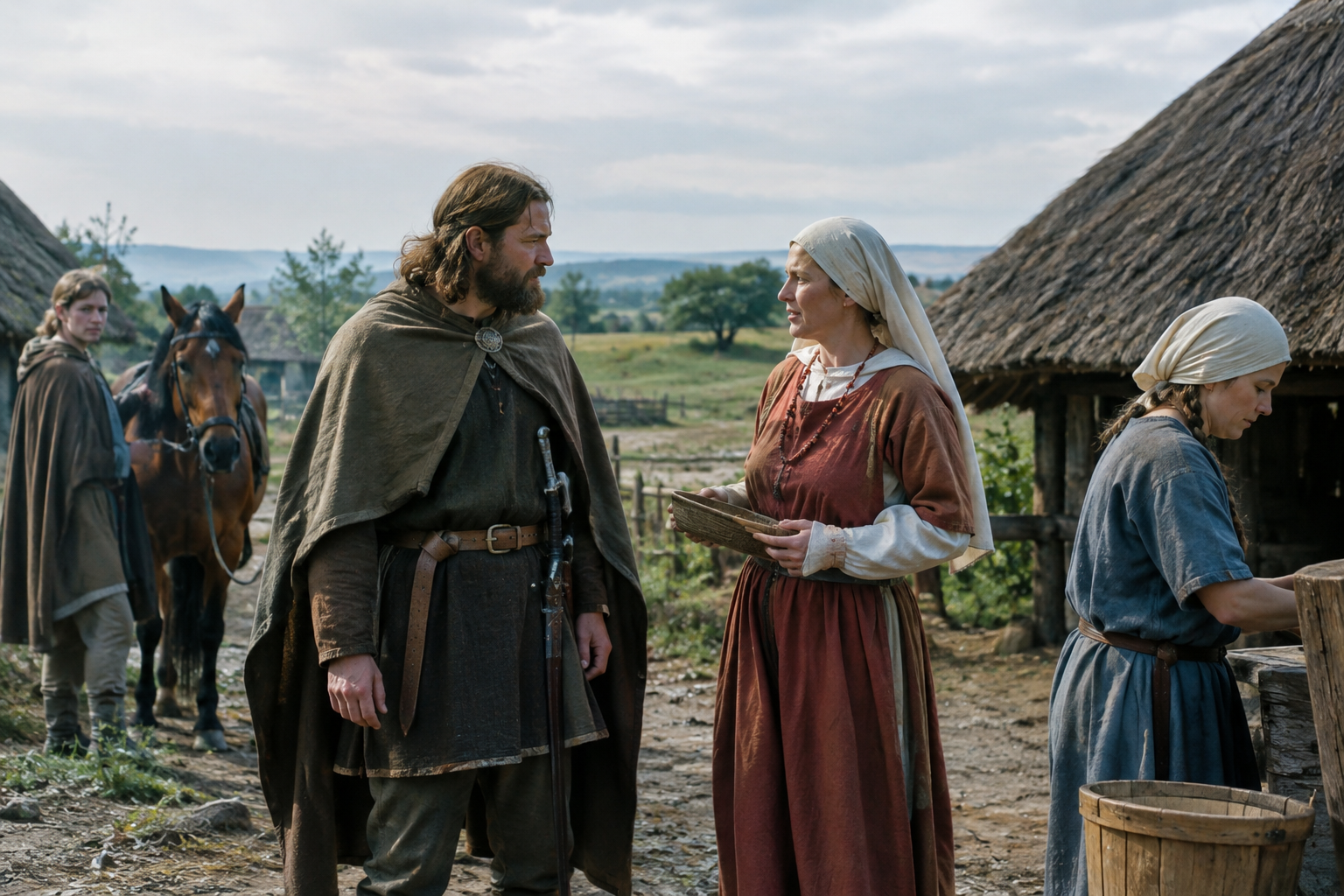
Still, the wider pattern is historically meaningful. Lineages within I2 are often discussed in connection with southeastern Europe because the Balkans preserve both very old population layers and evidence of repeated later reshaping. The early medieval period, when I1116 lived, was not a clean ethnic starting point. It was a time when communities formed from mixtures of local ancestry, incoming groups, and new political identities. A paternal line found in such a burial may reflect continuity from earlier Balkan populations, incorporation into Slavic-speaking societies, or both.
That is why Y-DNA becomes most useful when it is embedded in archaeology rather than detached from it. A haplogroup on its own can tempt people into making heroic claims. A haplogroup attached to a date, a burial ground, and a historical region is much more informative.
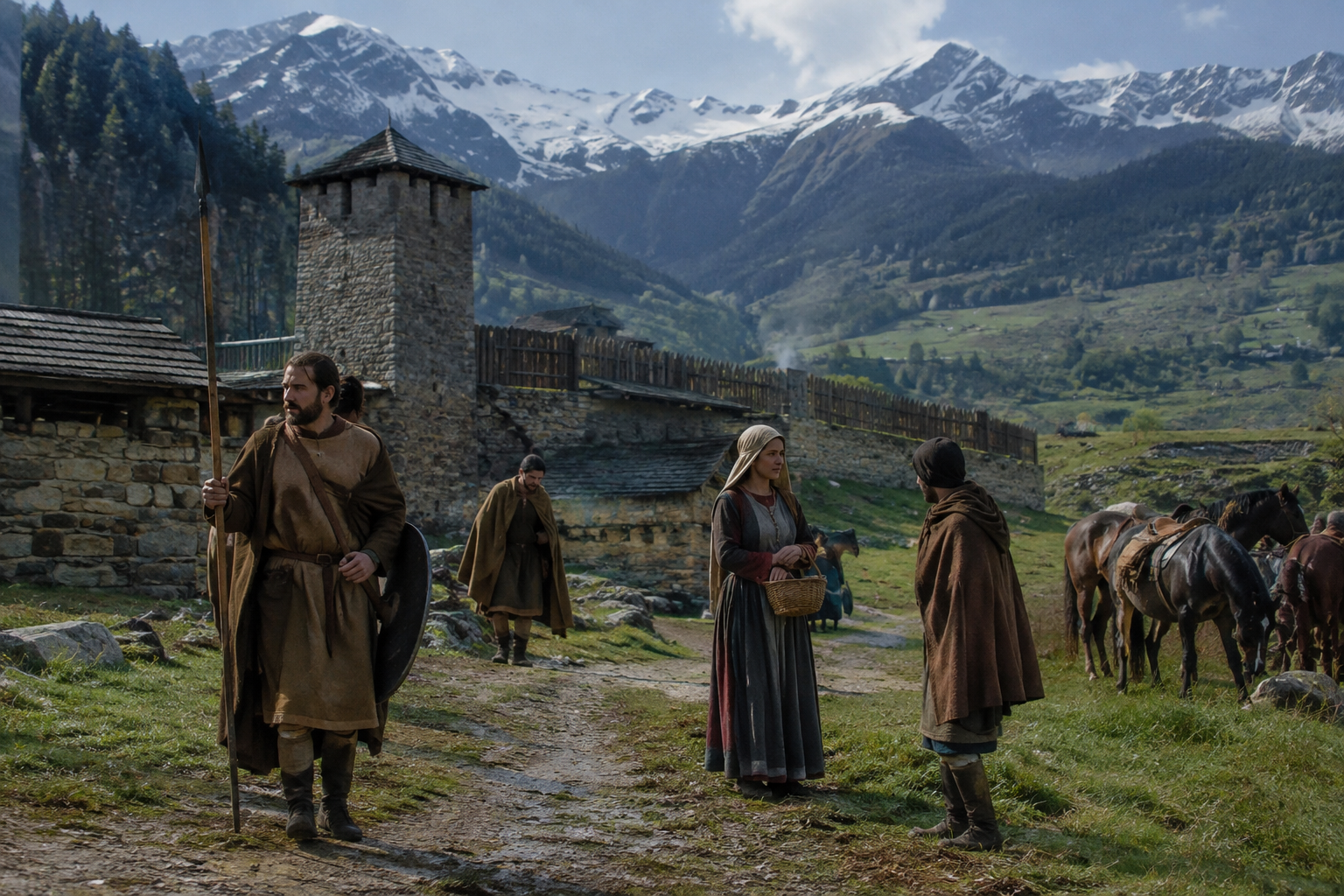
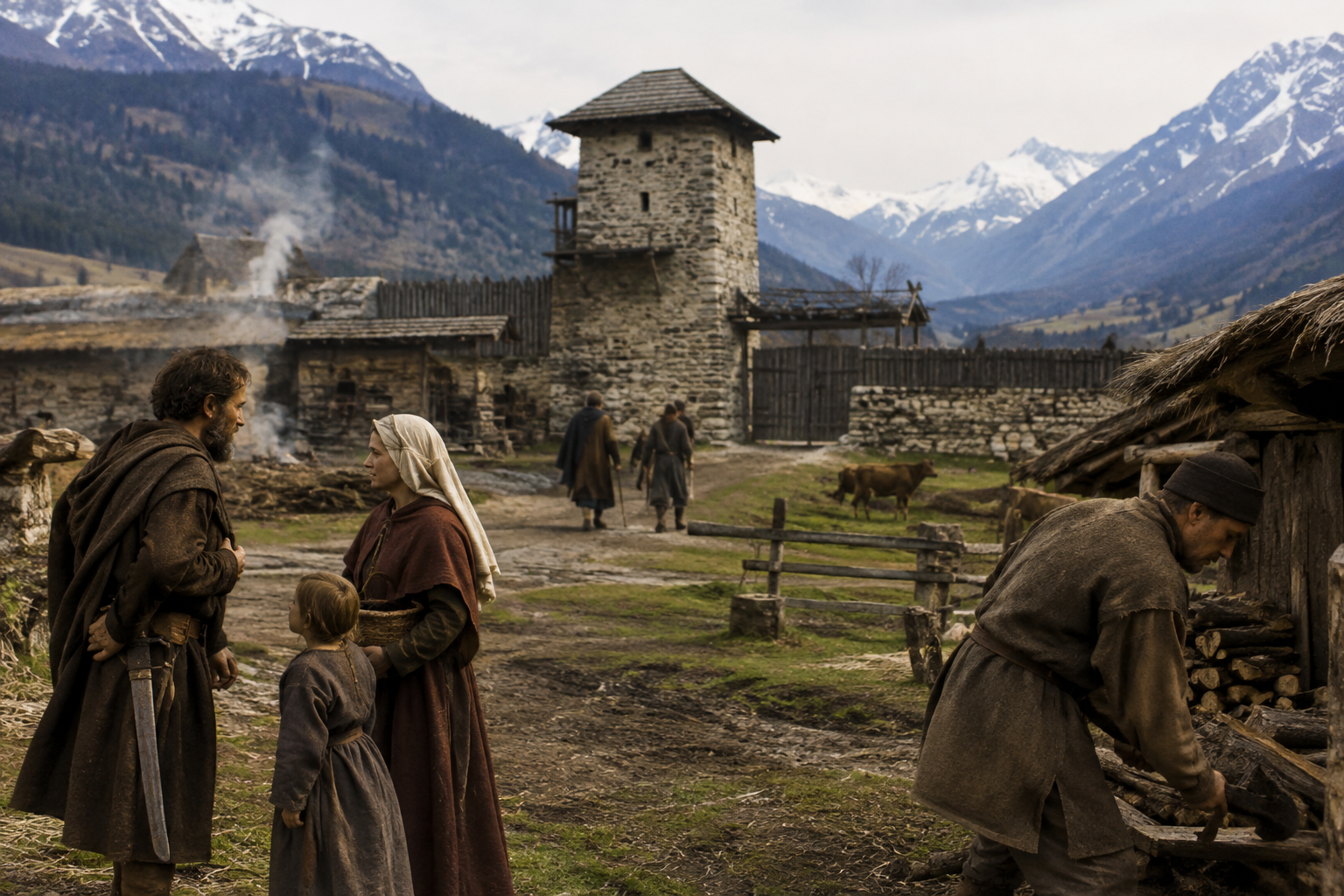
The temptation with the Balkans is always to flatten them: ancient tribe, medieval people, modern nation, one straight line. Archaeology and genetics keep refusing that neat story. By the 9th century, the region around Gomolava sat inside a contact zone shaped by the legacy of Rome, the spread of Christianity, Slavicization, Avar and post-Avar transformations in the Carpathian Basin, and ties to the Byzantine and Bulgarian worlds.
That makes sample I1116 valuable beyond the narrow question of one lineage label. He belongs to a historical moment in which identities were being assembled from several ingredients at once. Paternal lines like this one can survive political collapse, language shift, and cultural change. They may move with migrants, or remain in place while the names and institutions around them change entirely.
In other words, if your own Y-DNA falls on a branch like I2a1a2b1a1a1a, the ancient connection is not to a single banner or tribe, but to the human reality of the Balkans: persistence mixed with adaptation.
There is a practical reason to pay attention even when the evidence is sparse. Many haplogroup articles end up dominated by spectacular elites, famous dynasties, or oversized migration myths. Here, by contrast, the important figure is an ordinary excavated individual from a real cemetery context in the medieval Balkans. That is often where population history is clearest: not in royal propaganda, but in burial grounds that capture the people who actually lived in a place.
Sample I1116 also helps anchor this haplogroup in time. Modern distributions of Y-DNA can tell us where a branch is found now, but ancient DNA tells us when and where it is documented. Around 885 AD at Gomolava, this paternal line was already present in a region central to later South Slavic history. That does not prove origin there, and it does not prove uninterrupted descent for every present-day carrier. It does show that the branch had entered the historical record of the medieval Balkans by that point.
For readers exploring their own paternal ancestry, that kind of evidence is far more useful than legend. It ties a lineage to a place, a date, and an excavated human life.
The most responsible way to read I2a1a2b1a1a1a is as a finely resolved paternal branch that appears, at least in the evidence considered here, in an early medieval Serbian context at Gomolava. Its importance lies less in grand claims about a single founding people and more in what it shows about the durability of paternal lines in a region famous for historical layering.
The Balkans preserve some of Europe's deepest population history, as work on prehistoric and later populations has repeatedly shown. But medieval evidence is particularly valuable because it catches lineages after centuries of upheaval, when old and new identities were already entangled. Sample I1116 stands in exactly that world: neither purely prehistoric remnant nor neatly labeled medieval stereotype, but a person from a frontier society whose paternal line still reaches into modern family history.
So the distinctive lesson of haplogroup I2a1a2b1a1a1a is not grandeur but placement. At present, the clearest ancient signpost offered here is I1116 from medieval Gomolava, around 885 AD, in a region where continuity and mixture were both part of everyday history. For anyone researching this paternal line today, that is a meaningful clue: your direct male line belongs to a branch documented in the early medieval Balkans, in a landscape where identities changed faster than bloodlines did.

Comments