Ancient DNA Reveals Deep Balkan Roots and Medieval Admixture in the Ancestry of Albanians
– 6 min read


Ancient DNA and the Origins of the Albanian People
This comprehensive study plunges the reader into the rugged landscapes of the western Balkans at the end of the Bronze Age and the dawn of the Iron Age, asking a fundamental question: who were the people living there, and what do they have to do with modern Albanians? By following fragments of DNA from graves and hilltop cemeteries, it traces a remarkably persistent West Balkan population that seems to endure in place, long after many of their neighbours had been swept up, replaced or diluted by later movements across more than three millennia of turbulent history.
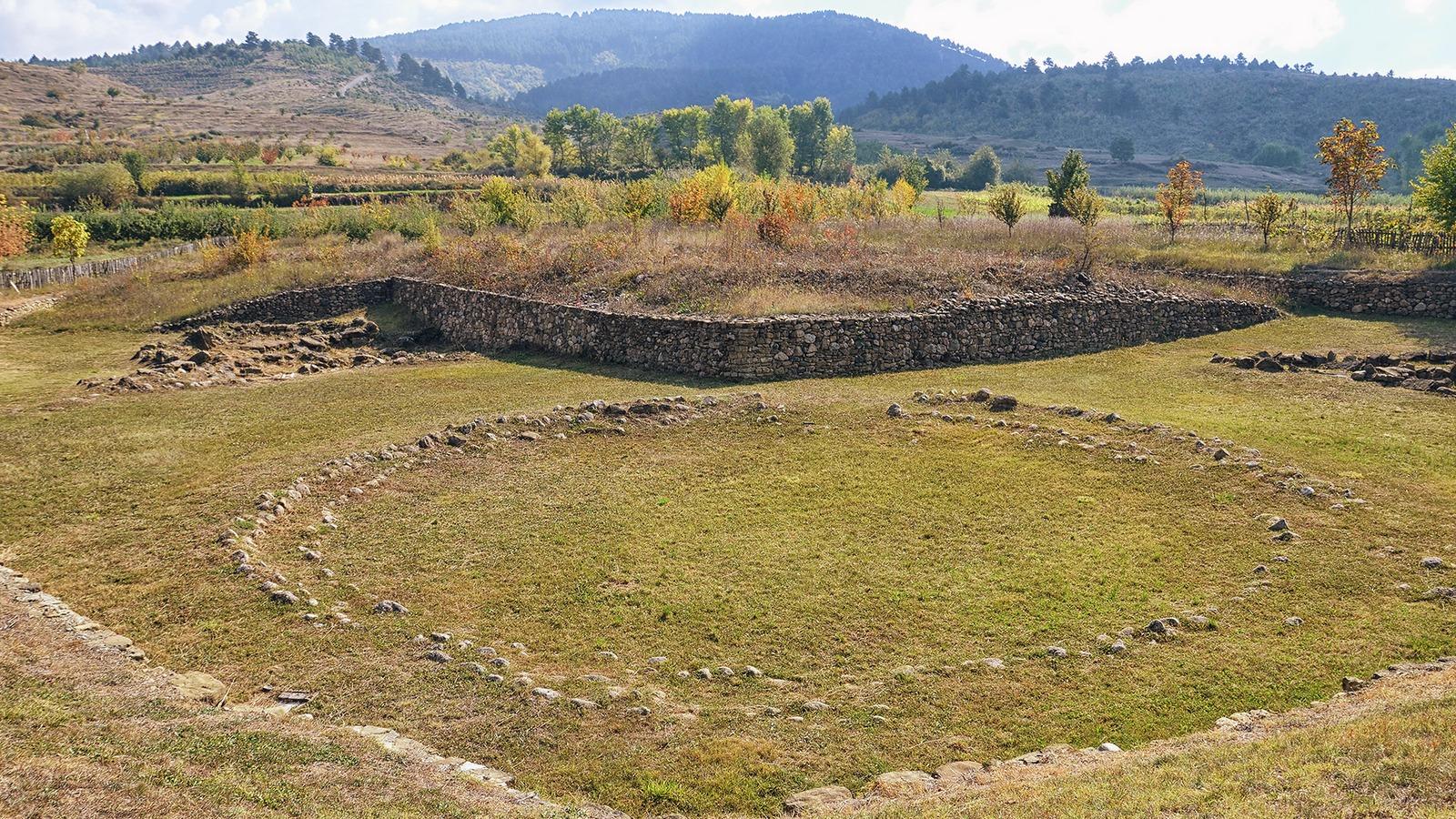
Two excavation sites in northern Albania, at Çinamak and Shkrel, become the main archaeological stages for this extraordinary story. Their graves span the end of the Bronze Age through the Iron Age, precisely the period when archaeologists speak of "palaeo-Balkan" peoples: tribal societies predating the Roman Empire, usually grouped under loose labels like Illyrians and their neighbours. At Çinamak, burials from the Early and Late Bronze Age through to the Iron Age preserve the remains of men, women and children who lived amid fortified hill settlements and tumulus cemeteries. Shkrel, in the mountainous north, provides Middle Bronze Age graves from a landscape of narrow valleys and steep pastures.
These communities left behind not only bones but a wealth of grave goods: metal pins and fibulae that fastened clothing, bronze weapons, ornaments, pottery vessels and the everyday kit of life in a warrior-farmer society. By sequencing DNA from the skeletons and comparing it with thousands of other ancient individuals from across Europe and western Asia, the study reveals that the people of Çinamak and Shkrel carried a distinctive mix of ancestries that had formed locally over the preceding millennia. This West Balkan genetic blend, crystallised in the Late Bronze and Iron Age, becomes the key reference point for understanding Albanian origins.
One of the most striking findings concerns long-term population continuity. When the DNA of these Late Bronze and Iron Age individuals is compared to later burials in the same region, and then to modern people, a clear line of descent appears. Ancient individuals from Çinamak and nearby sites share long stretches of DNA with early medieval and later skeletons from Albanian territory. These, in turn, connect strongly to present-day Albanians, revealing what the researchers describe as a "remnant" palaeo-Balkan group that survived the enormous political and cultural changes of the first millennium before and after Christ.
By at least 800–900 CE, individuals living in what is now Albania already resembled, in genetic terms, close cousins of modern Albanians. When their genomes are compared alongside Iron Age individuals from Çinamak, they match particularly well, suggesting that the same West Balkan population core stretches from those early warrior-farmers to medieval villagers and then to modern towns and mountain communities. This represents a more conservative demographic pattern than the repeated large-scale population replacements often imagined for the ancient Balkans.
The genetic findings sit within the broader context of Iron Age West Balkan societies, long associated by archaeologists with tribal groups that Greek and Roman authors later labelled as Illyrian, Dardanian and related peoples. The cemeteries at Çinamak and Shkrel occupy precisely the zones where such groups are thought to have lived. The graves themselves speak of societies that were both local and connected: bronze and iron spearheads, swords and knives found beside the dead suggest communities familiar with warfare and raiding, while pins, bracelets and rings in distinctive regional styles link these burials to a broader West Balkan artistic tradition.
Pottery shapes and decorative motifs show contacts both inland and towards the Adriatic coast. Individual skeletons from these sites become more than anonymous data points—each Iron Age burial represents a real person whose genetic signature can be tracked across time. Some individuals show particularly strong links to later Albanians, emerging as "hubs" of connection with many DNA matches to medieval and modern people from the same region, suggesting they belong to lineages that flourished locally rather than dying out.
The study also uncovers a fascinating additional thread woven into Albanian genetic history: a layer of Medieval East European–related ancestry that today makes up roughly one-tenth to one-fifth of the average Albanian's genome. This component can be tied to specific medieval graves and individuals from the turbulent centuries when new groups were moving through the Balkans. The researchers trace this ancestry back to populations from the broad East European world in the Middle Ages—groups that carried genetic signals similar to those later seen in Slavic-speaking peoples and other communities north and northeast of the Balkans.
Medieval cemeteries in the western Balkans have yielded skeletons that sit on an "East European cline"—a genetic gradient stretching from the Carpathian Basin and steppe-influenced regions down toward the Adriatic. Many graves from this period contain distinctive grave goods: men buried with long iron swords and heavy belt sets decorated with stamped metal plates, finely worked belt buckles whose style points northwards, echoing fashions seen in early Slavic burials or among steppe-influenced warrior elites. Women's graves sometimes include strings of glass and bronze beads, simple silver earrings, and temple rings recalling the material culture of early medieval communities in the middle Danube and further east.
The study employs sophisticated genomic tools to reconstruct this complex demographic history. Using "identity-by-descent" analysis to trace long shared DNA segments, the researchers demonstrate that medieval skeletons from Albania share genetic material with modern Albanians much more frequently than with neighbouring groups. Medieval villagers, post-medieval townsfolk and present-day Albanians form tight clusters of shared DNA, as if the same extended families keep reappearing across the centuries.
Analysis of "runs of homozygosity"—long stretches of DNA where both copies are almost identical—reveals demographic patterns spanning 6,000 years. Early farmers and Bronze Age people buried in what is now Albania show patterns typical of modest, valley-based populations: not so isolated as to suggest regular close-kin marriages, but small enough that the gene pool never grew very large. This pattern continues into Iron Age burials and medieval graves, echoing archaeological evidence of fortified hilltop settlements and scattered farmsteads rather than vast, cosmopolitan cities.
The study traces specific male-line lineages through time, with the Y chromosome serving as a kind of genetic surname passed from father to son. Two lineages stand out in the Balkans: E-V13 and J2b-L283. J2b-L283 first appears in Bronze Age contexts, found at sites like Shkrel and in coastal Adriatic cemeteries, often buried with weaponry and ornaments speaking to maritime connections. Remarkably, at the battlefield cemetery of Himera in 5th century BCE Sicily, outlier individuals with clear Balkan ancestry and J2b-L283 Y-chromosomes stand out from the majority—men whose recent ancestors likely came from across the Adriatic.
E-V13 becomes prominent in the Roman and post-Roman Balkans, common in contexts linked to Roman provincial populations and appearing in men buried with mixed material culture of the frontier. Present-day Albanians, including diaspora communities in Italy, still carry high frequencies of E-V13 and substantial amounts of J2b-L283, with the timing of splits within these lineages supporting their local expansion within the western Balkans during the Bronze and Iron Ages.
These genetic findings have profound implications for understanding Albanian language origins. The study provides evidence that the homeland of Albanian should be sought not in some remote corner far from the modern language area, but in the central and northern Albanian lands, where a core ancestral population was already settled and relatively stable by the Early Medieval centuries. The long-term genetic continuity makes it highly plausible that an Indo-European language ancestral to Albanian was spoken in these valleys and uplands for many centuries before appearing in written sources.
While the Balkans experienced repeated episodes of movement—from steppe nomads to Roman soldiers and later Slavic settlers—the genetic core underlying present-day Albanians maintained its ground more firmly than in many neighbouring areas. The Albanian language likely developed in a relatively sheltered corner of the Balkan mosaic, where older populations were not completely replaced despite the passage of armies and cultures. Medieval East European influences, visible both archaeologically and genetically, represent cultural and biological mixing on a strong local foundation rather than population replacement.
The power of this research lies in connecting archaeological scenes across millennia. Bronze Age cemeteries like Çinamak, Iron Age communities traced through distinctive pottery and metalwork, Roman-period frontier forts, and Early Medieval villages all supply individuals whose DNA aligns with today's Albanians more strongly than with almost any other living regional group. Behind every genetic statistic stands an excavation trench, with archaeologists recording each grave in painstaking detail: body positioning, pottery placement, and the arrangement of weapons or ornaments.
These graves emerge not as snapshots of single moments but as links in a chain of descent running across millennia. A child buried in a simple pit in an Early Medieval cemetery might share long stretches of identical DNA with an adult from a Late Bronze Age settlement nearby. These invisible ties demonstrate that communities occupying these ridges and valleys did not simply vanish with each new imperial frontier—many of their descendants remain there, speaking a language that developed locally from the same palaeo-Balkan roots.
By weaving together finds from graves—pottery, pins, knives, and beads—with the hidden record in the bones themselves, the study presents Albanian archaeology not as disconnected cultures but as a long, continuous conversation between generations. The Bronze Age, Iron Age, Roman, and Early Medieval periods become less a parade of textbook "cultures" and more a story of families, lineages, and communities adapting, enduring, and occasionally reinventing themselves on the same land across three thousand years of European history.
Original source: https://doi.org/10.1038/s41562-026-02462-z
Comments