The genetic legacy of the 17th-century colonial capital of St. Mary's City

– 7 min read


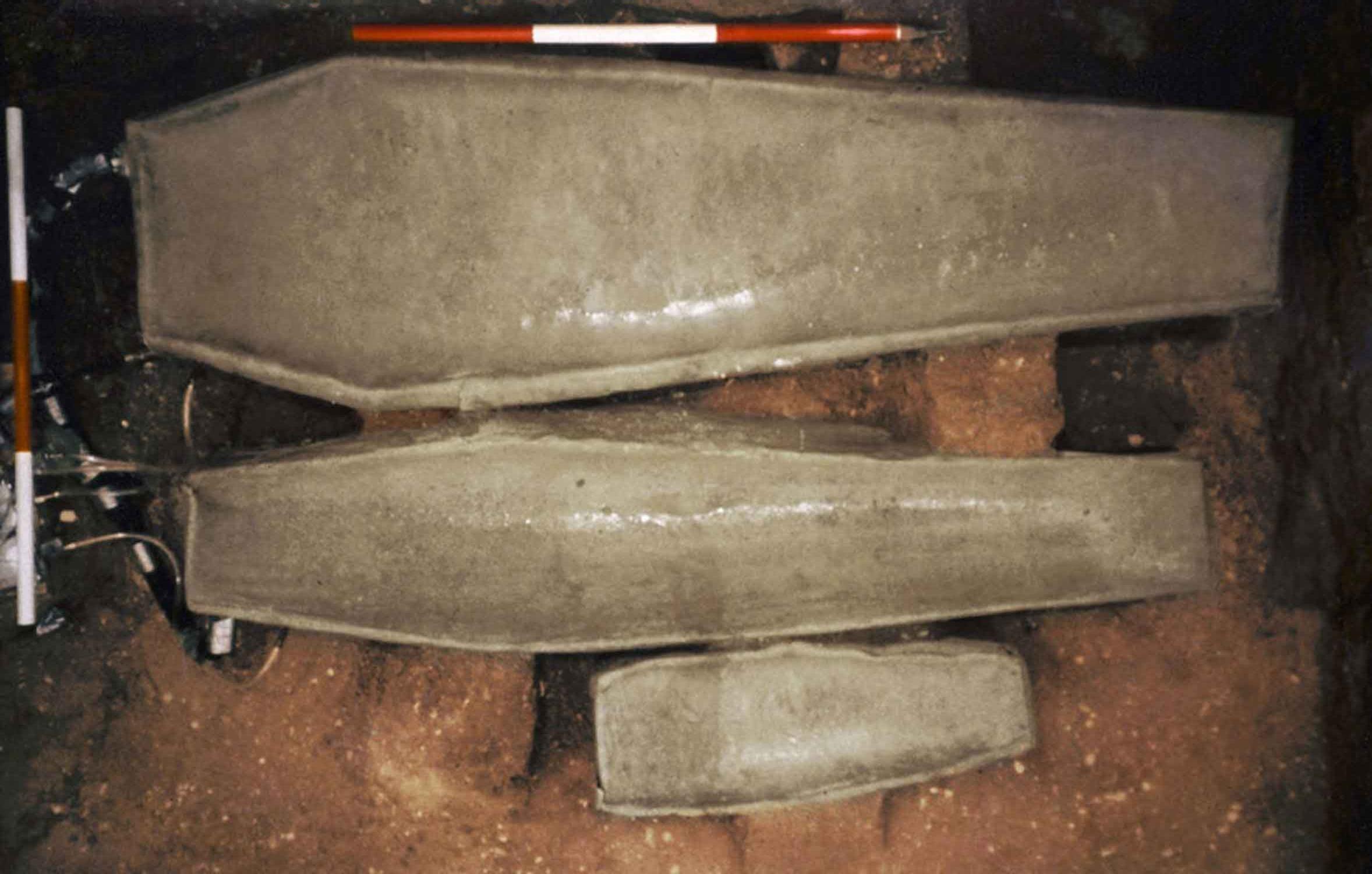
Archaeological Discoveries: Stories from Ancient Burial Grounds
The world of archaeology opens windows onto long-lost civilizations, using ancient skeletons, burial mounds, and forgotten artifacts to tell stories that written records never preserved. At its heart lies a series of archaeological dig sites where graves, grave goods, and fragments of bone become the main characters in gripping historical dramas that span millennia.
One major focus centers on burial grounds where archaeologists have carefully uncovered tombs layer by layer. In these cemeteries, rows of graves were cut into the earth over centuries, forming silent villages of the dead. Each grave functions like a time capsule, with some holding simple burials containing only a few personal items, while others are packed with weapons, jewelry, pottery, and animal remains, hinting at the wealth and status of those buried there. Even small details—the angle of a skeleton's arm or the way a pot is placed by the head—can reveal ritual behavior and beliefs about death and the afterlife.
These burial grounds bring to life remarkable individuals whose remains have been excavated with extraordinary care. One burial contains a person laid to rest with an elaborate array of metal ornaments, beads, and finely worked tools. The bones suggest a life of physical activity, perhaps warfare or long-distance travel, while the objects buried alongside speak of influence and high status. Another grave holds a child interred with miniature versions of adult tools and ornaments, touching evidence that even the young received the full ceremonial treatment of their community. These personal stories remind us that behind the grand sweep of history stand real men, women, and children with their own ambitions, fears, and social ties.
Particularly exciting sections examine warrior graves where individuals are buried with swords, spearheads, shields, and sometimes horses. The placement of these weapons is described in careful detail: a sword laid along the thigh, a spear by the shoulder, shield fittings near the ribs where the wooden board has rotted away. Such burials suggest a world where martial display mattered, and where a person's identity in death was tightly bound to their role as a fighter in life. Yet not every body with a weapon was necessarily a professional soldier—in some cases, the presence of arms may be as much about symbols and status as about actual combat experience.
The grave goods themselves receive almost as much attention as the skeletons. Archaeological investigations dwell on the craftsmanship of items found at digs: delicately patterned metal brooches, beads made from far-flung materials, drinking vessels with intricate decoration, and tools for spinning, weaving, or cooking. Each object is treated as a clue. A simple comb carved from bone can point to everyday grooming habits, while an imported glass bead hints at trade networks reaching across mountains and seas. When these items are mapped across many graves and sites, they reveal patterns of wealth, taste, and connection between distant communities.
A key strand running through archaeological research is the contrast between rich and poor burials. In some parts of a cemetery, graves are equipped with piles of offerings, while nearby bodies lie almost empty-handed. These differences reveal much about understanding ancient societies. Disparities in grave wealth are presented in concrete, visual terms: one grave might have a full set of feasting gear, another only a plain pot; one might feature fine jewelry and imported ornaments, another nothing but a simple knife. These comparisons make the past feel strikingly familiar, reflecting the social inequalities of any complex community while highlighting the particular customs of these ancient people.
Archaeological evidence paints a vivid picture of a time when Neanderthals and early modern humans were not just distant cousins passing in the night, but neighbors, rivals, trading partners, and crucially, parents of shared children. By following bones, teeth, and the faint traces of ancient DNA, researchers take us into caves, burial sites, and high mountain passes where these encounters actually happened.
Many of the most powerful clues come from caves—damp, smoky, and crowded spaces where both Neanderthals and modern humans sheltered from the Ice Age world. These investigations follow not just the genes but also objects and rituals, drawing attention to burials where Neanderthals and modern humans both seem to have cared about the dead in surprisingly similar ways. Specific ancient individuals are treated almost as historical personalities, not just rows in a data table, helping reconstruct meeting places at the edges of ice sheets, in river valleys, and along coasts.
The research translates complex genetics into everyday language, speaking of shared stretches of DNA and family resemblances that show up when scientists compare ancient bones with living people. The core message is simple and striking: most people outside Africa carry small pieces of Neanderthal ancestry in their bodies. These are like faint signatures from ancient encounters in caves and valleys tens of thousands of years ago, reframing Neanderthals not as a failed experiment, but as relatives whose lives, tools, and even grave goods are still, in a very quiet way, part of the human story.
In the Roman period, burial grounds were not just places for the dead; they were carefully arranged landscapes that told everyone who walked past exactly who lay there, how important they were, and sometimes even what they believed about the afterlife. These investigations take us straight into these silent cities of the dead, where archaeologists peel back layers of earth to reveal people, objects, and rituals frozen in time.
Roman law usually kept the dead outside city walls, and excavations show how long lines of graves stretched out along roads leading into Roman towns and forts. These cemeteries often began as simple clusters of burials beside busy routes. Over time, more graves were added, turning them into dense, crowded landscapes of tombs, simple pits, and grand monuments. Excavations along these old roads have uncovered everything from small family burial plots to large community cemeteries, showing changes over time: early cremations giving way to burials of whole bodies, grave types shifting from simple pits to stone-built cists, and new religious ideas creeping into the way people were laid to rest.
One of the most striking stories involves how Roman communities changed the very way they dealt with the dead. Early on, many people were burned on funeral pyres, their bones carefully collected and placed in containers such as jars, boxes, or carved stone chests. These cremation burials often come with burnt offerings: animal bones, pottery, and fragments of personal belongings that went onto the fire with the dead. Later, the fashion shifted. Whole-body burials became common, with bodies placed in narrow grave cuts, sometimes in wooden coffins, sometimes in stone coffins, sometimes simply wrapped in shrouds.
Archaeological research plunges us into the eerie world of ancient disease by following archaeologists as they open graves, examine skeletons, and extract invisible traces of infection from ancient teeth and bones. Instead of relying on old stories alone, scientists now track real outbreaks that swept through long-vanished communities, leaving their mark both in the earth and in the DNA of the dead.
One of the most gripping aspects involves tours of mass graves—not the careful, single burials of quiet countryside, but trenches in which bodies were laid hurriedly and in great numbers, the tell-tale sign that something catastrophic had happened. These trenches are like crime scenes for archaeologists, with the layout of bodies offering the first clues that they are looking at an epidemic rather than a war or natural disaster.
The most astonishing development is that researchers are no longer limited to what they can see with the naked eye. Scientists now take tiny samples from the hard inner core of teeth and bones, where traces of ancient germs can survive for thousands of years. Inside these samples, they search for fragmented genetic material from the microbes that once infected these people. When they succeed, they can say with confidence that specific individuals died from historically recorded diseases, turning abstract plagues into strings of real people, each with their own life story abruptly cut short.
Archaeological investigations lead us back to the world's earliest farming communities, not as an abstract revolution, but as a sequence of real places, real skeletons, and real objects pulled from the earth. The research shows how the first farmers did not suddenly appear everywhere at once; instead, agriculture emerged in particular regions, around particular villages, and can be traced through burials, houses, and tools.
The story opens in the region often called the Fertile Crescent, stretching through parts of modern Iraq, Syria, Turkey, and surrounding lands. Excavations here have uncovered some of the earliest clear traces of people planting and tending crops. Archaeological digs at ancient settlements reveal charred grains, grinding stones, and storage pits showing people who no longer relied only on wild plants. Archaeologists have found layers of soil packed with plant remains that look just slightly different from their wild cousins, showing that humans were already guiding the evolution of these plants, generation after generation.
At several early farming sites, excavated villages have stone or mud-brick houses tightly packed together. Some houses contained built-in bins, clay-lined pits, and heavy grinding stones worn smooth by constant use. These were not random collections of tools: they were the everyday equipment of people who had committed to life alongside their crops. Archaeologists sometimes find entire households frozen in time beneath collapsed walls: cooking pots, flint blades for cutting plants, and animal bones from herds of early domesticated sheep or goats.
The dig sites themselves are described almost like stage sets, inviting us to imagine standing at the edge of deep trenches, looking down at patchworks of soil colors where each stain marks the ghostly outline of a grave pit, post hole, or forgotten ditch. Archaeologists move slowly across these surfaces, trowel in hand, recording the exact position of each bone and bead. At one site, they uncover tightly clustered groups of graves arranged around central mounds, suggesting powerful families or elite groups whose members were buried together across generations. At another, graves are scattered more loosely, hinting at more open, less rigid community structures.
These investigations also highlight cases where physical remains and burial settings tell slightly different stories from traditional historical accounts. In some regions, written sources suggest sudden arrivals of new peoples or abrupt changes in power. Yet the graves show more gradual blending. At one settlement, archaeologists find local-style pottery sitting side by side with foreign-style ornaments in the same burial. Skeletal measurements show mixed body types, suggesting intermarriage and peaceful integration rather than simple invasion and replacement. These subtle, human stories soften the sharp edges of old tales about conquering armies and replaced populations.
Throughout all these investigations, the excitement remains alive by returning to the drama of excavation itself. There is the moment when the first hint of a skull appears in the soil, the slow brushing away of earth from a patterned metal brooch, the faint smell of damp, ancient ground rising from a newly opened grave. These sensory details, combined with clear explanations, give us a sense of standing alongside the excavators at the trench edge, watching as each new discovery adds another line to the long, rich story of our shared human past.
Original source article: https://www.cell.com/current-biology/fulltext/S0960-9822(26)00516-6
Comments