Ancient DNA Unlocks Mammoth Ivory and Human Behavior at Hohle Fels

– 6 min read


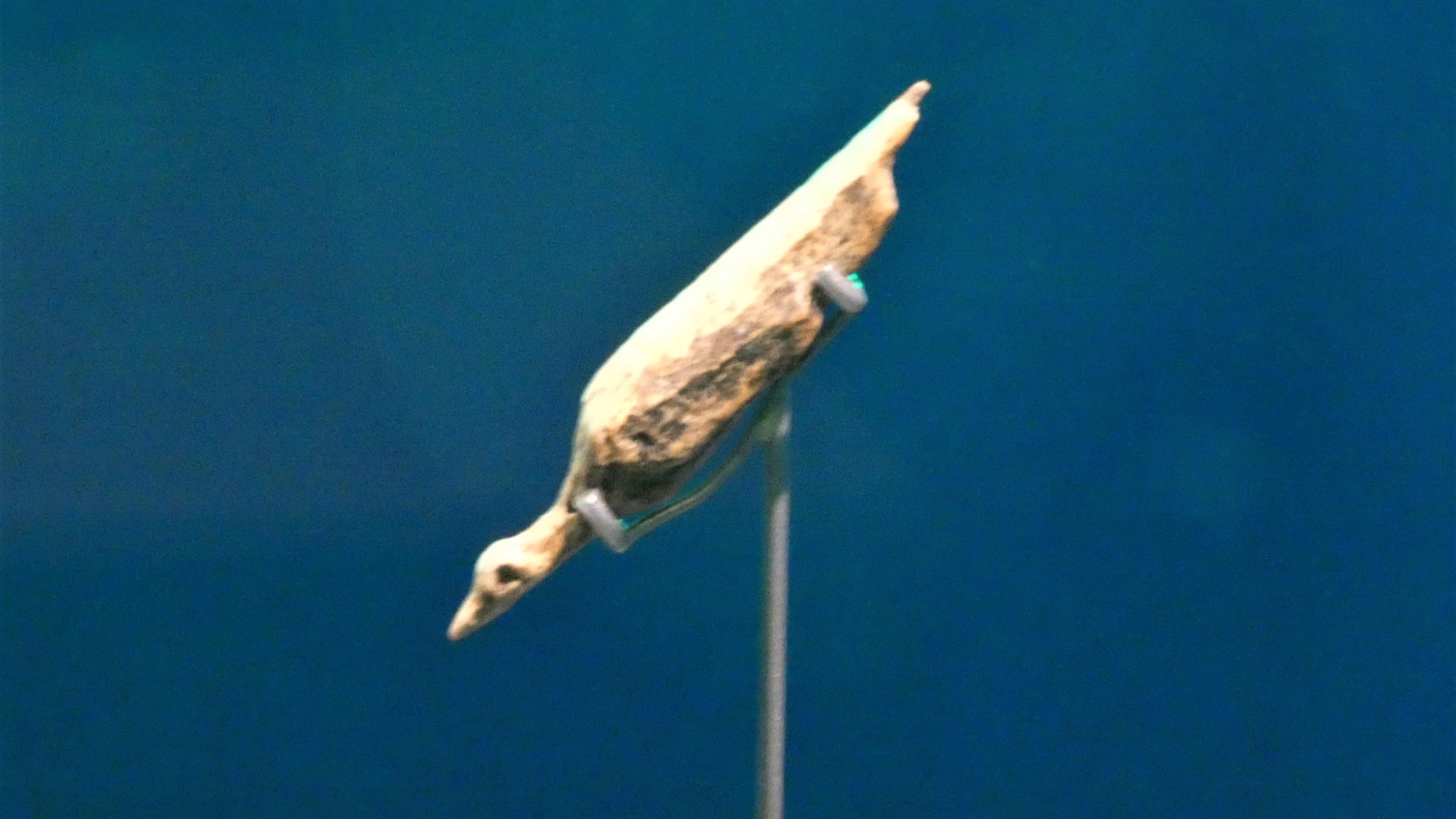
Ancient DNA in Mammoth Ivory from Hohle Fels
The research takes readers deep into Hohle Fels, a remarkable cave in the Ach Valley of southwestern Germany, famous for housing some of the world's earliest figurines and flutes carved from mammoth ivory. Here, amid layers of Ice Age occupation spanning tens of thousands of years, scientists have turned to a very modern question: can ancient DNA be recovered from mammoth ivory that has lain in non-frozen European soil for millennia?
Working with 25 small ivory flakes and chips, all clearly shaped or discarded by Upper Paleolithic craftspeople, this groundbreaking study demonstrates that the answer is definitively yes. Even though the material comes from temperate, non-permafrost deposits, researchers were able to extract genetic information that opens an entirely new window into both mammoths and the people who hunted and carved them.
Hohle Fels is not just another archaeological cave site. Its Aurignacian layers, dating roughly 42,000 to 35,000 years ago, have produced the famous female figurine and delicate bird-bone flutes, as well as a wealth of mammoth ivory artifacts and working debris. Later Gravettian levels, about 35,000 to 30,000 years ago, continued this rich tradition of ivory use. These layers preserve an extraordinary record of Upper Paleolithic craftsmanship and symbolic expression.
The ivory fragments studied in this research are not showpieces, but rather the offcuts and flakes once swept aside as Ice Age artisans shaped beads, pendants, and perhaps the raw blocks for larger carvings. Precisely because they represent by-products of manufacturing, they provide a direct glimpse into the everyday work of ivory crafting at the site, while simultaneously preserving genetic traces of the individual mammoths from which they came.
A mammoth tusk, functioning essentially as a giant tooth, consists of two main layers with dramatically different properties for genetic preservation. The bulk of the tusk is composed of dentin, the thick, creamy-white material that forms the main body and provides structural strength. Surrounding this core is a thin outer coating called cementum, a skin-like tissue that covers the tusk's surface and often appears brownish or weathered in archaeological specimens.
The research team set out to determine which of these layers is most effective for preserving ancient DNA over archaeological timescales. From four ivory pieces that still retained their outer coating, researchers sampled both dentin and cementum from the very same fragment. This approach allowed for direct comparison under identical burial histories, providing crucial insights into differential DNA preservation.
The results proved striking and consistent. Even in this relatively small sample set, cementum dramatically outperformed dentin in terms of DNA quality and quantity. The thin, often overlooked outer skin of the tusk emerged as a genetic goldmine, while the thicker, visually more impressive core proved significantly poorer in usable DNA. This finding represents a paradigm shift in how archaeologists should approach ancient DNA extraction from ivory materials.
This discovery holds particular importance for archaeological sites like Hohle Fels, located far from the deep Siberian permafrost that has traditionally supplied the best-preserved mammoth remains. The research demonstrates that even in central European caves, where bones and ivory have weathered 30,000 or 40,000 years of more moderate conditions, careful targeting of cementum can still unlock high-quality ancient genomes suitable for detailed genetic analysis.
To determine whether individual ivory pieces came from male or female mammoths, researchers employed sophisticated nuclear DNA analysis techniques. They mapped tiny surviving fragments of mammoth DNA against the genome of a modern African elephant, exploiting the close evolutionary relationship between these species. Using X-chromosome ratios as indicators, they developed a reliable method for genetic sexing of ancient specimens.
Male mammoths possessed one X chromosome while females carried two, creating a detectable genetic signature that persists in ancient DNA. From 25 ivory pieces analyzed, eight contained sufficient nuclear DNA to allow sex determination. When combined with seven previously studied mammoth bones from the same site, researchers assembled a revealing dataset of genetically sexed individuals.
The results revealed a strikingly female-biased pattern across both ivory and bone materials. The overall ratio showed approximately three females for every male mammoth represented in the archaeological assemblage. This female-leaning pattern contrasts sharply with natural mammoth deposits elsewhere, particularly in Siberia, where large collections from natural traps and mass death sites often show male-dominated assemblages, especially among young males prone to risk-taking behavior.
This female bias at Hohle Fels likely reflects deliberate hunting strategies rather than random scavenging. Modern elephant social structures provide insight into this pattern, as female-led herds form predictable, stable groups that return to the same valleys and water sources. Such herds would have offered multiple animals at once, making them attractive targets for organized hunting parties compared to solitary bulls that were harder to locate and yielded only single carcasses.
The research team successfully reconstructed twelve complete mitochondrial genomes from the Hohle Fels ivory fragments, providing unprecedented insight into mammoth population dynamics during the Upper Paleolithic. Every single genome belonged to what geneticists term Clade III, the dominant European mammoth lineage before the Last Glacial Maximum.
This genetic uniformity at the clade level masks important diversity within the lineage itself. The Hohle Fels mammoths represent five distinct branches within Clade III, indicating that the ivory worked at the site came from multiple herds rather than a single local population. This diversity suggests that Upper Paleolithic peoples either exploited several different herds over time or obtained ivory through extensive trade networks spanning considerable distances.
The timing of these specimens proves crucial for understanding mammoth population history in Europe. All the genetically analyzed material predates a major population turnover that occurred between approximately 24,500 and 16,200 years ago, when Clade III vanished from the European landscape and was replaced by Clade I populations spreading from elsewhere. The Hohle Fels mammoths thus represent the final chapter of the long-established European mammoth lineage.
This population replacement coincides with the coldest phase of the last Ice Age and appears to have had profound implications for human-mammoth relationships. The absence of securely dated Magdalenian mammoth ivory at Hohle Fels suggests that by the time this later culture occupied the cave, mammoths had either withdrawn from southwestern Germany or ceased to be a central resource for local hunter-gatherer communities.
The stratigraphic investigation of Hohle Fels revealed complex depositional processes that significantly impact interpretation of the archaeological record. The cave's sediment layers initially appeared to contain mammoth ivory spanning from Aurignacian through Magdalenian periods, suggesting continuous exploitation of mammoth resources across these cultural phases.
However, direct radiocarbon dating of ivory pieces from supposedly Magdalenian layers revealed a different story entirely. Multiple specimens that appeared stratigraphically Magdalenian actually dated to much earlier Gravettian periods, indicating significant post-depositional disturbance of the archaeological sequence.
Detailed geoarchaeological analysis revealed that powerful erosional episodes, likely occurring around the Last Glacial Maximum, carved deep gullies into the existing Gravettian deposits. These erosional channels were subsequently filled during Magdalenian times with material that had washed or fallen into the cave from the hillside above, creating a complex palimpsest of redeposited artifacts and sediments.
This discovery has profound implications for understanding mammoth exploitation during the Magdalenian period. Despite intensive excavation and analysis, no securely dated Magdalenian mammoth ivory has been identified at Hohle Fels. This absence suggests either that mammoths had withdrawn from the Ach Valley by Magdalenian times, or that these later hunter-gatherer groups had developed different resource strategies that de-emphasized mammoth exploitation.
The integration of genetic, chronological, and archaeological data from Hohle Fels provides unprecedented insight into Upper Paleolithic human-mammoth relationships. The research demonstrates that mammoth ivory was not simply a convenient raw material, but rather represents the intersection of complex hunting strategies, symbolic practices, and technological traditions.
The female-biased sex ratios and diverse mitochondrial lineages suggest that Upper Paleolithic peoples at Hohle Fels engaged in sophisticated hunting strategies targeting multiple herds across the landscape. This pattern implies considerable mobility, detailed knowledge of mammoth behavior, and possibly coordinated group hunting efforts capable of taking down entire family units.
The discovery that cementum preserves superior ancient DNA opens new possibilities for connecting specific artifacts to individual animals. Future research may be able to trace particular figurines, beads, or tools back to specific mammoths, potentially revealing whether symbolic choices in art creation were deliberately connected to characteristics of the source animals.
The apparent cessation of mammoth ivory use during the Magdalenian represents a profound shift in Upper Paleolithic lifeways. Whether driven by mammoth population decline, environmental change, or cultural preferences, this transition marks the end of a relationship between humans and mammoths that had shaped European archaeology for thousands of years.
The humble ivory chips and flakes from Hohle Fels, scraped from tusks by Ice Age craftspeople and dropped on cave floors tens of thousands of years ago, now preserve not only the marks of the tools that shaped them, but the complete genetic identity of the mammoths they once belonged to. Through careful analysis of these microscopic traces, we can reconstruct the individual lives, family relationships, and population dynamics of long-extinct herds, while simultaneously illuminating the sophisticated hunting strategies and symbolic practices of our Upper Paleolithic ancestors.
This research demonstrates that archaeological ivory is far more than a medium for creating beautiful artifacts. It represents a direct biological archive of human-animal relationships, preserving genetic information that can reconstruct hunting patterns, mobility strategies, symbolic practices, and population dynamics across tens of thousands of years. The cementum layer, thin as it is, emerges as the crucial key to reading these ancient stories written in DNA and stone.
Original source article: https://www.nature.com/articles/s41598-026-46761-x







Comments