Bronze Age Calabria DNA Reveals Inbred Community and a Rare Father–Daughter Incest Case

– 7 min read


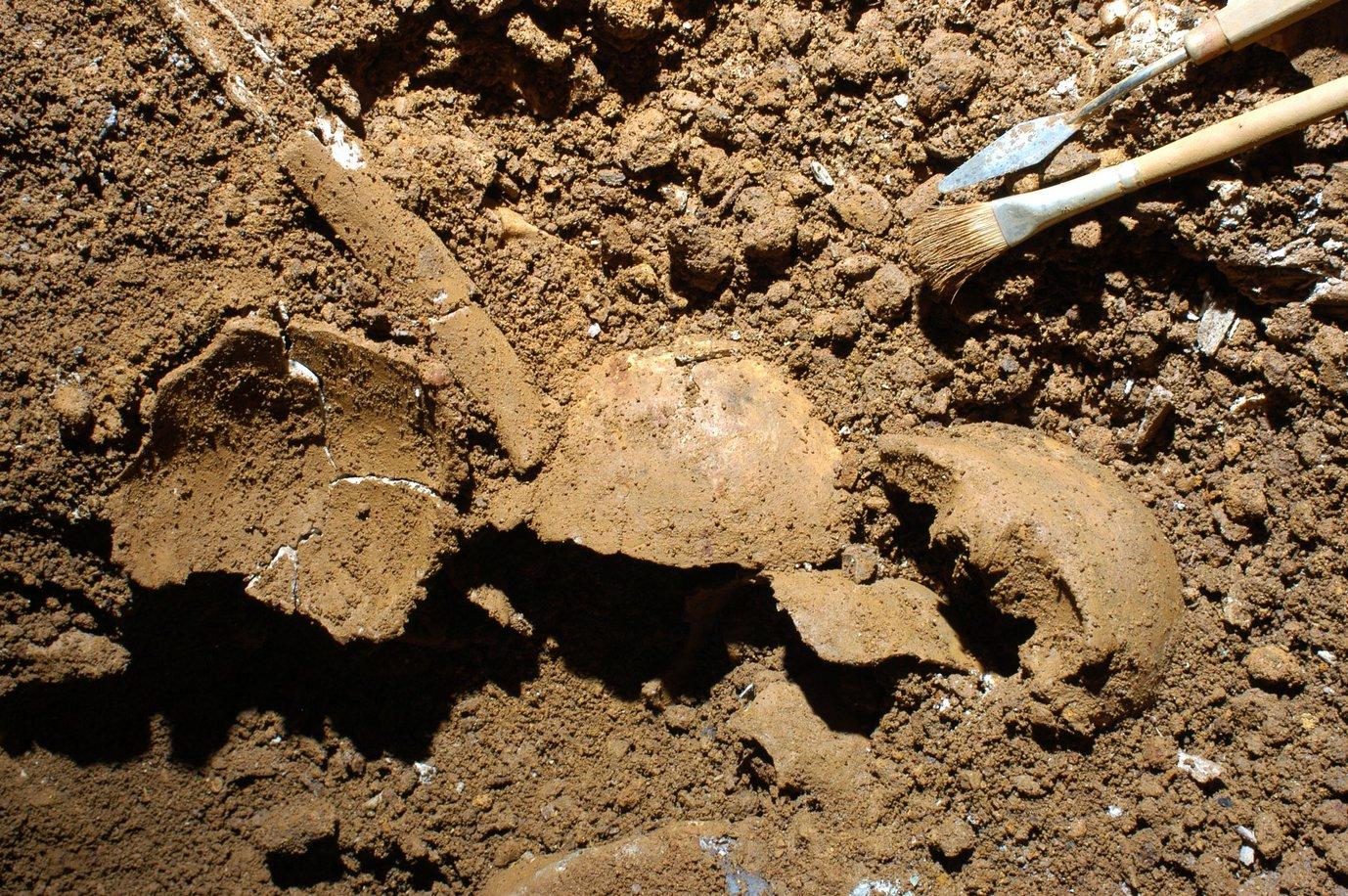
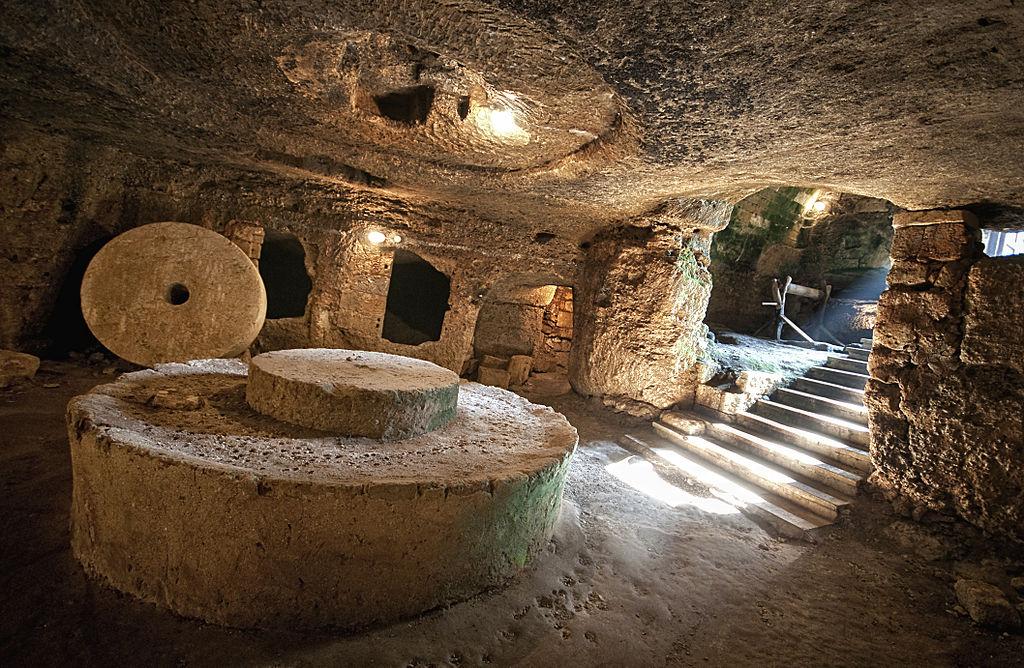
The article plunges the reader into the rugged mountains of northern Calabria during the Middle Bronze Age (around 1780–1380 BCE), using ancient DNA to put flesh – quite literally – back on the scattered bones from one extraordinary site: Grotta della Monaca. Perched more than 600 metres above sea level in the Pollino massif, some 20 kilometres from the Tyrrhenian Sea, this deep limestone cave served both as a prehistoric mine and, in its inner tunnels, as a communal burial place.
Archaeologists had already known Grotta della Monaca as one of Europe's key prehistoric mining sites, rich in evidence for early mineral extraction. Now, the article shows that its innermost gallery, area m5v, also held the remains of at least two dozen people, most of them children. These were not intact skeletons laid out neatly in rows, but secondary burials: bones gathered and deposited together, mixed and overlapping, and found alongside characteristic Protoapenninic pottery – a ceramic style linked to Bronze Age communities across southern Italy.
The Calabrian landscape, with steep mountains and limited arable land, never lent itself to large Bronze Age towns. The article emphasizes that, especially on the Tyrrhenian side, settlements appear small and scattered, often perched on promontories or hidden in upland zones. This is no comfortable coastal plain; it is a world of modest communities scraping a living from herding and small-scale farming, connected by difficult paths rather than broad roads.
Yet this was not an isolated backwater. Calabria sits at the very toe of Italy, a narrow channel away from Sicily and within easy maritime reach of the wider Mediterranean. Long before the famous Greek colonies of Magna Graecia, these mountains and coasts lay on trade routes that moved obsidian, metals, and ideas. The article situates Grotta della Monaca within this wider network: a mining cave, a burial cave, and a vantage point over the Tyrrhenian routes that linked southern Italy to Sicily and beyond.
Anthropological analysis identified a minimum of 24 individuals in the cave, with a striking pattern: roughly two-thirds were infants and children, aged between birth and 12 years. The main burial area, m5v, contained almost exclusively adult women and juveniles, with just one adult man identified there. This strongly suggests that the community was selecting who could be buried in this special, hidden gallery – probably according to sex and age, and perhaps according to kinship.
The article follows several of these individuals in remarkable detail through ancient DNA analysis. These are no longer anonymous Bronze Age burials but a cluster of real families, their relationships reconstructed from fragments of skulls and petrous bones. The genetic analysis revealed clear family connections: father-son pairs, mother-daughter relationships, and more distant kinship ties that bound this mountain community together.
By tracking which chunks of DNA are shared and how, the article maps out kinship within the burial group. Most individuals do not turn out to be close relatives, but two clear parent–child pairs emerge in the m5v area. One case, however, stands out as utterly exceptional. The boy GMO007 carries nearly 800 centiMorgans of very long "runs of homozygosity" – long stretches where the DNA from his mother and father is practically identical. In simple terms, this means his parents were first-degree relatives. When the uniparental markers (the maternal and paternal lines) are examined, it becomes clear: GMO007 is the child of GMO022 and one of GMO022's own daughters. This is, as the article emphasises, the earliest such parent–child incestuous union so far documented in the archaeological DNA record.
The burial context adds another twist. GMO022, that father, is the only adult male buried in the m5v funerary space, otherwise dominated by women and children. Whether he enjoyed some privileged or special status, whether the relationship was sanctioned, tolerated, coerced, or condemned within the community – these are questions the bones cannot finally answer, but they open a window onto the complexities of Bronze Age social life in Calabria.
The article uses the subtle genetic signals of inbreeding – not just extreme cases like GMO007, but the more modest background relatedness seen in others – to estimate the size of the breeding population this group belonged to. The result is surprisingly large: about 4,700 reproducing individuals when modelled, broadly similar to Middle Bronze Age communities in Iberia and Croatia. In other words, this was not an isolated handful of mountain herders cut off from the world. The community at Grotta della Monaca seems to have been part of a wider, moderately sized population network, in which people, genes, and objects were moving across distances. The cave burials may represent one local "node" within a broader Protoapenninic landscape of small but interconnected groups.
A crucial question for the article is: where do these Calabrian people fit into the big genetic picture of Bronze Age Italy and the Mediterranean? By comparing their genomes to hundreds of other ancient individuals, the researchers position the Grotta della Monaca community between several key groups. The closest match turns out to be Early Bronze Age Sicilians. The Calabrian group and these Sicilian predecessors share very similar proportions of ancestry from western hunter-gatherers, early farmers from Anatolia and the Balkans, and steppe herders from the north. This suggests a strong thread of continuity across the Strait of Messina: despite the water between them, northern Calabria and Sicily form part of the same genetic and cultural zone during the Bronze Age. Grotta della Monaca's people look genetically more like Sicilians of the Early Bronze Age than like many of their contemporaries further up the Italian peninsula.
The article is equally interested in what is missing from the Grotta della Monaca genomes. By the Middle Bronze Age, Aegean-style pottery and material culture appear in the Aeolian Islands, in Sicily, and in some western Calabrian caves. In western Sicily, this period also sees the arrival of people whose DNA carries a clear contribution from populations further east in the Mediterranean, linked to the Caucasus and the Levant. The Calabrian cave community is different. Careful modelling shows no detectable eastern Mediterranean ancestry in the Grotta della Monaca individuals. There is also no sign of North African input, even though such ancestry appears in some Bronze Age and later communities on Sardinia. Despite their strategic position between Sicily and the Tyrrhenian mainland, these mountain-dwellers seem to have remained outside the genetic ripple of eastern migrants that reaches Sicily in the second millennium BCE.
In other words, while exotic pots and stylistic influences may have circulated – Aegean-inspired ceramics are certainly in the wider region – the people buried in this specific Calabrian cave show a more local, western-looking ancestry. Their main outside connections appear to be to Early Bronze Age Sicily and, in a few individual cases, to northeastern Italy. This pattern reveals a picture of uneven connectivity, where the same stretch of sea could carry ships, pots, and ideas to one coastal hub, while a nearby interior valley remained genetically conservative.
Not everyone in the burial shares exactly the same genetic signature. Two individuals in particular, GMO004 and GMO010, stand out as genetic outliers within the community. They sit slightly closer, in genetic space, to Bronze Age groups from northern Italy and central Europe, carrying a somewhat higher proportion of steppe-related ancestry. When the article tests possible ancestral sources, GMO010 in particular can be modelled successfully as descending entirely from an Early Bronze Age community in Broion (northeastern Italy). This implies that at least some individuals, or their recent ancestors, had moved hundreds of kilometres across the peninsula by the time they ended up in this Calabrian mountain cave. These outliers hint at a world in which interregional mobility was very real: people, perhaps through marriage, trade, or migration, were crossing from northern Italy to southern mountain communities, and being integrated into local burial groups like that at Grotta della Monaca.
Beyond ancestry and kinship, the article also teases out aspects of what these people might have looked like and how they lived. Several individuals likely had dark hair, brown or reddish, and many probably had dark skin tones, although a handful carry variants associated today with paler skin and lighter hair. Blue or light-coloured eyes appear in some, showing that this trait was already part of the genetic palette in Bronze Age Calabria. At the same time, the article shows that all individuals with sufficient coverage retain the ancestral, "non-lactase-persistent" versions of key genes. In plain terms, these adults were almost certainly lactose intolerant. Yet isotopic analyses from the same site, considered alongside the genetic evidence, indicate that they were consuming dairy and meat products. The picture that emerges is of a pastoral economy in which milk and milk products were part of the diet, despite the likely digestive consequences for many adults.
Even the search for genetic markers of rare diseases is woven into the story. There is little sign of inherited disorders, despite the presence of inbreeding in the group, with just one woman (GMO012) carrying a variant that in modern populations has been linked to mild cognitive impairment in women. Whether that variant had any effect in the Bronze Age, in this particular setting, remains unknowable. The isotope studies at the site show that these people consumed dairy and meat, probably from their herds, painting a picture of a pastoral population – herding in the uplands, mining in the limestone, and returning their dead to the cool darkness of Grotta della Monaca.
Grotta della Monaca is not an isolated case of a cave used as a burial and cult space in Bronze Age Italy. The article situates it alongside other famous cavern cemeteries and ritual sites, such as Grotta Vittorio Vecchi and Grotta Regina Margherita in Lazio, and Grotta Manacora in Apulia. These caves served as places where communities brought their dead, often repeatedly, building up complex deposits of bones and offerings rather than neatly ordered individual graves. In the Protoapenninic world, such caves could be both cemeteries and sacred spaces, where the dead were gathered, remembered, and perhaps invoked. At Grotta della Monaca, the miners and the mourners may well have been the same people. The DNA results now suggest that the m5v burials belonged to a specific Bronze Age group using this hidden chamber between about 1780 and 1380 BCE.
The article underscores that the wider Tyrrhenian region of southern Italy at this time was dotted with small, sometimes short-lived communities, forming what archaeologists call a polycentric system: many small centres, none dominating, all linked by ties of kinship, movement, trade, and ritual. Grotta della Monaca emerges as one such centre – a mountain cave where ore was dug, where the dead were laid, and where, three and a half thousand years later, genetics can still trace the threads of family, mobility, and identity across the Bronze Age Italian landscape. The cave itself forms a vivid backdrop to these genetic stories, where Bronze Age miners and mourners once shared the same space, creating a unique window into the complexities of ancient Mediterranean life.
Original source article: https://www.nature.com/articles/s42003-025-09194-2
Comments