Ancient Oral Microbiome Database: A 102,000‑Year Relational Record of Dental Calculus DNA
– 5 min read


Ancient Mouths, Lost Worlds: Oral Microbiomes Across 102,000 Years
The study presents SMILE (Systematic Microbiome Intelligence for Lost Ecosystems), a comprehensive database examining oral microbiomes across approximately 102,000 years of human and Neanderthal history. This groundbreaking research utilizes ancient dental calculus – the mineralized tartar that accumulates on teeth – to trace microscopic life from Ice Age caves to medieval graveyards, providing unprecedented insights into the evolution of oral health and microbial communities.
The database encompasses 1,414 archaeological specimens spanning from Pesturina Cave in Serbia (102,000 years before present) through medieval European churchyards. Among the earliest samples are Neanderthal remains from De Nadale Cave in northern Italy (70,000 years old) and Banyoles, Spain (66,000 years). Each location represents a unique window into the oral microbial world of extinct hominins living in Pleistocene landscapes.
The temporal progression continues through Palaeolithic and Mesolithic hunter-gatherers, Neolithic farmers, Bronze and Iron Age communities, culminating in extensive medieval samples from churchyards across Europe. These later specimens often accompany burials containing rosary beads, knives, belt fittings, buckles, and religious badges, transforming quiet graveyards into rich microbiological archives where each burial preserves a frozen snapshot of everyday oral bacteria.
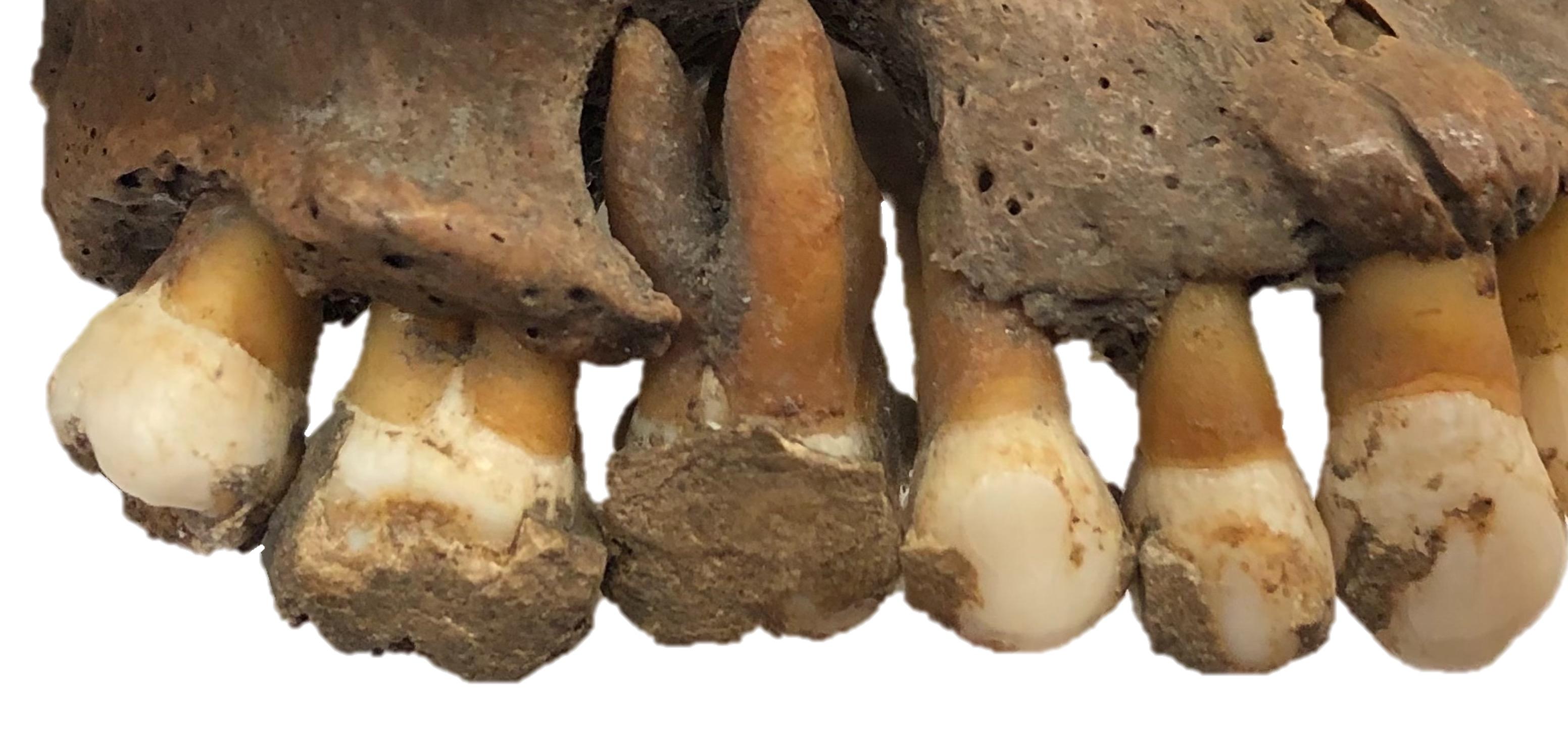
Dental calculus emerges as archaeology's most democratic archive – while not everyone possessed gold or weapons, virtually everyone accumulated plaque on their teeth. When dental plaque hardens and mineralizes, it traps food particles, pollen, bacteria, fungi, and viral DNA. Once sealed within this rocky matrix, these materials remain protected for millennia, creating natural time capsules that preserve soft tissue traces otherwise lost to decomposition.
Archaeologists collect these yellowish-white nodules using sterile tools, revealing rough crusts clinging to ancient enamel. From hunter-gatherers to medieval townsfolk, calculus often represents the sole surviving evidence of oral soft tissues – gums, tongue, saliva – and their invisible microbial inhabitants. The SMILE database transforms these seemingly mundane deposits into a timeline spanning human oral cavity evolution.
Several specimens represent celebrities in palaeogenetics and archaeology. The database carefully tracks individuals appearing in multiple studies, ensuring accurate identification without double-counting. Notable entries include Neanderthals from El Sidrón Cave in northern Spain and Spy Cave in Belgium, whose bones have undergone extensive analysis for dietary and health indicators. Now their preserved plaque adds new dimensions to these well-known individuals' life stories.
The database extends beyond humans with thirteen non-human specimens from bears, gorillas, and reindeer. These samples illuminate oral communities across species sharing Ice Age landscapes. One gorilla calculus sample contained such unusual bacteria that researchers double-checked it against original publications before inclusion, demonstrating the database's rigorous verification standards.
SMILE's strength lies in connecting microscopic bacterial evidence with tangible archaeological contexts. In Neolithic and Bronze Age cemeteries, calculus samples derive from individuals buried with ceramic vessels, flint blades, bronze daggers, beads, and animal offerings. The same teeth that once processed early domesticated cereals now reveal bacterial patterns linked to changing diets and emerging diseases.
At Iron Age and early historic sites, individuals interred with iron weapons, jewellery, and imported goods provide calculus for comparison with simpler burials, enabling researchers to investigate whether elite diets, trade connections, and urban living transformed oral health and microbial ecosystems. In medieval towns, cramped living conditions, refined grains, sugars, and regular fasting practices left distinctive signatures in dental calculus, capturing not only decay and gum disease but also microbes thriving in crowded, often unsanitary environments.
Recording geographical coordinates for over one thousand samples enables mapping these ancient mouths from high northern latitudes (approximately 79° north) to southern sites near 34° south, spanning nearly global longitude ranges. This geographic distribution transforms world maps into patchworks of ancient smiles, each pinned to specific excavation contexts.
Behind this geographic sweep, SMILE contains 16,180 microbiome records covering 2,150 distinct organism types, including bacteria, archaea, fungi, and viruses. For each ancient individual, the database records microbial presence and abundance as reported in original studies, whether as relative abundance percentages, direct read counts, or simple presence/absence data. This standardization enables comparisons between medieval towns and Neanderthal caves, or between Neolithic farms and modern oral communities.
The research reframes familiar archaeological locations as archives of microscopic history. Pesturina Cave becomes more than scattered stone tools and bones – through calculus analysis, it preserves traces of Neanderthal gum disease, dietary fiber processing, and bacteria that aided meat and plant breakdown. Medieval cemeteries with orderly grave rows transform into catalogues documenting changing oral health as cities expanded, diets shifted, and diverse populations mingled.
Each burial, labeled by trench and context numbers in excavation notebooks, gains parallel identity in SMILE through sample coordinates, dates, and microbial inventories. This dual identity enables investigations into diet evolution, disease transmission patterns, migration effects on oral health, social status impacts on microbial communities, and environmental influences on mouth ecosystems.
Critical to SMILE's reliability is rigorous authentication of ancient DNA. The database employs multiple verification strategies, recording authentication metrics for 212 samples with detailed damage pattern analysis. Genuine ancient DNA exhibits characteristic age-related degradation patterns, particularly increased C-to-T and G-to-A transitions at DNA fragment ends, where cytosine spontaneously converts to uracil over time.
Authentication measures include damage percentages, host DNA proportions, and sequencing methodology details. These metrics enable researchers to select only the most reliable samples for analysis, ensuring that detected microbes genuinely represent ancient oral communities rather than modern contamination introduced during excavation or laboratory processing.
The database's creation employed innovative artificial intelligence techniques to extract data from scattered archaeological publications. A five-step AI-assisted process analyzed PDFs and supplementary files from 45 studies, systematically converting tables, figures, and text into structured records. This approach handled publications in multiple languages including Japanese, French, and Russian, dramatically expanding the database's scope beyond English-language sources.
The AI system guided data extraction through sequential stages: document segmentation, table and figure identification, column mapping to archaeological and genetic information categories, systematic record creation, and quality validation with unit normalization. While some data locked within colorful visualizations required manual extraction, the AI-assisted approach enabled compilation of over 16,000 microbiome records – a task requiring months of manual effort.
SMILE enables investigations spanning evolutionary biology, medical history, and archaeological interpretation. Researchers can track antibiotic resistance gene evolution, trace pathogen emergence and spread, analyze dietary transition impacts on oral health, examine urbanization effects on microbial communities, and investigate climatic influences on ancient populations. The database's temporal span from early Neanderthals through late medieval periods provides unprecedented opportunities for longitudinal analysis of human oral microbiome evolution.
By weaving together calculus samples from Neanderthal caves, hunter-gatherer shelters, Neolithic long barrows, and medieval churchyards, the research demonstrates how much human history is preserved in ordinary dental deposits. SMILE transforms these encrustations into a carefully curated, searchable archive that allows past mouths to speak again through their microbial signatures, revealing intimate details of daily life, health challenges, and dietary practices across more than 100 millennia of human experience.
Original source article
https://www.researchsquare.com/article/rs-9586742/v1




Comments