Ancient DNA Reveals HLA Genes Linked to Leprosy Risk in Medieval Europe

– 4 min read


Leprosy in Medieval Europe: Archaeological and Genetic Evidence
This comprehensive study plunges readers into a medieval Europe where leprosy was not a rare misfortune but an ever-present fear. From the 10th to the 16th century, communities across Denmark and Germany grappled with this chronic disease, and their responses have been preserved in archaeological evidence: specialized hospitals for the sick, cemeteries devoted to them, and skeletons that still bear the unmistakable marks of infection centuries later.
Among the most striking archaeological sites examined are two medieval leprosaria: Skt. Jørgensgården in Odense, Denmark, and Gut Melaten near Aachen, Germany. These were not simple graveyards but complete institutions functioning as a mixture of hospital, hospice, and segregated community, founded specifically for those afflicted with leprosy. Both establishments were strategically positioned just beyond the main settlements, along busy medieval roads, close enough for charity and commerce yet sufficiently distant for social comfort.
The study reveals how these institutions embody complex medieval social responses to disease: genuine pity and Christian charity on one hand, strict separation and social control on the other. Once admitted to these leprosaria, most patients never returned to ordinary life; they belonged to a new, marginal community of the socially "unclean," yet they were still cared for and buried with a certain grim regularity according to Christian customs.
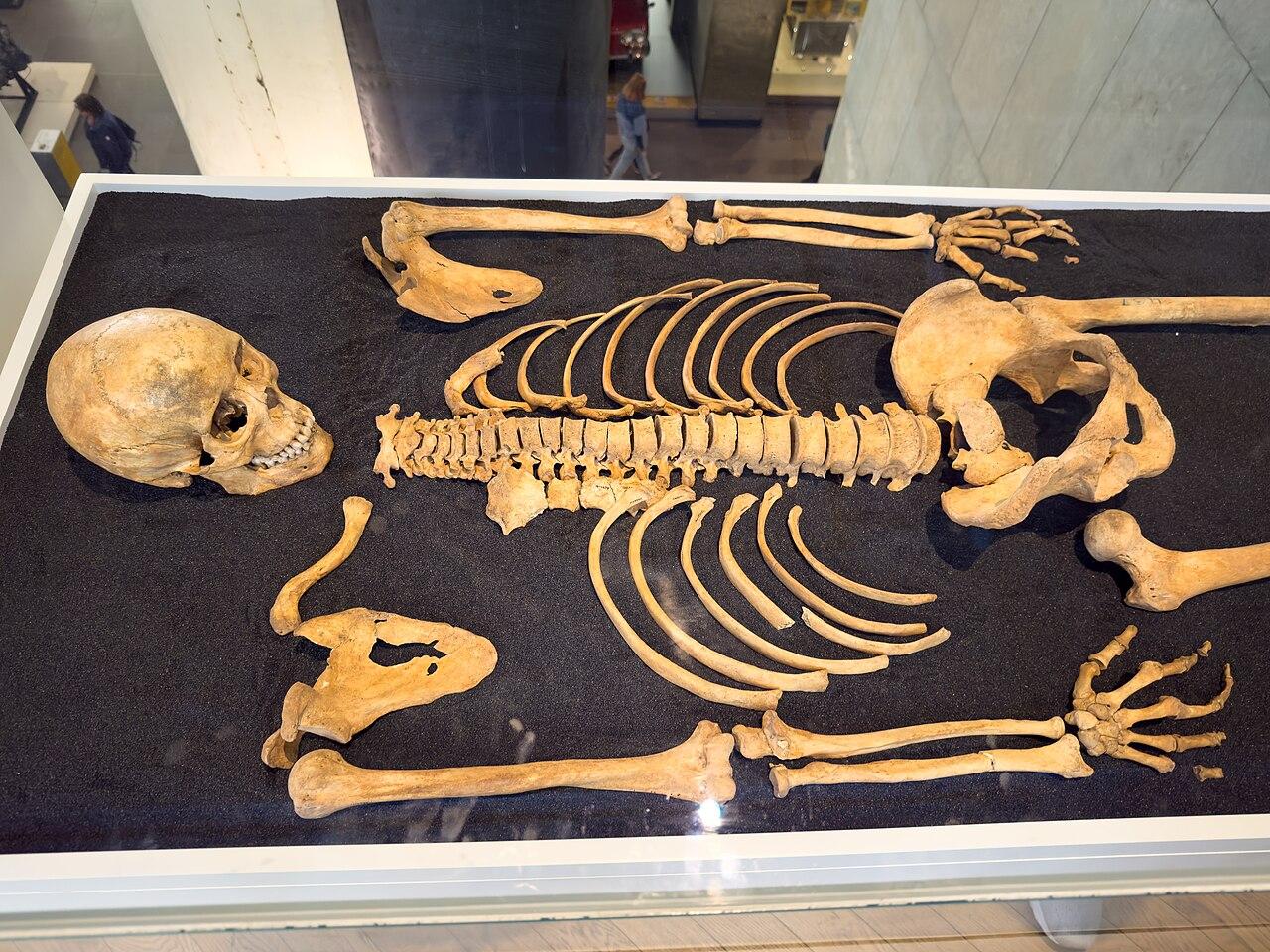
Leprosy leaves unmistakable traces on the human skeleton, particularly on the skull and extremities, and this research makes extensive use of these paleopathological signatures. The disease preferentially attacks the cooler parts of the body including the nose, face, hands, and feet, and over time can dramatically remodel the underlying bone structure. Advanced cases show characteristic erosion around the nasal aperture, remodeling of the upper jaw, and progressive loss of finger and toe bones.
At Gut Melaten and Skt. Jørgensgården combined, researchers confirmed 86 individuals as definitive leprosy cases, identified either through these distinctive skeletal markers, through direct detection of ancient leprosy bacterial DNA, or through both methods. These are not anonymous victims mentioned in historical chronicles, but specific men and women whose bones continue to tell stories of prolonged, disabling illness and the social exclusion that inevitably followed their diagnosis.
Medieval burial customs reveal a sharp divide between those interred in leprosaria cemeteries and those laid to rest in ordinary parish and monastic graveyards across Denmark and northern Germany. The leprosarium burial grounds stand in stark contrast to conventional community cemeteries, yet they maintain many traditional Christian burial practices including east-west orientation and orderly arrangement in rows.
Even within ordinary burial grounds examined in this study, researchers encountered several puzzling cases showing general signs of systemic infection but lacking firm skeletal or genetic evidence of leprosy. These ambiguous individuals were carefully excluded from the final genetic comparisons, demonstrating the rigorous methodology used to distinguish between clearly ostracized leprosy patients and the general medieval population.
One of the study's most remarkable achievements is the successful reconstruction of six complete medieval genomes of the leprosy bacterium, Mycobacterium leprae, extracted directly from the bones of identified individuals. Through advanced ancient DNA techniques and metagenomic screening, researchers were able to capture and sequence bacterial genetic material that had survived for over 500 years within skeletal remains.
Under microscopic analysis and in sophisticated sequencing laboratories, these long-dead patients become crucial witnesses to medieval disease patterns. The reconstructed genomes demonstrate that leprosy strains circulating in Denmark and Germany were closely related members of what specialists term "branch 3," a major lineage that dominated medieval European outbreaks. Significantly, the bacterial genomes showed remarkable stability over the centuries, suggesting that shifts in human demographics, social practices, and biological susceptibility rather than pathogen evolution underlaid the eventual decline of leprosy across Europe.
Beyond the two primary leprosaria, this research encompasses 18 archaeological sites spanning Denmark and Germany, incorporating a broad spectrum of medieval society. The study includes remains from parish churchyards in towns like Horsens, Ribe, and Viborg, monastic cemeteries, urban burial grounds, and rural church graveyards such as Tirup kirke and Ødekirkegård Sejet. This diverse sampling captures the full range of medieval communities, from trading centers to agricultural villages.
By weaving together evidence from these varied cemeteries, the research presents leprosy not as an isolated medical curiosity but as an integral part of the larger tapestry of medieval life. Monasteries, parish churches, trading towns, and rural communities all form the essential background against which the specialized leprosaria stand out as institutions of both care and exclusion.
Threaded throughout the archaeological and genetic evidence is a powerful narrative about identity and social exclusion in medieval society. Leprosy's very visibility in advanced cases—the characteristic facial disfigurement, damaged hands, and altered gait—made it a profoundly social disease that extended far beyond individual medical experience. Those ultimately buried at Skt. Jørgensgården, Gut Melaten, and similar institutions had been singled out in life as fundamentally different from their healthy neighbors.
Their final resting places, within walled leprosarium cemeteries positioned on the edges of major towns, serve to mark and perpetuate that difference even in death. Yet the graves themselves suggest considerable care and religious attention. Individuals were laid out in proper Christian fashion, oriented toward the east, often arranged in orderly rows within dedicated cemetery grounds. They represent, in other words, a complex status of being both excluded and included: held apart from the healthy population, yet still embraced by the religious and communal rituals of Christian burial.
The study's genetic analysis reveals fascinating patterns in immune system genes among medieval Europeans, comparing 93 confirmed leprosy cases with 209 controls from ordinary cemeteries. Several genetic variants show clear associations with disease susceptibility or protection. The variant B*38, though rare overall, appears nearly four times more frequently in leprosy patients than in controls, suggesting it may have increased individual risk of infection or disease progression.
Other immune gene variants including A*23, DRB1*04, and DRB1*13 show intriguing patterns that help explain why some medieval individuals succumbed to leprosy while their neighbors remained healthy. Computer modeling suggests that risk-associated variants tend to present fewer fragments of leprosy bacteria to immune cells, essentially leaving the immune system "blind" to much of the pathogen. In contrast, potentially protective variants like DRB1*13 can present a broader range of bacterial proteins, providing more comprehensive immune recognition.
The close reading of bones, burial grounds, and ancient genetic material allows modern researchers to glimpse these lost communities of the sick, their suffering inscribed both in their skeletons and in the very layout of the specialized cemeteries that received them, while simultaneously revealing the biological factors that determined who would join their ranks.
Original source: https://genomebiology.biomedcentral.com/articles/10.1186/s13059-025-03925-8





Comments