Ancient DNA and kinship analysis in Bronze Age and Iron Age European populations
– 8 min read


Ancient DNA and the People Behind the Bones: A Comprehensive Study
This comprehensive study plunges deep into the world of ancient DNA recovered from human skeletons, treating them not as anonymous bones but as once-living people with families, belongings, and stories written into their genes. Across a wide set of burial sites spanning from richly furnished graves to modest interments, genetic data rebuilds past lives, kinship networks, and movements of people over many centuries. By combining cutting-edge laboratory techniques with careful archaeological analysis, this research transforms ancient DNA from a distant technical tool into something immediately human: a way of hearing the voices of those who once walked through cemeteries in life and who now, through their genes, still speak from their graves.
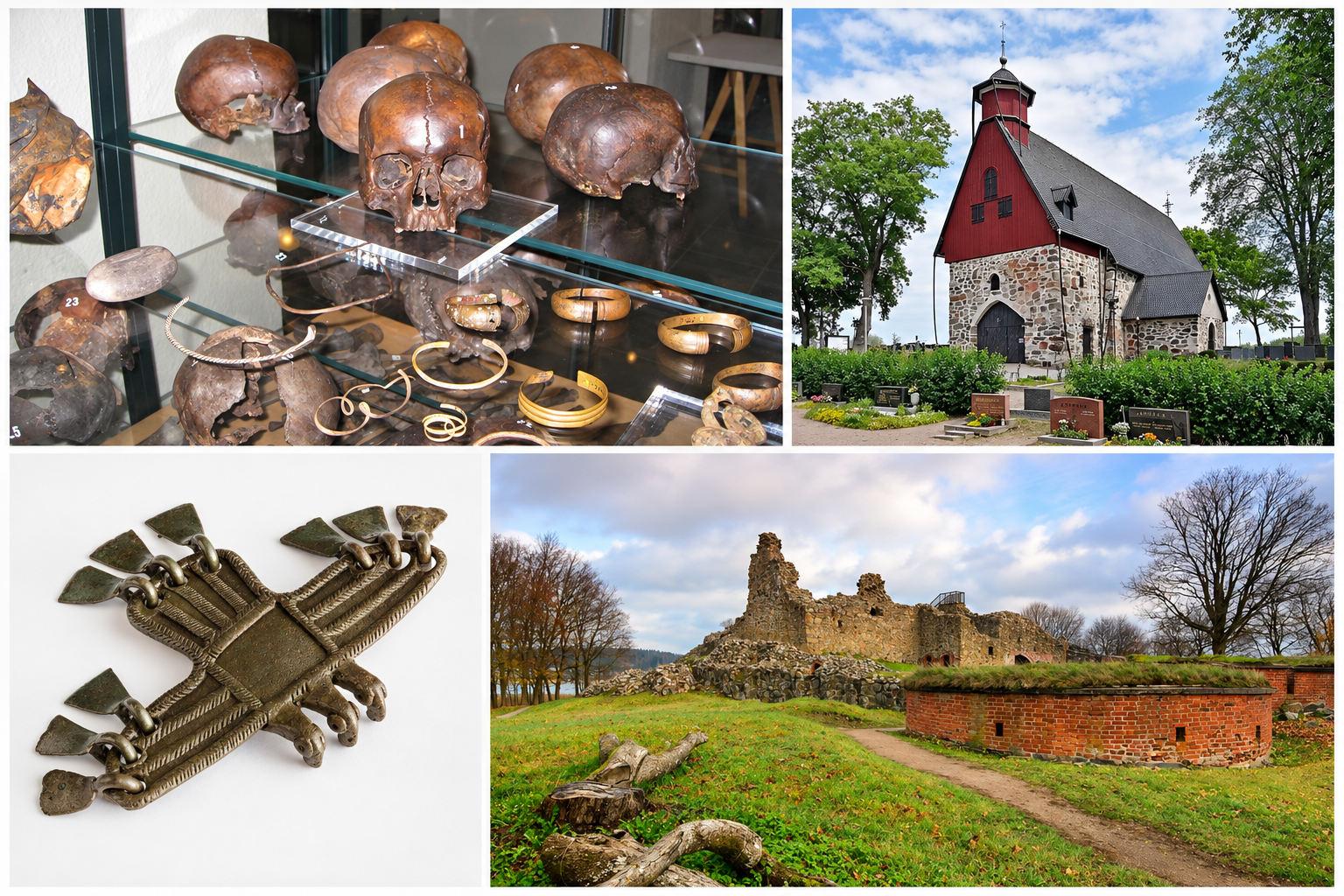
At the heart of this study are archaeological sites where human remains were found with carefully arranged grave goods: weapons, jewellery, tools, and ornaments that serve as clues about status, gender roles, and beliefs rather than mere decorations. In cemetery after cemetery, richly armed burials containing swords, shields, and spears contrast dramatically with graves holding brooches, beads, and fine dress fittings. The research uses DNA to test whether these gendered and status-based signals in graves match the biological sex and ancestry of the buried individuals.
Other graves show more modest assemblages: simple knives, pottery fragments, or a single brooch. By reading DNA from these same skeletons, the study reveals that even apparently ordinary burials can conceal complex life histories, including migrants and descendants of migrants who crossed vast distances to reach their final resting places. Child burials prove particularly revealing, with small graves containing carefully placed goods that sometimes echo the equipment of adult men or women. Genetic analysis reveals where each child fits into the family web of parents, siblings, and cousins also buried in the same cemetery.
The combination of grave goods and DNA creates a powerful analytical framework that can ask concrete questions: whether those buried with warrior trappings were actually close kin, whether genetic outsiders are marked as such in burial practices, and how family ties influenced where and how people were laid to rest. This approach turns cemetery excavation plans into ancestral maps, revealing the social geography of past communities.
One of the most striking contributions of this research is the reconstruction of extended families spanning multiple graves and several generations through ancient DNA analysis. In numerous cemeteries, researchers identify what are effectively multi-generational lineages: grandparents, parents, children, and distant cousins, all genetically linked and buried within the same clusters of graves. When plotted against detailed grave plans, these DNA-based family trees transform site layouts into comprehensive ancestral maps.
Certain high-status individuals buried with particularly lavish weapons or jewellery emerge as central figures within these kinship groups. Their children, grandchildren, and in-laws are arranged around them in tight rows or circles, as if the graveyard itself were designed to showcase the history of specific family lines. Statistical models of kinship work out relationships in much the same way that modern genealogy websites reconstruct family trees, except here the records are bones rather than parish registers.
In contrast, some individuals appear almost isolated in genetic terms, with no obvious close relatives in the same cemetery. Their DNA marks them as new arrivals who married in, were adopted, or perhaps fostered into local communities. Their graves become focal points for understanding how outsiders were absorbed into established social networks. By tying these genetic relationships to burial customs including grave type, presence or absence of goods, and position within the cemetery, the research demonstrates how kinship and social identity were arranged in the landscape of the dead.
The study reveals a long story of movement and mixture by setting ancient genomes alongside the graves, goods, and landscapes they came from. Rather than starting with abstract population labels, specific burials and cemeteries drive the narrative of how communities shifted across time. Across multiple burial grounds, genome-wide data shows that groups from richly furnished graves often form distinct clusters from those in simpler interments, revealing subtle social boundaries written into biology.
In key sites, large cemeteries divide into areas where some graves feature stone linings or wooden chambers while others are simple pits. Genetic clustering aligns with these zones, suggesting that kinship groups or status groups buried their dead in separate territories within the same graveyard. Extended families can be traced along rows of graves, with grandparents, parents, and children sharing both genetic signatures and particular styles of brooches, belt-sets, and weaponry.
When multiple cemeteries are stacked into single analyses, long-distance movements become visible. Genome-wide data shows that over several centuries, the genetic makeup of some regions shifts toward profiles more typical of populations from far north or east. This change occurs not as a sharp break but as a long, uneven process of integration and mixture. The research emphasizes that migration here is not a simple tale of replacement but rather a patchwork of individual and family journeys, with some moving far, others staying put, and many communities sitting at crossroads where these streams met and blended.
The technical work behind these discoveries involves coaxing DNA from very old bones and teeth through demanding laboratory procedures. In clean laboratories, small samples are drilled from the densest bone or tooth material, usually the inner ear bone or tooth roots, where DNA tends to be best preserved. These tiny fragments undergo grinding and chemical treatment to release genetic material, with machines then sequencing millions of short DNA fragments from each individual.
Computer methods rebuild these fragments into genetic profiles for each skeleton while carefully checking for modern contamination. Everyone who has ever handled these skeletons represents a potential contaminant, from nineteenth-century excavators who smoked over trenches to modern specialists who have reboxed collections without gloves. To combat this, teams work in dedicated clean rooms separated from the outside world, with surfaces and tools regularly treated with bleach or ultraviolet light.
The research profiles are compared with one another and with large reference sets of present-day and ancient genomes to estimate relatedness, ancestry, and biological sex. Critical authentication involves checking for classic signatures of ancient DNA damage, including characteristic chemical changes at fragment ends and very short fragment lengths. Cross-checking genetic sex with osteological sex helps identify potentially contaminated samples, as mismatches raise red flags requiring investigation.
Rather than speaking only in averages and population trends, this research lingers on particular individuals whose DNA and grave context together form miniature biographies. One prominent male burial, found at the head of a line of weapon-furnished graves, emerges through DNA analysis as the ancestor of several later burials around him. This archaeological trace of a founding figure, perhaps remembered locally as a patriarch, shows how descendants maintained privileged cemetery plots across generations.
A woman interred with rich dress accessories and imported ornaments shows genetic background partly different from the majority buried around her, appearing in DNA terms to be a migrant who married into the local community. Yet her central placement with lavish goods demonstrates how newcomers could be honored and woven into local storytelling. Several adolescents and young adults buried with adult-style equipment emerge as key nodes in family networks but die too early to leave many direct descendants, suggesting how youth, promise, and perhaps tragic early deaths were materialized in burial rites.
These individual portraits remind readers that ancient DNA represents not abstract datasets but sets of bodies, each in carefully prepared graves, each with social stories behind their final appearances. By treating ancient individuals identified by laboratory codes almost like characters in historical sagas, the research brings human faces to genetic data while maintaining scientific rigor.
Using ancient DNA alongside precise archaeological contexts, this research tackles social questions rarely accessible in written sources. By comparing genetic sex with gendered signals of grave goods, the study tests how tightly biological sex and social gender were linked in past societies. While many graves show clear matches, the research discusses ambiguous cases where objects and chromosomes tell different stories, revealing the complexity of ancient gender expression.
Patterns of burial location within cemeteries, including who occupied central plots versus edge positions and who was clustered together, map onto genetic family trees to reveal unwritten rules about who counted as core family versus those with more marginal places in groups. The research also explores how status inheritance may have worked, tracking how high-status grave goods persist down certain lineage branches while collateral lines fade into simpler burials.
Multiple ancestry components can be recognized within single communities, often aligning with different burial customs. Some individuals buried with weapons and horse gear, others with spindle-whorls and ornaments, and hybrid combinations in mixed-ancestry graves. Through time, sharply distinct components soften as later generations show smoother ancestry blends, demonstrating that population mixing was a multi-generational process playing out within single communities rather than only at their borders.
This comprehensive analysis reveals how different DNA processing approaches can change historical interpretations of the same ancient individuals. Two major data handling methods are compared throughout: one built around older chemical treatments of ancient DNA extracts, another using newer approaches designed to rescue more damaged molecules. These rival views of ancient genomes are walked through the same archaeological landscapes to identify where they agree and where they lead down different historical paths.
The same individual can appear differently under different analytical schemes. A warrior buried with lavish weapon sets might cluster with local farmers under one pipeline but edge toward steppe-linked groups under another. A woman interred with imported ornaments might show stronger or weaker genetic ties to distant regions depending on how damaged DNA fragments are filtered. These technical choices can tip interpretations between seeing someone as a local who adopted foreign styles versus a foreigner fully integrated into local communities.
Family relationships also prove sensitive to data processing approaches. Close relatives like parent-child pairs and full siblings remain robust across different analytical methods, but more distant ties including cousins, half-siblings, and marriage links between families show surprising sensitivity to damaged DNA treatment. These differences affect whether cemeteries appear dominated by single powerful lineages or by several competing houses, each with distinct status signaling practices.
Taken together, the graves, grave goods, and DNA-based family trees reveal past communities in action. This research moves beyond broad, sweeping claims about peoples and cultures to anchor arguments in specific men, women, and children whose bones can be tied to belongings, relatives, and life stories. The fine-grained genetic structure reveals household cemeteries with tight clusters of graves belonging to close relatives, set alongside other clusters with quite different genetic signatures.
Multiple houses or farmsteads can be matched to multiple genetic lineages, each burying their dead in favored cemetery corners. Marriages between lineages become visible when individuals with ancestry typical of one cluster are buried among the dead of another. These marriage migrants help explain how genetic components spread across landscapes without mass population movements, revealing the social mechanisms behind large-scale genetic change.
The research demonstrates that many communities were genetically mixed from the outset, with even earliest cemetery phases containing people whose ancestry points toward distant regions alongside others retaining overwhelmingly local profiles. Rather than simple replacement scenarios, the evidence points to complex social landscapes in which different ancestries lived, worked, and were buried side by side, gradually weaving together into new local populations.
This comprehensive study transforms our understanding of ancient communities by combining rigorous scientific methodology with careful attention to individual human stories. By treating cemetery excavations as windows into family histories rather than just collections of artifacts, the research reveals the intimate social processes behind major historical changes. Migration, intermarriage, and cultural exchange emerge not as abstract forces but as the lived experiences of specific people whose choices shaped the genetic and cultural landscapes of their descendants.
The integration of ancient DNA analysis with detailed archaeological contexts creates a new kind of historical narrative, one that can track both broad population movements and individual family stories across multiple generations. This approach reveals past societies as networks of real people related, intermarrying, moving, and mixing rather than as abstract cultural units. The result is a tapestry of family histories woven directly from the soil: dynastic lines laid out in rows of graves, migrants whose descendants became local, and ancestry mixtures that trace the great movements of people across prehistoric and early historic landscapes, all speaking with renewed clarity through the marriage of ancient DNA science and archaeological interpretation.
Comments