Haplogroup Q2a1c1a

– 5 min read


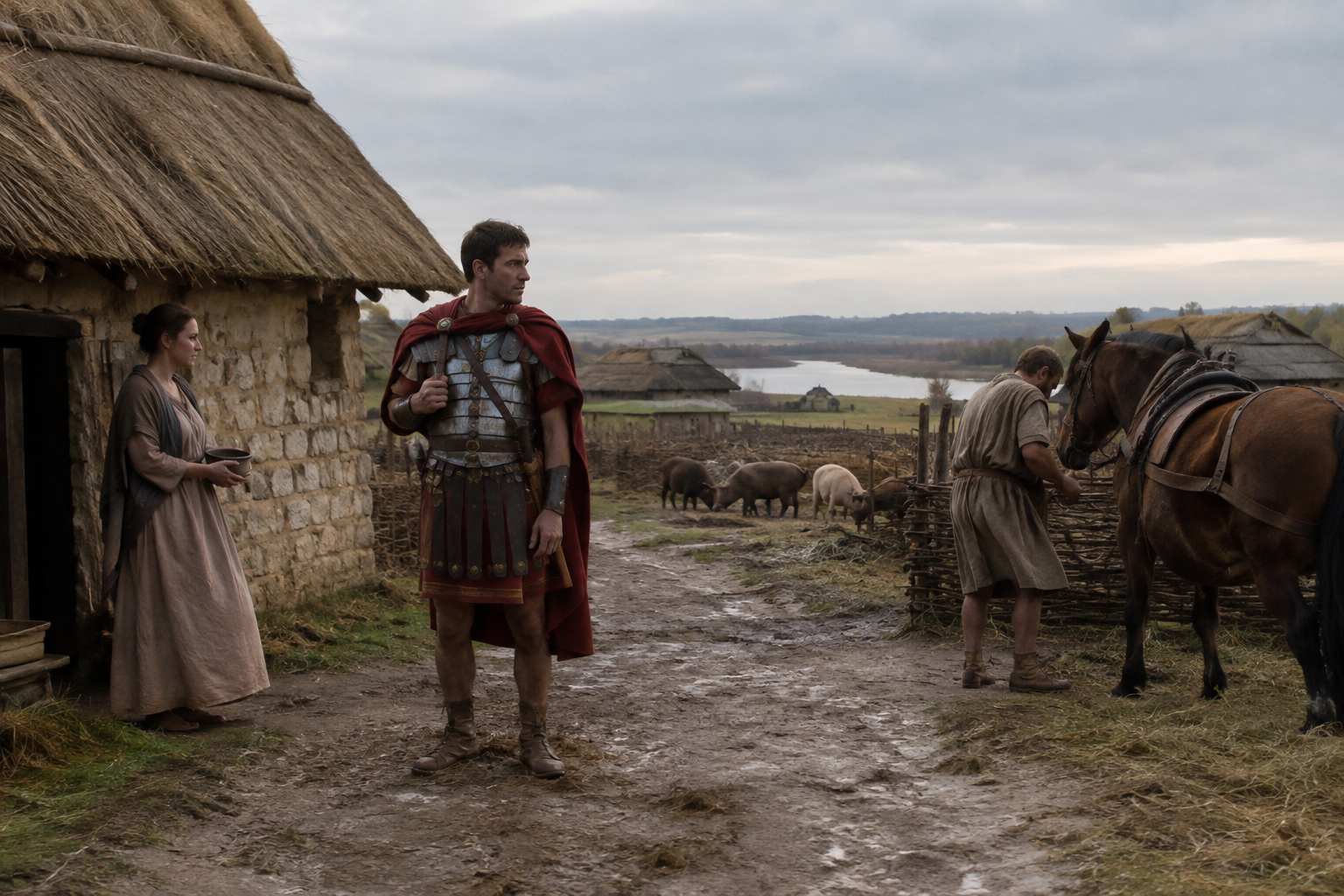
At Eddington in northwest Cambridgeshire, one Roman-era burial has turned a rather technical Y-chromosome label into a very human historical puzzle. The individual known as NWC004, dated to around AD 150, belonged to haplogroup Q2a1c1a - a paternal line that is uncommon in Roman Britain and unusual enough to make us stop and look more carefully at who, exactly, was living in the province.
That is the real interest here. Roman Britain was never a sealed island world. It was part of an empire of roads, garrisons, traders, enslaved people, migrants, officials, and families on the move. So when a lineage such as Q2a1c1a appears in a burial from inland eastern England, the point is not to force a romantic tale, but to ask a sharper archaeological question: what does one paternal line, found in one man, reveal about the variety of lives folded into the Roman landscape?
NWC004 comes from Roman-era Eddington, a site in Cambridgeshire that sits within a region deeply shaped by Roman rule but never reduced to it. This was a countryside of farms, small settlements, roads, local markets, and connections to larger urban and military networks. An ancient DNA study of Roman and early medieval Britain, published in research on genomic history and natural selection in Britain, has helped show just how varied some of these communities could be.
Within that wider setting, NWC004 matters because his Y-DNA marks a direct paternal line that is not what many readers would expect in Roman Cambridgeshire. Y-DNA traces one line only - father to son across generations - so it does not describe the whole ancestry of this man. But precisely because it is so narrow, it can sometimes illuminate movements or family histories that would otherwise disappear inside a more general genetic profile.
Haplogroup Q is a broad Y-chromosome family with a long and complicated history across Eurasia and, in other branches, the Americas. But that large-scale background should not be lazily poured into a much narrower branch like Q2a1c1a. The branch name in this article is specific, and the evidence here is specific too: one Roman-era male from Cambridgeshire associated with that paternal line.
That caution matters. It would be easy, and wrong, to turn Q2a1c1a into a ready-made story about a single homeland or a single migration route. Ancient DNA does not work like that. What we can say is more interesting in its own way: Roman-period Britain included men whose paternal ancestry linked them into genetic histories much wider than the old textbook picture of "native Britons plus Romans from Italy".
In other words, Q2a1c1a at Eddington is evidence of diversity within an imperial province, not proof of one simple origin legend. It belongs to the same larger historical pattern seen across Roman sites from frontier zones to market towns: people moved, families formed, and local communities could contain lineages from surprisingly far-flung backgrounds.
The Roman Empire was very good at moving people around, sometimes by choice and sometimes not. Soldiers were recruited far from where they served. Craftsmen, merchants, herders, and laborers followed opportunity or compulsion. Children inherited their fathers' Y-DNA whether their family had arrived last year or a century earlier. That is why a lineage that seems unexpected in Roman England is not automatically an anomaly in Roman history.
Cambridgeshire was not a frontier fort on the Rhine, but inland sites were still connected to imperial circulation. Grain, livestock, taxation, landholding, and transport tied rural settlements into larger systems. A man buried at Eddington around AD 150 may have been local to the region in upbringing and daily life while still carrying a paternal line whose deeper ancestry lay elsewhere in the empire or beyond it.
This is one of the useful correctives offered by archaeogenetics. Roman identity was not a genetic type. It was a political and social condition of life under empire. The burial of NWC004 reminds us that by the second century AD, "Romano-British" could include people with quite varied paternal histories.
For a long time, popular history liked tidy boxes: Briton, Roman, Saxon, Viking. Ancient DNA has been steadily making a mess of that simplicity, which is one reason it is so valuable. Findings from Roman Britain have revealed that some communities included ancestry drawn from different parts of Europe and beyond, without turning every cemetery into a story of mass replacement.
NWC004 fits that newer, more careful picture. One uncommon Y-line does not mean the whole settlement was dominated by men of haplogroup Q2a1c1a, nor does it identify a named ethnic group from ancient texts. But it does show that the male lines present in Roman England could be more varied than the later medieval or modern distribution of surnames and lineages might lead us to assume.
That also makes Cambridgeshire an intriguing setting. Later periods often overwrite earlier demographic patterns, especially in England, where post-Roman, Scandinavian, and Norman movements all left their mark. A Roman burial like NWC004 preserves a snapshot from before those later layers fully accumulated, allowing us to glimpse a paternal lineage that may once have been present in small numbers and then faded from view.
There is an important discipline in writing about a case like this: not pretending to know more than we do. With only one listed ancient individual here - NWC004 from Eddington, around AD 150 - the responsible story is not a dynasty, not a tribe, and certainly not a fantasy biography. It is a documented point of evidence for how mixed the paternal landscape of Roman Britain could be.
That may sound modest, but modesty is often where the best history begins. A single grave can unsettle inherited assumptions. An unexpected haplogroup can show that local populations were never quite as neat as later narratives imagined. And because Y-DNA follows a direct male line, even one result can preserve the faint outline of movements and family histories otherwise lost to the record.
If you want a wider comparison for how Roman rule shaped populations elsewhere in the western empire, the article on Roman Hispania's lasting genetic legacy offers a useful parallel: the empire repeatedly created local societies that were provincial in place but cosmopolitan in ancestry.
For someone researching haplogroup Q2a1c1a today, the Eddington burial does not promise a neat badge of identity. What it offers is something better: firm evidence that this paternal line was present in Roman England by around AD 150, inside a provincial community tied into the wider imperial world. That makes Q2a1c1a a reminder that paternal ancestry can preserve traces of mobility long after the documentary trail has vanished.
In that sense, NWC004 is memorable not because he solves the history of Q2a1c1a, but because he places it in a real landscape, at a real date, among the complicated lives of Roman Britain.

Comments