Haplogroup G2a2b2a3a

– 5 min read


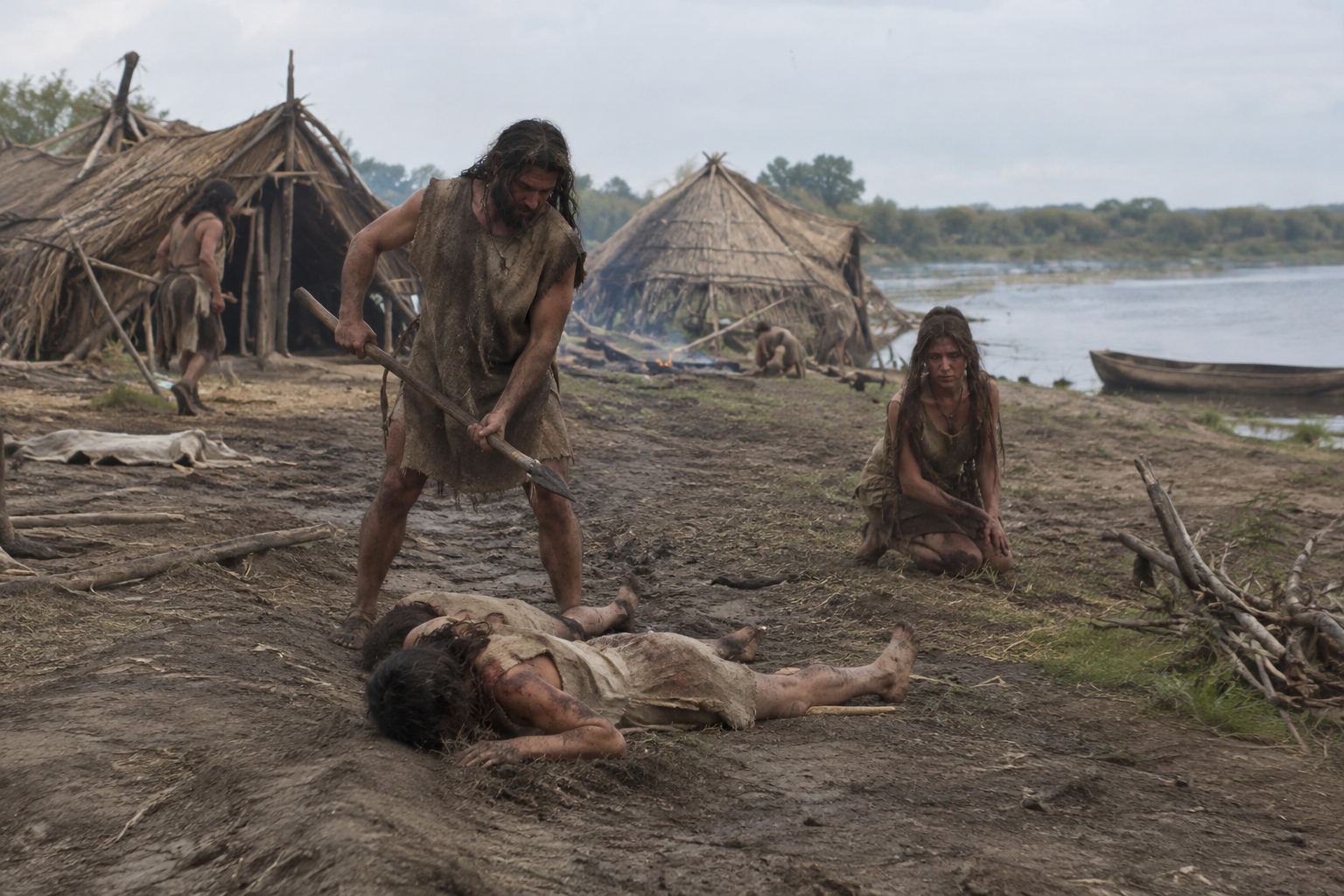
At Asparn-Schletz in what is now Lower Austria, archaeologists uncovered one of the starkest scenes from Neolithic Europe: the remains of a settlement community destroyed around 5000 BC. Among the individuals from this early farming world is sample I30421, associated here with the Y-DNA haplogroup G2a2b2a3a. That combination matters because it places a very specific paternal line inside one of the most revealing episodes of Europe's first agricultural age.
It is worth saying plainly what that means. Y-DNA follows a direct paternal line only, not a person's whole ancestry, language, or identity. But when a branch like G2a2b2a3a appears in an early Neolithic context, it sits inside a much larger and well-known archaeological story: the spread of farming into central Europe, the formation of new settled communities, and, at places like Asparn-Schletz, the sometimes violent tensions within that transformed landscape.
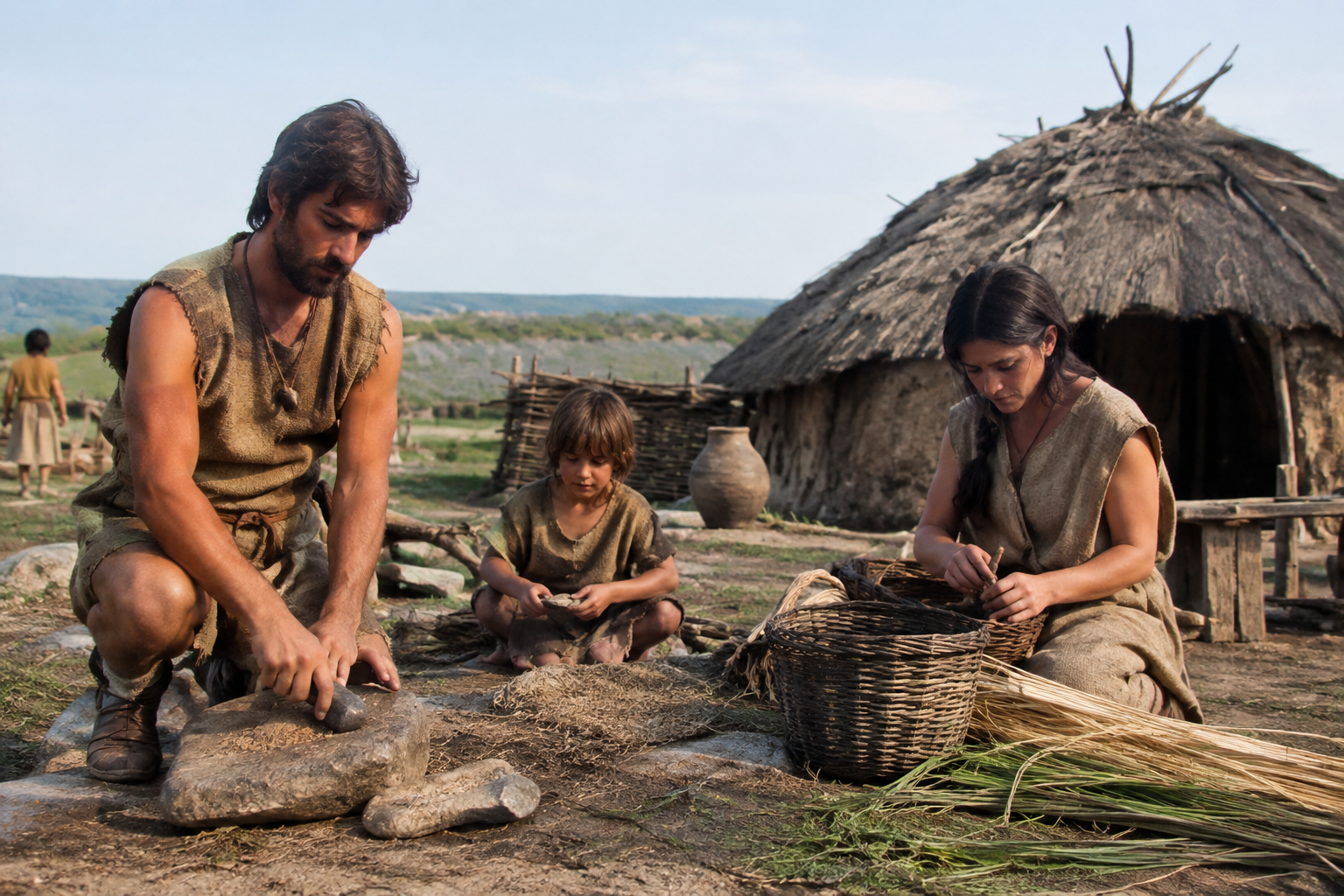
Asparn-Schletz is closely associated with the Linear Pottery horizon, the first great farming tradition across much of central Europe. These were the communities that built longhouses, cultivated crops, kept livestock, and established villages on soils that had previously been used by hunter-gatherers in very different ways. By around 5000 BC, this was not an experimental frontier anymore. It was a settled social world with territory, inheritance, labor, and very likely conflict.
The site is famous because the dead do not look like an ordinary cemetery population. Instead, the human remains point to a catastrophic event, often discussed as a massacre or violent destruction episode. That gives sample I30421 unusual weight. This is not simply a man from an early farming settlement; he belongs to a community caught in one of the most unsettling windows onto Neolithic instability.
An ancient DNA study examining these central European burials and related prehistoric populations has helped bring this period into sharper focus through genetics as well as archaeology: research on ancient European genomes and population history. Even where one sample cannot carry the whole interpretive burden, such work has made it increasingly clear that early Neolithic communities can be studied not only through pottery and settlement plans, but through family lines and biological connections as well.
The broader haplogroup G2a is one of the classic paternal signatures of early European farmers. It turns up again and again in Neolithic contexts linked to the spread of agriculture from Anatolia into the Balkans and onward into central and western Europe. That does not mean every branch of G2a had the same history, still less that every later carrier of G2a2b2a3a descends from one famous site or one single migration event. But it does place this lineage in a paternal landscape strongly associated with the first farming dispersals.
For that reason, G2a2b2a3a is especially interesting when found at Asparn-Schletz. It connects a modern tester's paternal line, however distantly, to the social world of Europe's first village farmers rather than to the later Bronze Age expansions that brought many other Y-chromosome lineages to prominence. In other words, this branch points toward an older layer of European paternal history, one rooted in the Neolithic transformation of everyday life.
That older layer is easy to miss because later periods often dominate popular imagination: chariots, hillforts, Roman armies, medieval dynasties. But the Neolithic was the great upheaval that changed diet, land use, settlement pattern, family structure, and demography on a continental scale. A lineage associated with that age is part of the deep architecture of European history.
It is tempting to read any ancient Y-chromosome through the lens of later peoples and named polities, but Asparn-Schletz long predates Celts, Romans, Germans, and Slavs. Around 5000 BC, Lower Austria was a world of timber houses, cultivated plots, animal herds, ditches, and neighborhood-level politics. The people living there were not "Austrians" in any modern sense. They belonged to local farming communities whose alliances and rivalries must be reconstructed from settlements, tools, bones, and now DNA.
That matters because G2a2b2a3a here should be understood in its own time. It is not evidence for a later ethnic label retroactively projected backwards. Instead, it is a paternal thread running through a formative moment in central European prehistory, when farming societies were establishing themselves and, at times, colliding with one another.
The violence at Asparn-Schletz also serves as a reminder that the Neolithic was not a gentle, uniform process of progress. Farming brought abundance in some forms, but also pressure: defended sites, competition for land, and communities vulnerable to collective attack. Sample I30421 belongs within that difficult reality.
Ancient DNA in the 5th Millennium Carpathian Basin
The deeper significance of a lineage like G2a2b2a3a lies in the movement of early farming ancestry into Europe. Genetic studies over the last decade have repeatedly shown that the first farmers of central Europe were closely linked to populations ultimately derived from Anatolia and the Aegean. Archaeology had long tracked the spread of farming practices; ancient DNA demonstrated that this was also, in large part, a movement of people.
That does not mean a simple one-way wave replacing everyone in its path. Local admixture with hunter-gatherers varied from region to region and increased over time. But in the earlier Neolithic, especially in cultures descended from the first farming expansions, G2a lineages are frequent enough to become historically meaningful. A branch such as G2a2b2a3a therefore sits within one of the best-established population shifts in European prehistory.
For readers exploring this background in broader regional terms, the early spread of farmers through southeastern Europe and into the continent's interior is well framed by work on neighboring zones such as Neolithic Expansion in the Aegean. The route from the Aegean into the Balkans and onward to central Europe is not a matter of romantic speculation now; it is one of archaeogenetics' clearest long-term patterns.
With only one named ancient individual in this article, there is no honest way to turn G2a2b2a3a into a sweeping dynasty or a tidy migration map. What makes I30421 important is not numerical abundance but archaeological setting. The sample comes from a site that condenses several big Neolithic themes into one place: early farming, settled community life, social stress, and lethal violence.
That is often how ancient DNA works best in public history. A single Y-line does not explain an entire society, but placed in the right context, it can illuminate the human scale of major transformations. Here, the direct paternal signal belongs to a man from the first agricultural centuries of central Europe, and from a settlement whose end was anything but peaceful.
Mesolithic-Neolithic Transition
What G2a2b2a3a most strongly suggests is not noble descent or a named tribal ancestry, but something older and, in its own way, more striking: a connection to the paternal world of early European farmers. Through sample I30421 at Asparn-Schletz, this branch appears in a community living through the profound social changes of the Neolithic and caught in one of its clearest episodes of violence. For someone researching this haplogroup today, that is the real historical prize: not a fantasy pedigree, but a direct line into the age when farming villages remade Europe.



Comments