African Maternal DNA Diversity and Population History

– 6 min read


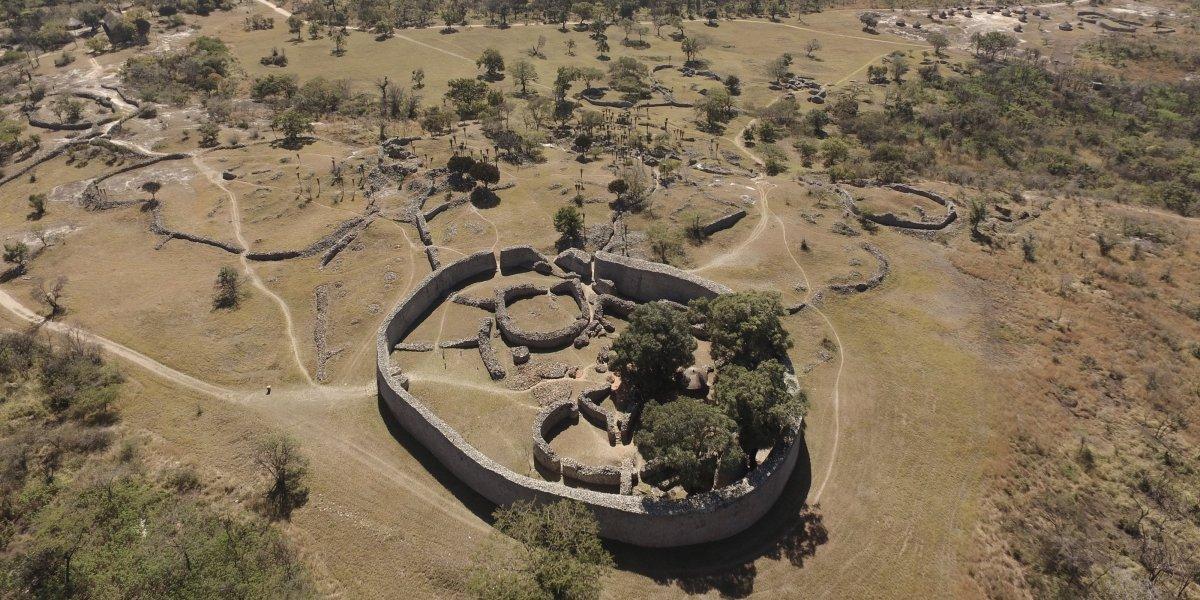
The study explores one of the most remarkable archives of human history: the maternal line. Passed from mothers to children, mitochondrial DNA preserves a record of descent that can stretch back deep into the African past. What emerges from this research is not a single tidy family tree, but an immense and intricate landscape of lineages, layered by movement, isolation, encounter, and expansion across the continent.
Africa holds the richest mitochondrial diversity anywhere in the world. That matters because these maternal lineages are not just biological labels. They are traces of ancient populations, of women and families moving across deserts, forests, wetlands, and savannas over tens of thousands of years. In this survey, researchers assembled nearly 5,000 complete mitochondrial genomes, including more than 1,100 newly sequenced samples from 71 sites in 13 African countries. Some of the most important additions came from places long underrepresented in genetic research, especially the Democratic Republic of the Congo and Ethiopia.
The "sites" of this study are not tombs or ruined cities, but living landscapes of history: the Kalahari region, the forests and river corridors of Central Africa, the Horn of Africa, and the broad belt stretching from West Africa into the south. The research treats them almost like an archaeological map, where each region preserves a different layer of the human story.
One of the most exciting findings is just how deep some African maternal lineages run. The earliest major split in the mitochondrial tree separates one branch called L0 from all the others around 132,000 years ago. That is a staggeringly ancient date. It places the maternal history of African populations far back in the age of early modern humans.
Within that ancient branch, the lineages called L0d and L0k stand out. These are concentrated mainly in southern Africa and are especially associated with Khoe-San populations. The study finds that L0d is especially common in South Africa, Namibia, and Botswana, while L0k is more restricted, strongest in northeastern Namibia and northern Botswana. The geographic pattern matters: it suggests very old continuity in the south, with some maternal lines surviving there over immense stretches of time.
The research places the highest diversity of L0d just west of the Kalahari Desert. That is an arresting detail. It gives a sense not simply of a genetic category, but of a real historical landscape where some of the oldest known maternal lines persisted. The study also notes that ancient DNA studies have found L0d and L0k among southern African Stone Age hunter-gatherers, making these lineages especially important for reconstructing very early human history.
African maternal history cannot be reduced to one people or one migration. Different lineages have different centers of gravity. Some are concentrated in the south, some in West and Central Africa, some in East Africa, and some spread widely across the continent.
The lineage called L0a is a striking example. It is widespread, turning up in places as far apart as the Democratic Republic of the Congo, South Africa, Mozambique, and even northern Egypt. Most carriers in the dataset are linked to Bantu-speaking populations, yet L0a appears among many language groups. Its highest diversity lies in the Congo region and South Africa, suggesting a more complicated past than a simple point of origin followed by one neat movement.
Another important branch is L1. Within it, L1c is especially prominent in West and Central Africa and in the region often connected with the early homeland of Bantu-speaking groups, around Cameroon and Nigeria. The study finds especially high diversity for L1c in western Central Africa. It also notes that some branches of L1c have long been associated with rainforest hunter-gatherers, while others expanded more recently with farming populations. Even within a single maternal branch, there are different stories unfolding.
L2a emerges as one of the most frequent maternal lineages in Africa. The research shows it as abundant across wide areas of the continent, especially in Central Africa. Its highest diversity appears in the center of the Congo region, while its highest frequencies are farther east, including northeastern Democratic Republic of the Congo and Mozambique. That mismatch between diversity and frequency is historically revealing. It hints that a lineage may have formed or diversified in one region, then later spread and flourished elsewhere.
The study gives special attention to the broader lineage called L3, and with good reason. L3 is one of the great turning points in human maternal history, because all mitochondrial lineages found outside Africa ultimately trace back to it. Yet the research is equally concerned with L3 inside Africa, where it remains rich, varied, and regionally complex.
Among its branches, L3e emerges as one of the most compelling. It is widespread across West, Central, and Southern Africa, and the study identifies it as a key marker of early Bantu-related maternal expansion. Its highest diversity lies in West and Central Africa, while high frequencies stretch southward toward Namibia. This broad spread makes it one of the clearest maternal signals of large-scale movement across sub-Saharan Africa.
The research describes how the internal shape of the L3e network tells a story. Individuals from southern Africa often appear on the outer edges of the network, while those from Central and West Africa are more central in some branches. The pattern looks like a lineage with deeper roots farther north and west, with later spread toward the south. Not every part of L3e behaved the same way, but taken together, the evidence suggests that some branches of L3e were carried along in the earliest waves of Bantu expansion.
Other L3 branches show their own regional character. L3b and L3d are most strongly tied to West Africa, while L3f is particularly associated with East Africa and some Afro-Asiatic-speaking groups. L3f has been linked to populations around the Lake Chad region and appears in notable frequencies in northern Namibia as well. Once again, maternal history does not sit still.
Two regions stand out as especially revealing because they were previously understudied: Ethiopia and the Democratic Republic of the Congo. These are not minor additions to the map. They are central zones in African history, and the new data give them fresh visibility.
In the Democratic Republic of the Congo, the newly sampled individuals carried especially high frequencies of maternal lineages such as L0a, L1c, L2a, and L3e. This combination is historically important because it ties the region to major episodes of Central African and Bantu-speaking population history. The Congo Basin has long been one of the great engines of African movement and exchange, and here the maternal evidence strengthens that picture.
Ethiopia showed a very different maternal profile. There the study reports higher frequencies of lineages such as L3x, L4a, L4b, L5b, and M1a. Some of these are comparatively rare elsewhere. Ethiopia thus appears as a region with a distinctive maternal signature, reflecting the Horn of Africa's long-standing role as a crossroads between African populations and movements connected to the Red Sea and beyond.
Especially striking is the finding that a small but notable share of the newly sequenced individuals carried lineages of non-African origin, most of them from Ethiopia. That does not erase the African character of the region's maternal history; rather, it underscores just how connected northeastern Africa has been over time.
The research repeatedly shows that maternal lineages and language groups often overlap, though never perfectly. That is exactly what makes the story so interesting. People shift languages, populations mix, and lineages can travel far from where they first became common.
Among Khoe-San populations, L0d and L0k dominate, preserving some of the deepest known maternal roots on the continent. Among non-Bantu Niger-Congo and Mande-speaking groups, lineages such as L2a, L3e, and L1b are especially prominent. Among many Bantu-speaking groups, the study highlights a broad mix that includes L1c, L3e, L0a, and L2a. Afro-Asiatic-speaking populations show a different pattern again, with greater importance for eastern and northeastern branches such as L3f, L4, L5, and some returning lineages like M1 and U6.
No single maternal lineage belongs exclusively to one language family. Human history is messier than that. Still, the broad associations are revealing, and they allow the study to reconstruct major demographic episodes across time.
One of the most vivid contributions is tracing expansions through maternal lines. For non-Bantu Niger-Congo and Mande-speaking groups, the study finds signs of a major expansion beginning around 17,000 years ago, with strongest growth around 9,000 years ago. That is earlier than some previous estimates and pushes the roots of this demographic history deep into the period after the harsh conditions of the last Ice Age began to ease.
For Bantu-speaking populations, the research finds a later but still ancient expansion signal, beginning around 6,000 years ago for some western groups, with eastern and southwestern branches expanding later. L3e appears especially important here. The maternal data suggest that certain branches of L3e were already present in the source populations involved in the earliest phases of this expansion.
 Imke Lankheet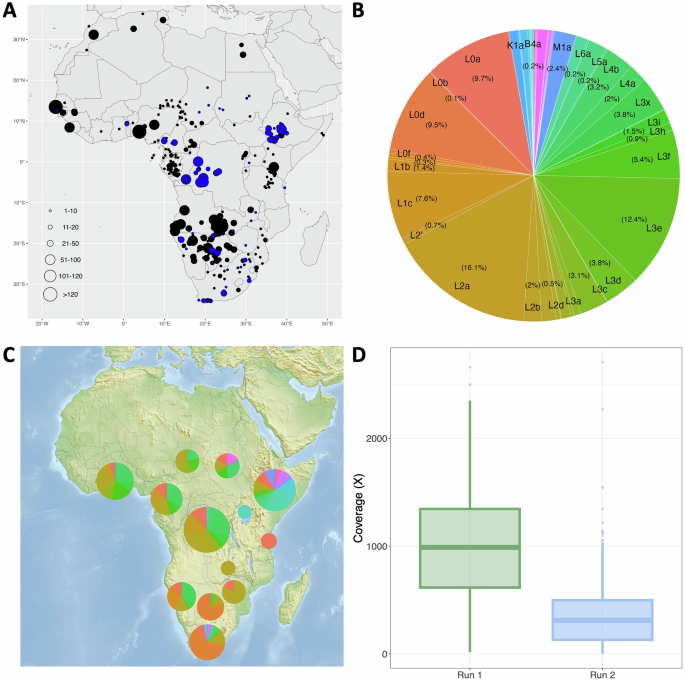



Comments