Haplogroup T1a3

– 4 min read


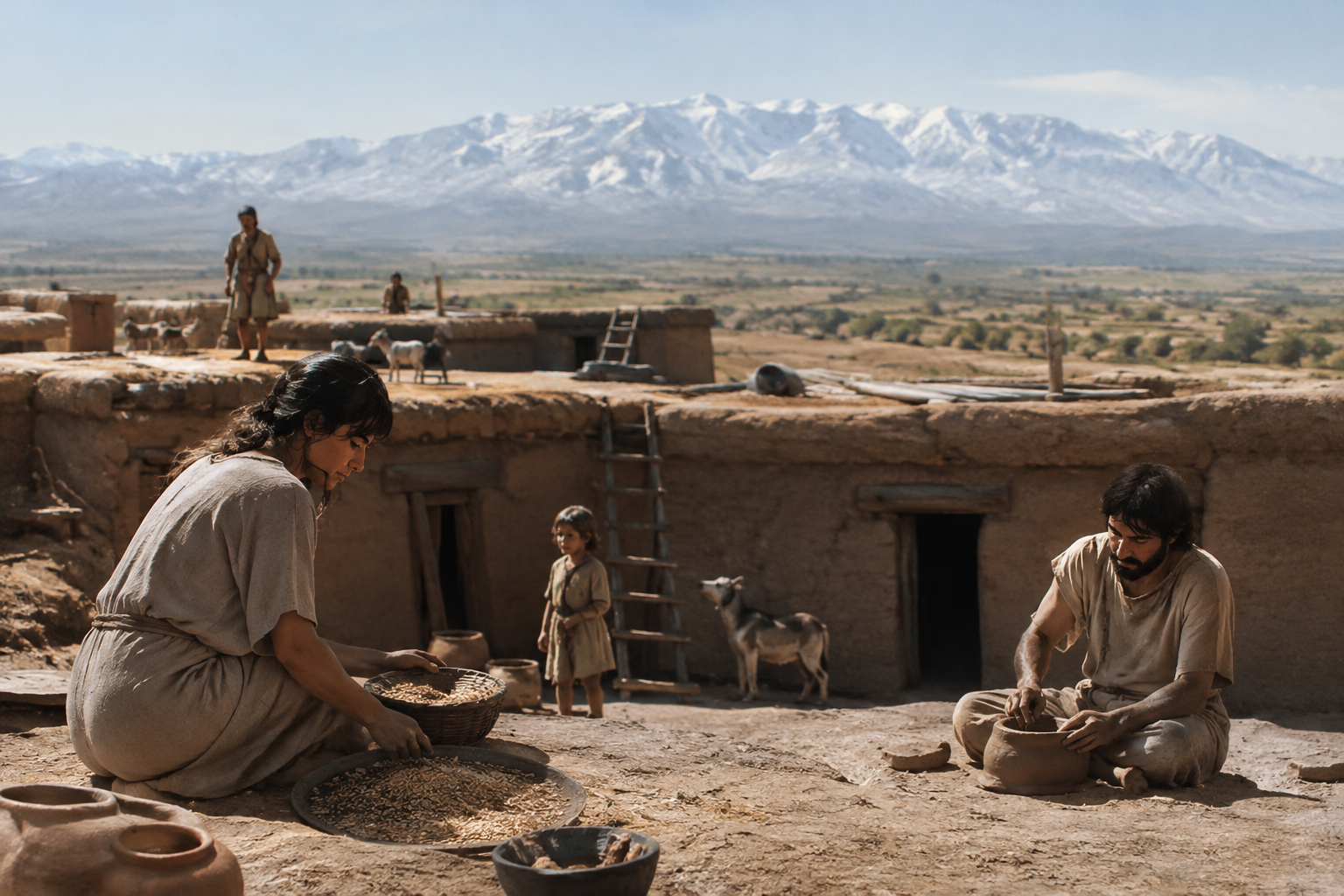
At Catalhoyuk in central Anatolia, one of the best known early farming settlements in the world, ancient DNA has added a small but intriguing paternal clue. A Middle Neolithic male dated here to around 6000 BC, sample cch131, has been associated with Y-DNA haplogroup T1a3. That matters because Catalhoyuk is not just any prehistoric site: it sits close to the heartland of the first village societies that reshaped western Eurasia.
For anyone carrying T1a3 today, this is the kind of evidence that brings a lineage down from abstraction to soil, mudbrick, and settlement archaeology. Y-DNA traces one direct paternal line only, not a whole ancestry profile, but when a branch turns up at a place like Catalhoyuk it anchors that line in a very particular human world: one of houses pressed together, farming established, and community life already old and complicated.
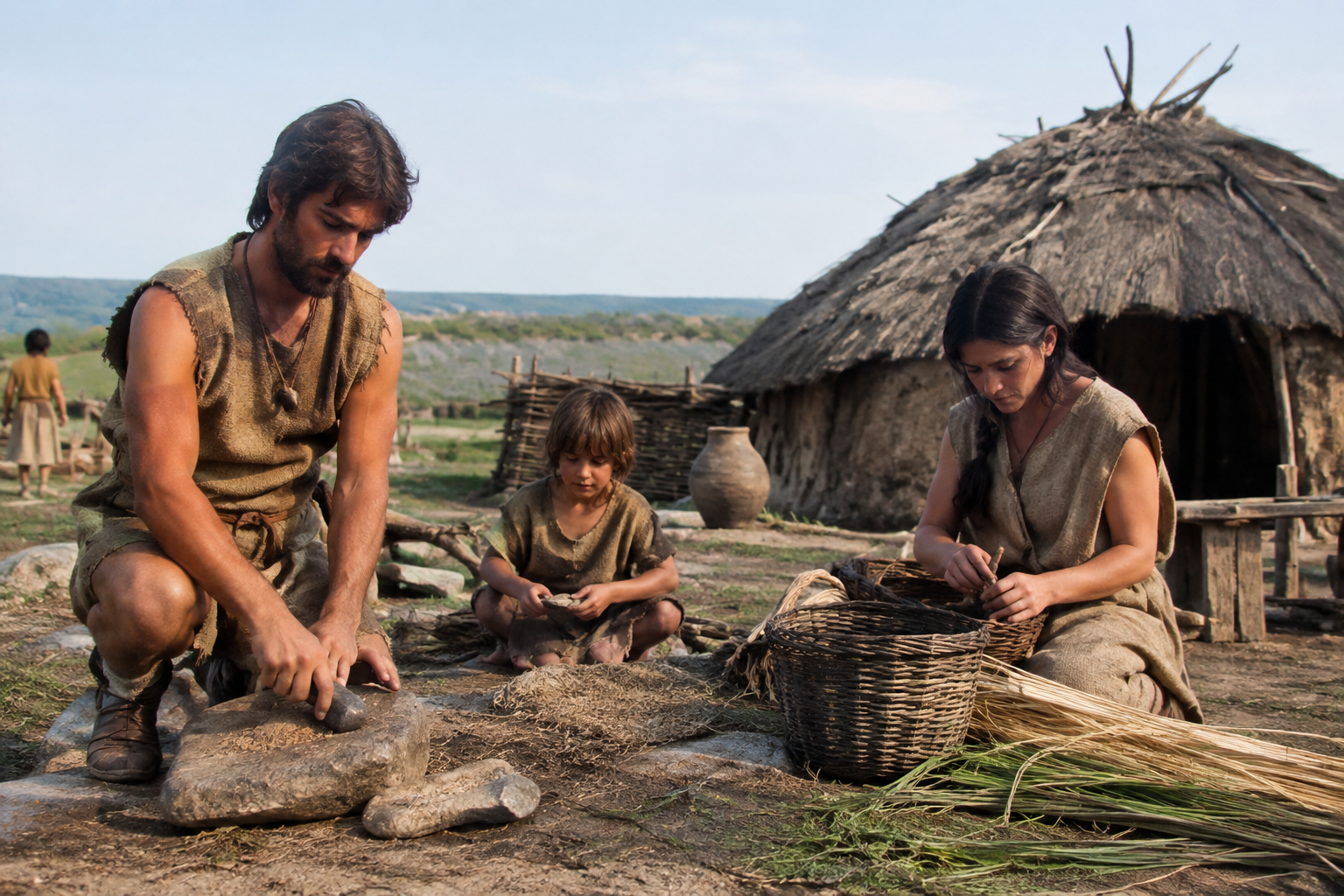
Catalhoyuk has long fascinated archaeologists because it preserves an early large-scale farming community on the Konya Plain. The site belongs to the Neolithic of Anatolia, when cultivation, herding, and permanent settlement had already transformed daily life. This was not the first flicker of farming, but a mature village world in which households, ritual practices, and food production had become tightly interwoven.
That makes cch131 especially useful as evidence. A paternal lineage linked with T1a3 appearing in this setting places the branch, or at least a close ancestral form of it, within the social landscape of Anatolian farmers rather than in some vague and undated "Near Eastern" past. Even with only one named sample here, the archaeological setting gives the lineage real historical texture.
A recent ancient DNA study touching on this wider regional background is available at this research preprint. Without forcing more from the evidence than it can bear, the broad picture is consistent with what archaeology has shown for decades: central Anatolia was one of the crucial zones from which early farming lifeways spread and diversified.
Haplogroup T is a wider Y-chromosome family with a scattered modern distribution stretching across parts of the Near East, northeast Africa, the Mediterranean, and beyond. But this article concerns T1a3, which is narrower. It would be careless to pour the entire history of haplogroup T into this one sub-branch as though every movement, language, or population associated with the parent lineage automatically belongs to T1a3. Ancient DNA rarely rewards that sort of laziness.
What the Catalhoyuk evidence does suggest is more specific and more interesting. It places a T1a3-linked paternal line in an early farming community of Anatolia by the 7th millennium BC. That does not prove where the branch first formed, nor does it mean every later T1a3 line descends from this one man at Catalhoyuk. But it does show that the lineage was present in one of the major societies involved in the Neolithic transformation of southwest Asia.
Readers sometimes expect ancient DNA stories to depend on kings, warriors, or dramatic migrations. In fact, one of the most important contributions of archaeogenetics has been to restore ordinary settlement populations to the center of the story. Catalhoyuk was not famous because of a royal tomb; it was famous because it preserves the accumulated lives of a dense farming settlement over centuries.
So when a Y-DNA branch appears there, the historical value lies in context. T1a3 is not being encountered on a random map pin. It is turning up in a place that has become almost shorthand for the Neolithic household world: built space layered over generations, close community living, and the deep routines of farming life. That helps frame T1a3 as part of the paternal diversity carried by early settled populations in Anatolia.
That wider theme of farming populations and their spread is explored in related MyTrueAncestry coverage of Neolithic expansion into Europe, which gives useful background for understanding why Anatolian evidence matters so much in paternal-line studies.
Neolithic expansion into Europe
There is an understandable temptation to draw a straight arrow from Anatolia into every later appearance of T-related lineages around the Mediterranean and Europe. Real history is messier. The spread of farming involved repeated movements, local admixture, regional bottlenecks, and later population changes layered on top of one another. Paternal lineages could expand, fade, or reappear in ways that are not identical to the spread of languages, pottery styles, or political power.
Still, Anatolia remains central. The first farmers who moved westward into the Aegean and Europe carried with them only part of the paternal diversity present in their homelands. Some branches flourished in descendant populations; others became rarer. A sample like cch131 therefore matters not because it solves the whole map of T1a3, but because it captures a branch within an early demographic reservoir from which later populations drew.
That point also helps explain why modern rarity or patchiness can be misleading. A lineage may look marginal today and yet have been present in socially important or demographically significant communities thousands of years ago. Ancient DNA keeps reminding us that surviving modern frequencies are only the end of a very long story.
Catalhoyuk belongs to a period before the later Bronze Age states, before classical civilizations, and long before medieval dynasties. That is precisely why it is so valuable. It gives T1a3 a foothold in the deep prehistoric world of village farmers rather than only in later, historically named populations.
It also underlines a broader lesson from ancient DNA: paternal history is often older than the identities we inherit from written history. A man at Catalhoyuk around 6000 BC lived millennia before Greek, Roman, Turkic, Arab, or medieval European political worlds. Yet lines like his could feed into all manner of later populations through countless local histories, marriages, dispersals, and demographic accidents.
For readers interested in how ancient population structure can persist or shift over long spans, MyTrueAncestry's piece on regional adaptation to Neolithic farming offers another useful angle on what these early agricultural societies set in motion.
The strongest supported insight for haplogroup T1a3 here is simple and important: a T1a3-linked paternal line appears in Middle Neolithic Anatolia at Catalhoyuk, in sample cch131, around 6000 BC. That places this lineage within one of the great early farming landscapes of human history. If you belong to T1a3 today, the evidence does not hand you a royal pedigree or a single migration route, but it does connect your direct paternal line to the world of early settled farmers in Anatolia, where some of the most consequential changes in human society were already well underway.


Comments