Haplogroup C2a1b

– 5 min read


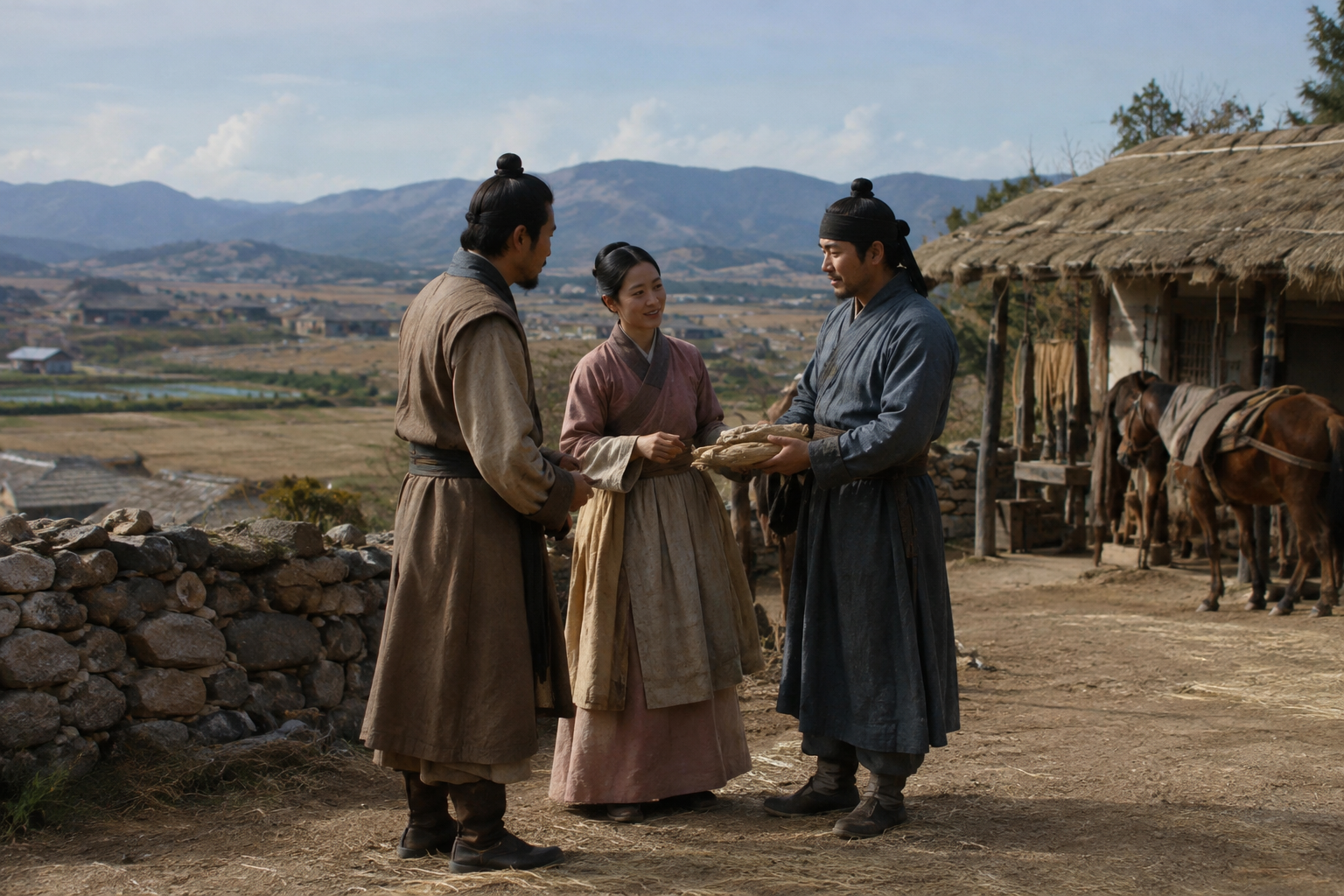
At Joyeong-dong in Gyeongsan, in southeastern Korea, one ancient man dated to around AD 500 has become an unexpectedly useful signpost for Y-DNA haplogroup C2a1b. He appears in the ancient DNA record as JOY010, from the Three Kingdoms period, when the Korean peninsula was politically divided but intensely connected through warfare, alliance, trade, and movement of people. For anyone tracing a paternal line in C2a1b, that matters because it places this branch, or at least a reported association with it, inside a real early historic community rather than in an abstract map of migrations.
That is the first thing worth saying clearly: Y-DNA follows one direct paternal line only. It does not tell us everything about JOY010's ancestry, language, or identity. But it does give us a sharp kind of evidence, and in this case the sharpness comes from context. A man associated with haplogroup C2a1b was living in the world of Three Kingdoms Korea, in a region tied especially to the orbit of Silla, at a time when local communities were being shaped by both old lineages and wider regional contacts.
Gyeongsan lies close to Gyeongju, the famous heartland of the Silla kingdom. Around AD 500, this was not a remote backwater but part of a politically important landscape of settlements, cemeteries, and elite centres. Even without inventing details about one grave, the location itself tells us a great deal: this was a society in which local ancestry, marriage patterns, and political consolidation were all intertwined.
JOY010 is therefore interesting not because one sample can stand for all of ancient Korea, but because it anchors C2a1b in a specific historical setting. The Three Kingdoms period is often described through court chronicles and state formation. Ancient DNA adds another scale of history: families, paternal lines, and the biological traces of communities that written records barely notice.
A broader ancient DNA investigation of these Korean burials has helped open that window onto the period, linking genetic evidence with archaeology in ways that are beginning to show how tightly structured some early historic communities could be. That context is especially relevant here because JOY010 was not found in isolation from history, but in a region whose cemeteries illuminate population structure during the Silla age. One research lead associated with this material is available here: https://datadryad.org/dataset/doi:10.5061/dryad.fj6q57489.
Haplogroup C is one of the old and widely dispersed paternal lineages of Eurasia, but that wider story should not simply be pasted onto the narrower branch C2a1b. The article haplogroup is a specific downstream line, and the responsible way to discuss it is through actual evidence for that branch or its reported association in ancient people like JOY010.
In practical terms, JOY010 shows that a paternal line reported as C2a1b was present in early medieval Korea. That is already significant. It does not mean everyone carrying C2a1b today descends from Korea, nor that the branch originated there, nor that one ancient burial can define the social rank or ethnic identity of all men with the same haplogroup. Ancient Y-DNA is powerful precisely because it is narrow: one line, one burial, one moment in a much bigger population history.
Even so, narrow evidence can be historically rich. A line like C2a1b in a Three Kingdoms context sits within a wider East and Inner Asian pattern in which paternal branches often moved across large regions, sometimes through small-scale kin groups, sometimes through political expansion, and sometimes through much older demographic layers that only later become visible in named kingdoms.
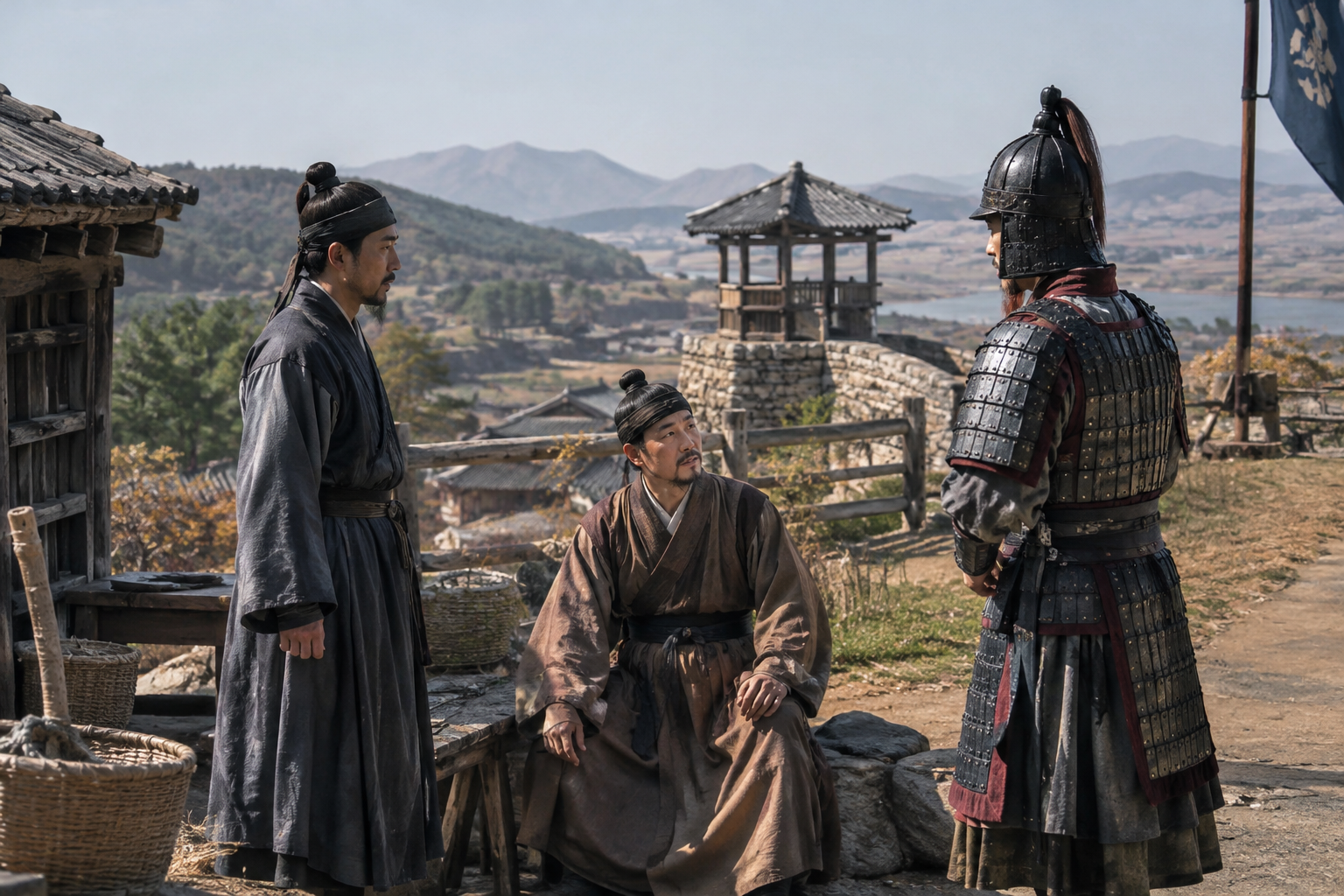
The most striking thing about southeastern Korea in late antiquity is how connected it was. Silla was consolidating power, but it did so in a peninsula already marked by rivalry with Baekje and Goguryeo, and by maritime and continental contacts reaching beyond Korea itself. Gyeongsan's importance lies in being part of that dense historical geography rather than a lone point on a map.
When a haplogroup such as C2a1b appears in this setting, it invites careful historical questions. Was this paternal line part of a long-established local population? Did it reflect earlier movements into the peninsula from the north or northeast? Was it one lineage among several circulating in communities that were already genetically mixed? With the current evidence, those questions remain open. But they are better questions than the old temptation to force one clean origin story onto every Y-chromosome branch.
This is exactly where archaeogenetics becomes more useful than mythic genealogy. It does not hand us a founding father. Instead, it shows us a living population in which paternal lines, maternal lines, and autosomal ancestry could all tell slightly different stories at once.
East Asian Y-Chromosome Migrations
Readers sometimes assume that a single ancient man is too little to say anything useful. In one sense that is true: JOY010 cannot represent all Silla-period men, all Koreans of the time, or all branches of C2a1b. But archaeology is often like this. A coin, a skeleton, a posthole, a broken inscription: each is small on its own, yet important when it lands in the right context.
JOY010 matters because the context is unusually informative. Three Kingdoms Korea is a documented historical world, but one in which ordinary biological relationships are still poorly understood. Ancient DNA studies from such periods can reveal whether burial communities were tightly kin-based, whether outsiders were being incorporated, and whether paternal continuity matched political narratives. A reported C2a1b result from Joyeong-dong therefore helps place this haplogroup inside a social landscape we can actually historicize.
It is also a reminder that paternal lines do not belong neatly to modern national stories. Ancient East Asia was full of movement, continuity, fragmentation, and recombination. Haplogroups travelled through people, and people lived in societies more complicated than later identity labels suggest.
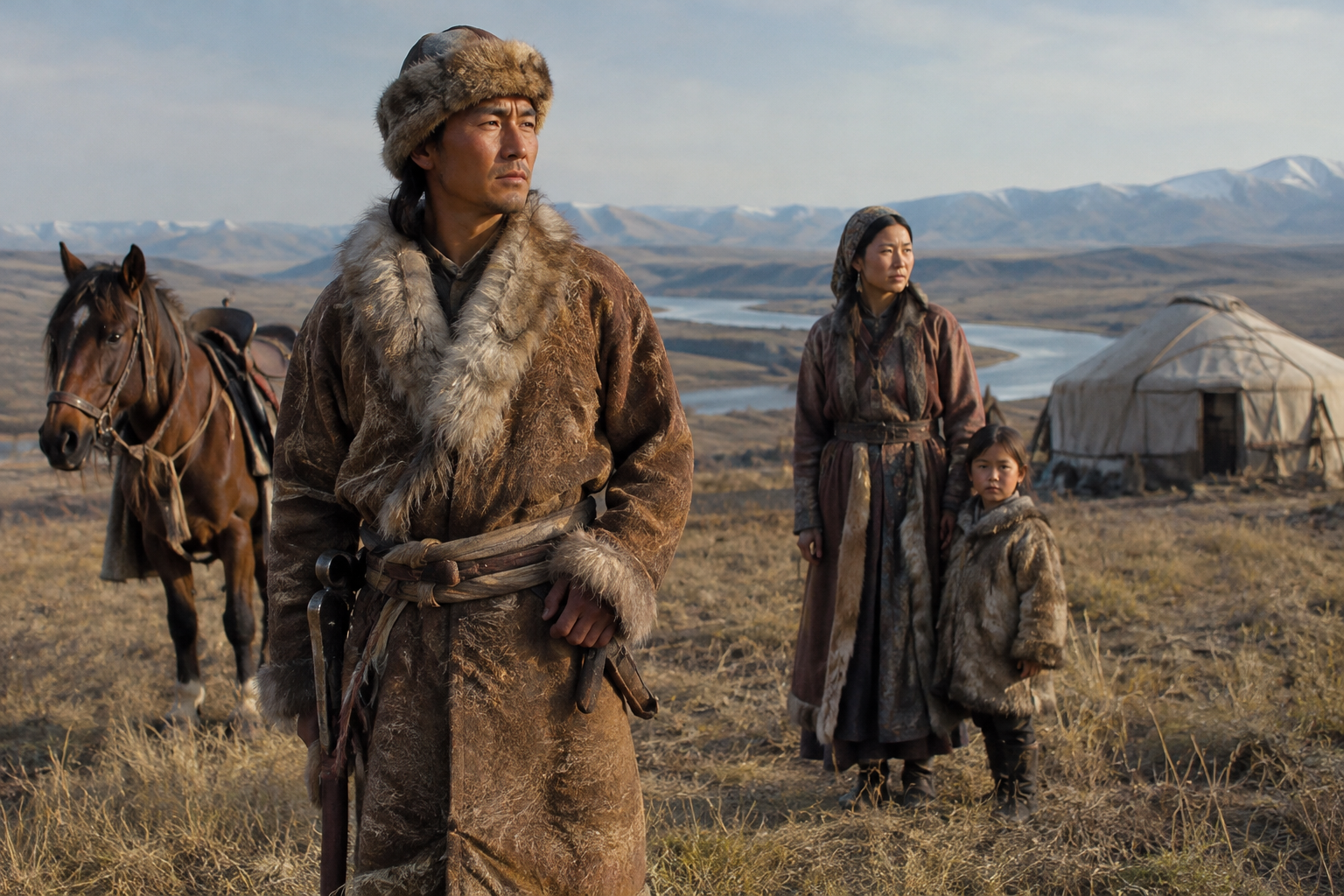
C2-related paternal lineages have a wider relevance across northern and eastern Asia, which is why even a Korean sample like JOY010 speaks to a bigger story. Not a simple story of conquest or a single migration wave, but a long history of population interaction stretching across steppe, forest, coast, and agrarian states.
That wider frame matters because the Korean peninsula was never isolated. Its populations were shaped by local continuity, but also by contact zones facing Manchuria, the Yellow Sea, the Japanese archipelago, and the continental northeast. A lineage like C2a1b appearing in early medieval Korea fits that broader pattern of interconnected East Asian paternal history without allowing us to collapse all of that history into one route or one people.
For readers interested in how such patterns look across deeper time in East Asia, the expanding ancient DNA picture from northern China and neighboring regions shows just how layered these paternal histories can be.
The distinctive point about C2a1b here is not grandeur but placement. An ancient individual, JOY010, links this paternal branch to the lived world of around AD 500 in southeastern Korea, near the Silla heartland. That gives the haplogroup a firm archaeological foothold in an early historic society shaped by kinship, politics, and regional exchange.
If C2a1b is part of your own paternal line, this evidence suggests that one branch of that ancestry was present in the Korean peninsula during the Three Kingdoms period. It does not turn a haplogroup into an ethnicity or a royal pedigree. But it does something better: it places your Y-line within a documented human landscape, where real communities once buried their dead and left traces that genetics can now recover.
Comments