The House of Neville
– 2 min read


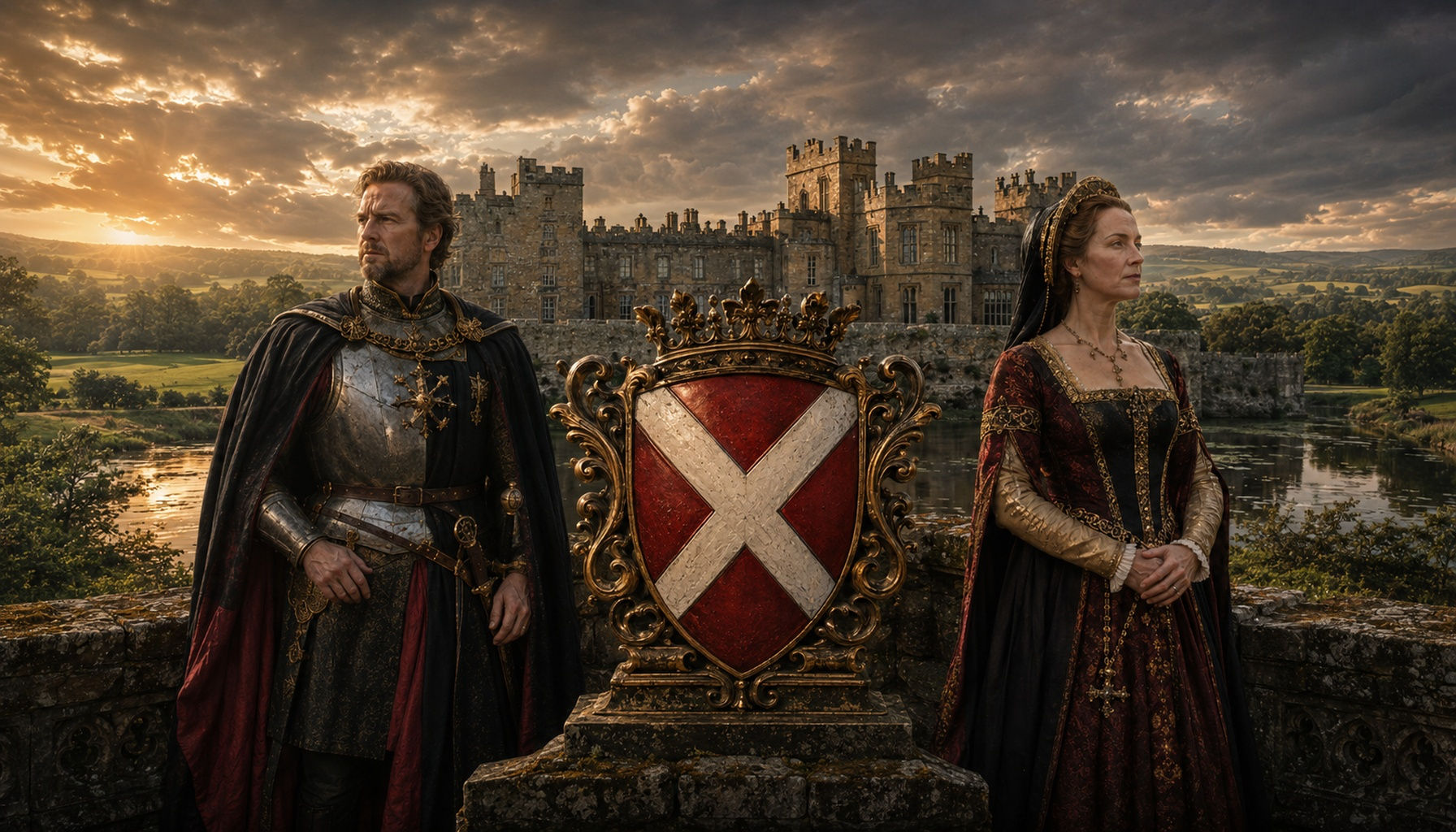
The House of Neville was one of the great magnate families of medieval England: northern, ambitious, well connected, and very often close to the dangerous center of power. Their rise was not a fairy-tale leap but the solid, medieval kind, built out of land, military service, marriage strategy, royal favor, and an unblinking readiness to take part in politics when politics meant armed force as much as parchment. In genetic tagging terms, the primary family haplogroup linked here is I1a2a1a1a1a2b4b, a lineage with deep roots in northern European paternal history.
The family name is usually associated with Neville in Normandy, but the English Nevilles became thoroughly embedded in the world of northern England after the Norman Conquest, especially through landed power in Durham, Yorkshire, and adjoining regions. Early figures in the wider lineage tradition include Uhtred, noted around 1080, standing near that murky but fascinating frontier where pre-Conquest northern power, Norman restructuring, and new aristocratic identities were all colliding. By the later Middle Ages the Nevilles had become major players in the kingdom, with names such as Ralph Neville, 1st Earl of Westmorland, and the far more famous Richard Neville, Earl of Warwick, the so-called Kingmaker, helping define the brutal drama of the Wars of the Roses. In many ways, the Nevilles are the pattern-book example of English noble power: castles, affinities, feuds, titles, marriages, and political warfare on a national scale.
Read more about the House of Mowbray
If one place anchors Neville memory, it is Raby Castle in County Durham. Begun in the 14th century and strongly associated with the Neville family, Raby was not just a residence but a statement in stone: a great fortified house with towers, curtain walls, a gatehouse, and the kind of commanding presence that tells you at once this was a family used to authority. It became one of the principal seats of the Nevilles and reflects exactly the sort of regional lordship they exercised in the north, where aristocratic power was local, military, and highly visible. Raby also has a later afterlife beyond the medieval world, having remained an important historic house, and yes, it can still be visited today, which is one of the pleasures of English heritage: the politics are long gone, but the architecture still does the talking.
Explore the Noble House of Percy
The haplogroup I1a2a1a1a1a2b4b linked with this family sits within a broader northern European paternal story, and related ancient DNA samples give a useful sense of that deeper backdrop. These are not proof of direct descent from the Nevilles, of course, but they are linked points in the wider genetic landscape: Migration Period Hungary Rakoczifalva RKF280, Iron Age Denmark Bornholm Island Slusegard CGG106748, described as a Uralic outlier, Viking Age Denmark Bogovej CGG106777, Early Anglo-Saxon Buckland Dover in England BUK073, and Medieval Tarquinia in Lazio TAQ009. What is striking is the geographical spread. A linked lineage appears in Scandinavia, in Anglo-Saxon England, in migration-age contexts in central Europe, and even in medieval Italy. That is a reminder, if we needed one, that noble houses like the Nevilles belong to a medieval story, but the lineages associated with them come from a much older map of movement, settlement, and connection across Europe.
Explore the House of de Warenne
If the Neville story speaks to you, whether through northern England, the Wars of the Roses, Raby Castle, or the haplogroup I1a2a1a1a1a2b4b, you can take it a step further. Upload your DNA to MyTrueAncestry and see whether you match the House of Neville or related ancient DNA samples linked to this wider lineage story.


Comments