The Noble House of Paget

– 3 min read


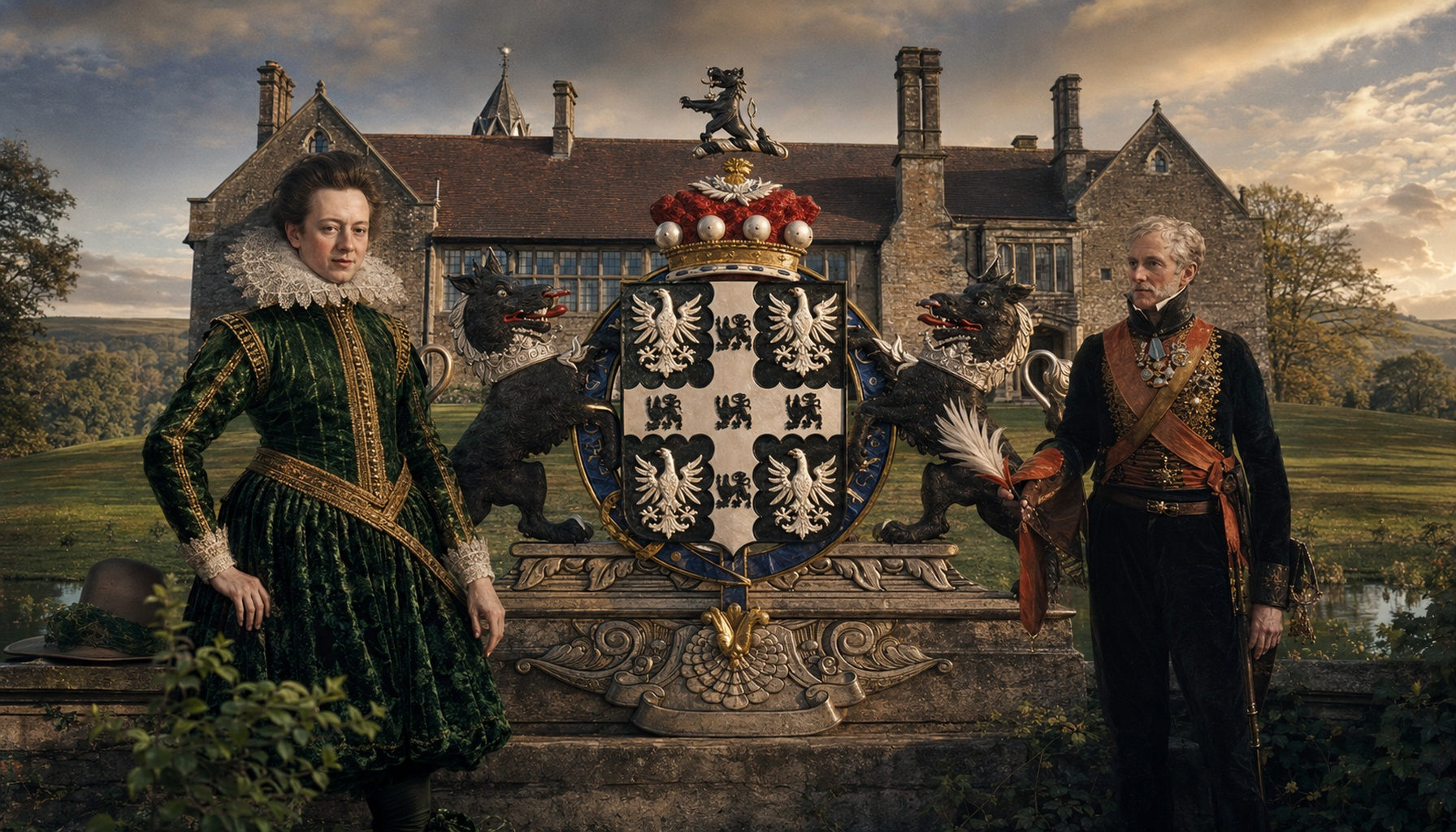
The House of Paget was an English noble house that rose through the machinery of Tudor and later British public life: royal administration, estate management, parliamentary service, military distinction, and the careful cultivation of status through marriage, office, and heraldry. In that sense the Pagets are wonderfully typical of the long-lived English aristocratic pattern, not a family built only on one battlefield moment, but on generations of service near the crown and within the state. Their primary linked Y-DNA haplogroup is tagged here as R1b1a1b1a1a2a, a branch within the great western European R1b line.
The family is closely associated with Staffordshire and with the world that grew up around Burton-on-Trent, where monastic lordship, royal power, and landed influence all met. Their rise belongs to the turbulent world of the 16th century, when England's court was dangerous, ambitious, and full of opportunity for clever men who could read power properly. William Paget, 1st Baron Paget (1505-1563), became one of the most important servants of Henry VIII and Edward VI. Later figures such as Thomas Paget, 3rd Baron Paget (1540-1590), and William Paget, 6th Baron Paget (1637-1713), show the family enduring through confessional conflict, dynastic change, and the shifting balance between crown, Parliament, and landed elite.
If one wants the Pagets in a sentence, it is this: they were not merely titled people, but public people. Their story runs through council chambers, embassies, estates, regiments, and the House of Lords. William Paget, 1st Baron Paget, was one of those formidable Tudor operators who survived by intelligence, literacy, and political suppleness. Thomas Paget, 3rd Baron Paget, belonged to a much more troubled age of religious division and political suspicion. By the time of William Paget, 6th Baron Paget, the family stood within the later Stuart and early Hanoverian world, where noble standing rested not only on ancestry but on continued relevance in national affairs. That combination of office, property, heraldic continuity, and public obligation is what makes Paget heritage so recognisably aristocratic in the English historical sense.
A key location anchor for Paget heritage is Burton Abbey at Burton upon Trent in Staffordshire. Founded in the early medieval period and refounded as a Benedictine monastery in the Norman age, Burton Abbey became one of the great ecclesiastical landholders of the region. It was not simply a religious house in the narrow sense; it was a power centre, owning estates, shaping local economy, exercising authority, and helping define the surrounding landscape for centuries. After the Dissolution of the Monasteries under Henry VIII, places like Burton Abbey were drawn into the redistribution of land and influence that transformed England and opened extraordinary opportunities for rising administrative families such as the Pagets. Even where the medieval abbey itself survives only in fragments, the site and town still preserve that long memory of monastic lordship, Tudor change, and elite landholding. Burton upon Trent can certainly still be visited today, and the abbey precinct area and surviving remains are part of the historical fabric of the town.
Read more about the Herbert family
The Paget-linked haplogroup R1b1a1b1a1a2a sits within a broad and very old western European paternal landscape, so we should be careful and historically honest: ancient samples with this or related tagging are not evidence of direct descent from the Pagets, but they do show the wider deep-time world in which such a paternal line appears. Related or linked examples include Roman Era England Northwest Cambridgeshire Eddington (NWC009), Roman Era Fenstanton Cambridgeshire (FEN008), Roman Era High Class Burial Cambridgeshire Arbury Wooden Coffin (ARB003), Celtic Durotriges England Duropolis Winterborne Kingston samples such as WBK103 and WBK106, Medieval England Cherry Hinton (ATP_PSN_944), Late Medieval England Clopton Cambridgeshire (ATP_PSN_1217), Pict Era Scotland Black Isle Rosemarkie Cave (KD001), and Medieval Northern Spain Las Gobas samples including ldo066, ldo037, and ldo046. Set beside elite Celtic burials from Germany such as Magdalenenberg MBG013, Asperg-Grafenbuehl APG001, and Hochdorf HOC001, they suggest a long and varied story for this paternal background across Iron Age, Roman, medieval, and early modern Europe. In other words, the Paget line belongs to a haplogroup world with deep roots in the populations that helped shape Britain and the wider Atlantic and continental zones long before surnames or peerages existed.
Explore Roman and early medieval Britain DNA
The House of Paget is a fine reminder that noble history is rarely just about glittering titles. It is about place, service, ambition, survival, and the long habit of public duty. If you have Paget ancestry, or simply want to see whether your DNA matches the House of Paget or related ancient DNA samples linked to R1b1a1b1a1a2a, upload your DNA to MyTrueAncestry and explore the deeper story written across both family history and archaeology.
Comments