Clan ODonovan
– 3 min read


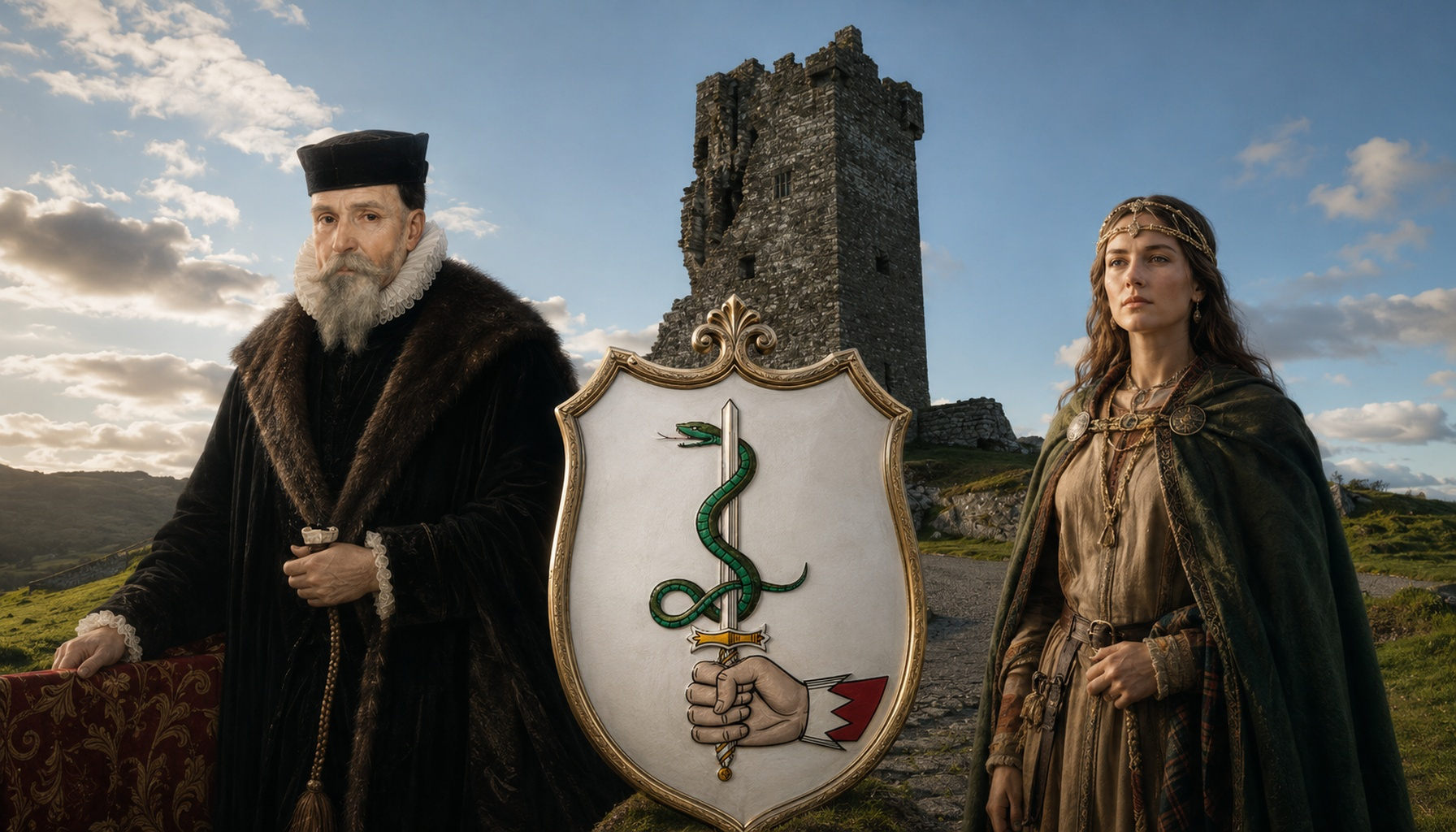
Clan ODonovan was a Gaelic Irish lineage of Munster, rooted above all in southwest Ireland, with deep associations in Cork and the wider Carbery world. Their story belongs to that distinctly Irish political landscape in which kin-group, territory, military strength, alliance, and remembered ancestry all mattered enormously. The surname carries the weight of lordship as much as family: ODonovans were not simply people from one bloodline, but participants in the Gaelic order of regional rule, where chiefs held authority through land, followers, fortified sites, and reputation. In haplogroup terms, the primary family association is R1b1a1b1a1a2a, a branch strongly linked to many western European paternal lines and especially familiar in Irish genetic history.
The ODonovans emerged from an older Gaelic world in which families expanded, split into branches, defended territory, and attached their identity to particular districts and strongholds. Over generations, they became closely tied to Munster and especially to Carbery, where their local authority was expressed through chieftainship, warfare, alliances with neighboring powers, castles, landholding, and heraldic identity. This is why the family remains so compelling historically: Clan ODonovan illustrates the Irish clan pattern in miniature and in full at once, with regional lordship, warrior leadership, territorial memory, Gaelic legitimacy, and an enduring continuity of name. Among the notable figures remembered in this line are Crom ODonovan, ancestor of Clancahill, noted in 1254; Cathal ODonovan, founder of Clancahill, in 1270; and Donal na gCroiceann ODonovan, Chief of Clancahill, in 1584, a figure whose very byname seems to come striding out of the hard-edged politics of late medieval Ireland.
Read more about the Royal House of ODonoghue
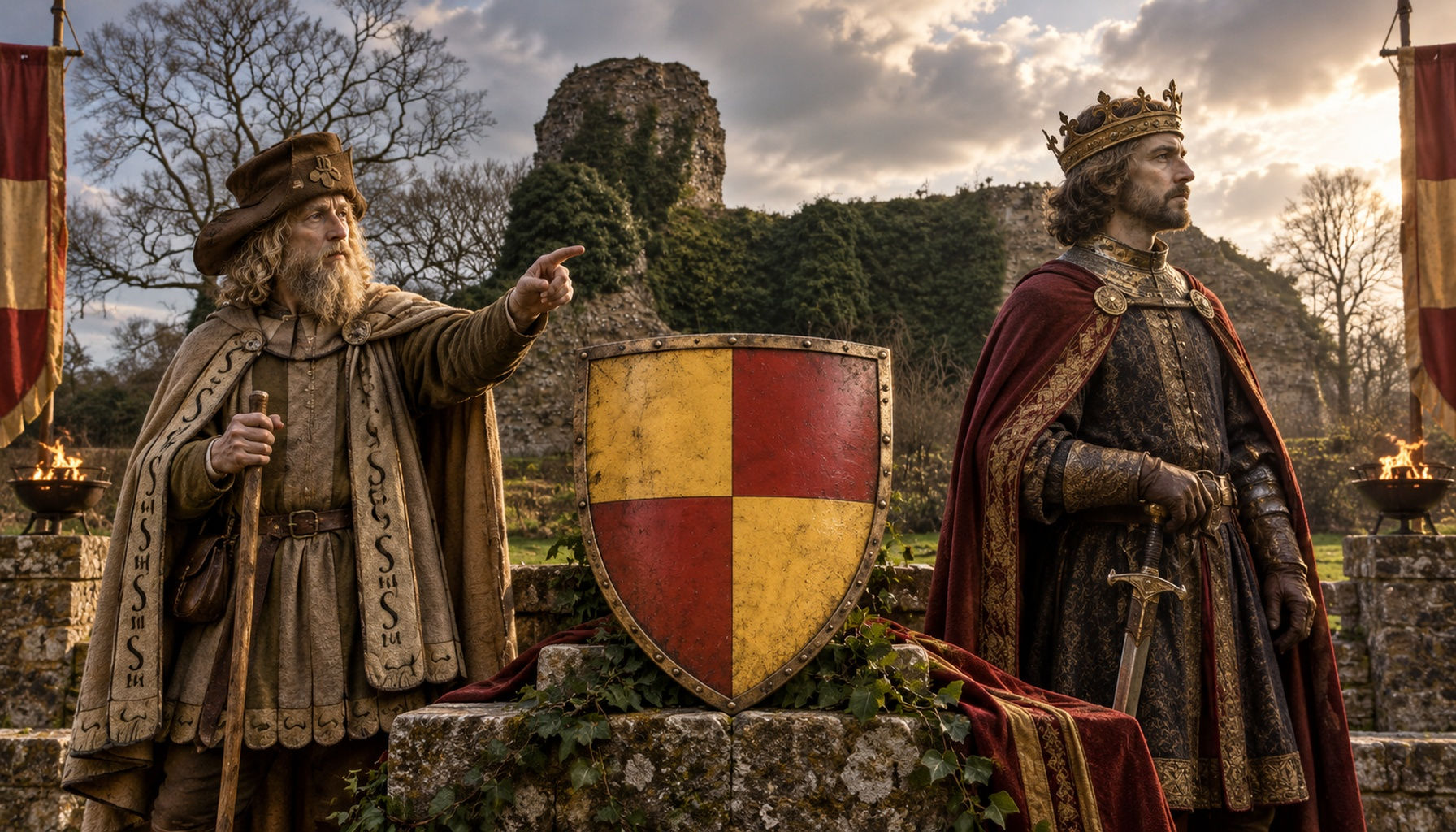
No family like this floats free of place, and for the ODonovans the great landscape anchor is Castle Donovan in west Cork, near Drimoleague. The castle as it stands today is a striking tower house, generally dated to the sixteenth century and associated with the ODonovan chiefs of the Clancahill branch. It rises from a countryside that still feels, rather wonderfully, like the proper setting for Gaelic lordship: rough uplands, narrow routes, river valleys, and the kind of terrain where control meant knowledge of every ridge and crossing. The building itself was a fortified residence rather than some fairy-tale palace, intended for defense, display, and the business of command. It is usually connected with Donal na gCroiceann ODonovan, Chief of Clancahill, in the later 1500s, placing it squarely in the final, tense centuries when Gaelic lordship in Munster was still very real but increasingly under pressure. Castle Donovan survives as an evocative ruin and, yes, it can still be visited, which matters more than one might think: standing there, one gets not just a view of old stone, but a sense of how family, territory, and authority were physically planted into the land.
From a DNA perspective, the primary ODonovan family haplogroup tag is R1b1a1b1a1a2a. That does not let us leap recklessly from a medieval Cork clan to a single ancient skeleton, and we should not pretend otherwise. What it does do is place the family within a wider paternal world visible across ancient Europe. Related or linked ancient DNA samples assigned within this broader haplogroup pattern appear in a remarkable spread of contexts: elite Celtic burials in Germany such as Magdalenenberg MBG013, Asperg-Grafenbuehl APG001 and APG003, Hochdorf HOC001, HOC001b and HOC001c, and Ludwigsburg Roemerhuegel LWB001; Iron Age and Romano-British individuals from England including NWC009, FEN008, ARB003, and DUX003; Durotriges samples from Winterborne Kingston such as WBK103, WBK106, WBK17, WBK36, WBK192, WBK10, WBK105, and WBK23; Pict-era and early medieval individuals from Scotland including KD001 and LUN004; and medieval northern Spanish samples from Las Gobas such as ldo066, ldo037, ldo046, ldo048, ldo062, and ldo040. The broad picture is not "these are ODonovans," but rather that the paternal branch linked with the family belongs to a deep and widespread Atlantic and Celtic-facing genetic story, stretching through Bronze Age, Iron Age, Roman, and medieval Europe.
Explore ancient DNA and Celtic origins
If you carry the ODonovan name, have Cork or Munster roots, or simply suspect a connection to the old Gaelic lordships of southwest Ireland, DNA can add an entirely new layer to the story. Upload your DNA to MyTrueAncestry to see whether you match Clan ODonovan, their haplogroup R1b1a1b1a1a2a, or related ancient DNA samples from Celtic, Romano-British, Pictish, and medieval European contexts.
Comments